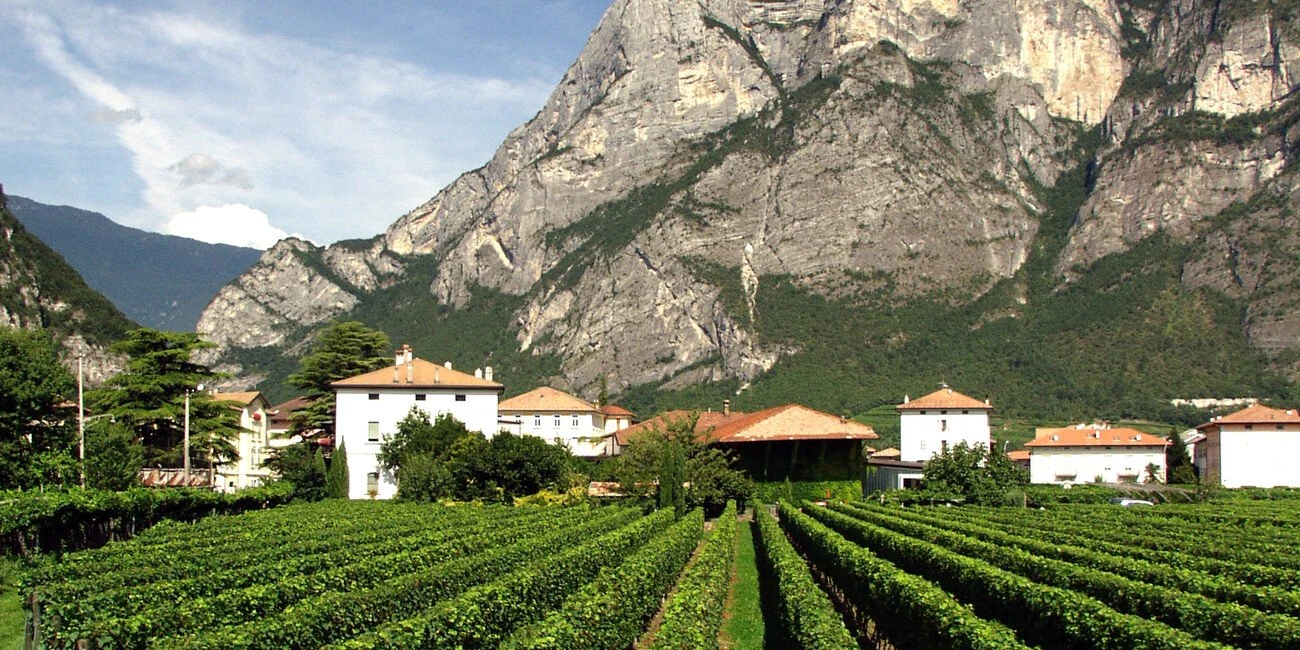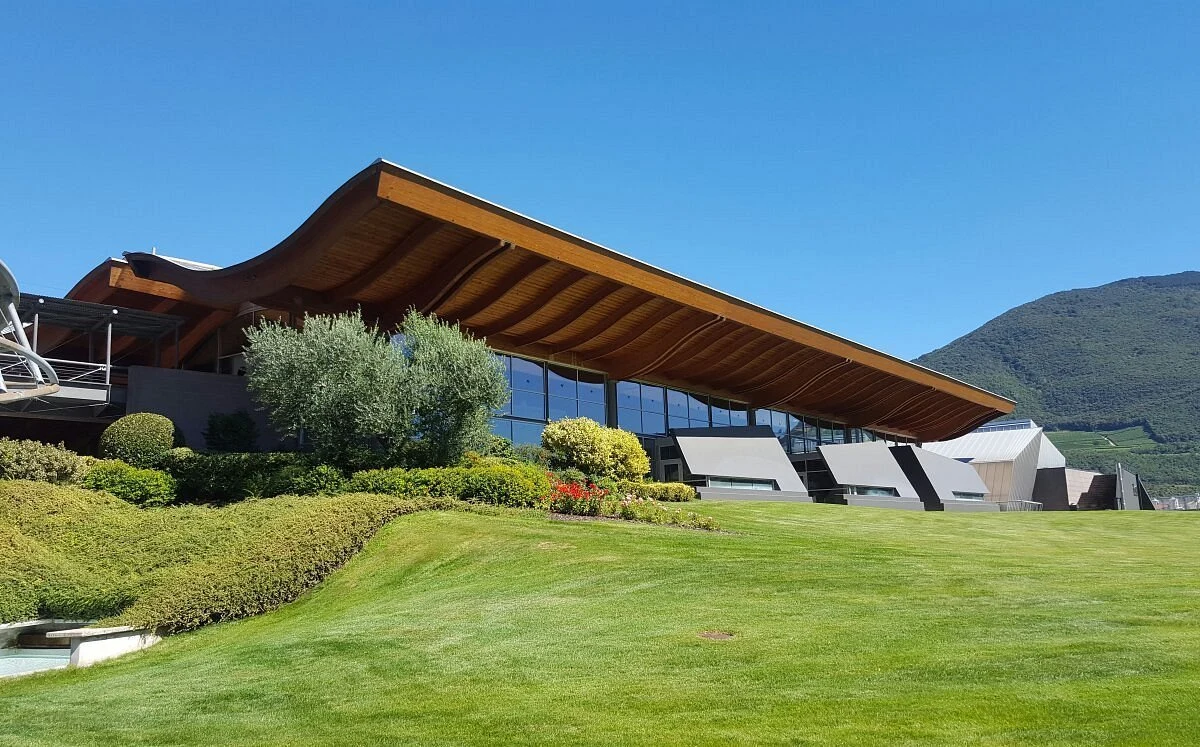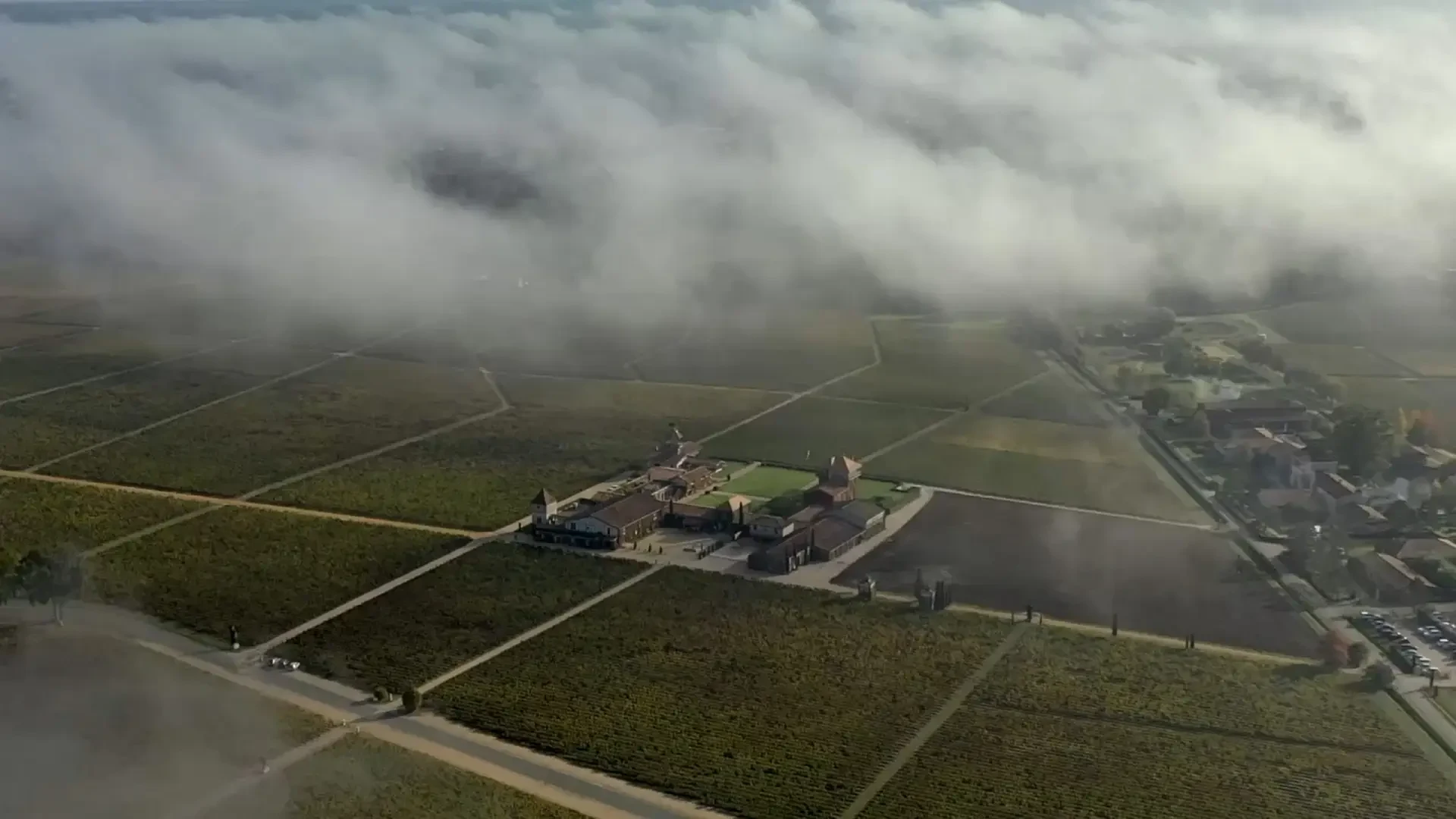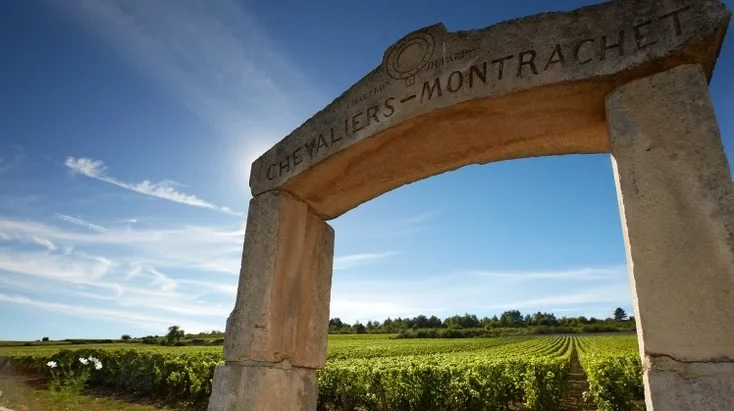
Foradori sits in Mezzolombardo at the northern end of the Adige Valley, where Trentino's volcanic porphyry soils and Alpine climate define some of Italy's most distinctive terroir-driven wine production. Awarded Pearl 2 Star Prestige in 2025, the estate occupies a serious position in the region's small cohort of internationally recognised producers. For anyone tracing Italian wine beyond Tuscany and Piedmont, this address is a necessary stop.
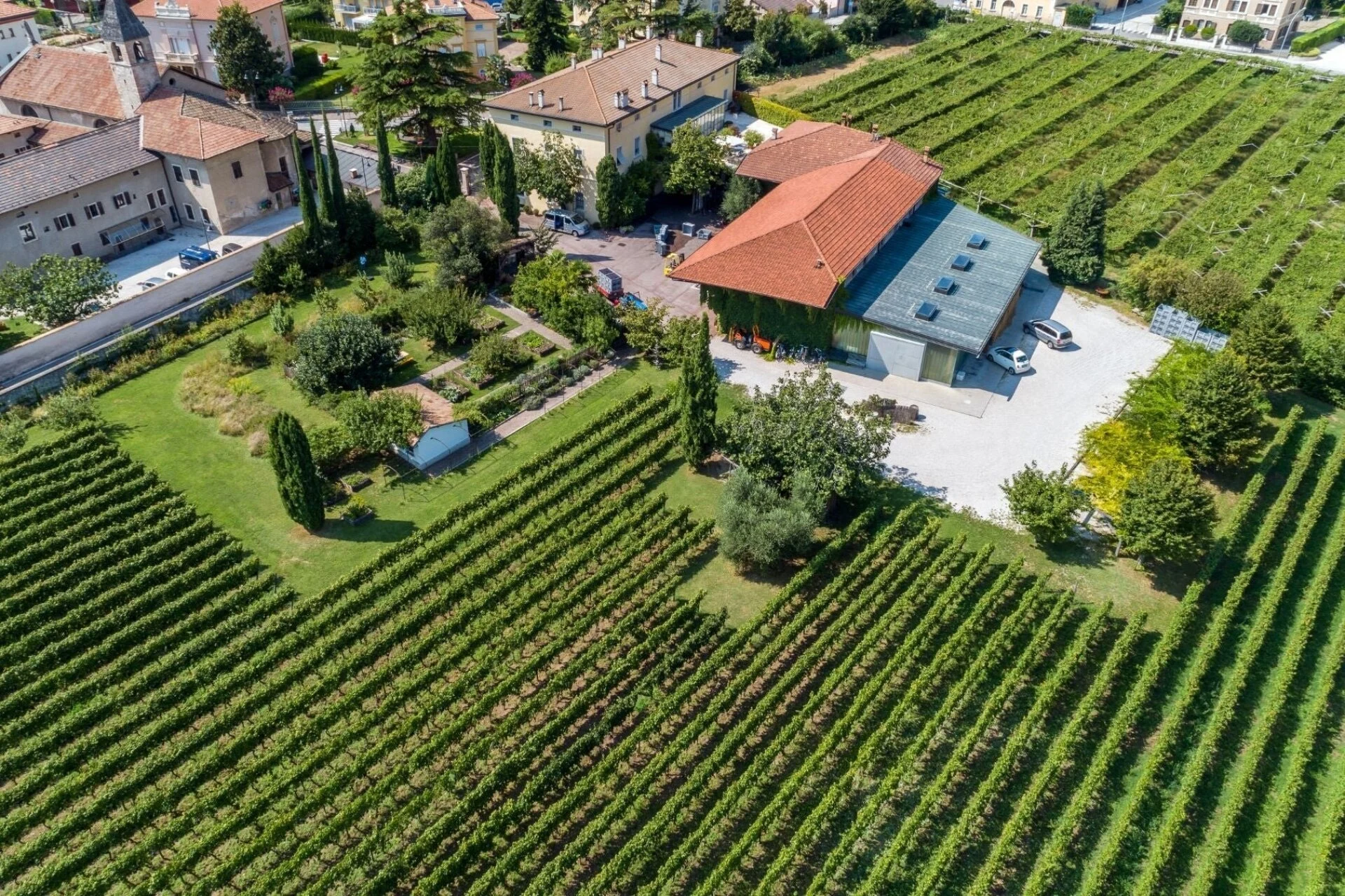
<h2>Where Alpine Geology Meets the Wine Glass</h2><p>The Adige Valley north of Trento narrows in ways that concentrate everything: cold air funnelling down from the Dolomites, volcanic porphyry soils broken up by alluvial deposits, and a diurnal temperature swing that preserves acidity in grapes long after the summer heat has pushed sugars high. Mezzolombardo sits at the southern end of the Campo Rotaliano plain, a flat stretch of gravel and porphyry rubble that has produced Teroldego for centuries. Most of Italy's wine conversation travels through Tuscany, Piedmont, or the Veneto. The upper Adige corridor gets less attention, which makes the producers operating here at serious quality levels all the more worth knowing.</p><p>Foradori, at Via Damiano Chiesa 1, Mezzolombardo, is a winery known for Teroldego in Trentino. Awarded Pearl 2 Star Prestige in 2025, the estate sits at the upper tier of Trentino production, in a comparable set that is small by any measure. To understand what that recognition means, it helps to understand the grape at the centre of this valley's identity.</p><h2>Teroldego and the Campo Rotaliano</h2><p>Teroldego is one of Italy's more singular indigenous varieties: thick-skinned, deeply coloured, and genetically linked to both Lagrein and Syrah through shared parentage with Dureza. On the Campo Rotaliano's porphyry-rich soils, it produces wines with a mineral tension that distinguishes them from Teroldego grown elsewhere in the region. The grape is not easy. Overcrop it and the wines turn thin and vegetal. Push the skins too hard in extraction and the tannins become aggressive. The estates that handle it well have typically spent decades learning the variety's specific thresholds in this specific geography.</p><p>The broader context of northern Italian terroir expression is instructive here. Compare the Campo Rotaliano to other geologically distinct Italian wine zones: the basalt-influenced Etna wines from <a href="https://www.enprimeurclub.com/wineries/planeta-menfi-winery">Planeta in Menfi</a> in Sicily, or the limestone-clay soils that give <a href="https://www.enprimeurclub.com/wineries/ca-del-bosco-erbusco-winery">Ca' del Bosco in Erbusco</a> its particular Franciacorta character. Each zone's identity is inseparable from its geology. In Mezzolombardo, the porphyry acts as both drainage mechanism and thermal regulator, warming slowly through the day and releasing heat through cool nights. The wines that come off this ground carry a lithic quality, something between graphite and crushed stone, that you do not find in Teroldego produced on less distinctive soils.</p><h2>Foradori in the Context of Italian Prestige Wine</h2><p>Italy's premium wine production is heavily concentrated in a handful of regions. Barolo and Barbaresco dominate the critical conversation in Piedmont, with estates like <a href="https://www.enprimeurclub.com/wineries/aldo-conterno-monforte-dalba-winery">Aldo Conterno in Monforte d'Alba</a> setting benchmarks against which the whole category is measured. Brunello di Montalcino occupies an equivalent position in Tuscany, with <a href="https://www.enprimeurclub.com/wineries/lenoteca-banfi">L'Enoteca Banfi in Montalcino</a> and <a href="https://www.enprimeurclub.com/wineries/poggio-antico">Poggio Antico</a> representing the established guard. Umbria has built a credible case through producers like <a href="https://www.enprimeurclub.com/wineries/lungarotti-torgiano-winery">Lungarotti in Torgiano</a>. Against this geography of prestige, Trentino operates as a smaller, more specialist market, fewer internationally recognisable names, a narrower grape vocabulary in the premium tier, but for those who seek it out, a clarity of site expression that the more crowded appellations can obscure.</p><p>Foradori's 2025 Pearl 2 Star Prestige recognition places it above the mid-tier regional producers and inside a narrow cohort of Trentino estates with genuine international standing. In practical terms, this means the estate is producing at a level where comparisons with serious Italian wine from better-known zones are legitimate rather than aspirational. The wines belong to the same critical conversation, even if the variety and geography remain less familiar to mainstream collectors.</p><h2>The Estate's Place in Mezzolombardo</h2><p>Mezzolombardo is a working agricultural town rather than a wine tourism destination in the conventional sense. It lacks the infrastructure of Barolo's village centre or the Chianti Classico zone's agriturismo circuit. What it has is the Campo Rotaliano, and the concentrated cluster of serious Teroldego producers that the appellation has generated. <a href="https://www.enprimeurclub.com/wineries/villa-de-varda-mezzolombardo-winery">Villa de Varda</a> operates in the same territory, and the town's compact production zone means that the leading estates are working the same essential geology with different choices about viticulture, winemaking intervention, and varietal emphasis.</p><p>The region also produces grappa in quantity, with <a href="https://www.enprimeurclub.com/wineries/distilleria-marzadro-nogaredo-winery">Distilleria Marzadro in Nogaredo</a> and the celebrated <a href="https://www.enprimeurclub.com/wineries/nonino-distillery-pavia-di-udine-winery">Nonino Distillery in Pavia di Udine</a> representing the broader Trentino-Friuli distilling tradition. For visitors assembling a northern Italy wine itinerary, Mezzolombardo works as a focused single-day destination or as part of a wider Trentino loop that includes Alto Adige to the north.</p><h2>What the Terroir Argument Actually Means Here</h2><p>The phrase terroir expression risks becoming a placeholder for vague marketing language unless it is grounded in specific, observable characteristics. At Campo Rotaliano, the argument is concrete. Porphyry, the volcanic rock that defines this plain, has a specific thermal mass and drainage profile that distinguishes it from the limestone-dominated soils of much of central Italy. Wine grown on this substrate tends toward red-fruit primary character with a structural mid-palate that comes from the natural acidity the site preserves. Tannin management becomes the critical variable: the grape's thick skins and the site's energy can produce either wines of considerable grip and age-worthiness or wines that are simply tight and closed in youth.</p><p>Producers at Foradori's quality level have typically resolved this through canopy management, harvest timing decisions, and choices about maceration length that respond to vintage conditions rather than fixed protocols. The 2025 Pearl 2 Star Prestige award is, in effect, a validation of those decisions across multiple vintages and a confirmation that the estate's approach to this particular terroir is producing wines that hold up against broader Italian benchmarks.</p><p>For wine enthusiasts whose reference points extend to other Italian estates with strong terroir arguments, <a href="https://www.enprimeurclub.com/wineries/castello-di-volpaia-radda-in-chianti-winery">Castello di Volpaia in Radda in Chianti</a> for altitude-influenced Sangiovese, or the volcanic specificity that <a href="https://www.enprimeurclub.com/wineries/accendo-cellars">Accendo Cellars in St. Helena</a> brings to Napa Cabernet, the Campo Rotaliano offers a geologically legible case study in a grape variety that rewards close attention.</p><h2>Planning a Visit</h2><p>Foradori is located at Via Damiano Chiesa 1 in Mezzolombardo, in the Trentino-Alto Adige region of northeastern Italy. The town is accessible by train from Trento, which itself sits on the main rail corridor between Verona and Innsbruck, making it direct to reach from either Milan or Munich. The estate operates by appointment only, so advance planning is advisable.</p>
Foradori is located at Via Damiano Chiesa, 1, 38017 Mezzolombardo TN, Mezzolombardo.
Foradori has received recognition including: Pearl 2 Star Prestige (2025).
Teroldego is the variety that defines Foradori's identity on the Campo Rotaliano plain, grown in volcanic porphyry soils north of Trento. The estate's 2025 Pearl 2 Star Prestige recognition reflects its standing as a reference-point producer for this indigenous variety. Any visit to Mezzolombardo without engaging with Foradori's Teroldego expression misses the central argument of the estate.
Foradori's strongest claim is its articulation of Teroldego as a serious, terroir-specific variety rather than a regional curiosity. The estate holds a Pearl 2 Star Prestige award for 2025, positioning it at the upper tier of Italian wine production outside the Piedmont-Tuscany axis. Its location at Via Damiano Chiesa 1 in Mezzolombardo places it at the geographic heart of the Campo Rotaliano, the only zone where Teroldego is grown at scale.
Phone and website details are not currently listed in our records for Foradori at Via Damiano Chiesa 1, Mezzolombardo. Reaching out directly through the estate's official channels or via specialist Italian wine travel contacts is the most reliable approach. Given its prestige rating and limited infrastructure as a wine tourism destination, advance planning is advisable.
The Campo Rotaliano is a glacial alluvial plain flanked by the Adige Valley north of Trento, where volcanic porphyry soils and cold Dolomitic air create growing conditions specific enough that Teroldego is rarely attempted with the same seriousness elsewhere. Foradori, based at Via Damiano Chiesa 1 in Mezzolombardo, has built its Pearl 2 Star Prestige standing (2025) on the argument that this geology produces a distinct and replicable character in the variety. The combination of deep-coloured thick skins and mineral porphyry substrate makes Campo Rotaliano the defining reference point for Teroldego as a category.
Foradori is oriented toward wine-focused visitors with a specific interest in Italian indigenous varieties and geological terroir, rather than casual wine tourists seeking a broad tasting-room experience. Mezzolombardo functions as a working agricultural town, and the estate's Pearl 2 Star Prestige (2025) reflects critical rather than commercial positioning. It rewards those who arrive knowing what Teroldego is and why the Campo Rotaliano's porphyry soils matter.
Via Damiano Chiesa, 1, 38017 Mezzolombardo TN
Mezzolombardo