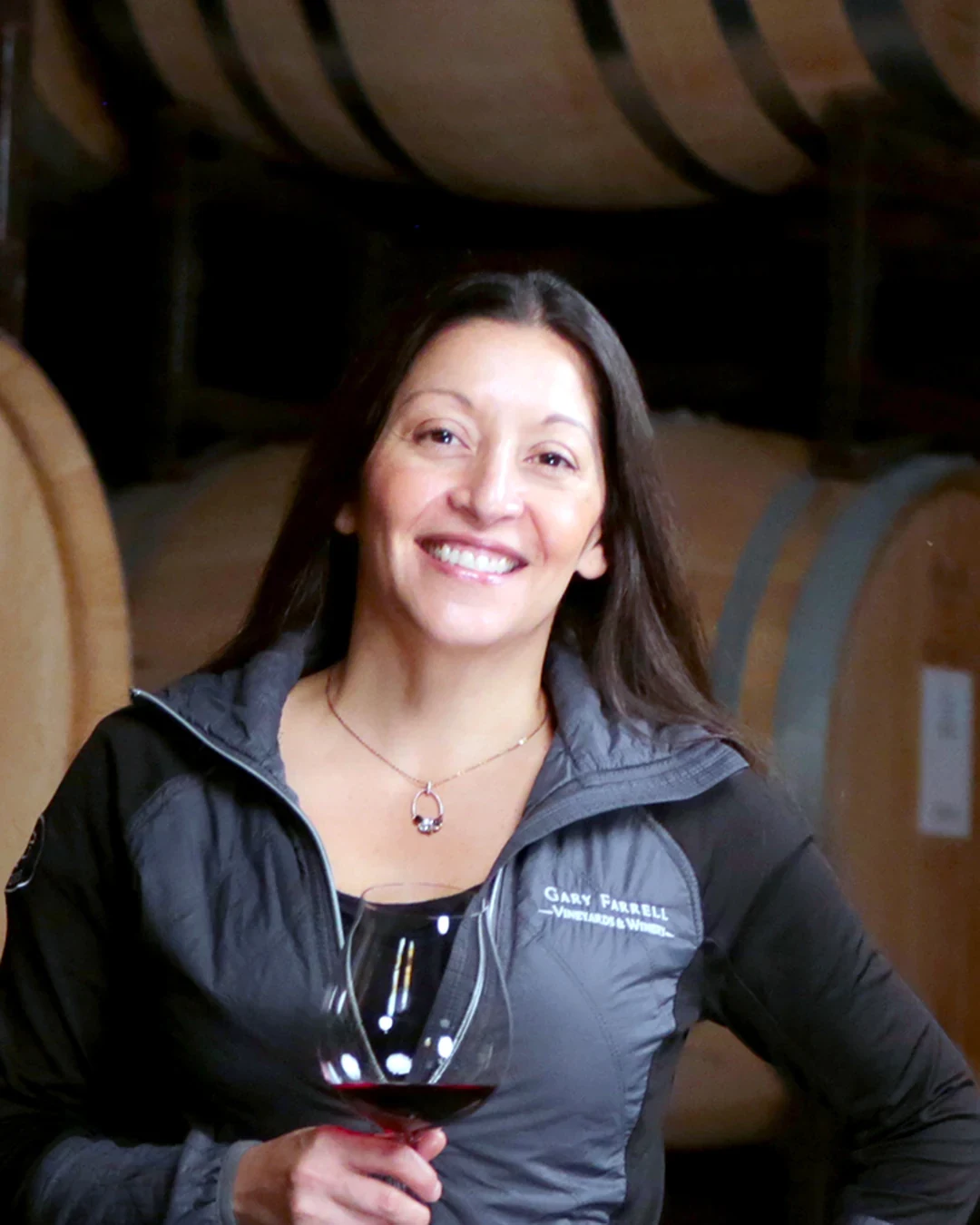

Theresa Heredia is winemaker at Freestone Vineyards in Freestone, where she makes Sonoma Coast Chardonnay and Pinot Noir.
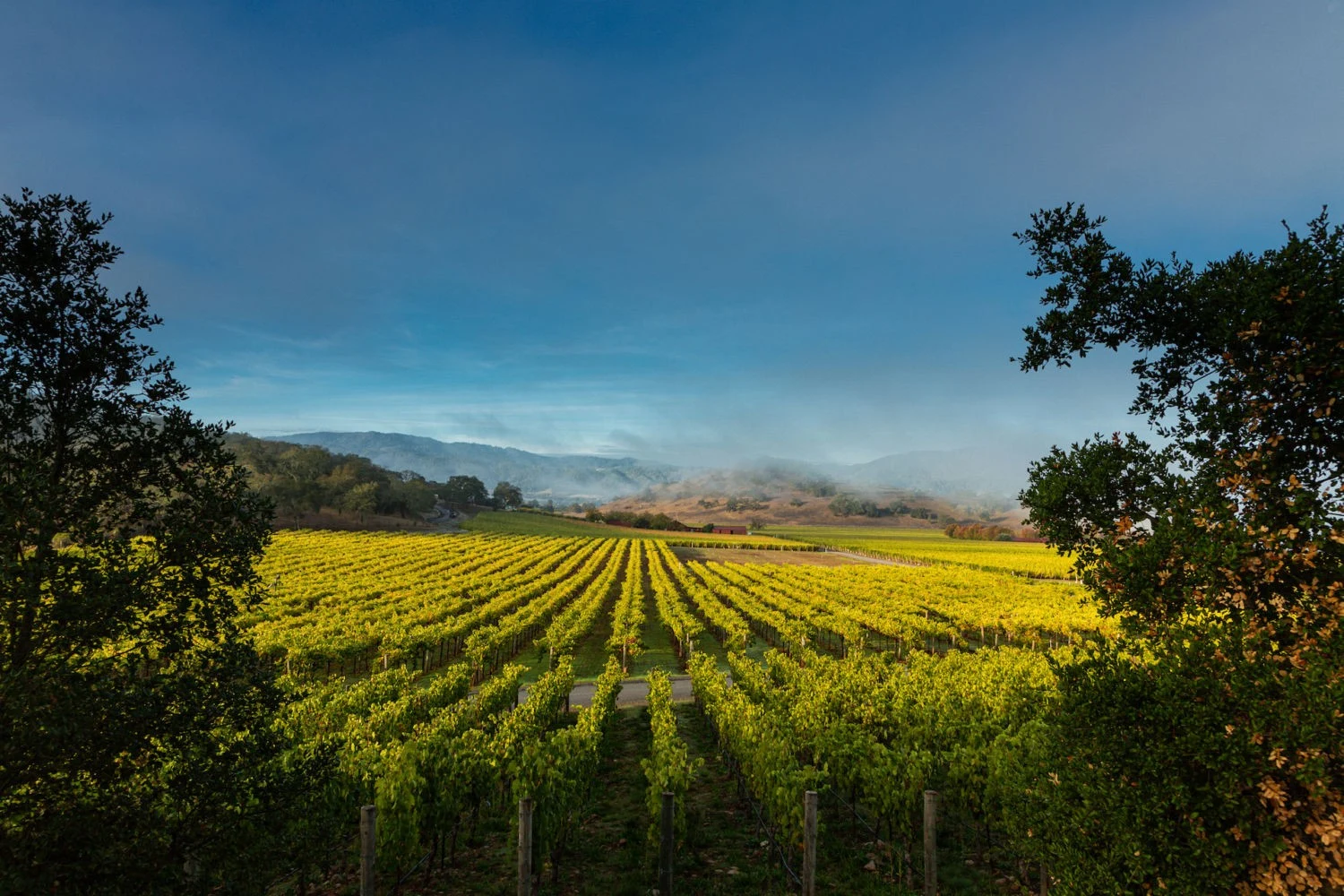
The fruit moves downward at Freestone Vineyards, where Theresa Heredia works as winemaker in Freestone, guiding Chardonnay and Pinot Noir from a Sonoma Coast site built to let gravity do part of the handling. Her bench was formed across harvest work, cellar instruction, and shifts in region: a harvest internship at Saintsbury in Napa Carneros, time as a teaching assistant at University of California, Davis, and a winemaking post at Domaine de Montille in France before the Joseph Phelps Freestone years. That path matters here because this is not a winery arranged around spectacle. The building asks for decisions made in sequence, from fruit reception to fermenters to barrel, with less reliance on pumping and more attention to how movement changes texture. Heredia has described her priority as respecting the fruit and trying to capture the essence of each place. At Freestone, that sentence has a physical setting: estate vineyards around the winery, coastal air shaping the raw material, and a cellar placed below ground for the cool, steady work of aging.
The clearest technical window into the Freestone program is the 2016 Freestone Vineyards Chardonnay, a wine stated as 100% estate grown from Freestone vineyards. It spent 13 months in French oak puncheons and barrels, with 35% new oak and 65% once-used oak, a proportion that gives the cellar a precise handhold: enough wood for breadth, not so much that the coastal line disappears. The wine is recorded at 14.1% alcohol and 2,725 cases, figures that place it in a focused estate register rather than a broad commercial one. Its frame is cool-climate Chardonnay, carried by acidity, citrus, apple, pear, yellow grapefruit, pineapple, and the pastry note that oak and time can bring when they stay in proportion. Pinot Noir sits beside Chardonnay in the identity of the estate, with the Sonoma Coast AVA supplying the colder argument for both varieties.
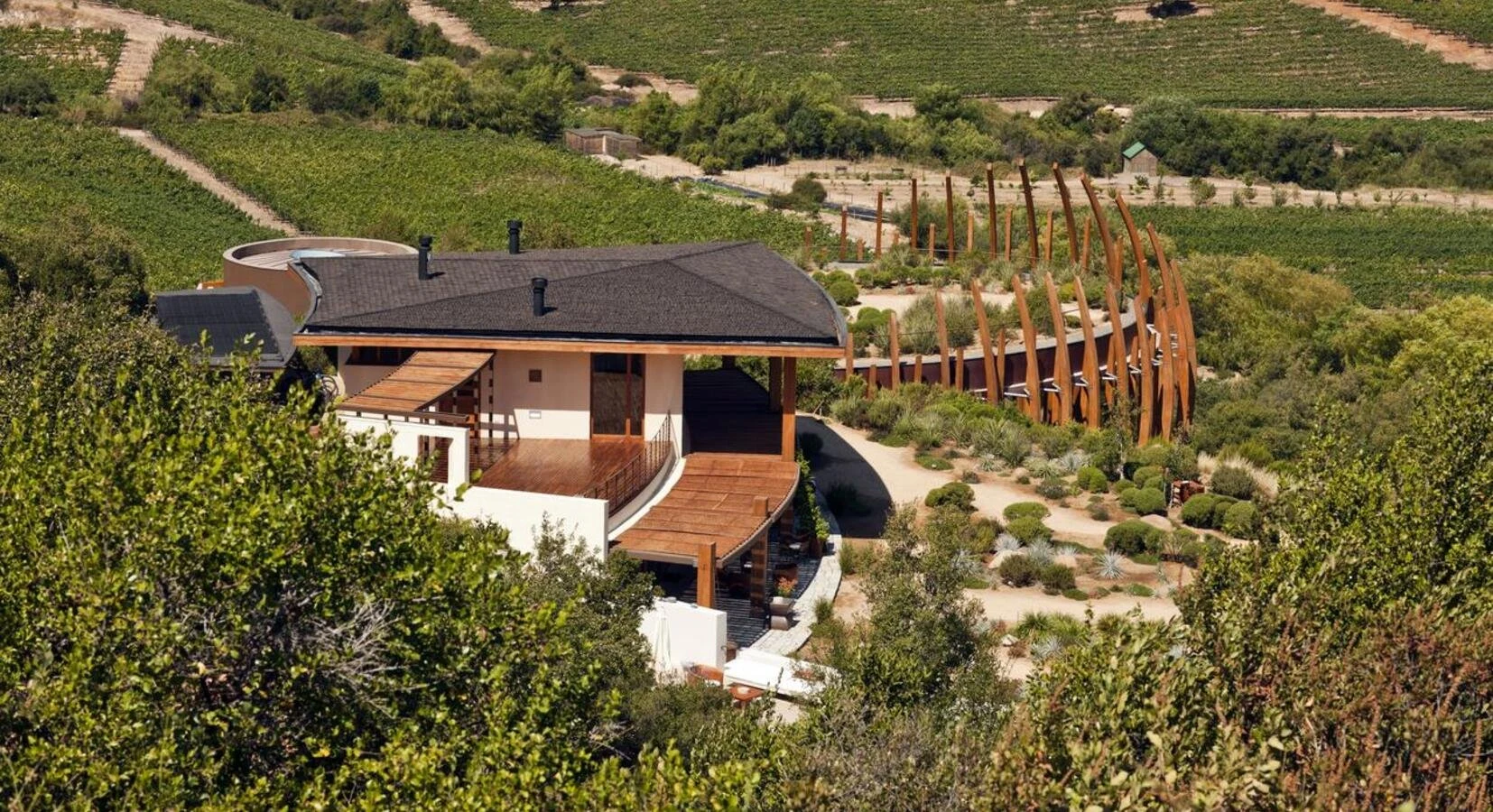
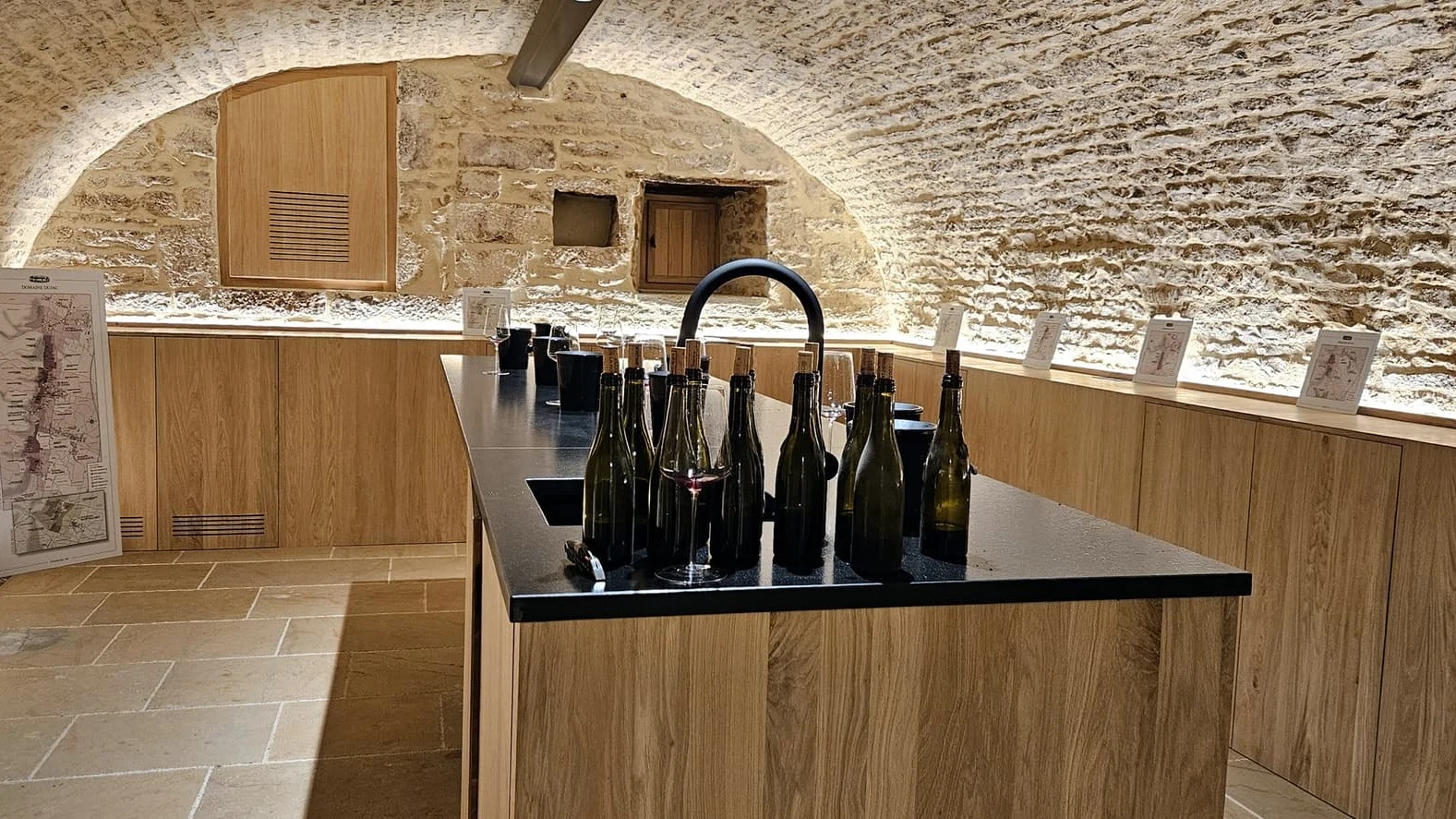
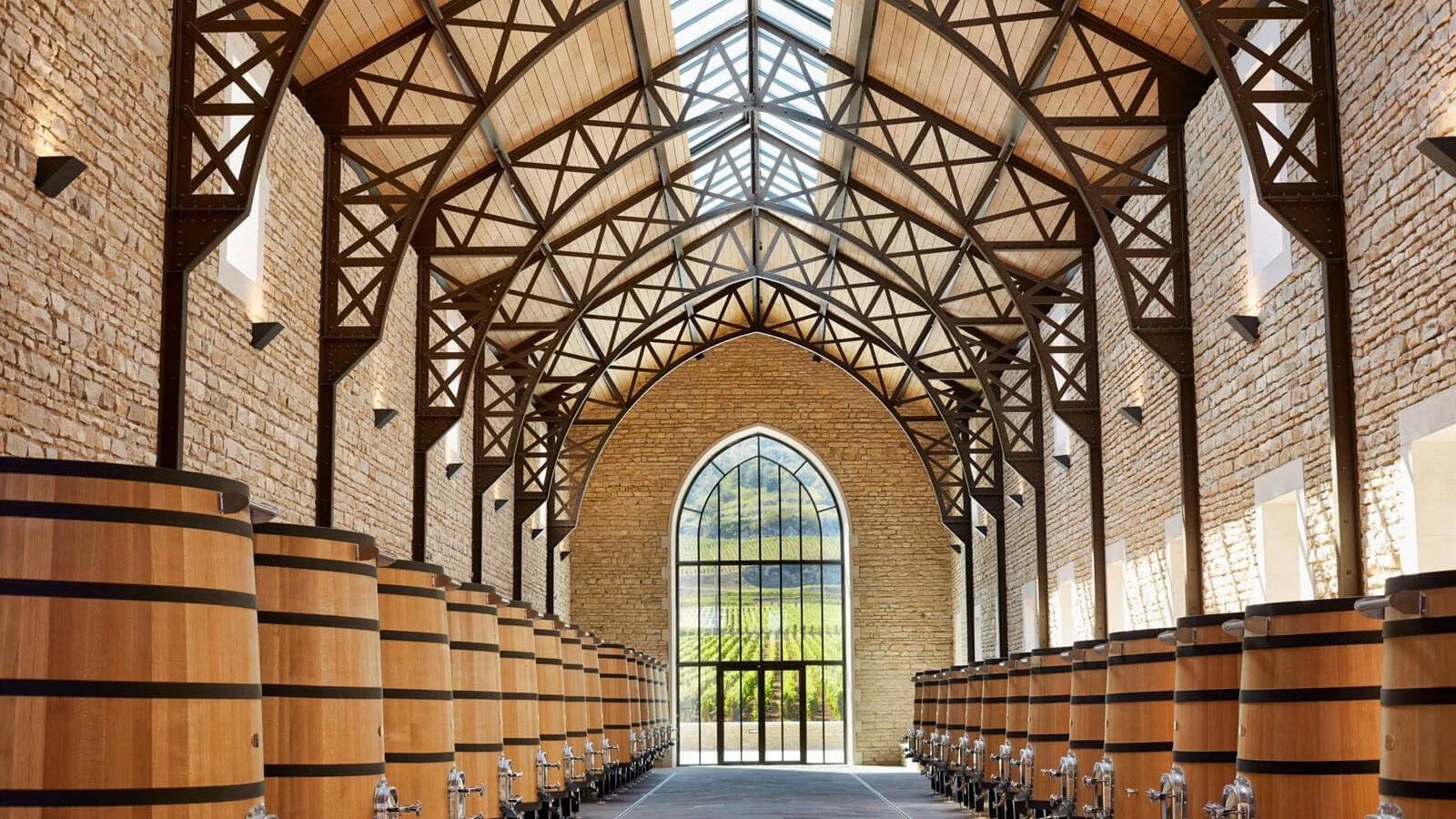
The winery reads as part of the vineyard rather than an object set upon it. Its three-story production building continues the contours of the Freestone estate, with a largely subterranean cellar that uses the earth for temperature and humidity. In the cellar, that choice is not decorative. It gives the wine a quieter passage, and it gives the people working there a room organized by sequence rather than show. Above ground, the Sonoma Coast landscape remains close: vines, low buildings, and the muted pace of a place where Chardonnay and Pinot Noir are the main subjects. The tasting room sits in that same mood, quiet and scenic, with the production logic still legible around it. Nothing here needs to raise its voice. The concrete fact is the descent from fermenters to barrels.
Freestone opened in 1999 under the Joseph Phelps banner, and its most durable idea remains the union of site, architecture, and cellar discipline. The wines may carry different names across releases, including Freestone Chardonnay, Fogdog Chardonnay, and Freestone Pinot Noir, but the working center is the same: cool Sonoma Coast fruit handled in a building designed to reduce force. If there is a next thing to keep in view, it is not a slogan or a visitor program. It is the continued reading of estate fruit through Chardonnay and Pinot Noir at Freestone Vineyards.
Freestone, California, Vereinigte Staaten
Freestone