Fry-ya
- 01CuisineModern Fried Japanese (Tonkatsu Specialist)
- 02CityTokyo, Japan
Panko, oil, heat, sixteen seats
- Michelin Bib Gourmand · Michelin Guide
- Tabelog 100 #31: 3.6pts · 2026
- Michelin Bib Gourmand · 2025
- Michelin Bib Gourmand · 2024
The fry station held close
The panko work at Fry-ya asks for restraint before it asks for heat. Owner-chef Nishiyama Michiyasu, Chef at Fry-ya in Takadanobaba, Tokyo, built the room around fried courses rather than abundance for its own sake. An Ehime native, he worked in upscale restaurants in Europe and in Tokyo’s Ginza before opening here, and the idea he brought was to take everyday fried food and give it the elegance usually reserved for tempura. That matters in a place where small portions carry the sequence, and where the kitchen has to make each cut, crumb, oil, and pause count.
The method is stated in terms of variables rather than flourishes: premium ingredients first, then breadcrumbs, oils and temperatures chosen for each item, lard for some, sesame for others, so the crust lands light and crisp while the interior stays juicy. Colour is part of the reading, with a delicate hue preferred to heavy browning. At Fry-ya, that patience meets a Japanese fried-food specialist’s format: tonkatsu, chicken breast croquette, mixed fry, seafood, and vegetables, each given enough space to register as its own course. The restaurant opened in September 2023, and its recognition has come quickly, with a Michelin Bib Gourmand attached to this basement address. The award is useful only because the cooking remains specific.
Small portions, separate oils, clean heat
Fry-ya does not treat frying as a single gesture. Lard appears for some items, sesame oil for others, with breading and temperature adjusted to the ingredient rather than imposed across the menu. The kitchen aims for a pale golden crust, not the deep brown shell of heavier tonkatsu houses. That choice changes the rhythm of the meal. Pork, lean chicken, seafood, and vegetables arrive as smaller cuts, closer to the pacing of tempura than to a large set meal centered on one cutlet.
The structure gives the cook less room to hide. A small piece of tonkatsu has to keep its juice under the crust; a chicken breast croquette has to carry tenderness without weight; mixed fry has to feel like a progression, not a plate of repetition. Fry-ya's evening courses are built around that progression, with 14 items in the longer formats and 6 items in the shorter one. Lunch turns the same discipline toward mixed-fry sets with rice and miso soup. Across both, the bench work is the point: crumb, oil, heat, rest, and the short interval before the next piece reaches the counter.
Sixteen seats below the street
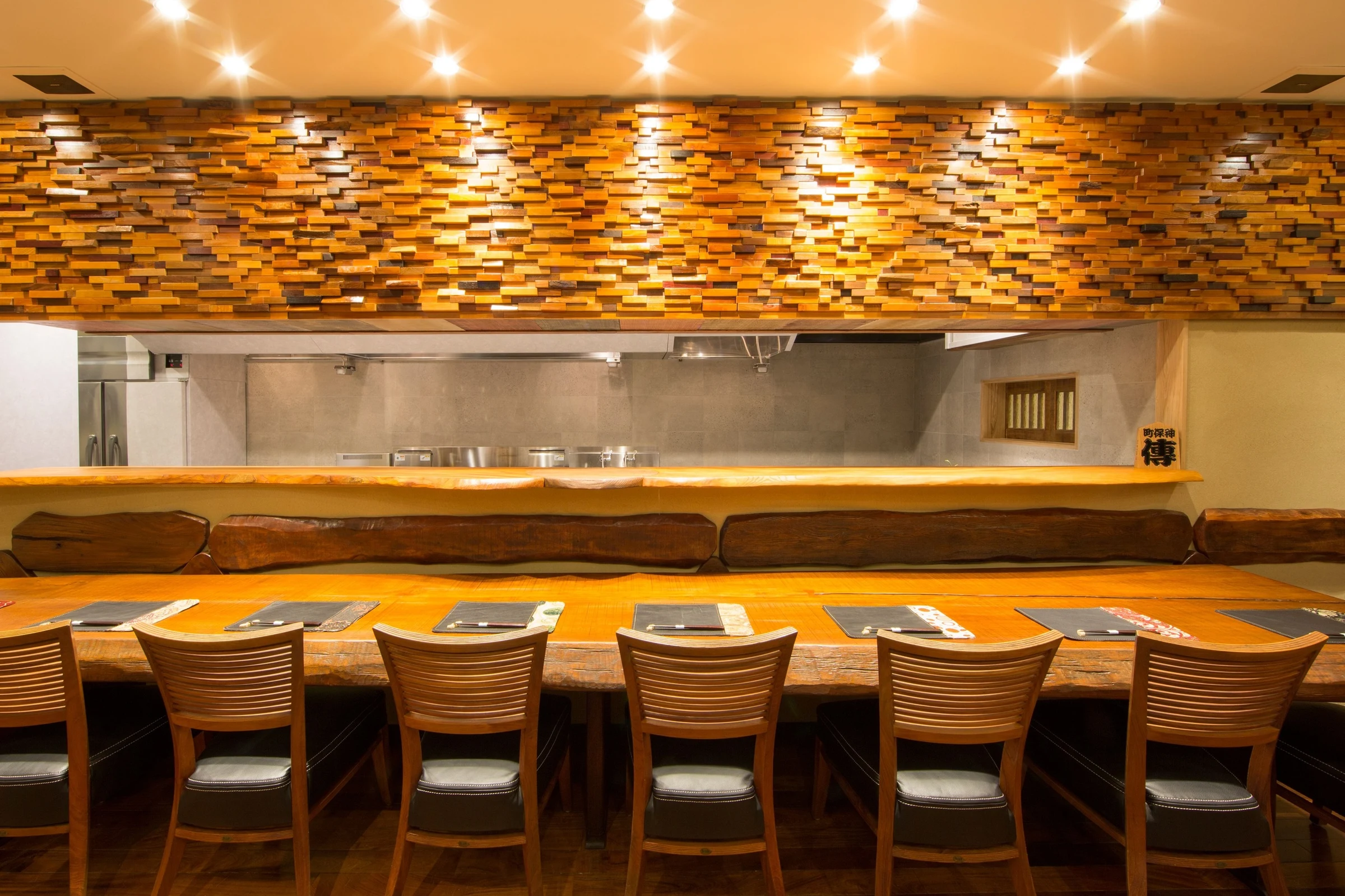
The room sits in Ozawa Building B1F, a small white basement reached from the Takadanobaba street above. Inside, 16 counter seats keep the pass near the guest. There is little distance between the fry station and the plate, so the sensory order is immediate: the dry sound of panko meeting oil, the brief lift from the pan, the cut surface shown before the sauce arrives. The room stays calm rather than hushed, with a relaxed counter pace that suits a sequence of small fried courses.
That intimacy makes the restaurant's scale part of the craft. A basement counter cannot lean on spectacle for long; it has to return to timing. The discipline of choosing product carefully and letting technique stay quiet finds a clear frame in a room this small. What remains is the thing in front of the hands: Fry-ya's tonkatsu, cut while the crust still holds its heat.
Questions
Frequently asked
What kind of restaurant is Fry-ya?
Fry-ya is a small Tokyo counter in Takadanobaba focused on modern Japanese fried food, with tonkatsu at the centre of the menu.
Who opened Fry-ya?
The restaurant was opened by owner-chef Nishiyama Michiyasu, who is from Ehime and worked in upscale restaurants in Europe and in Tokyo’s Ginza before opening here.
What are the signature dishes?
Tonkatsu, chicken breast croquette, and mixed fry are among the signature dishes, and the menu also includes seafood and vegetables.
Has Fry-ya received any recognition?
Fry-ya has a Michelin Bib Gourmand.
What are the opening days and booking notes?
Fry-ya is open Monday, Tuesday, Friday, and Saturday for lunch and dinner, and it is closed on Wednesday, Thursday, and Sunday. Reservations are recommended.
The field
How it compares
| Place | Cuisine | Notes | Awards |
|---|---|---|---|
| Fry-ya | Modern Fried Japanese (Tonkatsu Specialist) | Shinjuku, $$ | · |
| Den | Modern Japanese Kaiseki | Tokyo | Michelin 2 Stars, World's 50 Best |
| Florilège | Modern French-Japanese Plant-Based Fine Dining | Tokyo | Michelin 2 Stars, World's 50 Best |
| Narisawa | Modern Japanese Satoyama Fine Dining | Tokyo | Michelin 2 Stars, World's 50 Best |
| Quintessence | Modern French Fine Dining | Tokyo | Michelin 3 Stars |
| Sazenka | Modern Chinese Fine Dining | Tokyo | Michelin 3 Stars, World's 50 Best |
| Sézanne | Modern French Fine Dining | Tokyo | Michelin 3 Stars, World's 50 Best |
Similar places
Modern Japanese Kaiseki
Den
Tokyo, Japan
★★ · 50 Best
Modern French-Japanese Plant-Based Fine Dining
Florilège
Tokyo, Japan
★★ · 50 Best
Modern Japanese Satoyama Fine Dining
Narisawa
Tokyo, Japan
★★ · 50 Best
Modern French Fine Dining
Quintessence
Tokyo, Japan
★★★
Modern Chinese Fine Dining
Sazenka
Tokyo, Japan
★★★ · 50 Best
Modern French Fine Dining
Sézanne
Tokyo, Japan
★★★ · 50 Best