Made ByWinery
Fundo Los Nichos
- 01CityPisco Elqui, Chile
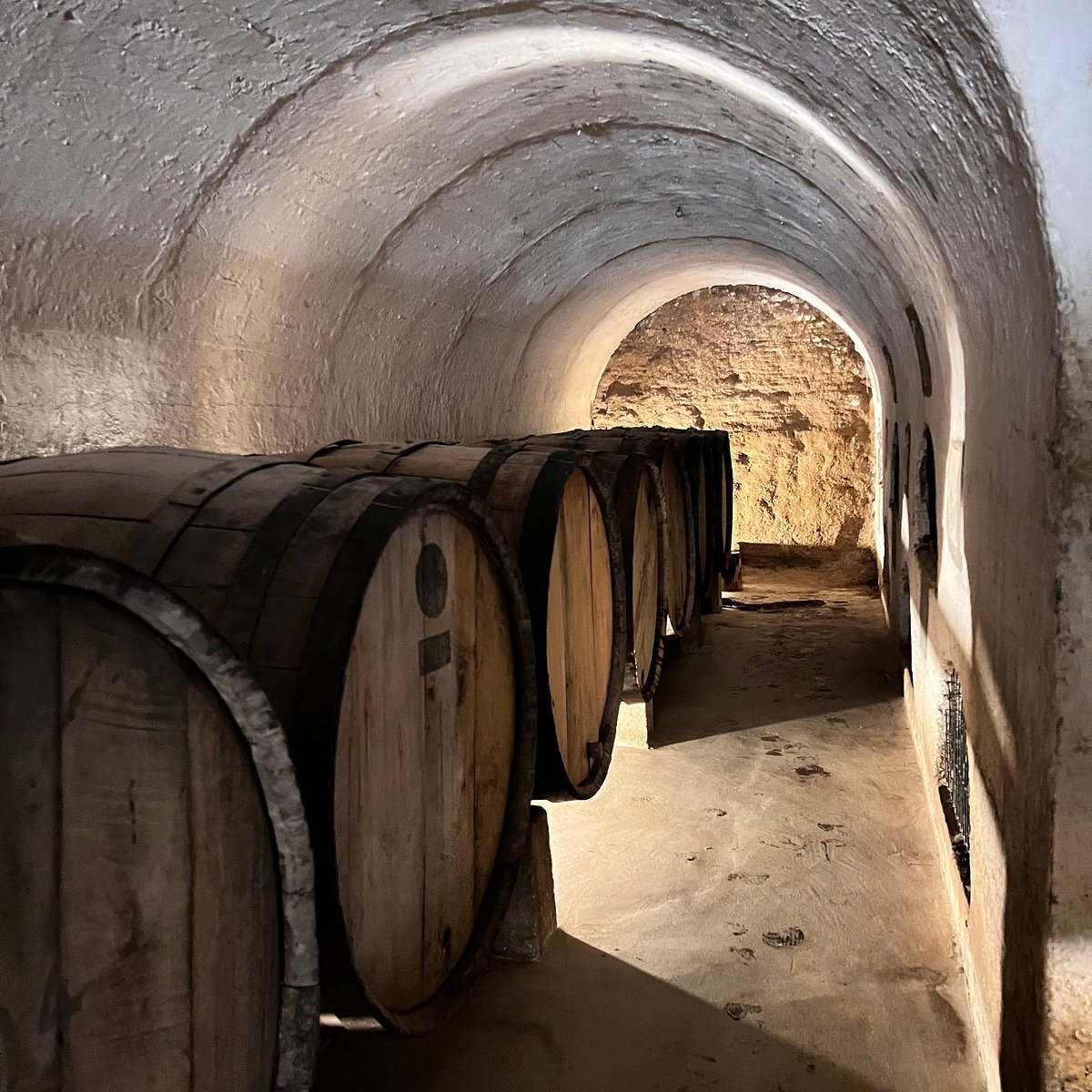
Fundo Los Nichos sits in the Elqui Valley's upper reaches near Pisco Elqui, where extreme altitude, intense UV radiation, and near-zero humidity define what grows and how it tastes. Awarded Pearl 2 Star Prestige recognition in 2025, it occupies a tier of the valley reserved for producers treating the high-desert terroir as a precision instrument rather than a backdrop.
At a glance
- Price
- $$
- Per person
- $8
- Neighborhood
- Pisco Elqui
Where the Elqui Valley Speaks Most Clearly
The road into Los Nichos, following address marker D-485 on the Paihuano stretch of Coquimbo region, narrows as the valley walls close in. The Elqui River runs leaner here than it does at sea level. The sky, at this elevation and latitude, is a shade of blue that photographers come from across South America to chase, and the light hitting the stone and scrub carries a directness that feels almost aggressive by mid-morning. This is not a gentle agricultural landscape. The Elqui Valley's upper communes, Paihuano among them, sit at altitudes where diurnal temperature swings can exceed 20°C in a single day, and where annual rainfall rarely clears 100mm. What survives here does so by developing concentration, aromatic intensity, and structural resilience that lower-valley growing cannot replicate.
Fundo Los Nichos, earning a Pearl 2 Star Prestige rating in 2025, sits inside that environmental argument. The recognition places it within a select group of Chilean producers whose output reflects not just competent winemaking or distilling, but a convincing translation of place into bottle.
The Elqui Terroir Case, Made in Detail
Elqui is one of the few wine and pisco-producing zones in the world where viticulture operates under near-desert conditions with deliberate intent. The Atacama Desert's southern edge exerts real influence here: irrigation is mandatory, UV radiation accelerates phenolic development, and the dry air suppresses fungal pressure to the point where many producers work with minimal intervention in the vineyard. What that combination yields, in varieties suited to the conditions, is fruit with thick skins, concentrated sugars, and aromatic profiles that tend toward floral and mineral rather than the jammy fruit registers of warmer, wetter valleys.
Muscat varieties, particularly Muscat of Alexandria (locally Moscatel Rosada) and the more refined Pedro Jiménez, have long dominated the Elqui growing calendar. Both serve dual purposes: table and pisco production. The distillation tradition in this valley predates the modern wine industry's interest in the region by several centuries, and the geography that makes pisco compelling here, altitude, heat differential, mineral-rich soils with low organic content, is the same geography now attracting wine-focused producers looking for conditions that resist easy replication elsewhere in Chile.
For context on how the broader Chilean wine and spirit industry has developed across contrasting geographies, producers such as Viña Falernia in nearby Vicuña have spent decades making the case for Elqui Valley viticulture, while the Central Valley's established houses, including Viña Casa Silva in San Fernando, Viña De Martino in Isla de Maipo, and Viña Undurraga in Talagante, operate under fundamentally different climatic premises. The comparison is instructive: what the Central Valley achieves through deep soils, reliable rainfall, and moderate maritime influence, the Elqui achieves through extremity.
Pisco Elqui as a Destination, Not Just a Detour
The village of Pisco Elqui, formerly called La Unión before a municipal renaming in the 1930s designed partly to cement regional identity in the ongoing pisco-denomination dispute with Peru, has a particular character among Chilean small-town destinations. It functions as a kind of gravitational point for the valley's tourism: small enough to feel unhurried, developed enough to support a range of visitor experiences without sacrificing the quietness that makes it worth the drive from La Serena (roughly 100km southeast, on roads that reward patience).
The local pisco tradition is central to any honest account of the area. Destilería Pisco Mistral, located in the village itself, offers one of the more structured introductions to how the spirit is made and what the valley's Muscat-forward raw material contributes to the final product. Understanding that context sharpens what a visit to a producer like Fundo Los Nichos can mean: you are not arriving at an isolated data point, but at one entry in a long conversation between this specific terrain and the people who have chosen to work it.
For those building a wider itinerary across Chilean wine country, the contrast between Elqui and more southerly appellations is worth planning deliberately. Viña MontGras in Palmilla, Viña Valdivieso in Lontué, and El Gobernador (Miguel Torres Chile) in Curicó represent the Central Valley at different scales and ownership structures, while Viña Seña in Panquehue anchors a different tier of Aconcagua production. None of them are making the same terroir argument that Elqui producers make, which is precisely the reason to include the north in any serious Chilean itinerary. The full Pisco Elqui guide on EP Club maps these producers and experiences in detail.
What the 2025 Pearl 2 Star Rating Signals
EP Club's Pearl 2 Star Prestige rating in 2025 is awarded to producers whose output merits serious attention from collectors and experienced visitors, not merely casual tourists. At this tier, the expectation is that the place itself, its setting, its production approach, and its product, holds together as a coherent proposition. For Fundo Los Nichos, that proposition is anchored in geography: Los Nichos, as a sub-location within Paihuano commune, sits far enough up-valley that the conditions described above are felt at their most concentrated. The rating confirms what the location already suggests.
For those accustomed to benchmarking against international reference points, it is worth noting that high-altitude desert viticulture of this kind has close analogues in northern Argentina's Cafayate and Mendoza highlands, and more distant ones in Spain's Canary Islands, where volcanic soils and extreme UV produce similarly atypical aromatics. The Elqui Valley has not yet achieved the export profile of those regions, which means the current window for visiting before wider recognition shifts the dynamic is real, even if impossible to quantify precisely.
Planning a Visit
Fundo Los Nichos is located at D-485 24500 Los Nichos S/N, Paihuano, in the Coquimbo region. The site sits within the Elqui Valley's upper corridor, accessible by road from Pisco Elqui village. Prospective visitors are advised to approach through the broader Pisco Elqui visitor infrastructure. The valley's tourist traffic concentrates in January and February, when visiting outside peak summer months reduces wait times and allows for more considered conversations at smaller producers.
For context on how other high-altitude and specialist Chilean producers manage visits, producers such as Pisco Alto del Carmen Distillery in Huasco offer a parallel reference point in the adjacent Huasco Valley, where the pisco tradition meets similarly arid conditions. Those planning longer circuits through Chile's northern wine and spirit country will find that routing through both Elqui and Huasco reveals how two valleys with overlapping climatic logic have arrived at distinct production cultures.
Producers earning recognition at the Pearl 2 Star Prestige level, as Fundo Los Nichos has in 2025, merit advance planning. Access to smaller producers has become more competitive than it was even five years ago. Viña Ventisquero and Viña Santa Rita, both operating at significant commercial scale from Santiago and Buin respectively, represent the end of the spectrum furthest from what Los Nichos offers. The contrast is not a quality judgment but a structural one: what this valley produces at this address is the result of conditions that cannot be franchised or replicated at volume.
Know before you go
- Dress code
- casual
- Reservations
- walk_in_friendly
- Parking
- on_site_lot
- Payment
- cash
- Children
- Welcomed
Frequently asked
What recognition does Fundo Los Nichos have?
Fundo Los Nichos has received recognition including: Pearl 2 Star Prestige (2025).
What's the address for Fundo Los Nichos?
Fundo Los Nichos is located at D-485 24500 Los Nichos S/N, Paihuano, Coquimbo, Pisco Elqui.
What do visitors recommend trying at Fundo Los Nichos?
Fundo Los Nichos operates in one of Chile's most demanding viticultural zones, where near-desert altitude conditions in the upper Elqui Valley shape everything the estate produces. Given its Pearl 2 Star Prestige rating from EP Club in 2025, the estate's core production is the primary draw.
What makes Fundo Los Nichos worth visiting?
The Pearl 2 Star Prestige rating awarded by EP Club in 2025 places Fundo Los Nichos among producers whose output merits serious attention from collectors and experienced visitors. The estate sits in the upper corridor of the Elqui Valley near Paihuano, a stretch where valley walls narrow and altitude intensifies growing conditions in ways that are unusual even by Elqui standards. The combination of documented producer quality and a location that rewards the detour from Pisco Elqui village makes the case on its own terms.
What's the best way to book Fundo Los Nichos?
No website or phone number is listed in current records for Fundo Los Nichos, so advance contact through regional tourism networks in Pisco Elqui or the Paihuano municipality is a practical starting point. The physical address is D-485 24500 Los Nichos S/N, Paihuano, Coquimbo. Given the estate's 2025 Pearl 2 Star Prestige recognition, demand from serious visitors has likely increased, making early planning advisable.
What does EP Club's Pearl 2 Star Prestige rating mean for Fundo Los Nichos?
EP Club's Pearl 2 Star Prestige is awarded to producers whose output warrants attention from collectors and informed visitors, not simply those with strong local presence. For Fundo Los Nichos, receiving that designation in 2025 positions the Paihuano estate within a comparable set defined by production quality rather than marketing profile. It is one of the clearest verifiable credentials currently attached to this Elqui Valley address.
Who tends to like Fundo Los Nichos most?
The audience that responds most strongly to Fundo Los Nichos is one already oriented toward producer-level visits rather than casual tastings: collectors, spirits and wine researchers, and travellers building itineraries around Chile's lesser-documented growing regions. The EP Club Pearl 2 Star Prestige designation in 2025 functions as a signal for that group specifically. Visitors to Pisco Elqui who want to move beyond the village's more accessible stops will find the Paihuano road into Los Nichos worthwhile.
Address
D-485 24500 Los Nichos S/N, Paihuano, Coquimbo
Pisco Elqui
How it compares
Fundo Los Nichos
- Cuisine
- Moscatel, Torontel
- Price
- $$
- Awards
- 1 recognition
- Notes
- Pisco Elqui
Destilería Pisco Mistral
- Cuisine
- Muscat, Pedro Jiménez
- Price
- $$
- Awards
- 1 recognition
- Notes
- Pisco Elqui
Pisco Mal Paso
- Cuisine
- Winery
- Price
- —
- Awards
- 1 recognition
- Notes
- Vicuña
Pisquera ABA
- Cuisine
- Muscat
- Price
- $$
- Awards
- 1 recognition
- Notes
- El Arenal
Capel Pisco Plant
- Cuisine
- Muscat of Alexandria, Pink Muscat
- Price
- $$
- Awards
- 1 recognition
- Notes
- Vicuña
Pisco Control C
- Cuisine
- Winery
- Price
- —
- Awards
- 1 recognition
- Notes
- Paihuano