
- Falstaff Winery - Listed · 2026
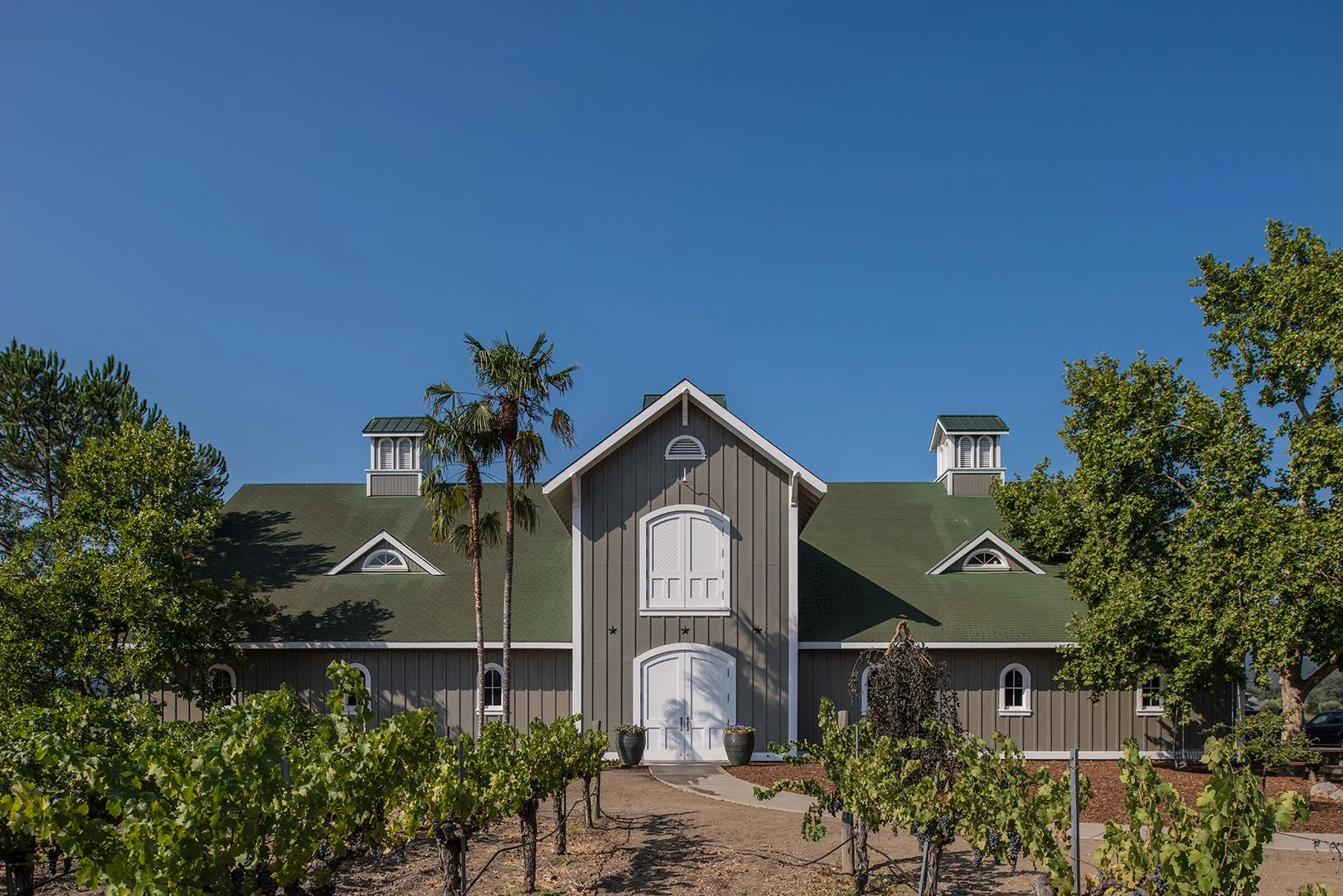
Gallica is a small, hands-on estate in St. Helena, centered around a handsome contemporary barn set among historic vines, gardens, olives, and coastal oaks. The mood is elegant and quiet rather than showy, with an emphasis on restraint, aromatic expression, and organically farmed wines. It reads as the kind of place where the surrounding agricultural landscape matters as much as the architecture, and where the impression is built through proportion, calm, and a close relationship between site and bottle.
St. Helena wines in a restrained estate setting
Gallica is best understood through its setting and tone: a contemporary barn, mature agricultural surroundings, and a polished but understated approach. The picture is of a smaller estate where the landscape and the wines are closely connected, not a venue defined by spectacle or excess. In St. Helena, where many wine experiences can feel highly produced, Gallica’s appeal rests in a quieter register: historic vines, gardens, olives, and coastal oaks framing a contemporary structure that feels composed rather than grandiose.
The available information supports a broad reading of the house style rather than a detailed inventory of grapes, bottlings, or production methods. What can be said with confidence is that Gallica emphasizes elegance, restraint, aromatic expressiveness, and organic farming. Those words suggest wines presented through balance and clarity, with fragrance and nuance carrying the experience rather than sheer weight or overt display. The estate’s identity is therefore best approached through texture and sensibility: a restrained style, a calm setting, and a farming-first point of view.
That makes the estate a fit for visitors who value quiet atmosphere in St. Helena. Specific claims about named bottlings, winemaking personnel, vineyard dates, soil types, visit formats, or appointment policies are not included here. Rather than filling in those gaps with assumptions, the safer and more useful way to describe Gallica is to stay close to what is known: a small, hands-on estate with organic farming at the center of its profile, set within a layered agricultural environment and presented with polish.
Organic farming is central to the identity
Organic farming is not a side note in Gallica’s profile; it is part of the identity of the estate. The wines are described around organic farming, aromatic expression, and a restrained sense of polish. That combination gives the property a clear editorial shape: Gallica is not merely positioned as a scenic St. Helena stop, but as an estate whose farming language helps define how the wines are understood.
The estate setting reinforces that impression. Historic vines, gardens, olives, and coastal oaks give Gallica a grounded, agricultural context in St. Helena, while the contemporary barn adds a more refined architectural note. The contrast is part of the appeal: old and living elements in the landscape, balanced by a clean, modern structure. Nothing in the description needs to be overstated for the point to come through. The setting already conveys a sense of cultivation, care, and restraint.
For readers comparing St. Helena wine experiences, Gallica stands out less for a checklist of disclosed amenities and more for the coherence of its mood. The available description points to an estate where organic farming, aromatic expression, and an understated style are aligned. Visitors interested in that kind of experience should think of Gallica as a quieter counterpoint within the area: polished, but not flashy; agricultural, but not rustic in a casual sense; contemporary, yet rooted in historic vines and established plantings.
What Gallica adds to a St. Helena visit
Gallica’s character points toward a restrained, quietly elegant presence in St. Helena. Rather than leaning on unconfirmed claims about a particular visit structure, menu, or hospitality format, the estate is best described by its setting and its emphasis on organically farmed, aromatically expressive wines. That description is useful because it sets expectations without overpromising. The draw is not framed around a scripted experience, a named tasting lineup, or a list of extras, but around atmosphere, farming, and style.
The price tier is listed as $$$. Beyond that, details such as exact fees, opening hours, walk-in policy, seating style, or reservation requirements should be confirmed directly before planning a visit. This is especially important for a smaller estate, where assumptions about access or format can easily lead to confusion. The most accurate planning stance is to treat Gallica as a distinctive St. Helena estate with a defined aesthetic, then verify the practical details through current direct information.
For planning around St. Helena, pair Gallica with other dining, lodging, and experience options in the area as needed, keeping the focus here on the estate’s quiet setting, contemporary barn, historic vines, gardens, olives, coastal oaks, and restrained wine style. Its role in an itinerary is likely strongest for visitors who appreciate calm design, organic farming, and wines described through elegance and aromatics rather than intensity alone. In that sense, Gallica adds a composed, reflective note to a St. Helena day.
Further reading can stay centered on Gallica and other St. Helena options without relying on comparisons or unrelated named venues. The essential profile is already clear: a small, hands-on estate, refined but quiet, shaped by organic farming and set within a carefully held agricultural landscape.
Questions
Frequently asked
Who works at Gallica?
Made By profiles Rosemary Cakebread (Winemaker) at Gallica.
How expensive is Gallica?
Gallica is listed at a price level of $$$.
The field
How it compares
| Place | Notes |
|---|---|
| Gallica | St. Helena, $$$ |
| Abreu Vineyards | St. Helena |
| Continuum Estate | St. Helena |
| Corison Winery | St. Helena |
| Ovid Napa Valley | St. Helena |
| Sloan Estate | St. Helena |
| Spottswoode Winery | St. Helena |