- Tabelog Bronze #76: 3.8pts · 2026
- Opinionated About Dining Top Restaurants in Japan Recommended · 2026
- Tabelog 100 #28: 3.8pts · 2025
- Opinionated About Dining Top Restaurants in Japan Ranked #221 · 2025
- Tabelog Bronze · 2025
- Opinionated About Dining Top Restaurants in Japan Ranked #282 · 2024
- Opinionated About Dining Top Restaurants in Japan Highly Recommended · 2023
The Seventh Floor and the Street Below
Ginza's ground level runs on retail logic: flagships, windows, foot traffic. What happens above the third floor is a different city. Ginza Fujiyama is a Tokyo restaurant serving Kyoto Kaiseki in Ginza, with 4.7 Google rating and dinner priced at about ¥400 per person. The Morita Building on 3-chome sits in the quieter grid between Ginza-dori and Sotobori-dori, and its seventh floor is where Ginza Fujiyama operates, removed from the street by an elevator ride that functions less as ascent and more as transition. Up here, the ambient noise of one of Tokyo's most commercially saturated districts drops away entirely, and kaiseki takes over.
That spatial logic is not incidental. Ginza has long been home to formal Japanese dining that uses building height to separate the experience from the commerce below. Restaurants in this tier don't need street presence; their clientele navigates by reservation confirmation rather than signage. Ginza Fujiyama, which arrived into a neighbourhood already well-practised at this model, and the 16-seat room, counter seating alongside private room capacity for up to eight, fits the established format for serious kaiseki in this part of the city.
Kaiseki in the Ginza Context
Tokyo's kaiseki offerings vary widely. At the leading sit restaurants like Kikunoi Tokyo, operating with Michelin recognition and multi-decade reputations; at the other end, the city has a long tail of smaller Japanese restaurants serving kaiseki-adjacent multi-course meals without the formal credentials. The middle tier, where a Tabelog score above 3.8 signals genuine kitchen seriousness without necessarily crossing into three-star territory, is where informed Tokyo diners often find the most consistent value relative to price.
Ginza Fujiyama sits in that middle-upper band, priced at JPY 50,000 to 59,999 for dinner, which puts it on par with or slightly below comparison venues in the Michelin-starred bracket. RyuGin, for instance, operates at a similar price point but with Michelin three-star recognition; Den carries two Michelin stars at a lower price floor. Ginza Fujiyama's positioning, backed by a Tabelog score of 3.84 and seven consecutive Bronze Awards (2020 to 2026), reflects a kitchen that has earned sustained peer recognition through the Japanese dining community's own ranking infrastructure rather than through international award cycles.
For visitors already familiar with kaiseki traditions elsewhere in Japan, say, through Gion Sasaki in Kyoto or Ifuki, the Tokyo kaiseki room operates in a distinct register. Kyoto kaiseki tends toward stricter seasonality signalling and a certain ceremonial formality tied to the city's culinary history. Tokyo tables, including those in Ginza, have absorbed more contemporary influence and often run with slightly less rigid structure, though the course format and ingredient philosophy remain aligned.
What the Awards Record Tells You
Seven Bronze Awards in sequence, from 2020 through 2026, is not a streak that happens by accident. The Tabelog Award structure distributes Bronze to restaurants scoring consistently above 3.8. A 3.84 score at the 2026 award cycle, combined with three separate appearances on the Tabelog 100 Tokyo Japanese cuisine list (2021, 2023, 2025), places Ginza Fujiyama in a cohort of fewer than 100 Japanese restaurants across the entire Tokyo metropolitan area.
The Opinionated About Dining ranking adds a second external data point: ranked 221st among all restaurants in Japan for 2025, up from a 2023 "Highly Recommended" designation and a 2024 ranking of 282nd. That upward trajectory across three consecutive years of OAD assessment suggests a kitchen gaining ground rather than holding steady.
For comparison, restaurants like Hirosaku and Ajihiro operate within Tokyo's broader Japanese cuisine ecosystem. The kaiseki-specific comparable set narrows further: within Ginza itself, very few restaurants carry both a Tabelog score above 3.8 and multi-year Tabelog 100 selection in the Japanese cuisine category simultaneously.
The Room Itself
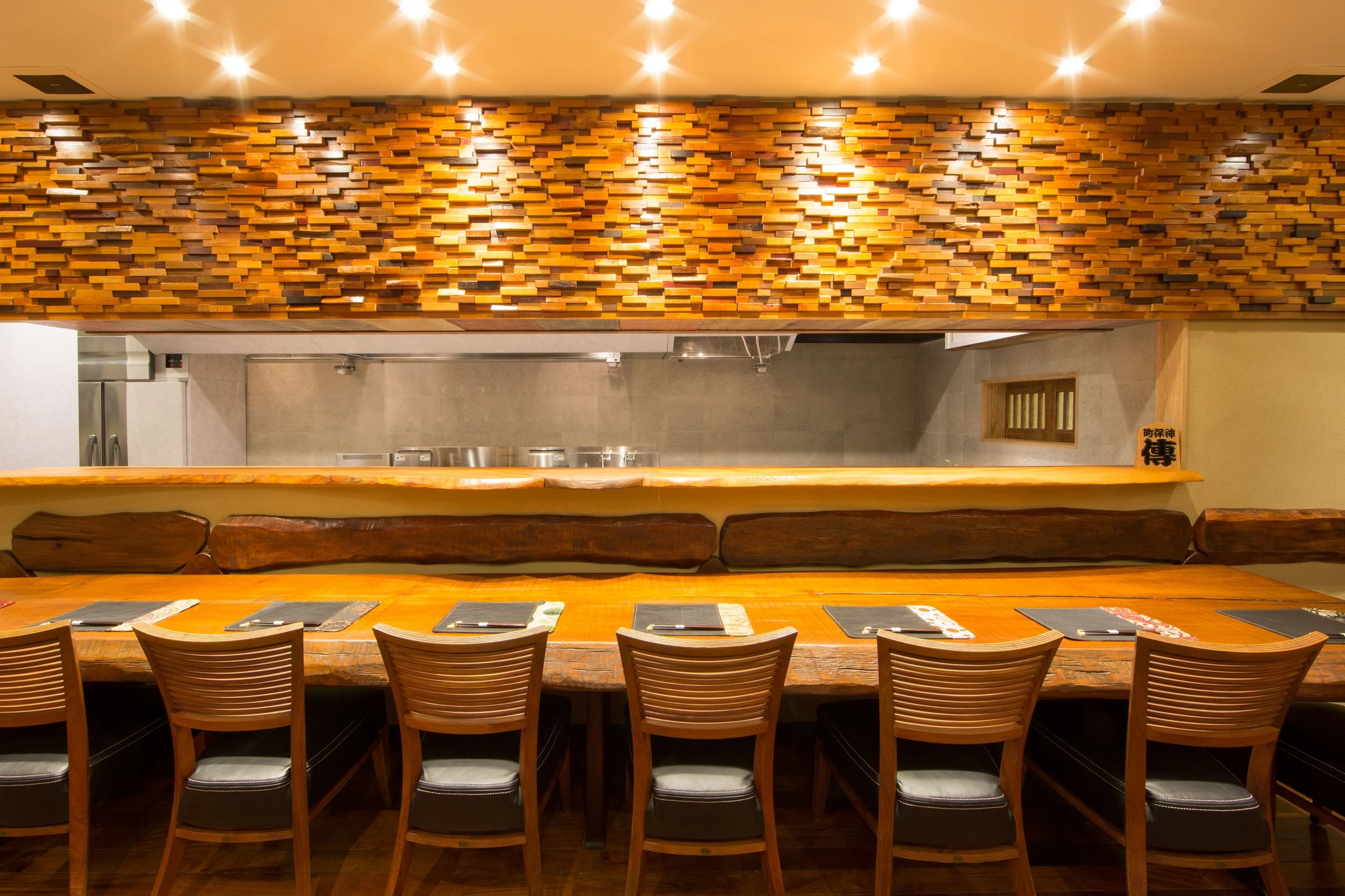
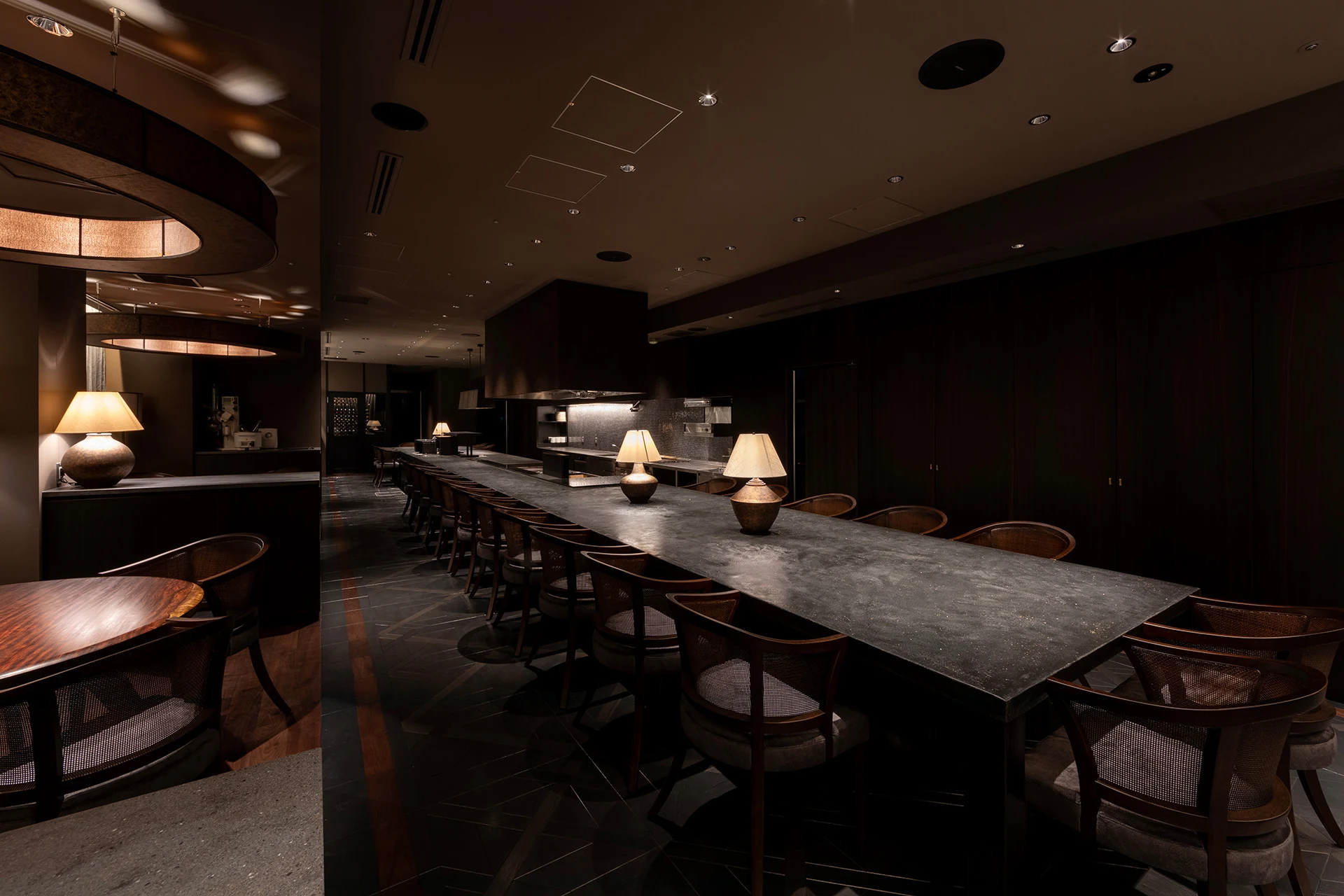
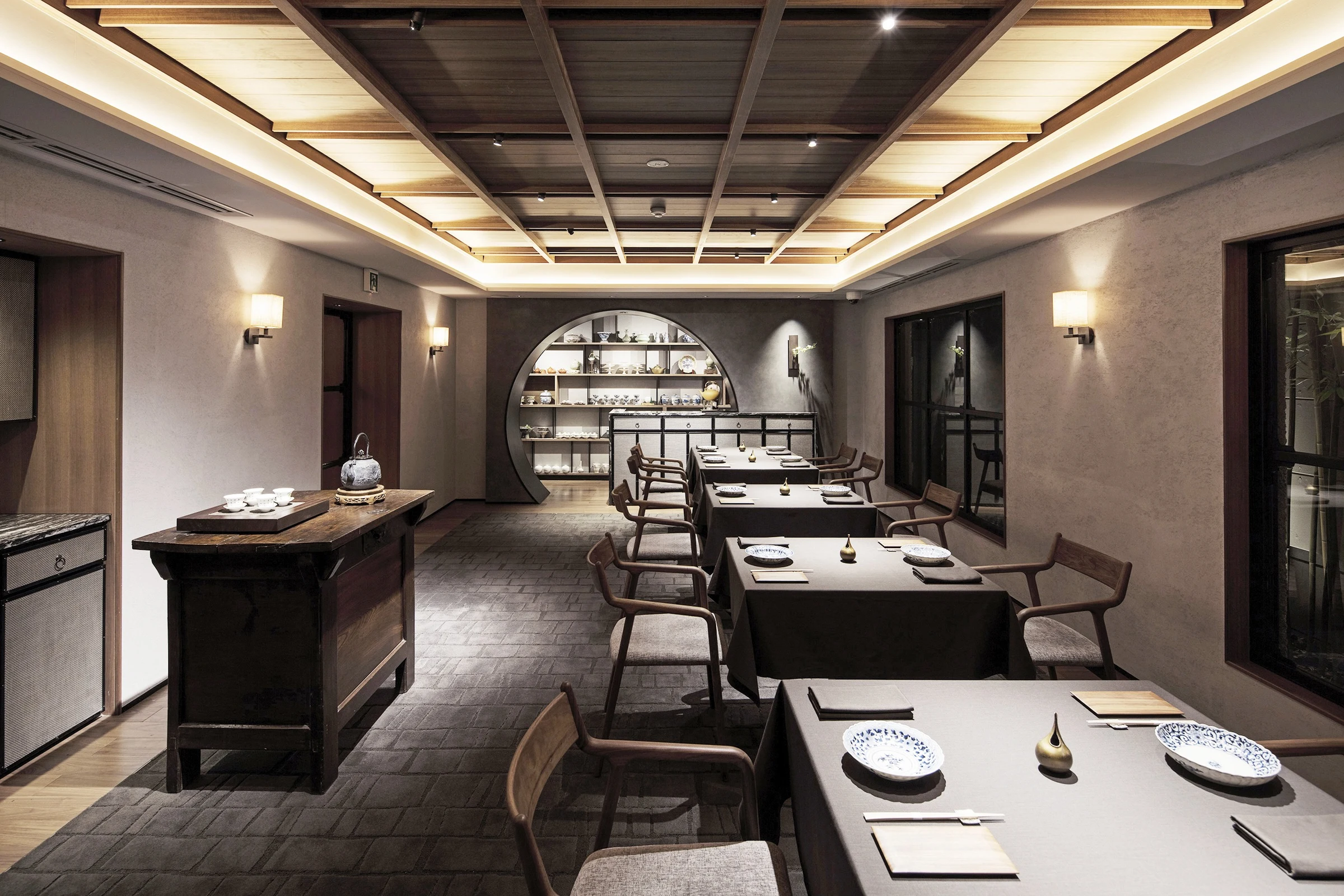
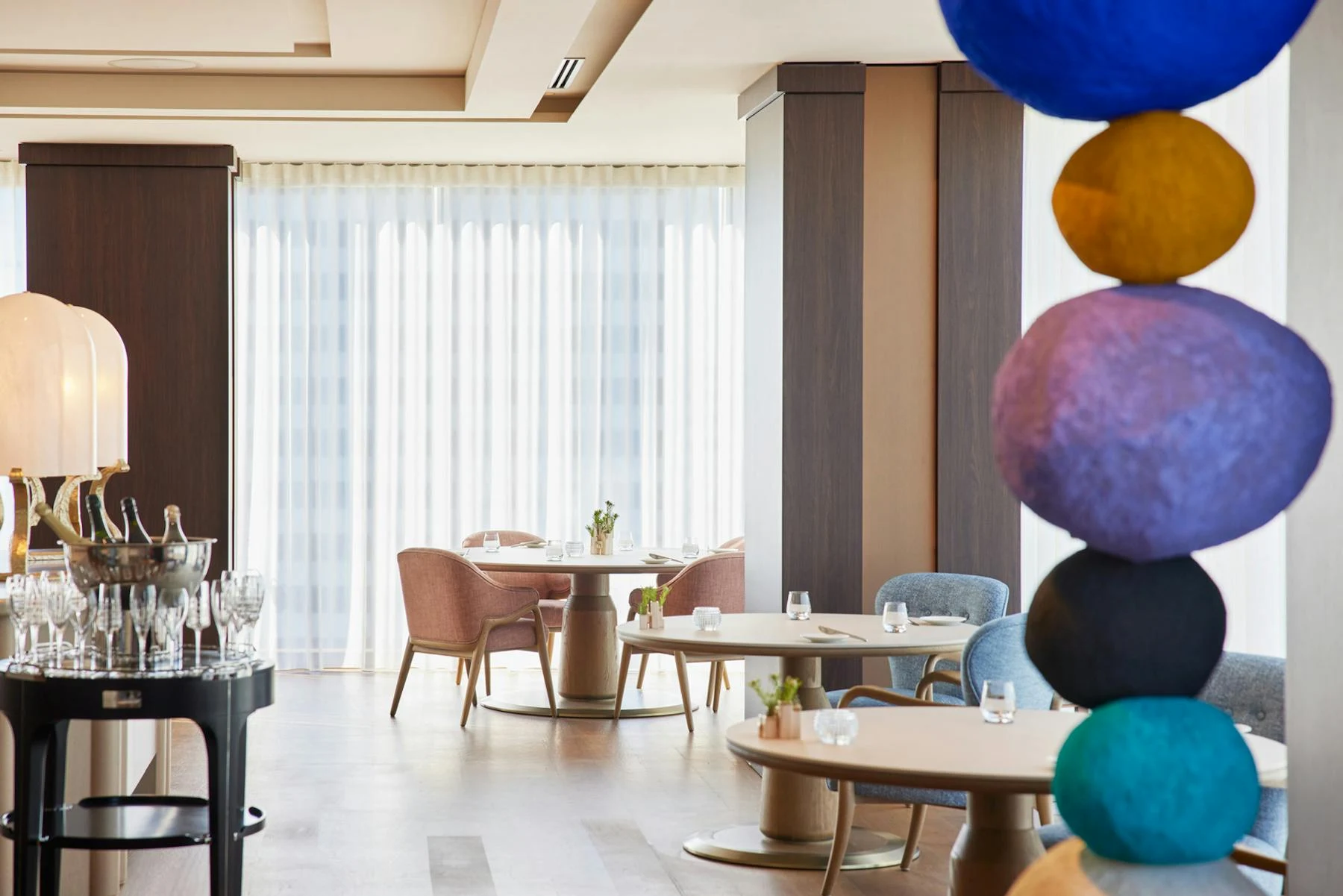
Sixteen seats across a counter and a private room for eight is a deliberate scale. Kaiseki at this price point functions on precision timing, courses arrive sequenced to the kitchen's rhythm, not the diner's pace, and that only works in rooms small enough to manage. The counter format gives solo diners and pairs direct sightlines into kitchen activity, while the private room (available for exclusive hire of the full restaurant) draws corporate dining and occasions that require separation from the main floor.
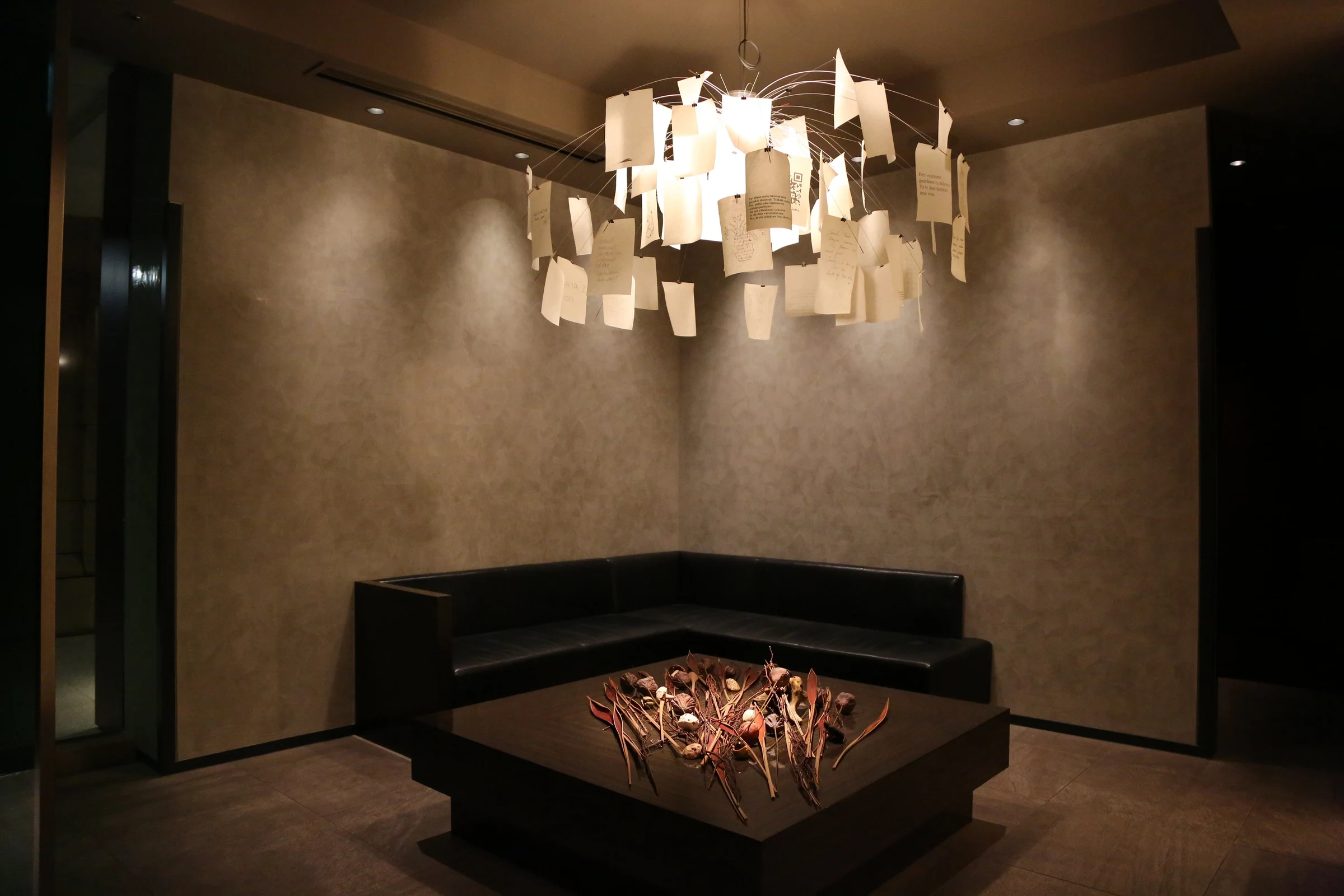
The space feels stylish, relaxed, and spacious relative to seat count, which at 16 seats means generous spacing rather than the tight-packed counter common to smaller omakase formats. The drink program covers sake, shochu, and wine, which is a fairly standard composition for Ginza kaiseki; the absence of a dedicated sake-pairing emphasis (at least as visible from available data) distinguishes it from venues where the beverage program is as curated as the food sequence.
Perfume is explicitly not permitted, a policy that appears more often in formal Japanese dining rooms than many visitors expect, and one that signals the kitchen is operating in an environment where subtlety of aroma is treated as part of the dining condition. Smart casual attire is the stated guideline, with tank tops, t-shirts, shorts, and sandals excluded. Both policies place the room closer to traditional formal Japanese dining convention than to the more relaxed dress and scent environments of contemporary Michelin-starred restaurants in other cities.
Planning a Visit
Ginza Fujiyama operates dinner service only, Monday through Sunday, 17:00 to 23:00, with no fixed closing days. Dinner service runs Monday through Sunday, 17:00 to 23:00. Online reservations are essential. Credit cards are accepted; electronic money and QR code payments are not.
The Morita Building is at Japan, 〒104-0061 Tokyo, Chuo City, Ginza, 3 Chome−3−6 森田ビル 7F.
For those building a broader Tokyo itinerary around serious Japanese dining, the kaiseki category has strong representation across the city's other neighbourhoods: Akasaka Ogino and Aoyama Jin operate in the Akasaka and Aoyama districts respectively, both at a different price-to-format relationship than the Ginza tier. Our full Tokyo restaurants guide maps the full spectrum.
Logistics at a Glance
| Venue | Cuisine | Dinner Price (JPY) | Seats | Awards |
|---|---|---|---|---|
| Ginza Fujiyama | Kaiseki | 50,000 to 59,999 | 16 | Tabelog Bronze ×7, OAD #221 Japan (2025) |
| RyuGin | Kaiseki | ¥¥¥¥ | , | Michelin 3 Stars |
| Den | Innovative Japanese | ¥¥¥ | , | Michelin 2 Stars |
| Harutaka | Sushi | ¥¥¥¥ | , | Michelin 3 Stars |
For wider regional context, Japan's kaiseki scene extends well beyond Tokyo: Ankyu in Kyoto and akordu in Nara represent different formal dining registers, while HAJIME in Osaka and Goh in Fukuoka anchor the broader Kansai and Kyushu ends of the country's premium dining map. Tokyo coverage extends beyond restaurants: see our guides to Tokyo hotels, Tokyo bars, Tokyo wineries, and Tokyo experiences. For completeness, 1000 in Yokohama and 6 in Okinawa extend the regional picture further.
Questions
Frequently asked
Who works at Ginza Fujiyama?
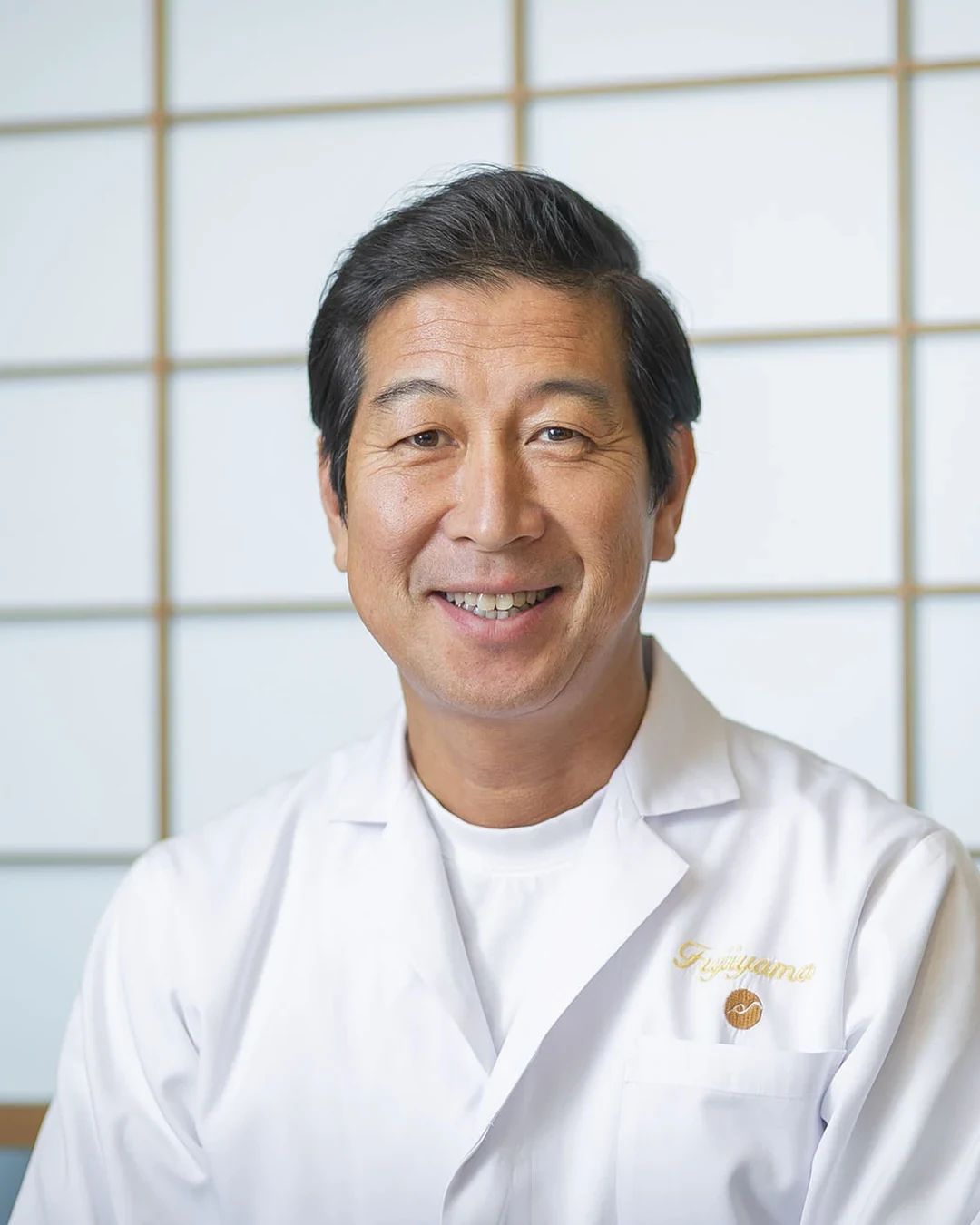
Made By profiles Takao Fujiyama (Chef) at Ginza Fujiyama.
How expensive is Ginza Fujiyama?
Ginza Fujiyama is listed at a price level of $$$$.
Where is Ginza Fujiyama and what does it serve?
Ginza Fujiyama is in Chūō, Tokyo, serving Kyoto Kaiseki.
The field
How it compares
| Place | Cuisine | Notes | Awards |
|---|---|---|---|
| Ginza Fujiyama | Kyoto Kaiseki | Chūō, $$$$ | · |
| Den | Modern Japanese Kaiseki | Tokyo | Michelin 2 Stars, World's 50 Best |
| Florilège | Modern French-Japanese Plant-Based Fine Dining | Tokyo | Michelin 2 Stars, World's 50 Best |
| Narisawa | Modern Japanese Satoyama Fine Dining | Tokyo | Michelin 2 Stars, World's 50 Best |
| Quintessence | Modern French Fine Dining | Tokyo | Michelin 3 Stars |
| Sazenka | Modern Chinese Fine Dining | Tokyo | Michelin 3 Stars, World's 50 Best |
| Sézanne | Modern French Fine Dining | Tokyo | Michelin 3 Stars, World's 50 Best |
In residence
Similar places
Modern Japanese Kaiseki
Den
Tokyo, Japan
★★ · 50 Best
Modern French-Japanese Plant-Based Fine Dining
Florilège
Tokyo, Japan
★★ · 50 Best
Modern Japanese Satoyama Fine Dining
Narisawa
Tokyo, Japan
★★ · 50 Best
Modern French Fine Dining
Quintessence
Tokyo, Japan
★★★
Modern Chinese Fine Dining
Sazenka
Tokyo, Japan
★★★ · 50 Best
Modern French Fine Dining
Sézanne
Tokyo, Japan
★★★ · 50 Best