Glenfiddich sits at the centre of Speyside's whisky geography, operating from its original Dufftown site where the Fiddich and Robbie Dhu springs converge. Holding a Pearl 4 Star Prestige award for 2025, it represents the Speyside template that shaped global single malt expectations, a reference point for understanding how regional terroir, water source, and extended maturation interact in Scotch production.
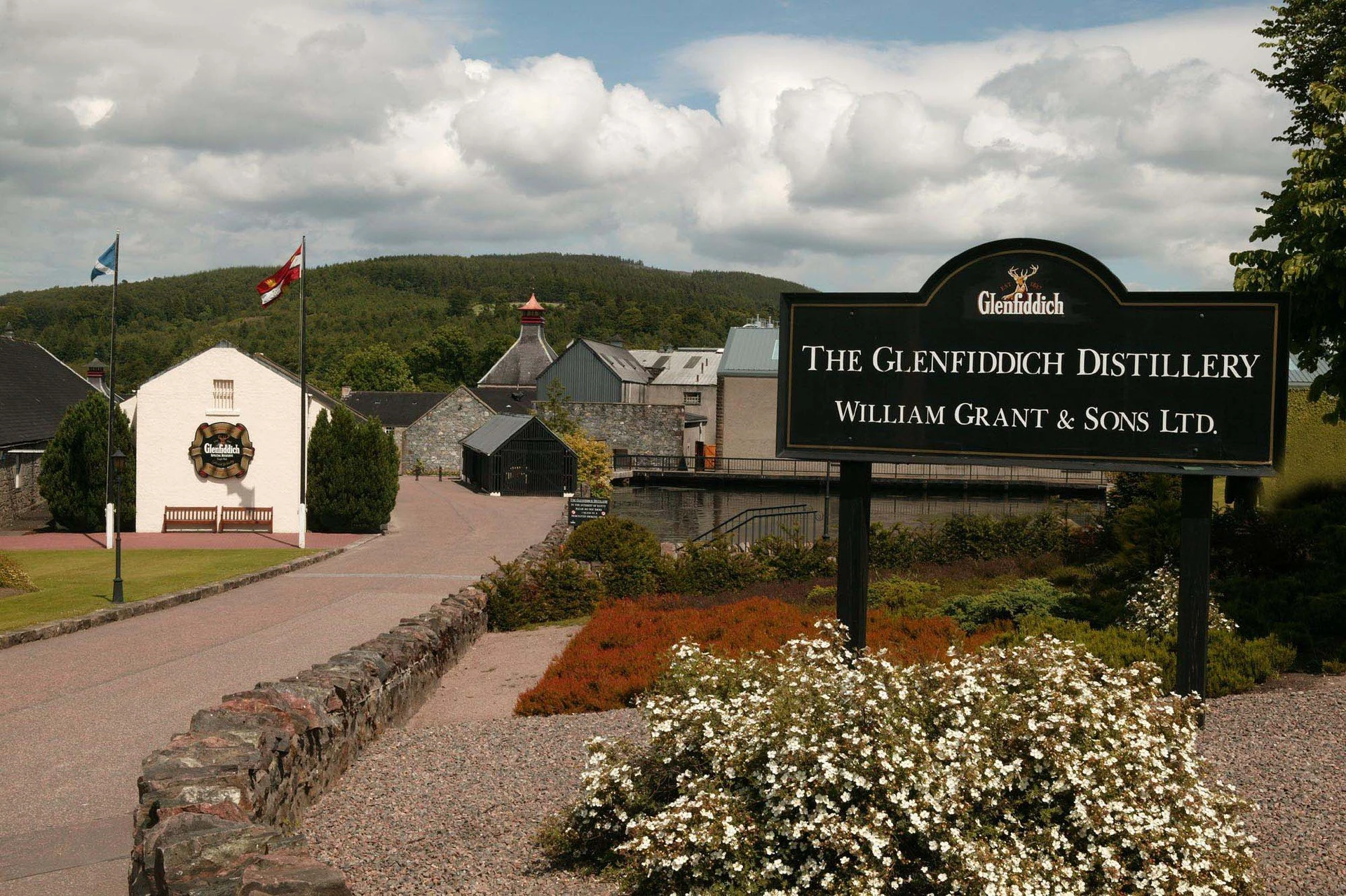
<h2>Where Speyside Sets Its Own Terms</h2><p>Dufftown sits in the Cairngorm foothills at the confluence of several river valleys, and this geography is not incidental. The town accounts for a disproportionate share of Scotland's single malt output, and the distilleries clustered here, including <a href="https://www.enprimeurclub.com/wineries/mortlach-distillery-dufftown-winery">Mortlach Distillery</a> and <a href="https://www.enprimeurclub.com/wineries/the-balvenie-dufftown-winery">The Balvenie</a>, both operating within a short walk, demonstrate how tightly Speyside's identity is bound to a specific stretch of highland terrain. The Fiddich river and the Robbie Dhu spring supply Glenfiddich directly, and water source in malt whisky is not a romantic detail: mineral content, temperature, and consistency through the seasons all shape the fermentation and, downstream, the spirit character.</p><p>Glenfiddich's site has been in continuous production since 1887, making it one of the longer unbroken production runs in Scottish distilling. That continuity matters because it creates a documented lineage of spirit style across different ownership periods, market conditions, and technical iterations, a record few distilleries anywhere can match. In the context of Speyside's broader history, Glenfiddich occupies the position of the region's most widely distributed ambassador, which has simultaneously helped define what consumers expect from a Speyside single malt and positioned the distillery against a comparable set that includes <a href="https://www.enprimeurclub.com/wineries/aberlour-aberlour-winery">Aberlour in Aberlour</a> and <a href="https://www.enprimeurclub.com/wineries/cardhu-knockando-winery">Cardhu in Knockando</a> at the approachable, fruit-forward end of the regional spectrum.</p><h2>Terroir in a Highland Context</h2><p>The concept of terroir, applied to whisky, is more contested than in wine, barley provenance, yeast strain, still shape, and wood policy all introduce variables that can override geographic influence. That said, Speyside as a region produces a recognisable family of spirits: lighter body, clean fruit, and less peat than Highland or Islay expressions. The elevation and climate around Dufftown contribute lower average temperatures, which slow maturation slightly and support the retention of delicate esters that higher-temperature warehousing would drive off. Distilleries across the Livet valley and into the Fiddich glen share access to soft, low-mineral water from granite-filtered sources, and this characteristic shows in the comparative brightness of Speyside spirits versus those from peat-heavy western sources like <a href="https://www.enprimeurclub.com/wineries/ardnahoe-port-askaig-winery">Ardnahoe in Port Askaig</a>.</p><p>Glenfiddich's stills are notably tall and narrow-necked, a configuration that increases copper contact and strips heavier compounds from the spirit during distillation. This is a design choice that reinforces rather than contradicts the regional terroir argument: the physical infrastructure is calibrated to produce a particular style that the geography already predisposes. The result is a spirit that reads as Speyside in the most legible sense, a useful reference when assessing how other distilleries in the region, from <a href="https://www.enprimeurclub.com/wineries/deanston-deanston-winery">Deanston in Deanston</a> to <a href="https://www.enprimeurclub.com/wineries/balblair-distillery-edderton-winery">Balblair Distillery in Edderton</a>, diverge from or reinforce the template.</p><h2>The Visitor Experience on Site</h2><p>Arriving at the distillery in Dufftown, the scale of the operation is immediately apparent: this is a working industrial site as much as a heritage attraction, with warehouses, cooperage, and active production running alongside the visitor infrastructure. That dual identity is actually what makes it instructive. Unlike smaller, artisan-scale operations such as <a href="https://www.enprimeurclub.com/wineries/dornoch-distillery-dornoch-winery">Dornoch Distillery in Dornoch</a> or <a href="https://www.enprimeurclub.com/wineries/dunphail-distillery-dunphail-winery">Dunphail Distillery in Dunphail</a>, where production and visitor experience are tightly interwoven in a smaller footprint, Glenfiddich operates at a scale where the distilling process is genuinely visible as an industrial system. For visitors trying to understand how Scotch whisky moves from grain to glass at volume, there is pedagogical value in seeing a large, continuously operating plant.</p><p>The visitor centre has evolved considerably over recent years, moving from a standard tour-and-tasting format toward tiered experiences that range from entry-level walkthroughs to more intensive sessions focused on wood policy, cask selection, and blending. Practically speaking, advance booking is advisable for the higher-tier experiences, particularly during the summer months when Speyside visitor numbers peak across the region. The distillery is located on the B4048 road just north of Dufftown's town centre, accessible by car from Keith or Aberlour, and is included in the broader Speyside Way visitor corridor that connects multiple distilleries on foot or by road.</p><h2>Where Glenfiddich Sits in the Competitive Set</h2><p>Scotch whisky visitor experiences have split between high-volume, brand-led operations and lower-capacity, specialist formats focused on deep technical engagement. Glenfiddich occupies the former category by volume, but its 2025 Pearl 4 Star Prestige award signals a level of experience quality that places it above the threshold of a purely commercial attraction. For comparison, distilleries at the smaller end of the Speyside visitor circuit, such as <a href="https://www.enprimeurclub.com/wineries/bladnoch-distillery-bladnoch-winery">Bladnoch Distillery in Bladnoch</a> or <a href="https://www.enprimeurclub.com/wineries/auchentoshan-distillery-clydebank-winery">Auchentoshan Distillery in Clydebank</a>, offer a different register of intimacy, but they cannot replicate the depth of heritage infrastructure or the breadth of aged stock on site at Glenfiddich.</p><p>The distillery's position as a family-owned operation, still under the William Grant and Sons group rather than a multinational drinks conglomerate, is relevant to how it manages its premium tier. Ownership structure does not guarantee quality, but in the context of the Scotch industry, independence has historically correlated with longer maturation policies and more conservative release strategies. Glenfiddich's age-statement range and its older expressions carry the kind of institutional knowledge about wood management that takes decades to accumulate. That is a different proposition from newer-era craft distilleries, however technically accomplished, like <a href="https://www.enprimeurclub.com/wineries/clynelish-distillery-brora-winery">Clynelish Distillery in Brora</a>, where the maturing stock base is necessarily shallower.</p><h2>Planning Your Visit</h2><p>Dufftown is most conveniently reached by car from Inverness (roughly 60 kilometres south via the A9 and A941) or from Aberdeen (approximately 70 kilometres northwest on the A97). There is no direct rail connection to Dufftown, though Keith, 17 kilometres east, sits on the Aberdeen to Inverness line and provides a practical transfer point for visitors without a vehicle. The Speyside distillery circuit is dense enough that a two-day visit to the area, based in Dufftown or nearby Craigellachie, allows coverage of multiple sites without significant driving. Spring and early autumn offer the most reliable combination of weather and availability, with August representing peak demand across all Speyside visitor operations.</p><p>For visitors contextualising Glenfiddich within a broader Scotland itinerary that includes island or lowland distilleries, it serves as the most useful Speyside baseline: a large, well-resourced operation producing the fruit-forward, lightly peated style the region is associated with, with enough range in its portfolio to illustrate how maturation time and wood type alter a consistent base spirit. Distilleries at geographic and stylistic distance, such as <a href="https://www.enprimeurclub.com/wineries/achaia-clauss-patras-winery">Achaia Clauss in Patras</a> or <a href="https://www.enprimeurclub.com/wineries/accendo-cellars">Accendo Cellars in St. Helena</a>, operate under entirely different production logic, but the underlying question of how place shapes a spirit's character is the same thread that connects serious producers across categories.</p>
Glenfiddich is located at Glenfiddich Distillery, Dufftown, Keith AB55 4DH, UK, Dufftown.
Glenfiddich has received recognition including: Pearl 4 Star Prestige (2025).
The database record for Glenfiddich in Dufftown does not specify individual bottlings, so naming a single signature release with confidence isn't possible here. What is documented is the distillery's Pearl 4 Star Prestige rating (2025), which reflects the breadth of its whisky programme rather than a single expression. The on-site shop at Dufftown typically carries distillery-exclusive releases not available in general retail.
Glenfiddich is a working industrial distillery in Dufftown, and that duality — operational scale alongside heritage presentation — is what separates it from smaller, more curated Speyside sites. The distillery earned a Pearl 4 Star Prestige rating in 2025, placing it among Scotland's highest-rated whisky visitor experiences. Its location at the confluence of the Fiddich and Robbie Dhu rivers in the Cairngorm foothills ties the production story directly to local geography.
Walk-in availability at Glenfiddich's Dufftown site varies by tour format and season; the distillery runs multiple tour tiers, some of which can accommodate unbooked visitors during quieter periods. For specialist tastings or premium experiences, advance booking is the more reliable approach. Check the official website for current availability before travelling, particularly between May and September when Speyside sees its highest visitor volumes.
Glenfiddich is one of the few Speyside distilleries where visitors can observe a fully operational, large-scale production site rather than a preserved or partially mothballed facility. Dufftown itself accounts for a concentration of active distilleries unmatched anywhere in Scotland, giving the Glenfiddich visit a genuine industrial context rather than a heritage-park atmosphere. The distillery's Pearl 4 Star Prestige rating in 2025 marks it as one of the most highly credentialled whisky visitor experiences in the region.
Glenfiddich in Dufftown is structured to serve both: entry-level tours cover the full production process from grain to glass, making it a solid introduction to Scotch whisky for newcomers, while premium and private experiences go deep enough on cask selection and maturation to reward those who already know the basics. The Pearl 4 Star Prestige rating (2025) reflects a visitor programme with genuine range across experience levels. Repeat visitors generally benefit most from booking one of the higher-tier formats rather than the standard distillery walk.
Glenfiddich Distillery, Dufftown, Keith AB55 4DH, UK
Dufftown