Goldener Adler
- 01CuisineTraditional Swabian German
- 02CityStuttgart, Germany
Spätzle crusts the roast onions
- Michelin Bib Gourmand · Michelin Guide
- Michelin Plate · 2026
- Star Wine List · 2026
- Michelin Plate · 2025
- Michelin Bib Gourmand · 2024
Swabian work at the visible pass
Spätzle crusts roast onions before the plate leaves the pass at Goldener Adler in Stuttgart, inside a kitchen that lets the room see the method. The restaurant sits at Böheimstraße 38 in Karlshöhe, close to Marienplatz, and cooks traditional Swabian German food with a contemporary hand. No chef is named in the public record around the house, so the work has to be read through the place itself: regional dishes, an open kitchen, a changing menu, and a room built for close attention rather than spectacle.
That restraint suits the restaurant. Goldener Adler carries Michelin Bib Gourmand recognition, and Falstaff scores it 86 for German cuisine. The numbers matter because the cooking remains grounded in a la carte Swabian form: cordon bleu, veal schnitzel, Tafelspitz, dumplings, roast meats, onions under spätzle, and vegetarian dishes given enough space to stand beside the heavier regional canon. Those vegetarian plates are described as plentiful and tasty rather than tolerated, which broadens the Swabian register past its meat-centric habit.
Regional dishes with a modern cut
The kitchen’s architecture is built around change. Scallop risotto, roast beef carpaccio, and sous vide duck with cherry pepper sauce show the spread of technique: rice worked to a creamy finish, beef sliced for cold precision, duck cooked low and served with fruit and heat. None of those gestures erases the Swabian base. They sharpen it. The house phrase often attached to the cooking is “Swabia meets the world,” and here that reads less like a slogan than a practical rule for the pass: local forms stay visible while global references move through the garnish, the sauce, the texture, or the wine.
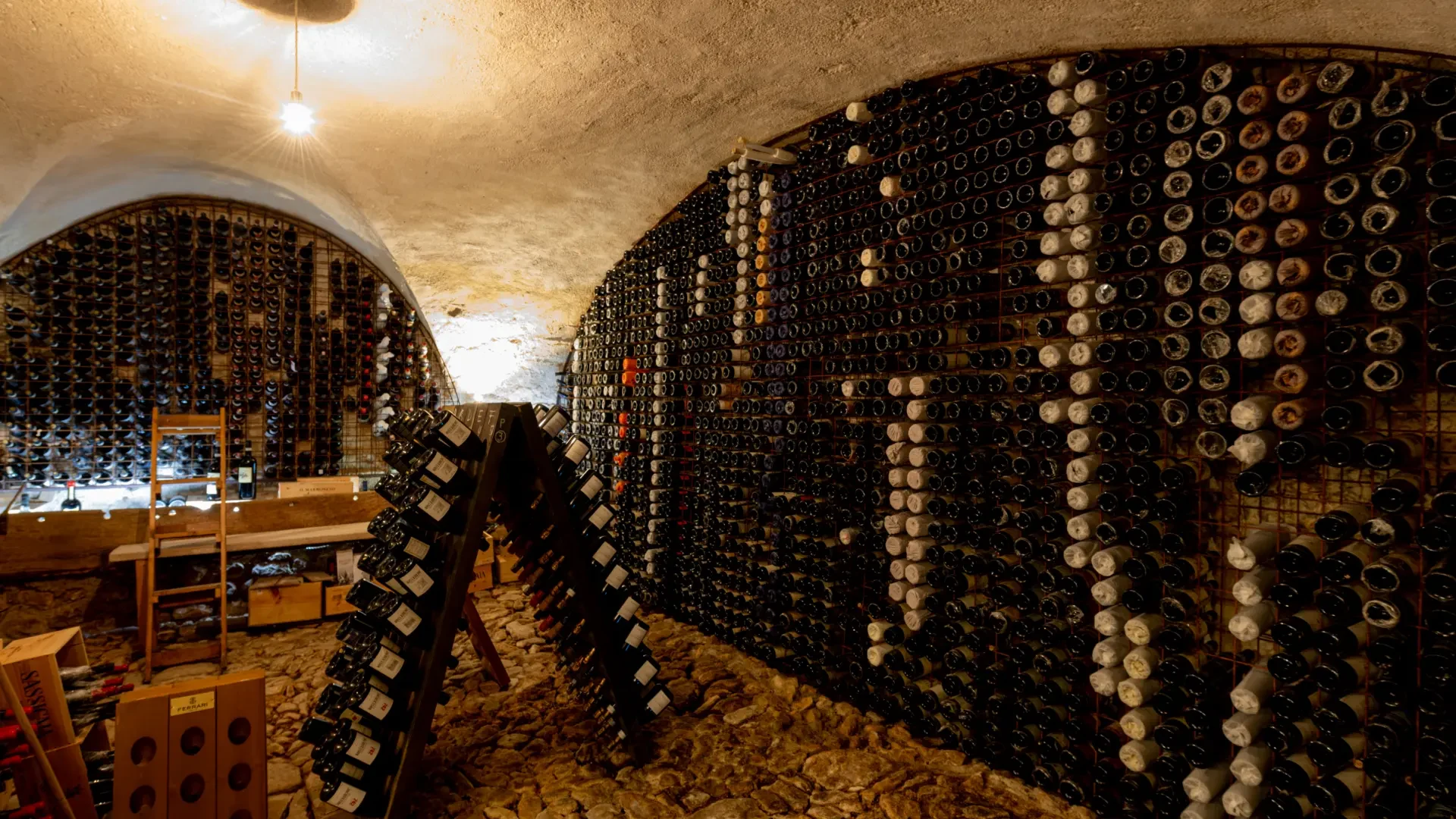
The wine program is curated rather than ornamental. A sommelier recommends bottles for the changing dishes, and the list reaches beyond the region while staying close to the food’s weight: roast meats, dumplings, schnitzel, carpaccio, risotto. In a city with its own wine culture, that matters. The cellar does not have to announce scale to do its work at the table, and the menus evolve regularly enough to keep regulars guessing.
Wood, low light, terrace air
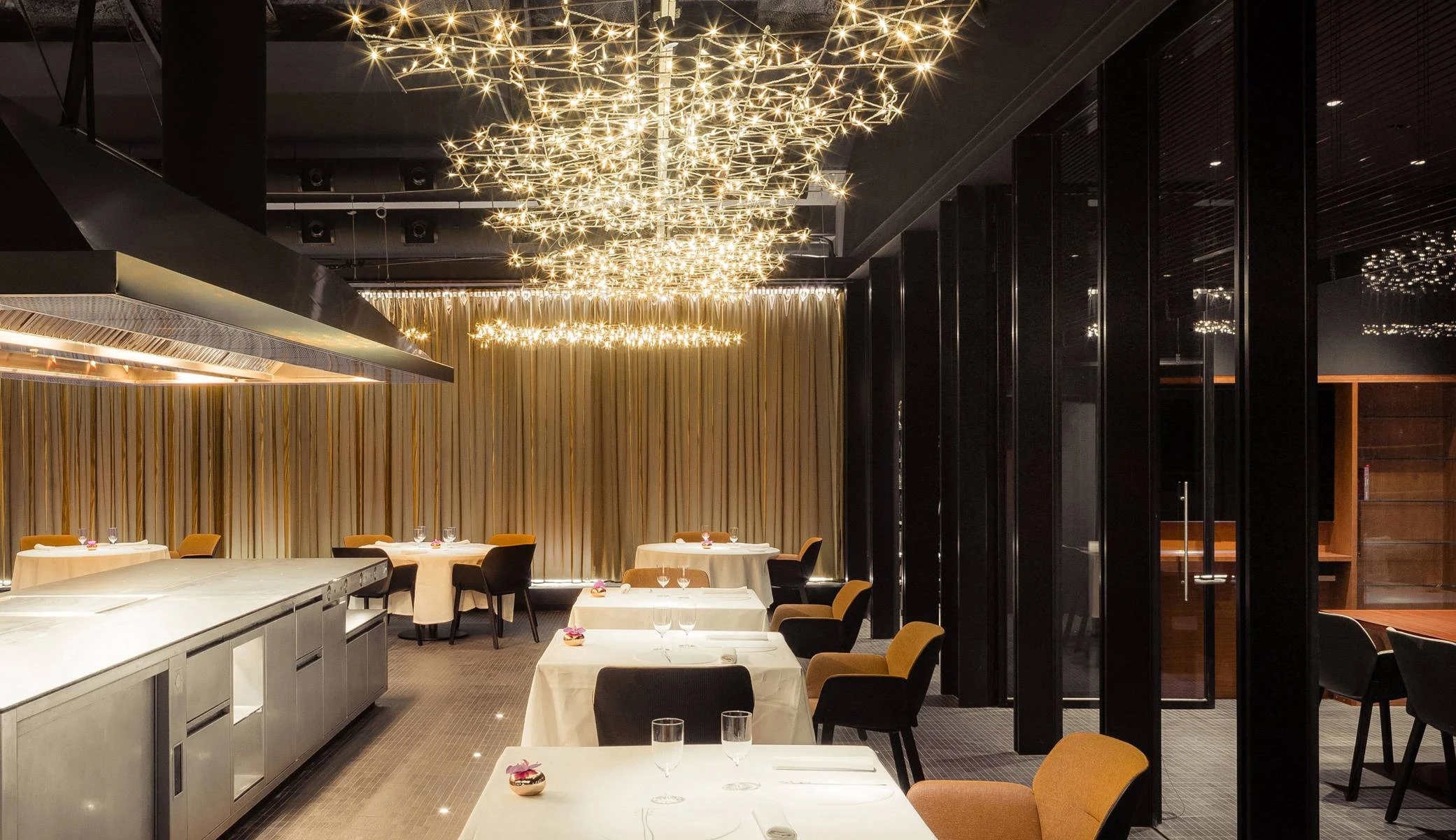
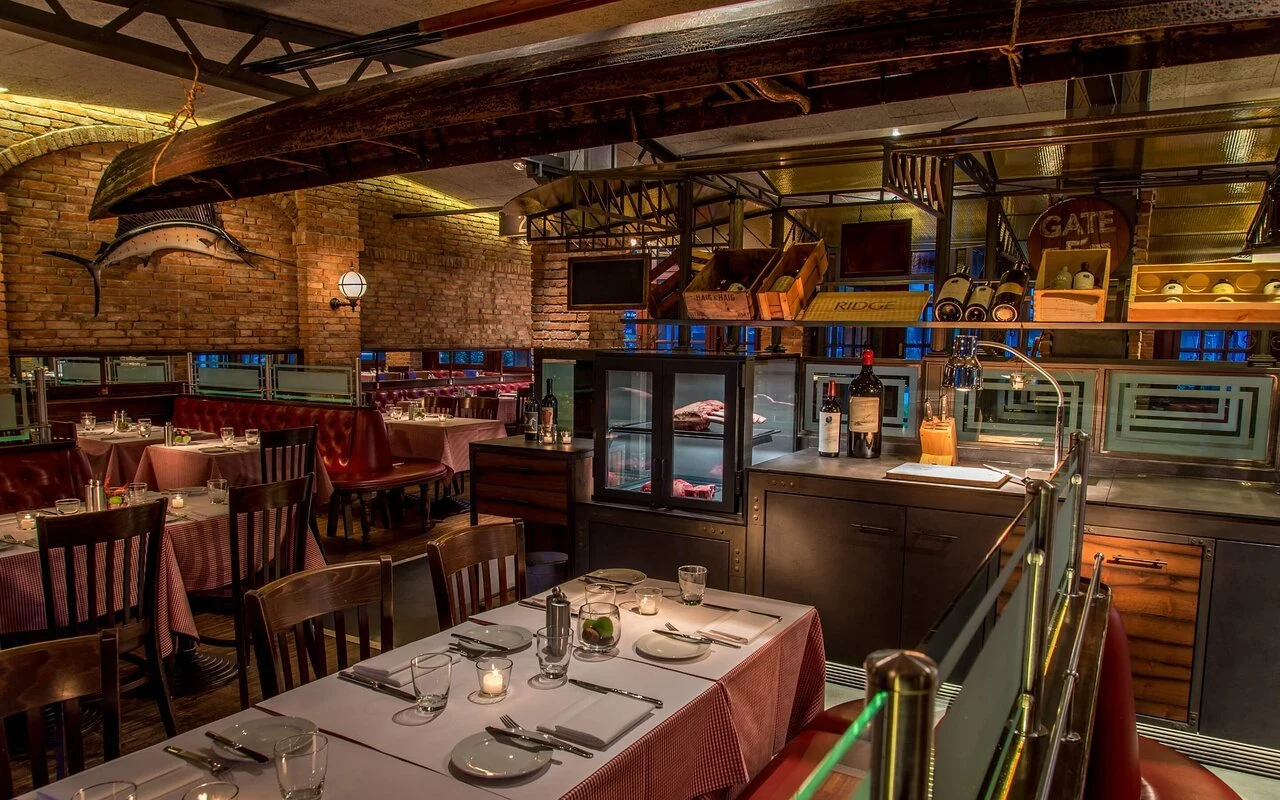
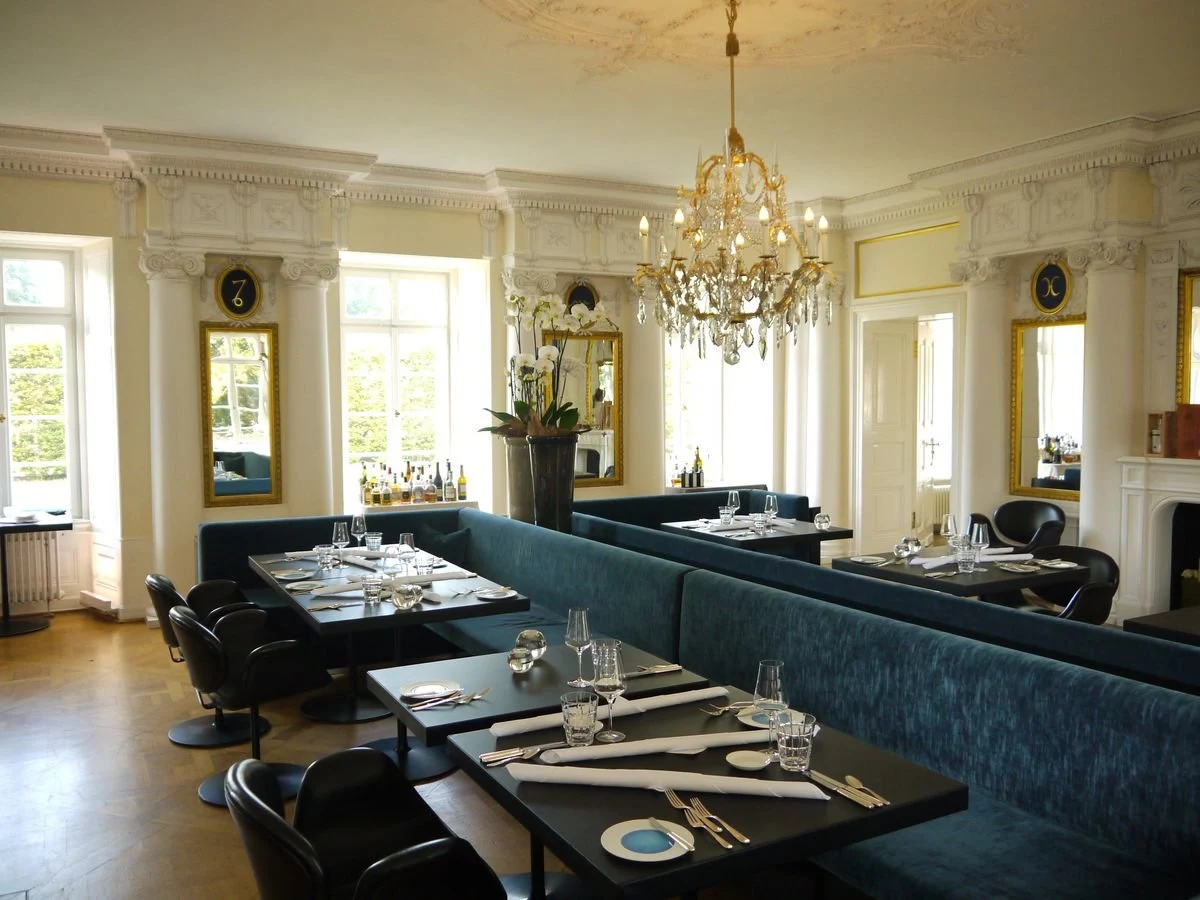
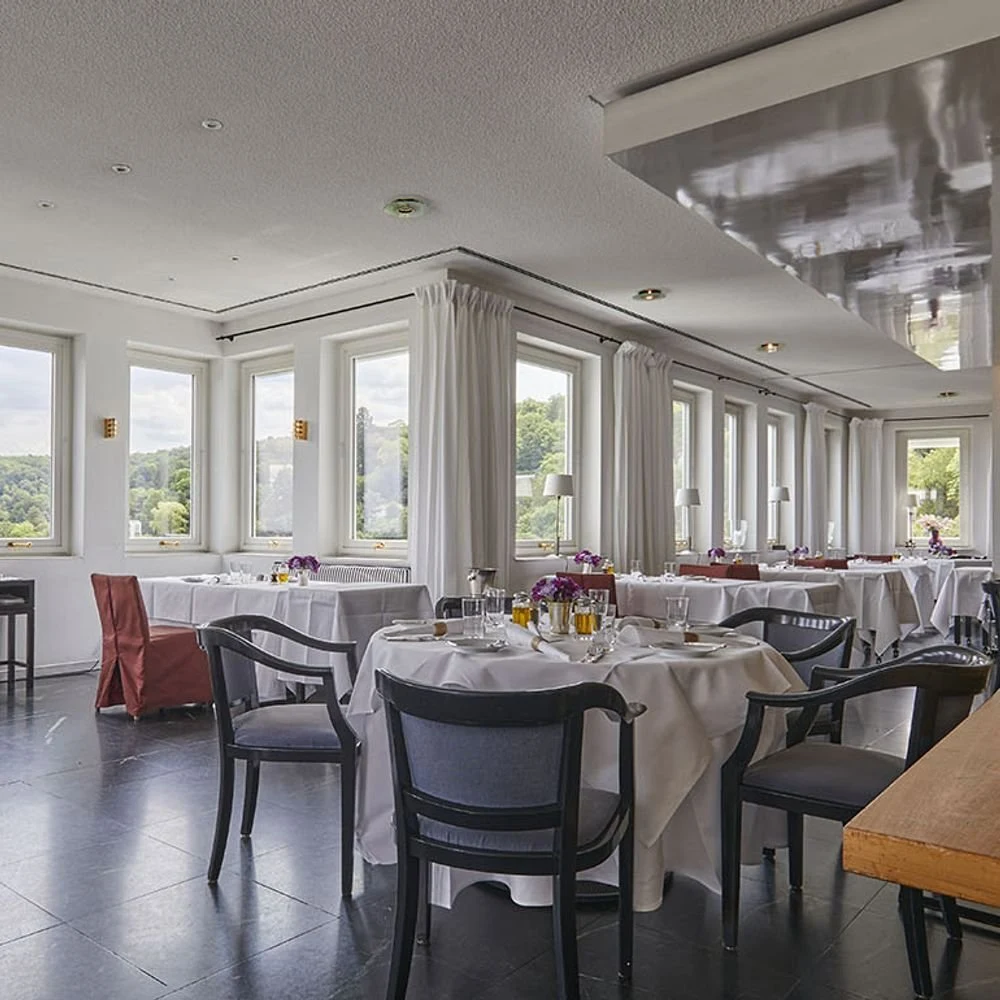
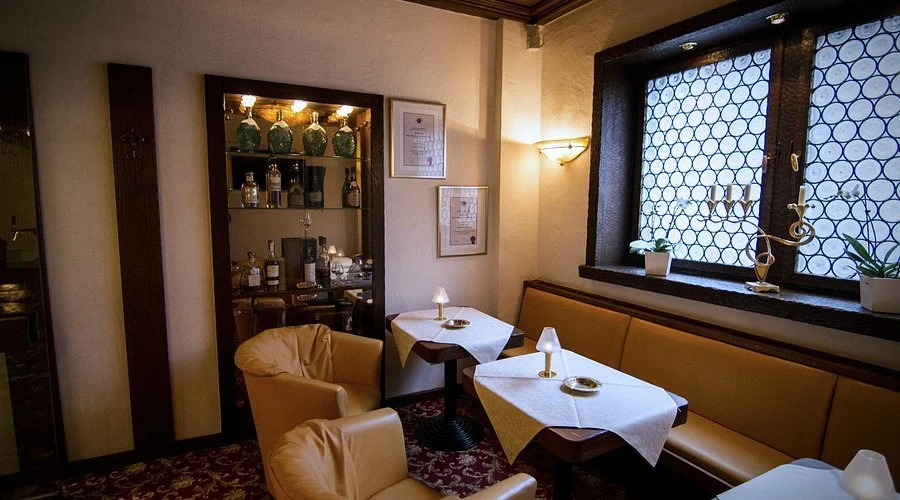
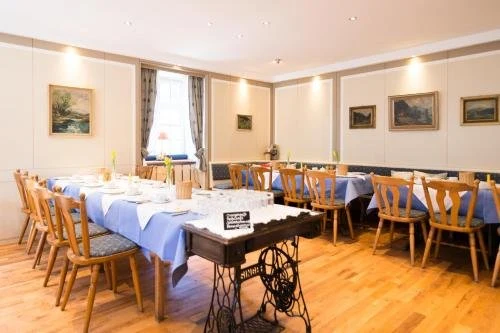
The room carries contemporary decor with rustic notes: modern wooden tables, a low-lit interior, beam-ceilinged warmth, and the steady movement of a restaurant that stays conversational even when it is full. The open kitchen gives the basement dining area a bench-side current. Plates cross the pass, the team resets, the next table leans into the noise of cutlery and glass rather than over it.
Outside, the large terrace changes the register without changing the house. The same cooking, cordon bleu and veal schnitzel among it, moves into the air of Karlshöhe. Inside, the room is cozy and buzzing; outside, the terrace gives the Swabian dishes room to breathe. Goldener Adler’s most concrete promise is still the plate leaving the pass, with spätzle-crusted roast onions carrying the house’s argument in one crisp edge.
Questions
Frequently asked
What kind of restaurant is Goldener Adler?
Goldener Adler is a restaurant in Stuttgart that cooks traditional Swabian German food with a contemporary hand. The house sits in Karlshöhe, close to Marienplatz, and works with an open kitchen and a large terrace.
What is it known for on the menu?
The menu includes cordon bleu, veal schnitzel, and Tafelspitz, along with dumplings, roast meats, and spätzle with roast onions. The kitchen also gives room to vegetarian dishes alongside the heavier regional plates.
Does Goldener Adler have any recognition?
Goldener Adler carries Michelin Bib Gourmand recognition. The public record also notes a Falstaff score of 86 for German cuisine.
Is booking recommended?
Reservation is recommended at Goldener Adler. The restaurant is open every day from 5:30 to 11 PM.
What should visitors expect from the room and setting?
The room is described as contemporary with rustic notes, including modern wooden tables, low light, and beam-ceilinged warmth. The open kitchen lets diners see the method, and the terrace gives the same cooking more space.
The field
How it compares
| Place | Cuisine | Notes | Awards |
|---|---|---|---|
| Goldener Adler | Traditional Swabian German | Heslach, $$ | · |
| Cocina Hermanos Torres | Modern Spanish Fine Dining | Barcelona | Michelin 3 Stars, World's 50 Best |
| Hupperts | Modern German Fine Dining | Stuttgart | Michelin 1 Star |
| Reale | Modern Italian Fine Dining | Castel di Sangro | Michelin 3 Stars, World's 50 Best |
| Speisemeisterei | Modern Creative Fine Dining | Stuttgart | Michelin 2 Stars |
| Wielandshöhe | Classic French Fine Dining with Swabian Influences | Stuttgart | Michelin 1 Star |
| ZUR WEINSTEIGE | Modern German-Japanese Fusion | Stuttgart | Michelin 1 Star |
Similar places
Modern Spanish Fine Dining
Cocina Hermanos Torres
Barcelona, Spain
★★★ · 50 Best
Modern German Fine Dining
Hupperts
Stuttgart, Germany
★
Modern Italian Fine Dining
Reale
Castel di Sangro, Italy
★★★ · 50 Best
Modern Creative Fine Dining
Speisemeisterei
Stuttgart, Germany
★★
Classic French Fine Dining with Swabian Influences
Wielandshöhe
Stuttgart, Germany
★
Modern German-Japanese Fusion
ZUR WEINSTEIGE
Stuttgart, Germany
★