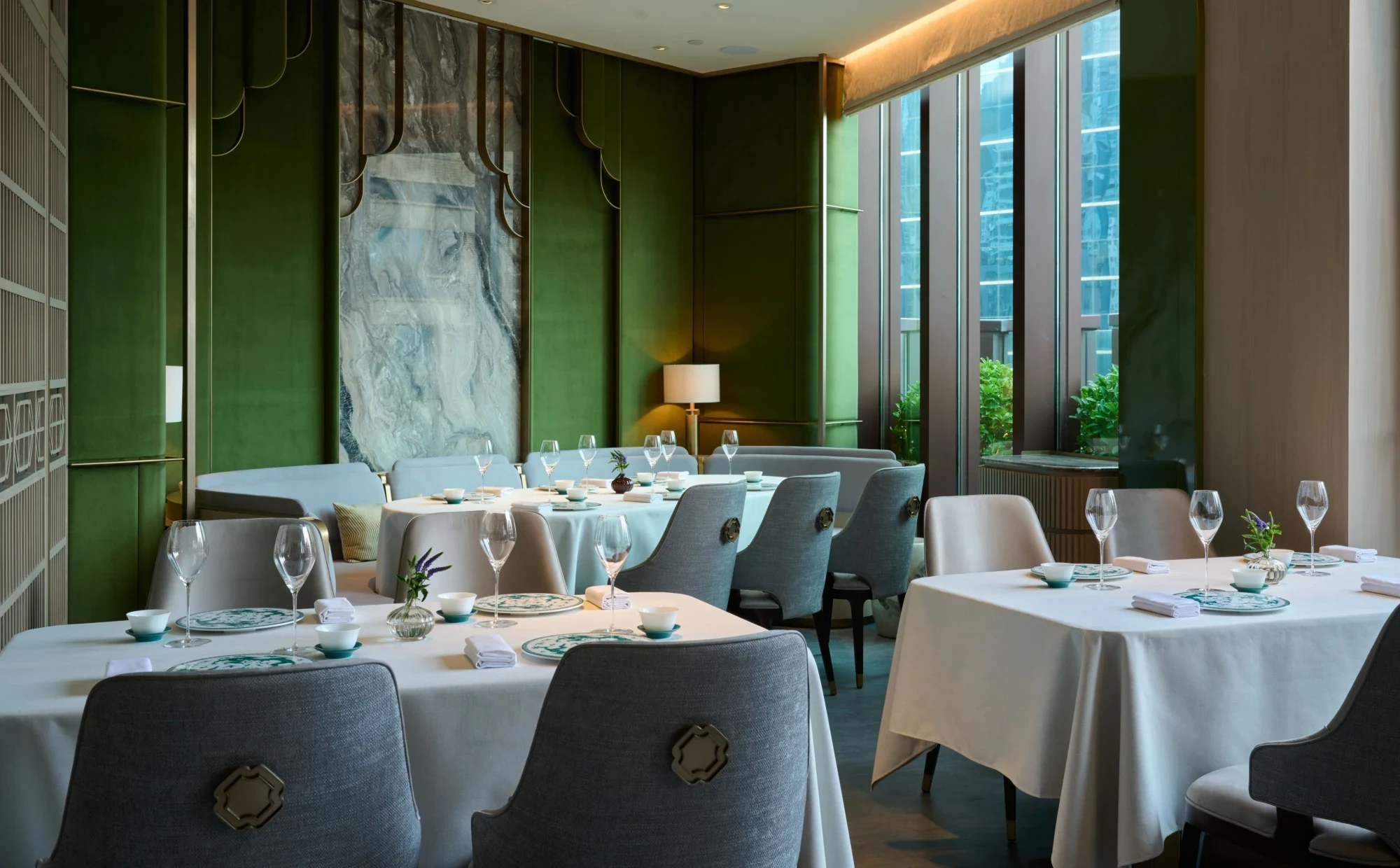
Greater China Club

In Residence
Chan Wai Ting
Chef
- 01CuisineModern Cantonese Fine Dining
- 02CityHong Kong, Hong Kong
- Opinionated About Dining Top Restaurants in Asia Recommended · 2026
- Opinionated About Dining Top Restaurants in Asia Ranked #399 · 2025
- Opinionated About Dining Top Restaurants in Asia Ranked #364 · 2024
Cheung Sha Wan and the Other Cantonese Hong Kong
Hong Kong's Cantonese dining conversation defaults quickly to the harbour-view dining rooms of Central and Tsim Sha Tsui, the hotel flagships where Michelin stars and per-head spends define the competitive set. Venues like Lung King Heen, T'ang Court, and Lai Ching Heen operate at the formal end of that market, where the room, the service choreography, and the wine list are as much a part of the proposition as the food. But there is a second Cantonese tradition in this city, one that runs through working neighbourhoods and lunch-focused dining rooms, where the kitchen's authority rests entirely on what comes out of the wok. Greater China Club, on Cheung Yee Street in Cheung Sha Wan, belongs to that second tradition.
Cheung Sha Wan sits on the Kowloon peninsula's western side, away from the tourist circuits and well clear of the polished restaurant corridors of Tsim Sha Tsui. The neighbourhood is predominantly industrial and residential, which means a restaurant earning regional recognition here does so without the structural advantages of foot traffic, hotel partnership, or proximity to expense-account clientele. Opinionated About Dining placed Greater China Club at number 364 in its 2024 Asia rankings and number 399 in 2025. For a non-hotel, neighbourhood Cantonese operation in a district that rarely features in international dining coverage, that level of sustained recognition carries weight.
Wok Hei as the Governing Standard
Classical Cantonese cooking is built around speed and heat at a scale that is genuinely difficult to replicate. Wok hei, the charred, breath-of-the-wok quality produced when protein and vegetable make brief, violent contact with a seasoned carbon-steel wok over a high-BTU flame, is the benchmark by which serious Cantonese kitchens are measured. It is also the quality most easily lost in the translation from neighbourhood restaurant to formal dining room, where presentation timelines, larger brigade structures, and tableside theatre tend to slow the journey from wok to plate. The restaurants that maintain it consistently are almost always the ones where the kitchen operates at pace and the dining room doesn't ask it to do otherwise.
That dynamic is part of what positions Greater China Club differently from its hotel-dining counterparts. Venues like Rùn or Forum operate within formats where presentation expectations and room scale shape the kitchen's output. A focused neighbourhood room, by contrast, compresses the distance between cook and diner in ways that tend to favour high-heat technique. The wok cook's discipline, sequencing ingredients by cooking time, reading the temperature of the pan by the sound of the sizzle, pulling dishes at the precise moment before they tip from correct to overdone, is the kind of craft that shows most clearly in a room where nothing else is competing for attention.
Chef Chan Wai Ting leads the kitchen at Greater China Club. In the Cantonese dining context, the role of the head chef is inseparable from the wok station: the technical standards set there cascade through the rest of the menu, from the clarity of a steamed fish to the texture of a stir-fried vegetable. Chan's position at a restaurant earning consecutive OAD Asia rankings suggests a kitchen operating with consistent technical control, though the specifics of the menu and preparation style are best assessed in person.
A Reference Point in Regional Context
Cantonese cuisine, as it is practised across the greater region, has diversified considerably. In Macau, venues like Chef Tam's Seasons and Jade Dragon operate at the high-formal end of the register, with Michelin recognition and resort-scale hospitality shaping the experience. In Shanghai, operations like 102 House, Bao Li Xuan, and Canton 8 (Huangpu) translate Cantonese technique into a mainland dining context. In Taipei, Le Palais maintains one of the most formally recognised Cantonese kitchens outside Hong Kong and Macau. In Singapore, Summer Pavilion represents the hotel-Cantonese model at its most consistent. And in Guangzhou, Imperial Treasure Fine Chinese Cuisine operates in the cuisine's home territory.
Greater China Club sits outside most of those comparative frames. It is not a formal dining destination in the Michelin-starred sense, nor a hotel property with international marketing reach. What the OAD rankings suggest is that it functions as a serious neighbourhood Cantonese restaurant whose kitchen quality is sufficient to attract the kind of critical attention that ranking systems depend on. In the current Hong Kong dining context, where neighbourhood Cantonese rooms face sustained pressure from rising rents, labour costs, and the gravitational pull of hotel-dining budgets, that positioning is not a small thing.
Hours and the Logic of Lunch
Greater China Club runs a split-service format across all seven days. Weekday lunch runs from noon to 3 pm, dinner from 6 to 11 pm. Weekend lunch extends slightly, from 11 am to 3:30 pm on both Saturday and Sunday, with dinner service maintaining the same 6 to 11 pm window. The extended Saturday and Sunday lunch hours reflect the traditional importance of the weekend dim sum and yum cha meal in Cantonese culture, when family groups expect a more leisurely midday pace. For visitors whose Hong Kong itinerary skews toward Central and Hong Kong Island, the Cheung Sha Wan location requires deliberate planning, but the MTR's Cheung Sha Wan station on the Tsuen Wan Line makes the journey manageable from most parts of the urban core.
Know Before You Go
- Address: 9 Cheung Yee Street, Cheung Sha Wan, Hong Kong
- Lunch (Mon–Fri): 12:00 pm – 3:00 pm
- Dinner (Mon–Fri): 6:00 pm – 11:00 pm
- Lunch (Sat–Sun): 11:00 am – 3:30 pm
- Dinner (Sat–Sun): 6:00 pm – 11:00 pm
- Recognition: Opinionated About Dining Leading Restaurants in Asia, #364 (2024), #399 (2025)
- Chef: Chan Wai Ting
- Cuisine: Cantonese
- Getting there: Cheung Sha Wan MTR station (Tsuen Wan Line) is the nearest rail option
Questions
Frequently asked
Who works at Greater China Club?
Made By profiles Chan Wai Ting (Chef) at Greater China Club.
How expensive is Greater China Club?
Greater China Club is listed at a price level of $$$$.
Where is Greater China Club and what does it serve?
Greater China Club is in Sham Shui Po West, Hong Kong, serving Modern Cantonese Fine Dining.
The field
How it compares
| Place | Cuisine | Notes | Awards |
|---|---|---|---|
| Greater China Club | Modern Cantonese Fine Dining | Sham Shui Po West, $$$$ | · |
| 8 1/2 Otto e Mezzo Bombana (Hong Kong) | 3 Michelin-Star Italian Fine Dining | Hong Kong | Michelin 3 Stars, World's 50 Best |
| Amber | Contemporary French Fine Dining | Hong Kong | Michelin 3 Stars, World's 50 Best |
| Caprice | Contemporary French Fine Dining | Hong Kong | Michelin 3 Stars, World's 50 Best |
| The Chairman | Traditional Cantonese | Hong Kong | Michelin 1 Star, World's 50 Best |
| Vea | Modern Chinese-French Fusion | Hong Kong | Michelin 1 Star, World's 50 Best |
| WING Restaurant | Modern Chinese Fine Dining | Hong Kong | World's 50 Best |
In residence
Similar places
3 Michelin-Star Italian Fine Dining
8 1/2 Otto e Mezzo Bombana (Hong Kong)
Hong Kong, Hong Kong
★★★ · 50 Best
Contemporary French Fine Dining
Amber
Hong Kong, Hong Kong
★★★ · 50 Best
Contemporary French Fine Dining
Caprice
Hong Kong, Hong Kong
★★★ · 50 Best
Traditional Cantonese
The Chairman
Hong Kong, Hong Kong
★ · 50 Best
Modern Chinese-French Fusion
Vea
Hong Kong, Hong Kong
★ · 50 Best
Modern Chinese Fine Dining
WING Restaurant
Hong Kong, Hong Kong
50 Best