Hali
- 01CityKaohsiung, Taiwan
Culinary nutrition at the pass
Flavor held against function
Flavor is measured against function before it reaches the plate. Her training began in two demanding rooms: Johnson & Wales University, where she earned a Bachelor of Science in Culinary Nutrition, and the Utah Jazz, where food had to answer to bodies in use. That is a particular kind of apprenticeship, less romantic than exacting, with the station judged by recovery, energy, appetite and taste at the same time.
Her own formulation is plain: “Blend nutrition science with soulful flavor so every dish tastes like comfort but performs like fuel.” At Hali, that means contemporary Taiwanese cooking is not treated as a decorative category. It becomes a working field for balance, warmth and use.
The Sunday email
Read about the people behind restaurants like Hali in the Sunday email.
Every Sunday we send a lead story and up to four more about the chefs, winemakers, sommeliers and hoteliers behind the restaurants, bars, wineries and hotels we cover.
Recent stories

Free. One email a week, and you can unsubscribe from any issue.
A hotel kitchen with many registers
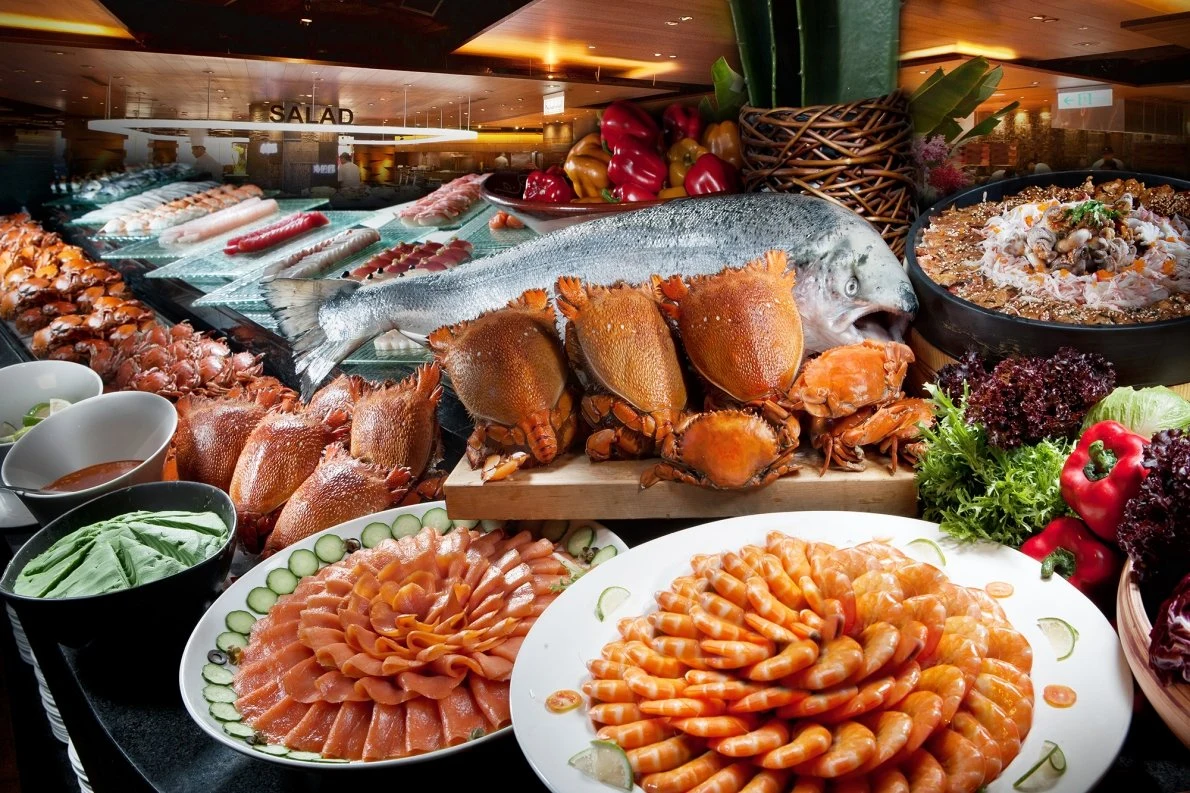
The Grand Hi-Lai Hotel is a large house for dining as much as lodging, with 13 Chinese, Western and Japanese restaurants under one roof. That matters for Hali because a chef working here does not cook in isolation from the building’s wider appetite. The hotel already carries Cantonese, Taiwanese, buffet and Japanese registers through its dining rooms, from a Cantonese room on the 12th floor to a Taiwanese restaurant on the 9th floor and a buffet restaurant on the 43rd floor with more than 100 dishes moving through Chinese, Western and Japanese styles.
What can be held, instead, is the discipline behind the plate: culinary nutrition, comfort, performance and a willingness to let flavor carry structure rather than explanation. In a hotel where multiple restaurants speak at once, that restraint becomes part of the method.
The room above Chenggong 1st Road
The building sits at No. 266, Chenggong 1st Road, in Qianjin District, with Kaohsiung moving around it: business traffic, hotel arrivals, dining rooms stacked above the street, and views that widen toward the harbor from the upper floors. The room is not a countryside atelier. It is a city house with elevators, polished floors, formal service rhythms and guests moving between rooms for different kinds of appetite.
That setting gives Hali a particular pressure. The pass has to hold its own inside a hotel known for range, not intimacy alone. A contemporary Taiwanese plate here must sit beside Cantonese dim sum, seasonal seafood, buffet abundance and the hotel’s Japanese register without borrowing their noise.
Where the measure stays on the plate
At Hali, the next proof is not a slogan or a room count.
Questions
Frequently asked
What kind of cooking does Hali serve?
Hali serves contemporary Taiwanese cooking, with an emphasis on balance, warmth and use rather than decoration.
What is the chef’s training background?
Her training began at Johnson & Wales University, where she earned a Bachelor of Science in Culinary Nutrition, and continued in the Utah Jazz kitchen, where food had to support bodies in use.
How does the Grand Hi-Lai Hotel shape the restaurant?
Hali sits inside a hotel with 13 Chinese, Western and Japanese restaurants, so it operates within a wider dining house rather than in isolation. That setting puts its cooking beside Cantonese, Taiwanese, buffet and Japanese registers already present in the building.
Where is Hali located?
Hali is at the Grand Hi-Lai Hotel, No. 266號, Chenggong 1st Rd, Kaohsiung City, Taiwan.
Similar places
The Sunday email
Read about the people behind restaurants like Hali in the Sunday email.
Every Sunday we send a lead story and up to four more about the chefs, winemakers, sommeliers and hoteliers behind the restaurants, bars, wineries and hotels we cover.
Recent stories
Free. One email a week, and you can unsubscribe from any issue.