Kaiseki under black truffle
- Tabelog Bronze #96: 4.2pts · 2026
- Opinionated About Dining Top Restaurants in Japan Recommended · 2026
- Tabelog 100 #73: 4.1pts · 2025
- Tabelog Bronze · 2025
- Opinionated About Dining Top Restaurants in Japan Ranked #573 · 2025
- Opinionated About Dining Top Restaurants in Japan Highly Recommended · 2023
The counter as Hara’s frame
Black truffle falls over rice at the counter while Shotaro Hara, chef at Haramasa in Yotsuya-Sanchome, Tokyo, keeps the kaiseki sequence taut. The gesture is not a garnish after the fact; it is part of the restaurant’s argument. Hara trained in kaiseki kitchens in Osaka and Tokyo, including 13 years as an understudy before he opened Haramasa in 2013. Those kitchens gave him the grammar of the form: season, order, temperature, the quiet pressure of one course making room for the next.
At Haramasa, Hara works as owner and chef-owner, and the room is built close enough for the hands to matter. He has not used the restaurant to preserve kaiseki as a fixed museum language. He uses the discipline as a frame, then lets richer materials press against it: black truffles, foie gras, caviar, cod milt, sea urchin, wagyu. The method depends on control rather than novelty. A heavy ingredient can still land cleanly if the sequence around it has been cut, warmed, cooled, and paced with intent.
Hassun before the weight arrives
Hassun carries the house’s structure in miniature. The mixed platter, typically early in a kaiseki meal, lets Hara set the register before the richer courses arrive: seasonal pieces arranged with enough restraint to make the later force legible. Barracuda, matsutake, edamame, salmon roe, aubergine with sea urchin, or other seasonal compositions may appear, depending on the menu. The plate is not a pause. It is the first tightening of the line.
From there the tasting menu can move into gout somen, thin noodles carrying cod milt, bottarga, caviar, salmon roe, or abalone, then toward claypot rice finished with black truffle. Other dishes reported from the counter point to the same appetite for contrast: chawanmushi with hairy crab and foie gras, abalone with liver sauce, blowfish tempura, salt-grilled nodoguro, hand rolls assembled at the bench-side. The portions are generous by kaiseki standards, and the sequence can hold a lot of weight without losing its shape.
A modest room under Yotsuya
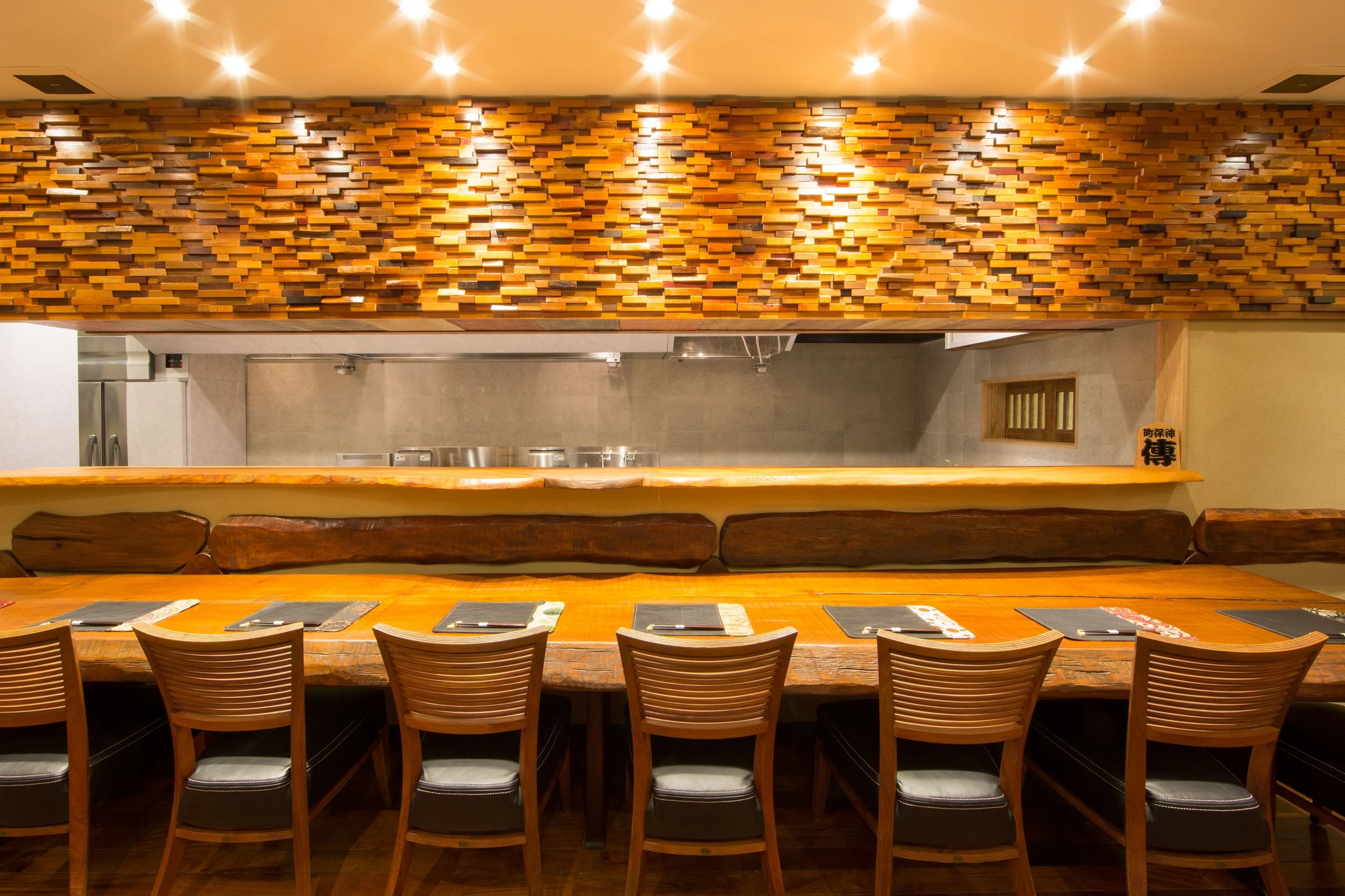
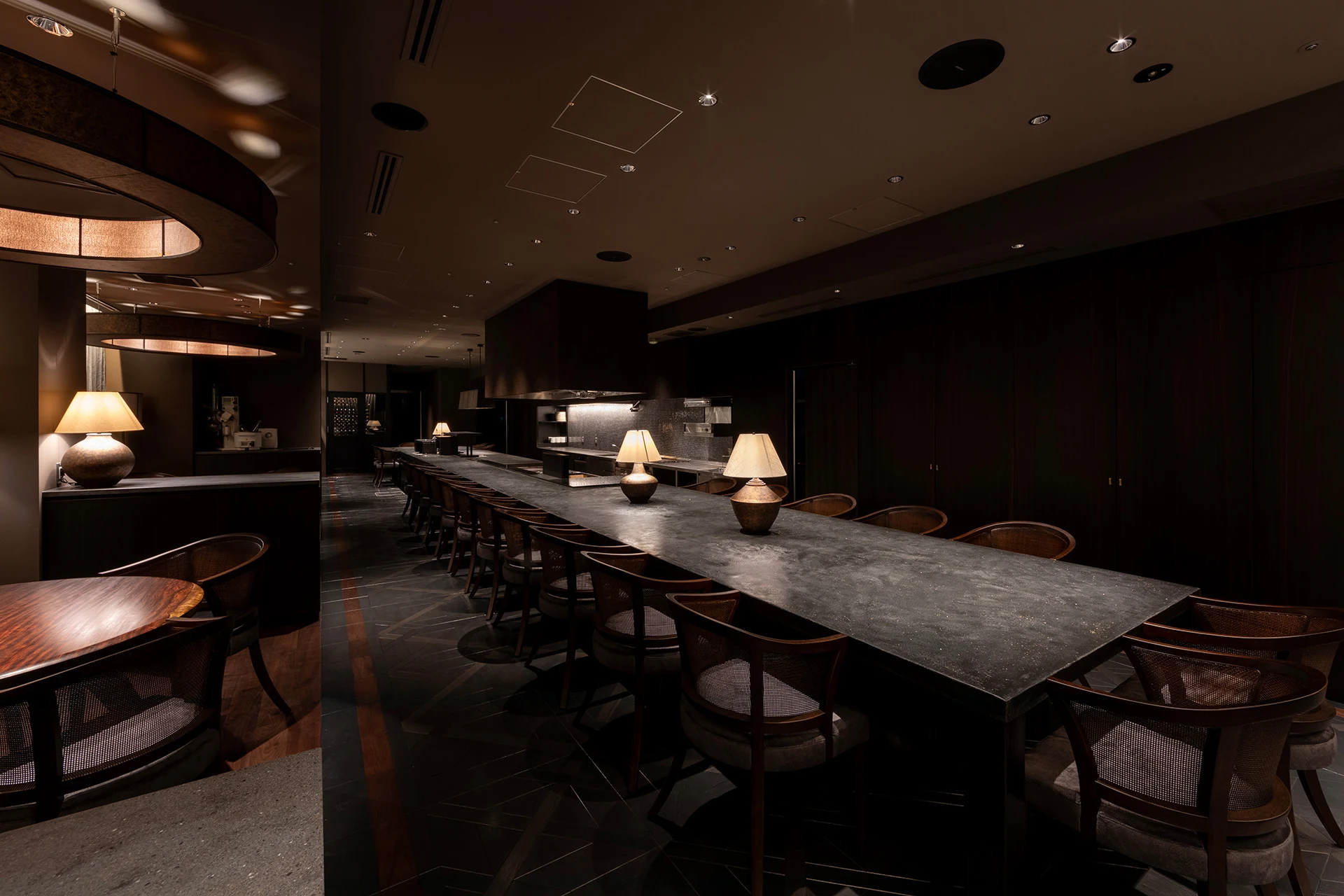
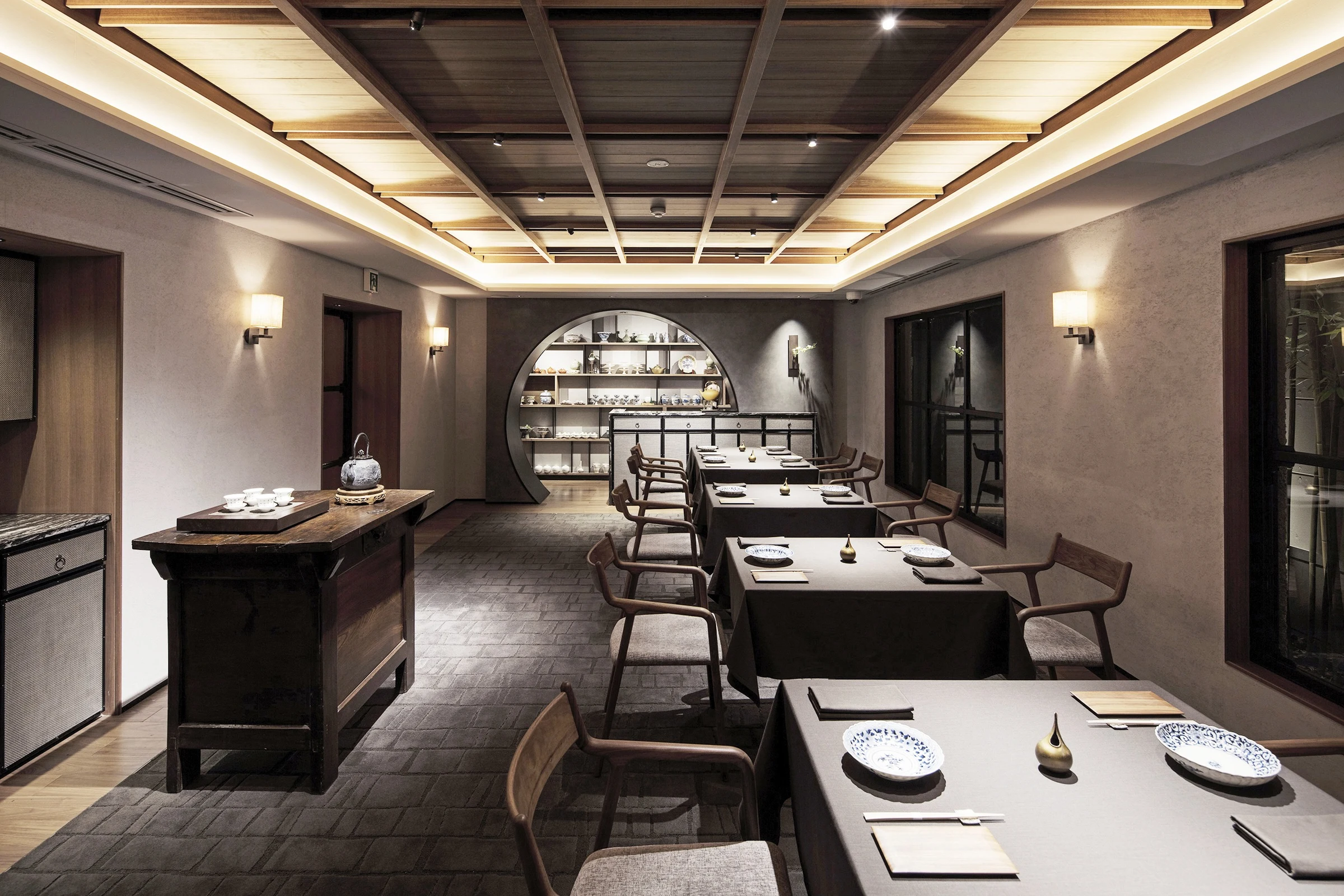
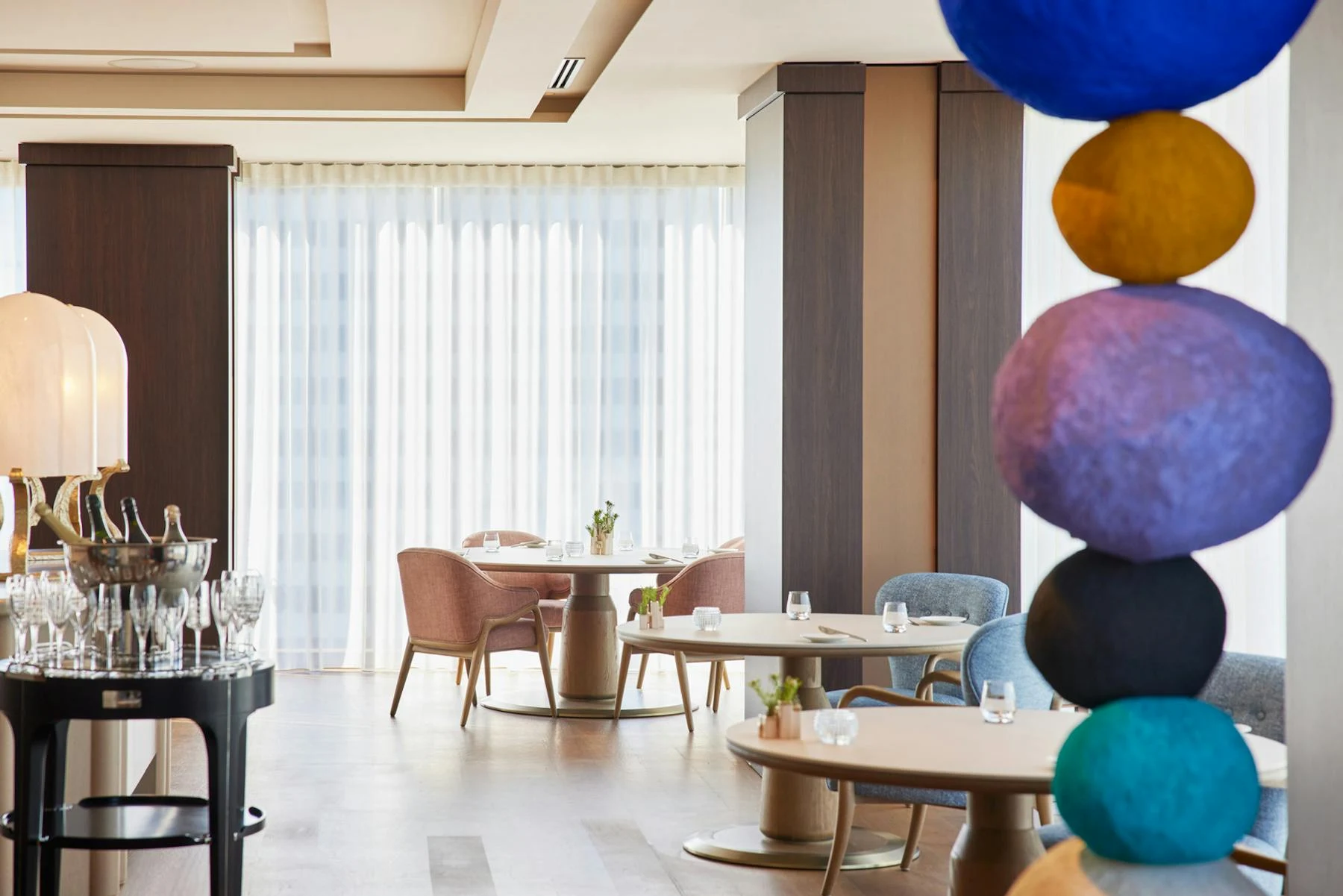
The room sits below Lions Yotsuya Tower Gate, in the Yotsuya-Sanchome district, after the restaurant’s move from Akebonobashi. The setting is modest: a light wooden counter, simple decor, private rooms, ceramics that take the food seriously without asking for attention first. The quiet suits the work. Aromas reach the counter before explanation does.
Counter dining makes Hara’s decisions visible. A truffle is shaved, a bowl is turned, a hand roll is passed before the nori softens. The place does not rely on spectacle in the room; it puts the pressure on sequencing, tableware, and the distance between maker and guest. That distance is short at Haramasa, especially when the claypot rice reaches the counter under black truffle.
Questions
Frequently asked
Who is behind Haramasa?
Haramasa is led by Shotaro Hara, who is both owner and chef-owner. He trained in kaiseki kitchens in Osaka and Tokyo and spent 13 years as an understudy before opening the restaurant in 2013.
What kind of cooking does Haramasa do?
It serves modern kaiseki at the counter, using the structure of the form and then bringing in richer ingredients such as black truffles, foie gras, caviar, cod milt, sea urchin and wagyu.
What are some dishes associated with the restaurant?
Dishes reported from the counter include hassun, gout somen, claypot rice finished with black truffle, chawanmushi with hairy crab and foie gras, abalone with liver sauce, blowfish tempura, salt-grilled nodoguro and hand rolls assembled at the bench-side.
What is the booking situation at Haramasa?
Reservations are essential, and bookings are taken directly. The dress code is smart casual.
Where is Haramasa and what are its hours?
Haramasa is in Yotsuya-Sanchome, Tokyo, below Lions Yotsuya Tower Gate. It is open Monday to Saturday for lunch from 12 to 2 PM and dinner from 6 PM to 12 AM, and it is closed on Sunday.
The field
How it compares
| Place | Cuisine | Notes | Awards |
|---|---|---|---|
| Haramasa | Modern Kaiseki | Shinjuku, $$$$ | · |
| Den | Modern Japanese Kaiseki | Tokyo | Michelin 2 Stars, World's 50 Best |
| Florilège | Modern French-Japanese Plant-Based Fine Dining | Tokyo | Michelin 2 Stars, World's 50 Best |
| Narisawa | Modern Japanese Satoyama Fine Dining | Tokyo | Michelin 2 Stars, World's 50 Best |
| Quintessence | Modern French Fine Dining | Tokyo | Michelin 3 Stars |
| Sazenka | Modern Chinese Fine Dining | Tokyo | Michelin 3 Stars, World's 50 Best |
| Sézanne | Modern French Fine Dining | Tokyo | Michelin 3 Stars, World's 50 Best |
In residence

Similar places
Modern Japanese Kaiseki
Den
Tokyo, Japan
★★ · 50 Best
Modern French-Japanese Plant-Based Fine Dining
Florilège
Tokyo, Japan
★★ · 50 Best
Modern Japanese Satoyama Fine Dining
Narisawa
Tokyo, Japan
★★ · 50 Best
Modern French Fine Dining
Quintessence
Tokyo, Japan
★★★
Modern Chinese Fine Dining
Sazenka
Tokyo, Japan
★★★ · 50 Best
Modern French Fine Dining
Sézanne
Tokyo, Japan
★★★ · 50 Best