- Relais Chateaux Award · 2026
- Relais Chateaux Award · 2025
Where Salamanca Meets the Spanish Larder
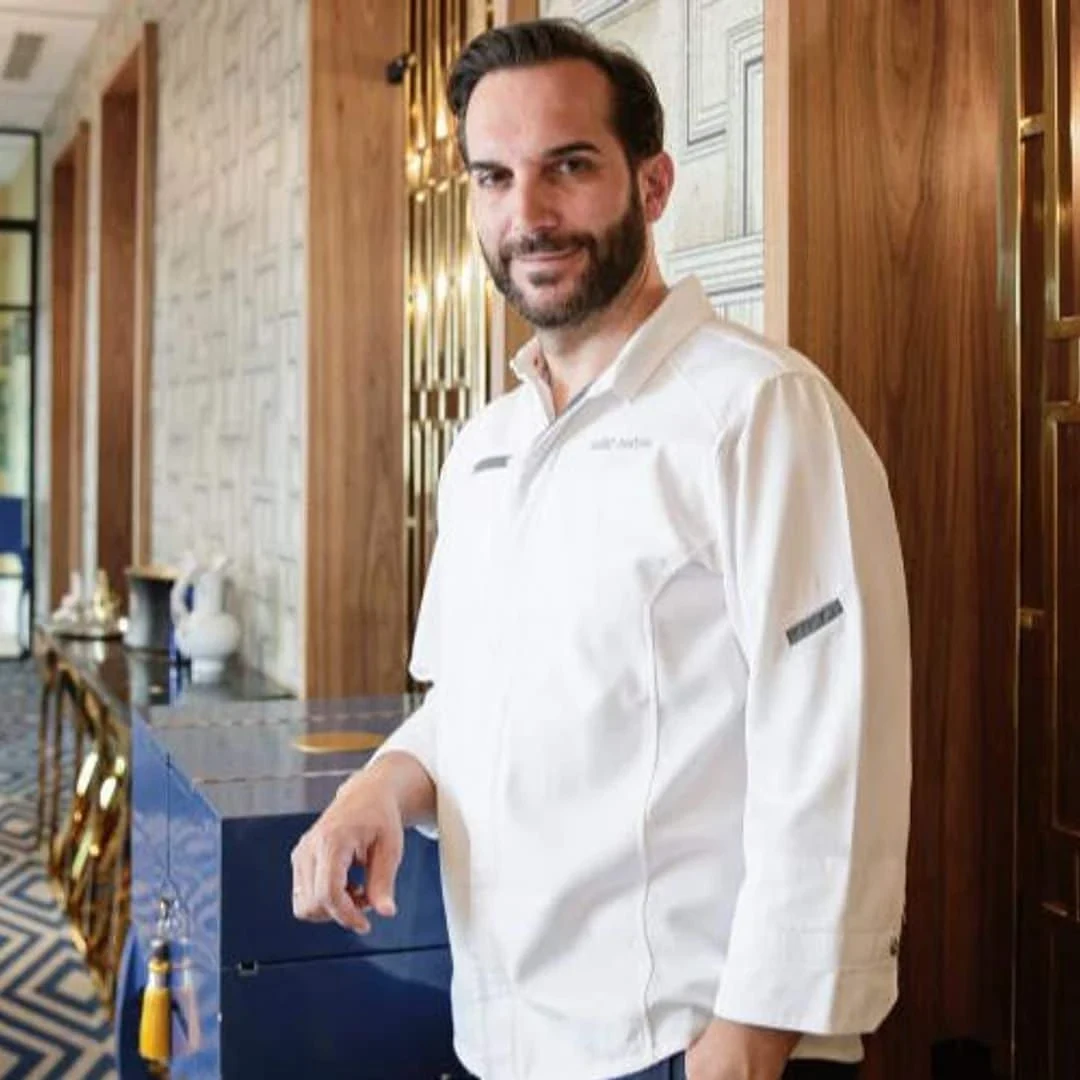
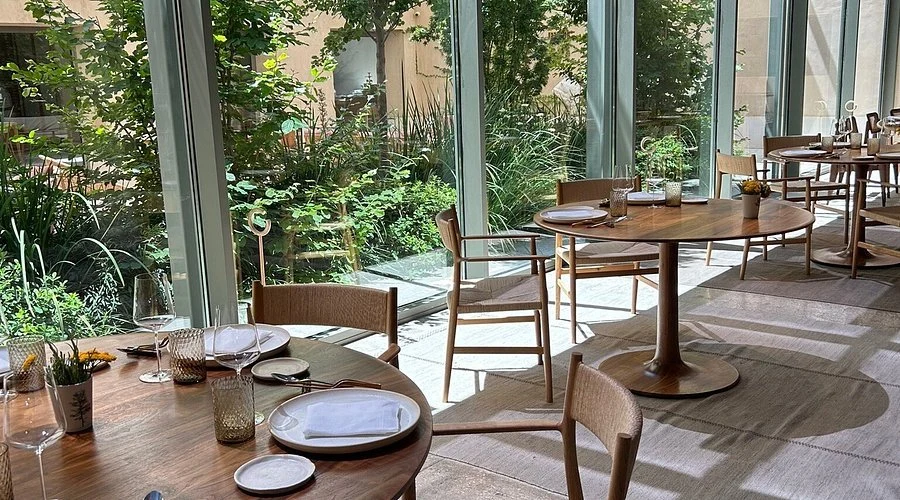
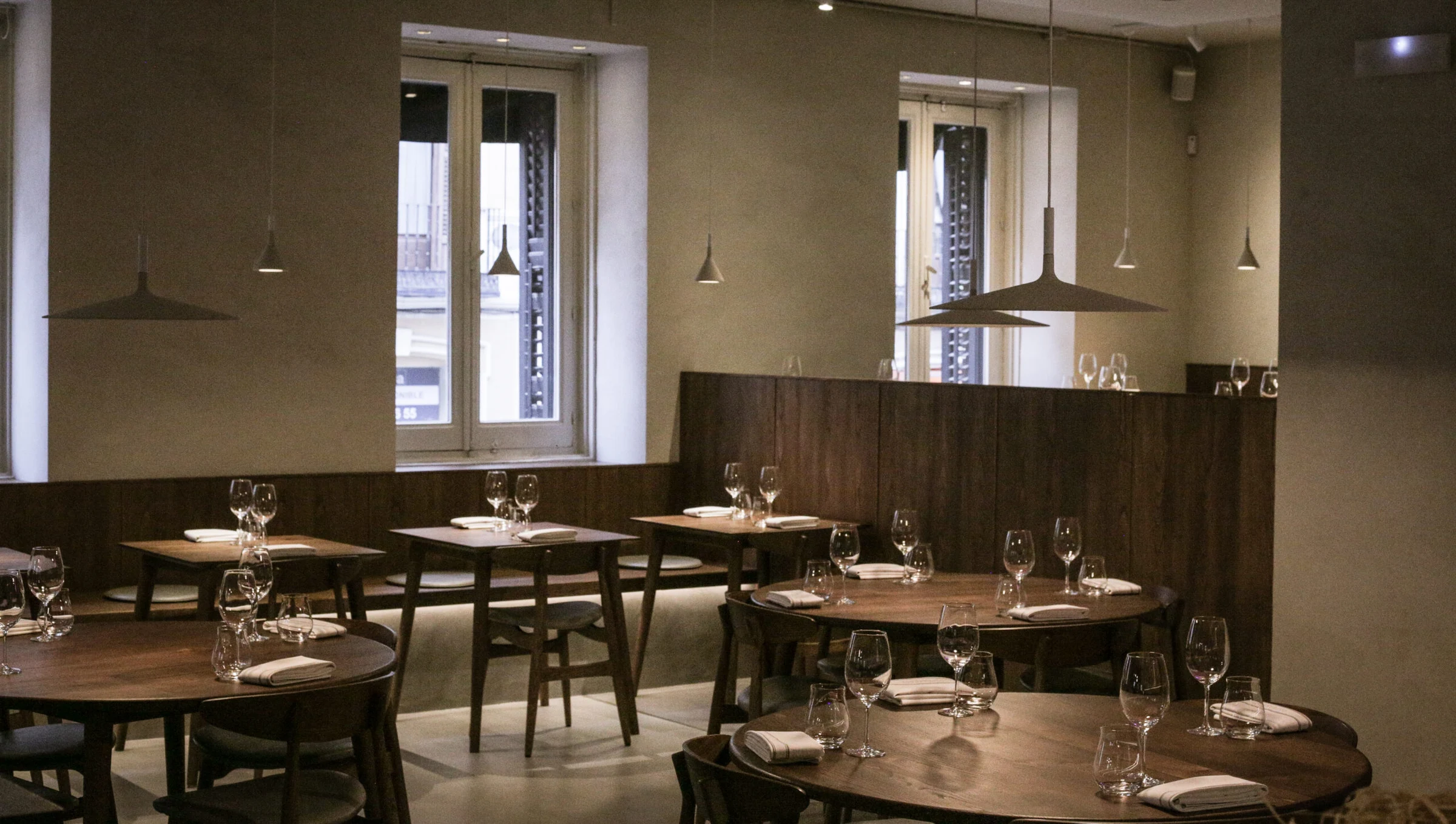
Calle de Diego de León runs through one of Madrid's more composed dining neighbourhoods, where the Salamanca district's broad avenues and established residential character have long attracted kitchens that prioritise craft over spectacle. This is not the Madrid of late-night taberna culture or the tourist-facing tapas corridor, it is a quartier where serious cooking tends to land quietly, accumulating a loyal local following before the broader conversation catches up. Haroma fits that pattern precisely. It is a restaurant in Madrid's Salamanca district, led by Mario Sandoval, with a Google rating of 4.5 and an estimated price of about $75 per person.
The broader context matters here. Spain's post-elBulli generation produced a wave of chefs who absorbed the language of avant-garde technique and then asked a harder question: what do you do with it once the novelty fades? The answer, at the most considered end of the spectrum, has been a turn toward terroir, not as a marketing concept but as a structural principle. Regional ingredients, seasonal cycles, and geographic identity have become the raw material that technique is applied to, rather than the other way around. Haroma's recognition as Expression of the Terroir places it squarely within that movement.
The Sunday letter
Find new places through the people who run them.
Our Sunday email brings you the chefs, winemakers and hoteliers behind our newest stories. See a sample before you subscribe.
See a sample of the Sunday emailOne email a week. Unsubscribe from any issue.
Mario Sandoval and the Terroir Argument
Within Spain's contemporary cooking scene, terroir-led restaurants occupy a particular position: they tend to require more from the diner, familiarity with regional produce, attention to seasonal rhythm, and more from the kitchen, which must make geography legible on a plate without resorting to folklore. Chef Mario Sandoval operates in this space, and Haroma functions as the articulation of that approach in Madrid's Salamanca address.
Sandoval's profile in the Spanish culinary conversation predates Haroma, which positions the restaurant as a considered project rather than a debut. That matters when reading the Expression of the Terroir recognition: it is not a credential attached to an emerging voice, but to a chef with an established point of view now applied in a specific, neighbourhood-rooted context. Compare that positioning to the more overtly theatrical end of Madrid's high-end scene, DiverXO (Progressive - Asian, Creative), which holds three Michelin stars and operates at maximum provocation, and Haroma's quieter register becomes its clearest distinguishing signal.
Spain's Terroir Movement in a Madrid Frame
Spain's regional cooking traditions are among the most geographically differentiated in Europe. The Basque Country, Galicia, Andalusia, and Castile each operate with distinct larder logics, and Madrid has historically played the role of aggregator, a capital city that draws produce and people from across the peninsula without necessarily owning a single terroir of its own. The more interesting kitchens in the city have leaned into that tension, using Madrid's position as a crossroads to build menus that reference regional specificity without being locked into a single geography.
Haroma's Expression of the Terroir recognition suggests a more committed stance than the aggregator model, a kitchen that has made explicit choices about where its ingredients come from and what those choices mean for the plate. That kind of editorial discipline in sourcing is increasingly the differentiator at this tier of Spanish cooking, where technique is assumed and the argument is made through provenance. Restaurante Montia takes a similar stance in the Madrid context, while beyond the capital, Azurmendi in Larrabetzu and Aponiente in El Puerto de Santa María represent the most rigorous versions of terroir commitment in Spanish fine dining.
The 4.5 rating across 433 Google reviews places Haroma in a range that reflects genuine consistency rather than viral novelty. High-volume positive scores at creative fine dining addresses in Madrid tend to cluster around the mid-fours when the kitchen is technically sound and service matches the ambition of the food; a score sustained across more than four hundred responses carries more interpretive weight than a thinner sample.
Placing Haroma in Madrid's Creative Tier
Madrid's Michelin-decorated creative tier is anchored by a handful of addresses that together define what the city's cooking currently argues for internationally. Coque holds two stars with a Spanish-creative approach; Deessa and Paco Roncero operate in similar Michelin-recognised territory. A'Barra Restaurante y Barra Gastronómica pursues modern Spanish cooking with a format emphasis on the counter experience. Haroma, with its terroir recognition rather than a star count in the available record, occupies an adjacent register, serious in ambition, neighbourhood-rooted in character, and positioned for a diner who is not chasing institutional validation but looking for cooking that has something to say about place.
That positioning also connects to a wider pattern in Spanish fine dining. El Celler de Can Roca in Girona and Martin Berasategui in Lasarte - Oria are the canonical examples of what Spanish cooking becomes when technique, territory, and generational depth converge. Arzak in San Sebastián is the historical anchor of the Basque avant-garde. Cocina Hermanos Torres in Barcelona pursues a similar terroir-conscious creative methodology from a Catalan base. Haroma is the Madrid entry point to that conversation, not a scaled-down version of those addresses, but a kitchen asking the same fundamental questions from a Salamanca street.
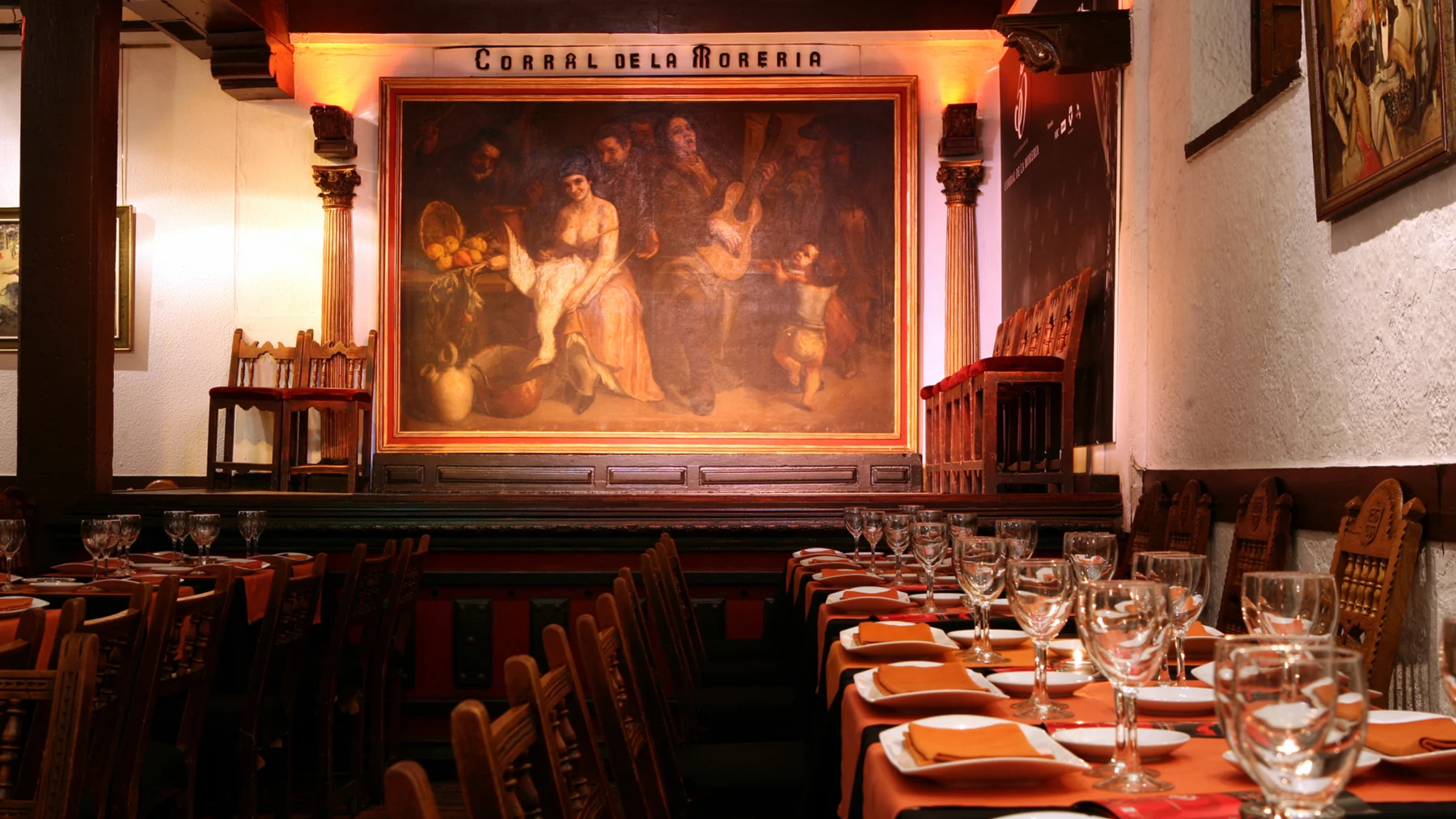
The city's offer extends well beyond the creative fine dining tier. El Lince and Corral de la Morería represent different dimensions of what Madrid does with tradition, the former contemporary, the latter one of the capital's most established cultural dining formats. Modern Spanish cooking also travels well: 55 Pasos in A Coruña and Basque Kitchen by Aitor in Singapore show how the idiom functions outside its home geography.
Know Before You Go
- Address: Calle de Diego de León, 43, Salamanca, 28006 Madrid, Spain
- District: Salamanca
- Chef: Mario Sandoval
- Cuisine: Modern Spanish
- Recognition: Expression of the Terroir
- Google Rating: 4.5 (412 reviews)
- Booking: Contact the restaurant directly; specific booking method not confirmed
- Pricing: about $75 per person. Hours: Mon to Sun, 1 to 4 PM and 8 to 11 PM. Dress code: smart casual.
Questions
Frequently asked
Who works at Haroma?
Made By profiles Mario Sandoval (Chef) at Haroma.
How expensive is Haroma?
Haroma is listed at a price level of $$$$.
Where is Haroma and what does it serve?
Haroma is in Lista, Madrid, serving Avant-Garde Spanish Fine Dining.
The field
How it compares
| Place | Cuisine | Notes | Awards |
|---|---|---|---|
| Haroma | Avant-Garde Spanish Fine Dining | Lista, $$$$ | · |
| Coque | Modern Spanish Fine Dining | Madrid | Michelin 2 Stars |
| Corral de la Morería | Modern Spanish Fine Dining with Flamenco | Madrid | Michelin 1 Star |
| Desde 1911 | Premium Seafood Fine Dining | Madrid | Michelin 1 Star |
| DiverXO | Avant-Garde Spanish Tasting Menu | Madrid | Michelin 3 Stars, World's 50 Best |
| DSTAgE | Avant-Garde Spanish Tasting Menus | Madrid | Michelin 2 Stars |
| Paco Roncero | Avant-Garde Spanish Fine Dining | Madrid | Michelin 2 Stars |
In residence
Similar places
Modern Spanish Fine Dining
Coque
Madrid, Spain
★★
Modern Spanish Fine Dining with Flamenco
Corral de la Morería
Madrid, Spain
★
Premium Seafood Fine Dining
Desde 1911
Madrid, Spain
★
Avant-Garde Spanish Tasting Menu
DiverXO
Madrid, Spain
★★★ · 50 Best
Avant-Garde Spanish Tasting Menus
DSTAgE
Madrid, Spain
★★
Avant-Garde Spanish Fine Dining
Paco Roncero
Madrid, Spain
★★

The Sunday letter
Get the next Made By story in your inbox.
We send one email every Sunday morning with the places and people we covered that week.
See a sample of the Sunday emailOne email a week. Unsubscribe from any issue.