Honey Road

In Residence
Cara Tobin
Owner
- 01CuisineEastern Mediterranean Mezze
- 02CityBurlington, United States
- 03RecognitionJames Beard Award
- James Beard Winner · James Beard Foundation
- James Beard Award Semi Finalist · 2025
Church Street and the Eastern Mediterranean Tradition
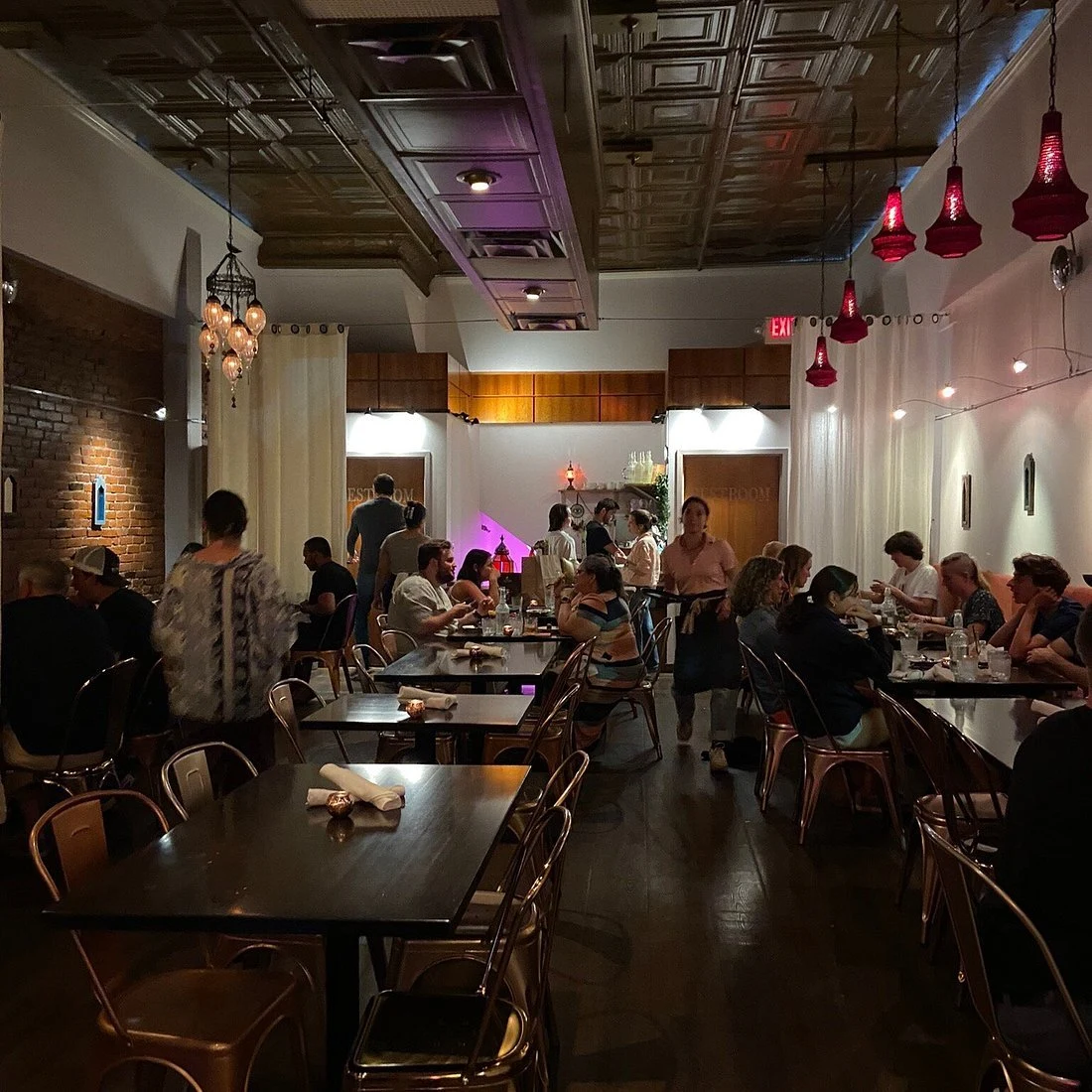
Burlington's Church Street is the axis around which the city's dining scene rotates. Foot traffic is consistent year-round, but the corridor has matured well beyond the casual bar-and-burger format that once defined it. In that context, Honey Road at 156 Church St sits in an interesting position: it brings a cuisine tradition rooted in the Eastern Mediterranean, specifically the shared-plate, mezze-forward logic of Lebanon, Israel, Turkey, and the broader Levant, into a New England city whose food culture has historically leaned hard into farm-to-table Americana. That contrast is productive. The mezze format, with its emphasis on abundance through accumulation rather than single-plate centrepieces, tends to encourage a different kind of dining behaviour than Burlington's more conventional options.
Church Street itself is worth contextualising. The pedestrian mall runs through the commercial heart of downtown Burlington and hosts a range of restaurants that span price points and formats, from the wood-fired informality of American Flatbread to the Italian-leaning Bardō Brant and the seafood-and-steak positioning of black & blue Steak and Crab. Honey Road does not compete directly with any of them. Its cuisine category sits apart from the Italian scratch-pasta tradition represented elsewhere on the Burlington scene by venues like Sorella, and it operates at a register that is harder to place: not casual, not formal, but deliberately convivial.
The Ritual of the Mezze Table
Eastern Mediterranean dining, when done with fidelity to the tradition, is structured around accumulation and conversation rather than the linear progression of a European tasting menu. You do not eat a starter, wait, eat a main, wait, receive dessert. You build a table. Small plates arrive in loose sequence, condiments and breads land early, and the meal finds its own pace through the choices of the people at the table. That rhythm demands a particular approach from diners: you need to order more than feels instinctively comfortable, resist the urge to anchor the meal around one protein, and resist, too, the habit of treating a mezze restaurant like a conventional sit-down. The format rewards curiosity and a willingness to share.
This approach to dining has parallels at more formally recognised addresses. At Atomix in New York City, the progression of courses is governed by deep cultural logic from Korean tradition; at Blue Hill at Stone Barns in Tarrytown, the meal is shaped by agricultural seasonality. Honey Road operates at a different scale and with different ambitions, but the underlying principle holds: the structure of the meal is itself the statement. In the mezze tradition, that structure is hospitality-first, designed to put more food on the table than is strictly necessary, because abundance is part of the message.
Practically speaking, the shared-plate format at a restaurant like Honey Road means group size affects the experience significantly. Two diners can work through the menu, but four or more opens the table to a wider spread of dishes, which is how the format was intended to function. Burlington's dining scene has several venues where the experience scales with group size; for Eastern Mediterranean specifically, that scaling has particular logic.
Burlington's Position in the Regional Dining Conversation
Vermont's dining scene is often read through the lens of its agricultural identity: dairy, maple, heritage grains, farmers' markets. That framing is accurate but partial. Burlington specifically has developed a dining culture that draws in part on its university population, its proximity to Montreal (roughly 100 miles north), and a food-conscious local demographic that supports a wider range of cuisine formats than the state's rural image might suggest. The city has sustained Chinese cooking of some depth, as seen at A Single Pebble, and the natural wine focus of Barra Fion points to a bar culture that has absorbed national trends. Honey Road's Eastern Mediterranean positioning fits into that pattern: a cuisine tradition that is well-established in major American cities, arriving in Burlington at a moment when the city's dining curiosity has expanded well beyond its comfort zone.
For comparison, Eastern Mediterranean cooking has a longer foothold in cities like New York, Chicago, and Los Angeles, where the dining ecosystem is large enough to sustain multiple formats within the same cuisine category. The level of precision and formal recognition achieved at addresses like Le Bernardin in New York City or Alinea in Chicago is not the frame through which to assess Honey Road, which operates in a different tier and with different objectives. The relevant comparison is neighbourhood-level: does the restaurant serve its cuisine tradition with integrity, and does it bring something genuinely distinct to its city? In Burlington, the answer to the second question is straightforwardly yes.
What to Expect When You Arrive
The physical approach is simple: 156 Church St is on the pedestrian stretch, accessible on foot from most downtown Burlington accommodation and from the waterfront. Reservations are recommended, and walk-in availability depends on day and time of arrival. Weekend evenings fill the block consistently, and a restaurant drawing on the mezze format attracts groups, which reduces table turnover compared to a two-course dinner house. Arriving early in the service or on a weekday evening improves walk-in prospects.
For those planning ahead, the mezze format at Honey Road rewards a certain kind of pre-arrival consideration: think about the group composition, whether you have guests unfamiliar with the cuisine, and how you want to pace the meal. The tradition handles dietary variation reasonably well; vegetables, legumes, and grains are load-bearing in the Eastern Mediterranean repertoire rather than afterthoughts. Diners at restaurants like Single Thread Farm in Healdsburg or Providence in Los Angeles encounter menus where dietary accommodation is woven into the design from the start. The mezze tradition operates by a similar logic: the format is structurally inclusive because the table is built from many small things rather than one large one.
Questions
Frequently asked
What recognition does Honey Road hold?
Honey Road holds a James Beard award.
Who works at Honey Road?
Made By profiles Cara Tobin (Restaurateur) and Allison Gibson (Restaurateur) at Honey Road.
How expensive is Honey Road?
Honey Road is listed at a price level of $$$.
Where is Honey Road and what does it serve?
Honey Road is in Church Street Marketplace, Burlington, serving Eastern Mediterranean Mezze.
The field
How it compares
| Place | Awards | Cuisine | Notes |
|---|---|---|---|
| Honey Road | James Beard | Eastern Mediterranean Mezze | Church Street Marketplace, $$$ |
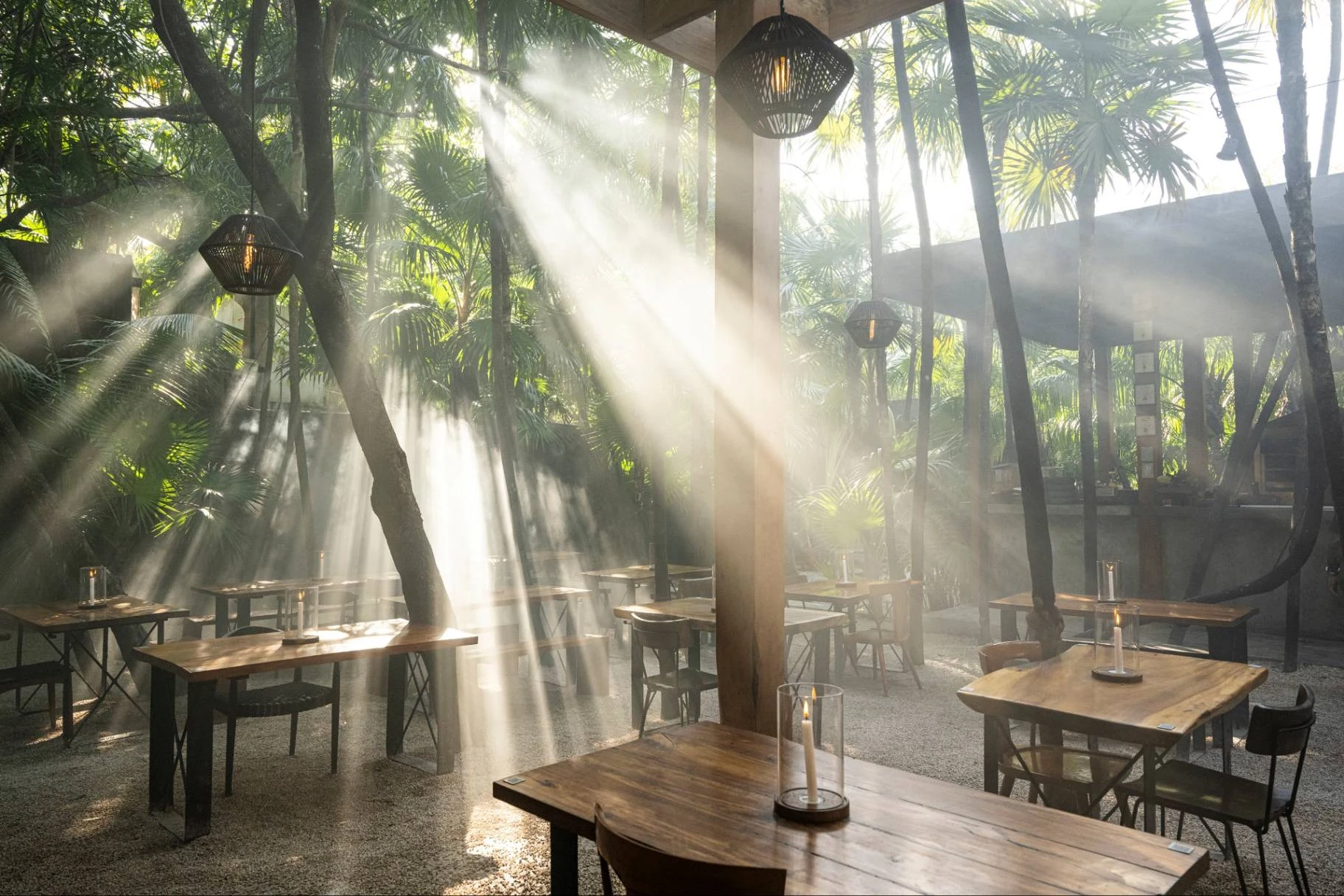
| Arca | World's 50 Best | Modern Yucatan Fire-Cooked Small Plates | Tulum |
| Casa Marcial | Michelin 3 Stars | Modern Asturian Fine Dining | Arriondas |
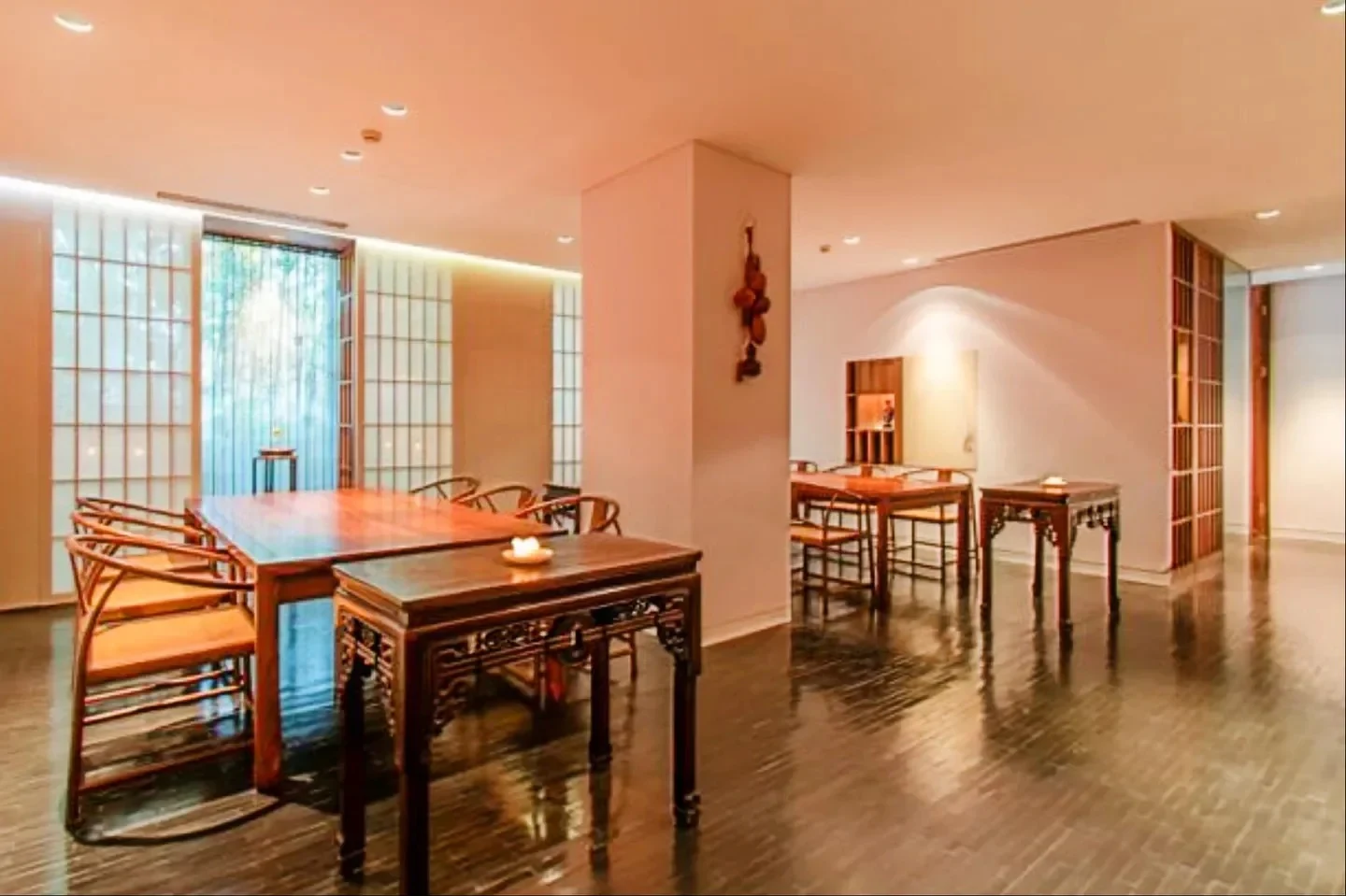
| Fu He Hui | Michelin 2 Stars, World's 50 Best | Modern Seasonal Vegetarian Fine Dining | Shanghai |
| Ikoyi | Michelin 2 Stars, World's 50 Best | Modern West African Fine Dining | London |
| La Cime | Michelin 2 Stars, World's 50 Best | Modern French with Japanese Ingredients | Osaka |
| The Inn at Little Washington | Michelin 3 Stars | Contemporary American Fine Dining with French Influence | Washington |
In residence

Similar places
Modern Yucatan Fire-Cooked Small Plates
Arca
Tulum, Mexico
50 Best
Modern Asturian Fine Dining
Casa Marcial
Arriondas, Spain
★★★
Modern Seasonal Vegetarian Fine Dining
Fu He Hui
Shanghai, China
★★ · 50 Best
Modern West African Fine Dining
Ikoyi
London, United Kingdom
★★ · 50 Best
Modern French with Japanese Ingredients
La Cime
Osaka, Japan
★★ · 50 Best
Contemporary American Fine Dining with French Influence
The Inn at Little Washington
Washington, United States
★★★