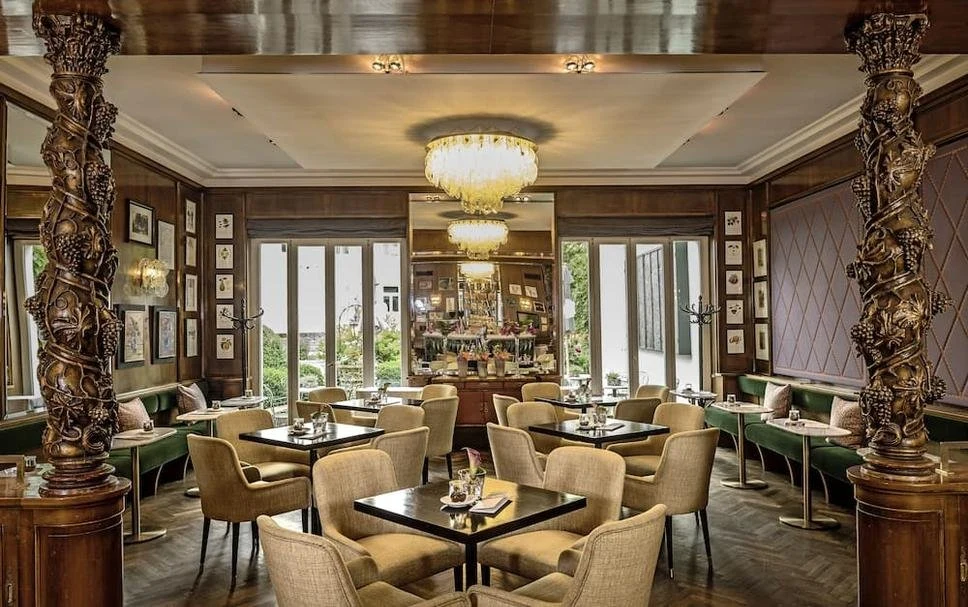
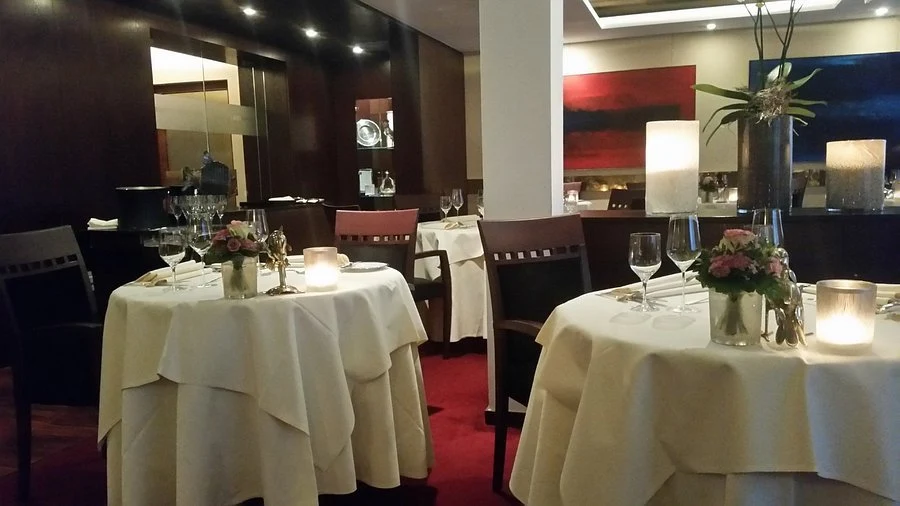
Hotel & Restaurant Jörg Müller
- 01CuisineClassic German Fine Dining
- 02CityWesterland, Germany
- Opinionated About Dining Classical in Europe Ranked #300 · 2025
- World's Best Wine Lists Awards WBWL 3-Star · 2023
A Fine-Dining Address at the Edge of Germany
Sylt sits at the northern tip of Germany, separated from the mainland by the Wadden Sea and connected only by a single railway causeway. The island has long attracted a particular kind of visitor: those who come for the dunes, the raw North Sea light, and the sense of deliberate remove from urban life. Its main town, Westerland, is not a place that typically appears in conversations about Germany's serious dining scene, that conversation more often runs through Hamburg to the south, or further into the country toward destinations like Restaurant Haerlin in Hamburg or Schwarzwaldstube in Baiersbronn. Which is precisely what makes the presence of Hotel & Restaurant Jörg Müller on Süderstraße worth examining closely.
Classical European dining has increasingly concentrated in urban centers or in well-established resort destinations with dense high-spending tourist infrastructure. The 2025 Opinionated About Dining Classical in Europe ranking, which places Jörg Müller at #300, maps a tradition that prizes technical rigor, produce quality, and continuity of craft.
The Classical German Tradition and Where This Kitchen Sits
Germany's classical fine-dining lineage is less internationally discussed than its French counterpart, but it is no less structured. Chefs working in this register typically train across multiple kitchens before establishing their own voice, and the progression tends to be methodical: classical French techniques absorbed and then gradually inflected with German produce, regional specificity, and a preference for precision over novelty. The kitchen at Jörg Müller operates within this tradition, and chef Jörg Müller's continued association with the restaurant gives it a continuity that distinguishes it from properties where the founding chef has moved on.
That kind of longevity is worth placing in context. Germany's upper-tier dining scene includes houses that have maintained their standard across decades, Waldhotel Sonnora in Dreis and Victor's Fine Dining by Christian Bau in Perl are examples from the western part of the country. What such restaurants share is a commitment to the classical register at a time when the broader industry has largely moved toward either casual formats or highly conceptual tasting menus. Jörg Müller belongs to this cohort rather than to the newer wave represented by, say, CODA Dessert Dining in Berlin or ES:SENZ in Grassau.
For a reader trying to calibrate expectations: this is not a restaurant pursuing the kind of creative vocabulary that defines Aqua in Wolfsburg or the Franco-German hybrids found at Vendôme in Bergisch Gladbach. The OAD Classical ranking is the relevant frame, it signals a kitchen whose ambitions are about depth within a tradition, not departure from it.
The Hotel-Restaurant Format on Sylt
The combined hotel-and-restaurant structure at Süderstraße 8 matters more here than it would in a major city. On Sylt, where the island's geography enforces a certain kind of stay, you come, you settle, you eat well, the ability to sleep above or beside the kitchen changes the experience considerably. Guests do not need to plan logistics around a single dinner reservation; the restaurant is simply part of where they are. This format is more common among Germany's serious regional dining destinations than it is in urban contexts, and it tends to produce a different rhythm of hospitality: longer, less transactional, more attentive to the full arc of a stay.
For those planning a visit to Westerland specifically for the restaurant, the hotel component removes one layer of logistical friction. Sylt's accommodation options span a wide range, from beach-fronting spa hotels to smaller guesthouses, but few combine a serious kitchen with the room product in the same address.
Placing It in Germany's Wider Fine-Dining Geography
Germany's fine-dining map is more distributed than France's or Spain's, with serious kitchens spread across smaller cities and rural destinations rather than concentrated in one or two urban poles. The OAD Classical list reflects this: alongside urban anchors like JAN in Munich and Hamburg's established dining rooms, it consistently surfaces regional houses that the international press undercovers. Jörg Müller's #300 position in 2025 places it in a range where peer recognition is meaningful and where the relevant comparison set is other long-form classical European restaurants rather than casual island dining.
For readers coming from or passing through Hamburg, the journey north by train to Westerland takes roughly two and a half hours from Hamburg Altona, with the final section running across the Hindenburgdamm causeway over the Wadden Sea. The trip adds genuine context to arriving at a serious restaurant in an unexpected place. Those interested in German cooking in international settings can also look at Sühring in Bangkok as a point of comparison for how the tradition travels.
Additional classical German kitchen references include Schanz in Piesport and Bagatelle in Trier for readers building a broader German fine-dining itinerary, and CARLS Brasserie an der Elbphilharmonie in Hamburg as a German-tradition option at a more accessible price point during a Hamburg stopover.
Planning Your Visit
The address is Süderstraße 8, Westerland, on the island of Sylt in Northern Germany. Booking ahead is recommended, particularly in the summer months when Sylt's visitor numbers peak.
Questions
Frequently asked
How expensive is Hotel & Restaurant Jörg Müller?
Hotel & Restaurant Jörg Müller is listed at a price level of $$$.
Where is Hotel & Restaurant Jörg Müller and what does it serve?
Hotel & Restaurant Jörg Müller is in Westerland, Westerland, serving Classic German Fine Dining.
The field
How it compares
| Place | Cuisine | Notes | Awards |
|---|---|---|---|
| Hotel & Restaurant Jörg Müller | Classic German Fine Dining | Westerland, $$$ | · |
| Erbprinz | Classic German Fine Dining | Ettlingen | Michelin 1 Star |
| Piazza Duomo | Modern Piedmontese Fine Dining | Alba | Michelin 3 Stars, World's 50 Best |
| Quique Dacosta | Avant-Garde Spanish Fine Dining | Dénia | Michelin 3 Stars, World's 50 Best |
| Smyth | Modern American Tasting Menu | Chicago | Michelin 3 Stars, World's 50 Best |
| Steinheuers Restaurant | Classic German Fine Dining | Bad Neuenahr-Ahrweiler | Michelin 2 Stars |
| Zur Tant | Classic German Fine Dining | Cologne | Michelin 1 Star |
Similar places
Classic German Fine Dining
Erbprinz
Ettlingen, Germany
★
Modern Piedmontese Fine Dining
Piazza Duomo
Alba, Italy
★★★ · 50 Best
Avant-Garde Spanish Fine Dining
Quique Dacosta
Dénia, Spain
★★★ · 50 Best
Modern American Tasting Menu
Smyth
Chicago, United States
★★★ · 50 Best
Classic German Fine Dining
Steinheuers Restaurant
Bad Neuenahr-Ahrweiler, Germany
★★
Classic German Fine Dining
Zur Tant
Cologne, Germany
★