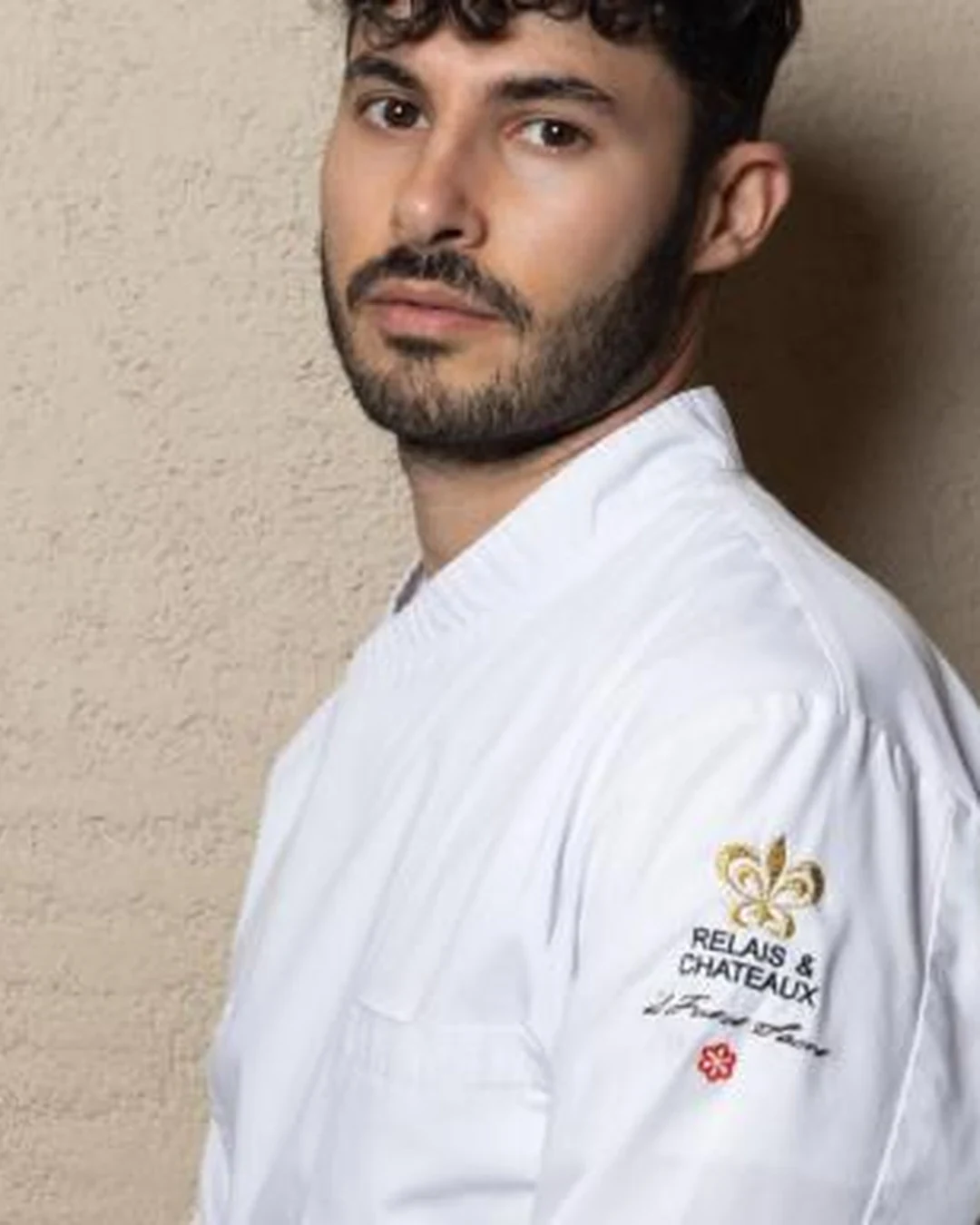
Chef in Residence
Alessandro Menditto
Chef

Sardinia's Gallura region has a handful of restaurants operating at the level where produce provenance and technique converge. Il Fuoco Sacro, set within the Petra Segreta resort outside San Pantaleo, holds a Michelin star and carries the oversight of Enrico Bartolini, Italy's most-starred active chef. The kitchen works with herbs, vegetables, and cheeses from the resort's own farm, placing Mediterranean ingredients at the centre of a creative, modern menu.
<h2>Where the Gallura Backcountry Meets Modern Italian Cookery</h2><p>San Pantaleo sits in the Gallura, the granite-ribbed interior of northeastern Sardinia that most visitors drive through on their way to the Costa Smeralda's beaches. The town itself, a small, stone-built village with a weekly craft market and an outsized reputation among those who know it, occupies a different register from the coast's resort infrastructure. The restaurants here trade less on sea views and more on the density of the surrounding maquis: rosemary, myrtle, wild fennel, and cistus pressing in from every hillside. It is a culinary microclimate that favours restraint and provenance over spectacle, and Il Fuoco Sacro operates squarely within that tradition.</p><p>The restaurant sits within the Petra Segreta resort, accessed along a road that threads through Mediterranean scrubland. The setting is not incidental. Sardinian fine dining has historically clustered along the coast, at addresses that compete on location as much as on food. A restaurant choosing the Gallura interior, and anchoring itself to a working farm, makes a different argument. That argument is about ingredient fidelity, and it is one the Michelin Guide has found persuasive.</p><h2>The Sardinian Table and Its Northern Variant</h2><p>To understand what Il Fuoco Sacro is doing, it helps to place Sardinian cuisine in its Italian context. The island's food traditions diverge sharply from the mainland. Where Roman cooking is built on offal and braised meat, Neapolitan cuisine on tomato and pizza, and Milanese cooking on butter and risotto, Sardinian food is shaped by pastoral isolation: roasted suckling pig, flat pane carasau bread, aged Pecorino Sardo, myrtle-cured cured meats, and seafood that varies by coast and season. The Gallura sub-region adds its own inflection, a rougher, more herb-forward character than the fishing villages of the south and west.</p><p>Modern Sardinian fine dining has worked with this tradition rather than against it. The island's starred addresses are not numerous, which makes each one carry more weight, and the better ones share a commitment to indigenous ingredients treated with technical precision. Il Fuoco Sacro fits this pattern, drawing on the resort farm for its herbs, vegetables, cheeses, and some of its meat. The Michelin recognition signals that the kitchen is not simply reproducing recipes; it is using regional produce as the raw material for something more considered.</p><h2>Enrico Bartolini's Role and What It Means for the Menu</h2><p>The oversight of Enrico Bartolini gives Il Fuoco Sacro a credentialing anchor that is worth contextualising. Bartolini runs the <a href="https://www.enprimeurclub.com/restaurants/enrico-bartolini-milan-restaurant">Enrico Bartolini restaurant in Milan</a>, which holds three Michelin stars, making him Italy's most-decorated active chef by star count. His culinary network now extends across multiple properties, and his involvement at Il Fuoco Sacro places the restaurant in a peer conversation with addresses operating at a considerably larger scale and budget. For a Sardinian countryside address, that alignment is significant, it suggests a kitchen with access to technical mentorship and supply-chain discipline beyond what an isolated rural property would typically command.</p><p>Italy's top tier of creative Italian cooking, represented by addresses like <a href="https://www.enprimeurclub.com/restaurants/osteria-francescana">Osteria Francescana in Modena</a>, <a href="https://www.enprimeurclub.com/restaurants/le-calandre-rubano-restaurant">Le Calandre in Rubano</a>, <a href="https://www.enprimeurclub.com/restaurants/piazza-duomo-alba-restaurant">Piazza Duomo in Alba</a>, <a href="https://www.enprimeurclub.com/restaurants/reale-castel-di-sangro-restaurant">Reale in Castel di Sangro</a>, and <a href="https://www.enprimeurclub.com/restaurants/dal-pescatore-runate-restaurant">Dal Pescatore in Runate</a>, operates at the three-star level. Il Fuoco Sacro at one star occupies a different rung, but its creative classification and Bartolini connection place it in the same broader tradition: Italian ingredients read through a contemporary technique lens. The comparison is one of lineage. For context on what Italian fine dining looks like when it extends beyond the peninsula entirely, <a href="https://www.enprimeurclub.com/restaurants/8-12-otto-e-mezzo-bombana-hong-kong-restaurant">8 1/2 Otto e Mezzo Bombana in Hong Kong</a> and <a href="https://www.enprimeurclub.com/restaurants/cenci-kyoto-restaurant">cenci in Kyoto</a> show how far the tradition's influence travels.</p><p>The farm-to-table model underpinning the kitchen is not simply a marketing position. When a restaurant grows its own aromatic herbs, the kind of detail that shapes the character of a sauce or a finishing oil, it gains consistency that sourcing through third-party suppliers cannot reliably provide. In the Gallura, where herbs grow with a mineral intensity that reflects the granite soil, the on-property farm is a genuine competitive advantage rather than a brochure talking point.</p><h2>The Physical Experience</h2><p>The restaurant overlooks a garden, with views reaching toward the Sardinian coast. The surrounding maquis scrubland, the dense, fragrant vegetation that defines the Gallura interior, contributes to the sensory context in a way that glass-and-steel urban dining rooms cannot replicate. Fine dining in remote natural settings has become its own sub-category within Italian gastronomy; <a href="https://www.enprimeurclub.com/restaurants/atelier-moessmer-norbert-niederkofler-brunico-restaurant">Atelier Moessmer Norbert Niederkofler in Brunico</a> in South Tyrol represents the alpine version of this model. The Sardinian variant is warmer, more aromatic, more connected to the sea even when the sea is not immediately visible.</p><p>Price positioning at €€€€ places Il Fuoco Sacro at the top of the local market and in line with starred Italian country house restaurants nationally. Dinner service runs from 7:30 PM to 11 PM Tuesday through Saturday. Sunday offers both a lunch sitting (1 PM to 2:30 PM) and an evening service. The restaurant is closed on Mondays. Given the resort setting, advance reservation is essential.</p><p>For those building a wider San Pantaleo itinerary, <a href="https://www.enprimeurclub.com/restaurants/mizuna-restaurant-san-pantaleo-restaurant">Mizuna Restaurant</a> offers an alternative dining option in the village.</p><h2>Where Il Fuoco Sacro Sits in the Wider Italian Scene</h2><p>Italy's starred countryside addresses have increased in number over the past decade as the Michelin Guide has extended its coverage beyond the major cities. The pattern across these rural one-star and two-star restaurants is broadly consistent: strong regional ingredient sourcing, menus that read as personal interpretations of local tradition rather than generic Italian fine dining, and settings that contribute to the experience in ways that urban restaurants cannot. <a href="https://www.enprimeurclub.com/restaurants/uliassi-senigallia-restaurant">Uliassi in Senigallia</a> on the Adriatic coast and <a href="https://www.enprimeurclub.com/restaurants/quattro-passi-marina-del-cantone-restaurant">Quattro Passi in Marina del Cantone</a> on the Amalfi coast illustrate the same coastal-countryside dynamic from different regional vantage points. <a href="https://www.enprimeurclub.com/restaurants/enoteca-pinchiorri">Enoteca Pinchiorri in Florence</a> represents the urban end of the same Italian fine dining conversation, where cellar depth and room formality take on more weight.</p><p>Il Fuoco Sacro's 4.6 rating across 201 Google reviews suggests consistent execution rather than occasional brilliance. For a starred restaurant in a resort setting, where the captive audience effect can sometimes flatten ambition, sustained positive feedback points to a kitchen that is performing to its rating rather than coasting on it.</p><p>The Gallura is not the part of Sardinia that most travelers plan around first. The Costa Smeralda draws on a different set of expectations, larger-scale luxury, yacht culture, international visitor density. San Pantaleo's dining scene, with Il Fuoco Sacro at its most considered end, belongs to a quieter, more rooted version of the island. For those willing to base themselves inland or combine a coastal stay with a drive through the scrubland, it offers something the beachfront addresses cannot: cuisine that actually comes from the place it is served in.</p><h2>Planning Your Visit</h2><p>Il Fuoco Sacro operates Tuesday through Saturday from 7:30 PM, with last orders at 11 PM. Sunday service extends across lunch (1 PM to 2:30 PM) and dinner. The restaurant is closed on Mondays. The €€€€ pricing positions it as an occasion restaurant rather than a casual dinner option. Contacting the Petra Segreta resort directly is the most reliable route to securing a table.</p>
At €€€€ pricing in a formal resort setting with Michelin recognition, the restaurant is calibrated for adult dining. The creative tasting format overseen by Enrico Bartolini and the evening-only service Tuesday through Saturday point toward an experience designed for unhurried, course-by-course attention rather than family meals.
The restaurant sits within the Petra Segreta resort in the Gallura backcountry, surrounded by Mediterranean maquis scrubland and overlooking a garden with coastal views. Arriving from San Pantaleo village or the Costa Smeralda, the shift is marked: rural seclusion rather than resort bustle, with the formality that comes with a 1-Michelin-Star kitchen.
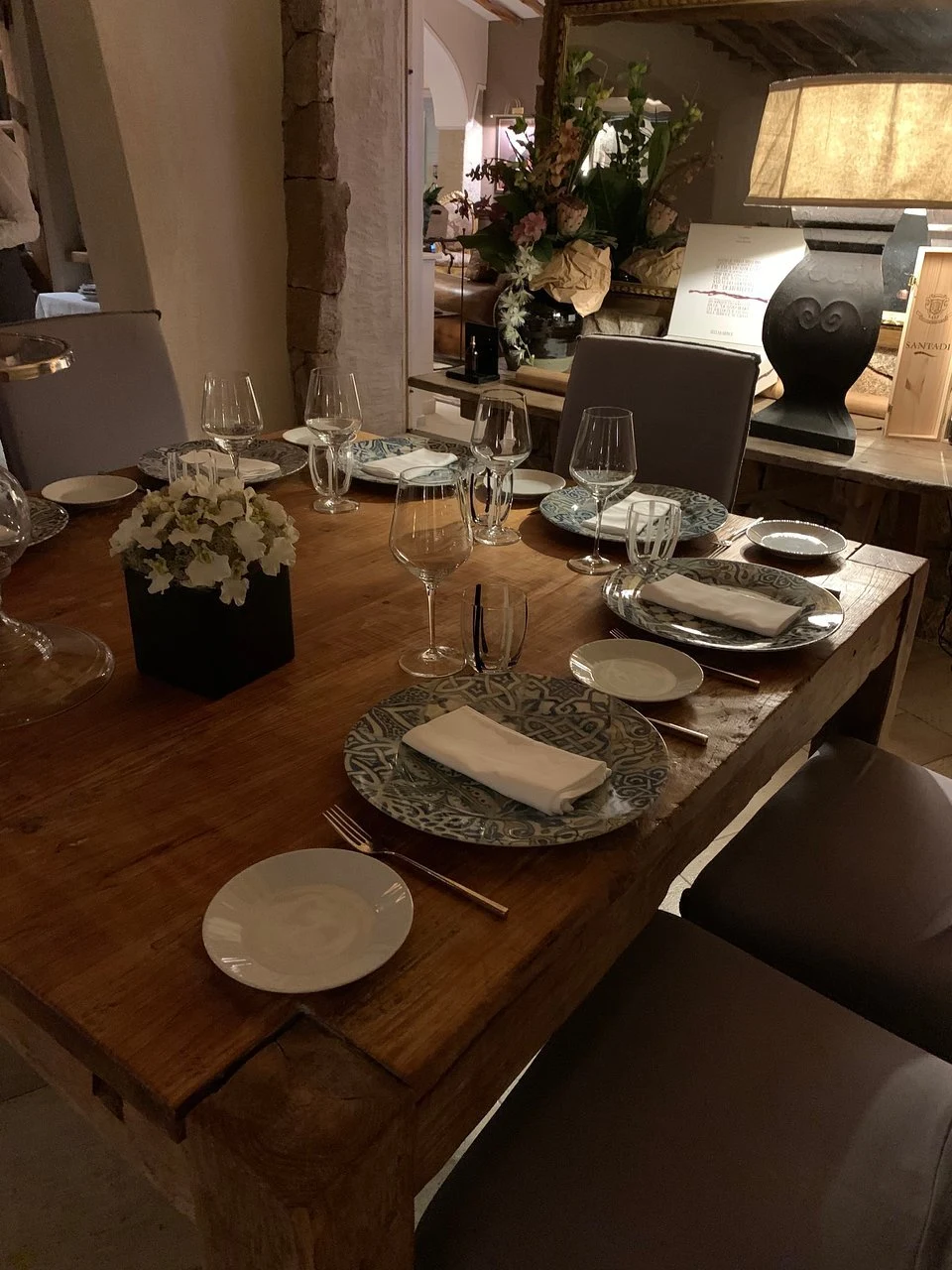
Il Fuoco Sacro has received recognition including: Situated in the magical, rural and secluded setting of the Petra Segreta resort, surrounded by Mediterranean maquis scrubland, the gourmet Il Fuoco Sacro restaurant overlooks a delightful garden and boasts stunning views of the coast. The f….
The Michelin classification is specifically for creative cooking, and the menu's foundation is the Petra Segreta farm, which supplies aromatic herbs, vegetables, cheeses, and some meat directly to the kitchen. Given that provenance, dishes built around those farm ingredients are where the kitchen's distinctiveness is most legible. The Sunday lunch service — the only midday sitting of the week — is worth considering for a different pace.
Via Buddeu, snc, 07026 San Pantaleo Provincia della Gallura Nord-Est Sardegna, Italy
San Pantaleo
Italo Bassi Confusion Restaurant

Japanese-influenced Californian Kaiseki
Single Thread Farm
Healdsburg, United States
★★★ · 50 Best

French Seafood Fine Dining
Le Bernardin
New York City, United States
★★★ · 50 Best

Modern Korean Tasting Menu
Atomix
New York City, United States
★★ · 50 Best

French
Sézanne
Tokyo, Japan
★★★ · 50 Best

Modern Seafood Fine Dining
Providence
Los Angeles, United States
★★★ · 50 Best

Contemporary Plant-Based Fine Dining
Eleven Madison Park
New York City, United States
★★★ · 50 Best