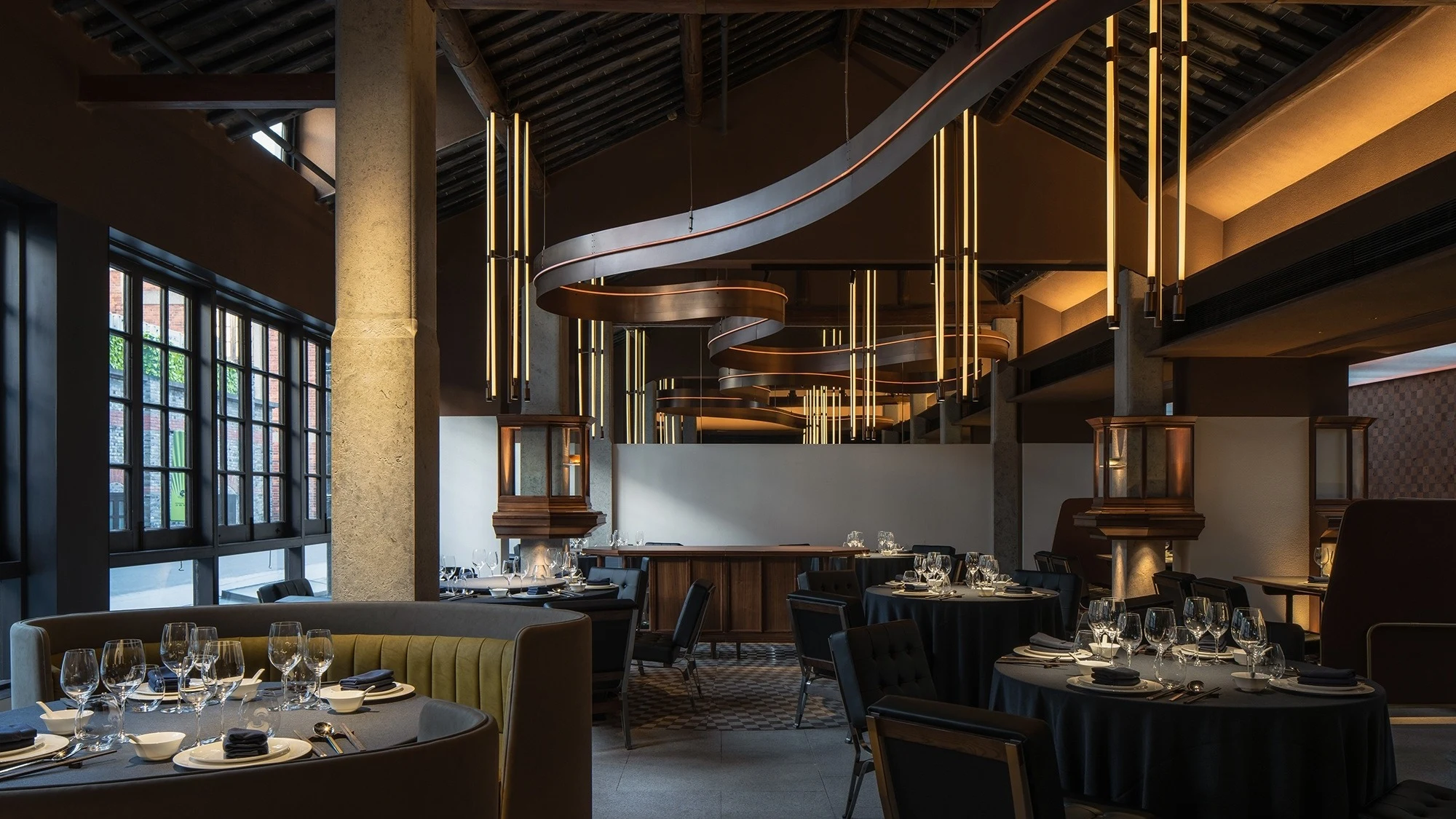
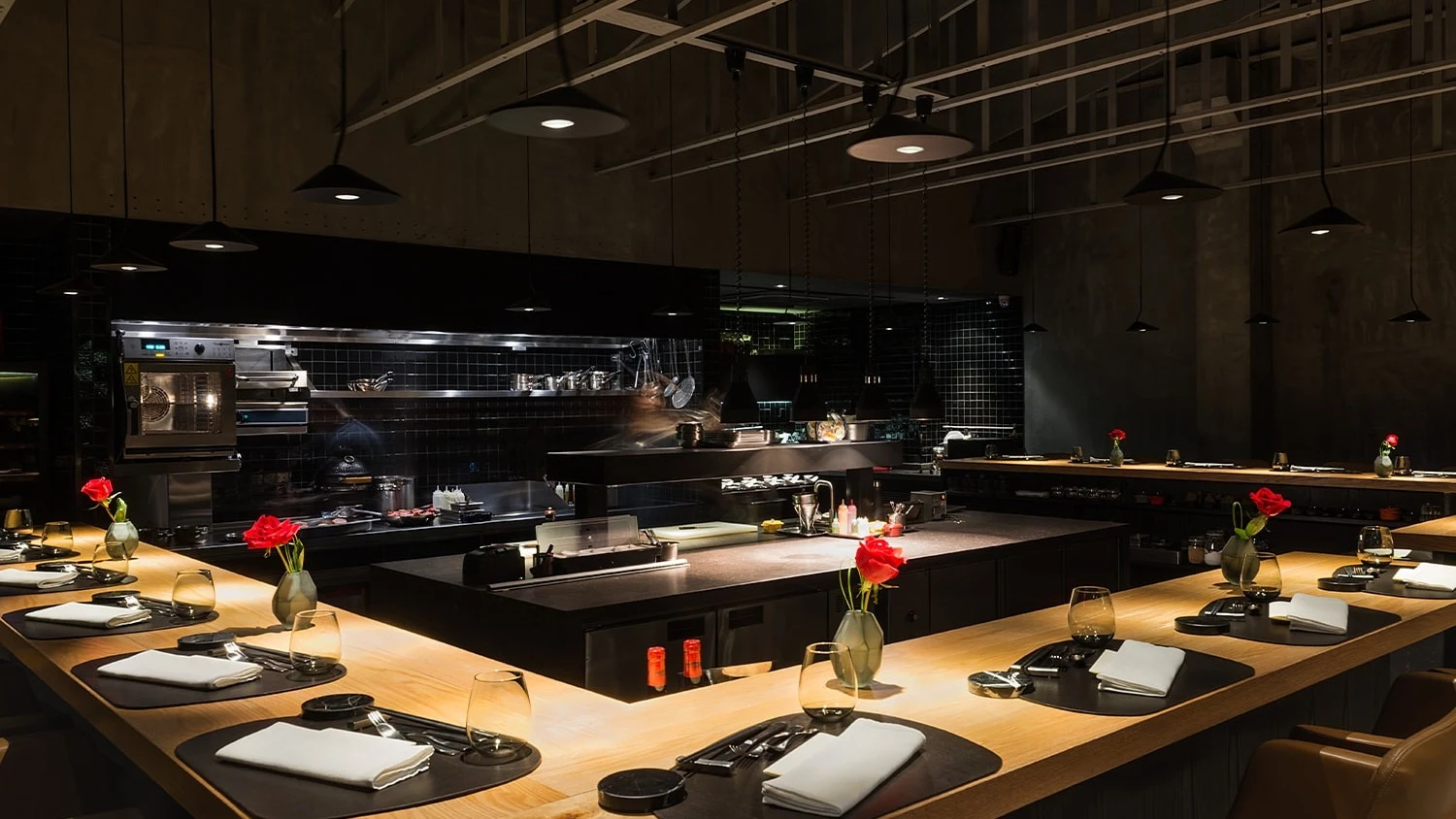
Ji Pin Court
- 01CuisineTwo-Michelin-Starred Cantonese
- 02CityShanghai, China
- 03RecognitionTwo Michelin Stars
- 2 Michelin Stars · Michelin Guide
- La Liste Top Restaurants: 76pts · 2026
- Michelin 2 Stars · 2025
- La Liste Top Restaurants: 79pts · 2025
- Michelin 2 Stars · 2024
Cantonese in Jing'an: Where Shanghai's Fine Dining Meets a Southern Tradition
Ji Pin Court is a two-Michelin-starred Cantonese restaurant in Shanghai's Jing'an district. The mall-adjacent address sits inside one of Shanghai's more commercial corridors, a setting that filters out casual foot traffic and rewards those who have already decided to come. That deliberateness is, in a sense, consistent with what Cantonese fine dining has always asked of its guests: a degree of preparation, a willingness to slow down, and an understanding that the work is mostly invisible.
Ji Pin Court operates in that register. Its two Michelin stars confirm it within Shanghai's upper tier of Cantonese kitchens. La Liste placed it at 79 points in 2025 and 76 in 2026, scores that reflect a kitchen holding its standard across independent evaluation cycles rather than a single peak season.
The Morning Ritual and What It Demands
Yum cha, the Cantonese morning tea tradition anchored by dim sum, is one of the more demanding formats in Chinese cuisine. The ritual is social by design: bamboo steamers arrive in sequence, trolleys navigate tight dining rooms, and the pace of ordering is set by the table rather than the kitchen. At its street-level form in Guangdong or Hong Kong, it is one of the most democratic eating traditions anywhere. refined into a two-star context, the same format requires the kitchen to hold technique across dozens of small items simultaneously, with no single showpiece dish to anchor the experience.
That technical load is what separates a serious dim sum program from a competent one. Har gow skins need to be thin enough to show the filling's colour but resilient enough to hold through service. Char siu bao, whether baked or steamed, hinges on a balance between dough texture and filling sweetness that most kitchens calibrate poorly. Cheung fun should hold together on chopsticks while remaining soft enough to resist with almost no pressure. These are small tolerances, and at the volume dim sum demands, they are genuinely difficult to maintain. The Michelin distinction at Ji Pin Court signals that the kitchen is operating at a level where those tolerances are being met consistently.
Bao Li Xuan and Canton 8 (Huangpu) both serve the format in Shanghai at different price points and scales. In Hong Kong, Forum remains a reference point for classical Cantonese, and in Macau, Jade Dragon frames the cuisine inside a luxury hotel context. Ji Pin Court's positioning, two stars, ¥¥¥¥ pricing, and Jing'an address place it among Shanghai's more serious fine dining choices.
Cantonese in Shanghai: A Kitchen Away from Its Source
Cantonese cuisine operating at fine dining level outside Guangdong faces a structural challenge: the leading ingredients for the cuisine, live seafood, specific regional vegetables, freshly-rendered stocks built on Guangdong-specific ingredients, travel poorly or not at all. Shanghai has compensated for this through supply chain discipline, and its leading Cantonese restaurants have built sourcing relationships that partly close the gap. The trade-off is cost: ingredients that arrive by air or cold-chain from the Pearl River Delta add to operational overhead in a city where rents are already significant.
That context helps explain why ¥¥¥ pricing at a two-star level reflects genuine value rather than restraint. At the equivalent award level in Hong Kong or Guangzhou, the same kitchen might operate at a higher absolute price point simply due to real estate and ingredient competition. Shanghai's Cantonese fine dining tier, which also includes Canton Table and Imperial Treasure Fine Chinese Cuisine, has developed a local identity distinct from its southern roots, combining classical technique with the ingredient reach that Shanghai's logistics infrastructure provides.
The wider mainland Cantonese scene shows similar patterns. Xin Rong Ji in Beijing and Xin Rong Ji in Chengdu have both built Cantonese programs far from the cuisine's home base, relying on technique and sourcing investment to close the geographic gap. Chef Tam's Seasons in Macau occupies a different position, drawing on proximity to Hong Kong while serving a casino-adjacent audience. Ji Pin Court sits within this broader network of displaced Cantonese ambition, distinguishable by its sustained award record and its premium pricing within the two-star bracket.
Ji Pin Court in Shanghai's Broader Dining Picture
Jing'an has consolidated as one of Shanghai's two or three most active fine dining districts, with a concentration of internationally recognised tables across multiple cuisines. Within that district, Chinese cuisine formats have been gaining ground relative to Western options, a trend visible across the city's Michelin selection over the past three years. Ji Pin Court's two-star status places it in the same award tier as a small number of Shanghai kitchens, well above the one-star level that Bao Li Xuan occupies and in a different competitive conversation than ¥¥¥¥ addresses like Fu He Hui, where the audience is seeking vegetarian tasting menus rather than Cantonese craft.
Other Shanghai addresses worth considering alongside Ji Pin Court include 102 House for a different register of Chinese cooking, and Ru Yuan in Hangzhou for those willing to travel for a contrasting regional perspective.
Planning Your Visit
Ji Pin Court is located on the second floor of 1788 Plaza in Jing'an, at 204 within that building, with the address registered in the 200040 postal zone. The ¥¥¥ price tier places it in range with comparable two-star addresses in the city, and the two consecutive Michelin recognitions mean demand is consistent rather than speculative. Booking ahead is advisable, particularly for weekend yum cha sittings, which fill faster than weekday services across all serious dim sum programs. Chef Li Wei leads the kitchen. The dress code is smart casual.
Questions
Frequently asked
What recognition does Ji Pin Court hold?
Ji Pin Court holds 2 Michelin stars.
How expensive is Ji Pin Court?
Ji Pin Court is listed at a price level of $$$$.
Where is Ji Pin Court and what does it serve?
Ji Pin Court is in Jing An Si, Shanghai, serving Two-Michelin-Starred Cantonese.
The field
How it compares
| Place | Awards | Cuisine | Notes |
|---|---|---|---|
| Ji Pin Court | Michelin 2 Stars | Two-Michelin-Starred Cantonese | Jing An Si, $$$$ |
| 8 1/2 Otto e Mezzo Bombana (Shanghai) | Michelin 2 Stars | Modern Italian Fine Dining | Shanghai |
| Amazing Chinese Cuisine | Michelin 2 Stars | High-end Chaoshan Cuisine | Shanghai |
| Fu He Hui | Michelin 2 Stars, World's 50 Best | Modern Seasonal Vegetarian Fine Dining | Shanghai |
| Ling Long Shanghai | Michelin 1 Star, World's 50 Best | Modern Chinese Fine Dining | Shanghai |
| Meet the Bund | Michelin 1 Star, World's 50 Best | Modern Fujianese Fine Dining | Shanghai |
| Taian Table | Michelin 3 Stars | Modern European with Asian Influences | Shanghai |
Similar places
Modern Italian Fine Dining
8 1/2 Otto e Mezzo Bombana (Shanghai)
Shanghai, China
★★
High-end Chaoshan Cuisine
Amazing Chinese Cuisine
Shanghai, China
★★
Modern Seasonal Vegetarian Fine Dining
Fu He Hui
Shanghai, China
★★ · 50 Best
Modern Chinese Fine Dining
Ling Long Shanghai
Shanghai, China
★ · 50 Best
Modern Fujianese Fine Dining
Meet the Bund
Shanghai, China
★ · 50 Best
Modern European with Asian Influences
Taian Table
Shanghai, China
★★★