Made ByRestaurant
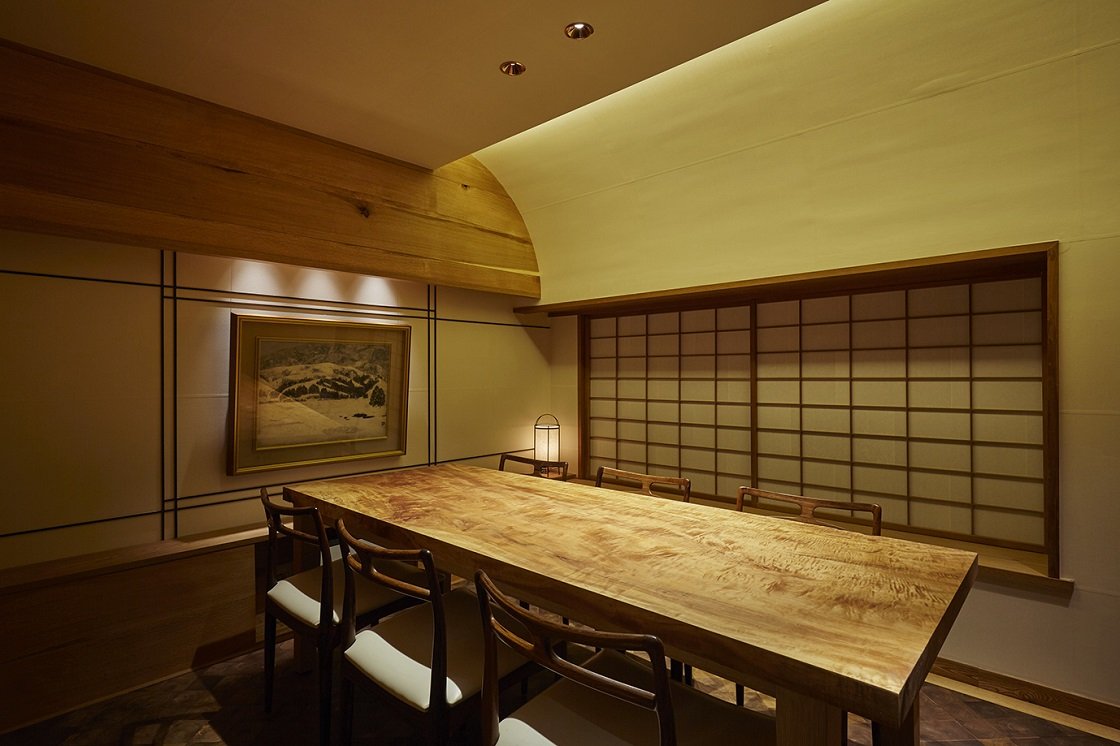
JIBUNDOKI in Osaka elevates teppanyaki and okonomiyaki into a refined tasting experience. Signature dishes to try include the Osaka-style okonomiyaki, roasted potatoes with butter and mentaiko, and inventive kushiyaki skewers. The owner-chef serves bite-sized portions that encourage sampling across teppan-grilled yakisoba, rice cakes wrapped with grilled ham, and sautéed mountain yam with avocado and bottarga. Honored with a Michelin Bib Gourmand (2024) and Tabelog West recognition, JIBUNDOKI pairs high-quality seasonal ingredients with playful international flavors. Expect sizzling teppan aromas, crisp edges on each okonomiyaki, and attentive service in an intimate 18-seat setting a short walk from Honmachi Station.
- Michelin Bib Gourmand
At a glance
- Cuisine
- Modern Teppanyaki Okonomiyaki
- Price
- $$$
- Per person
- $80
- Hours
- Mon: Closed; Tue: 5–11 PM; Wed: 5–11 PM; Thu: 5–11 PM; Fri: 5–11 PM; Sat: 5–11 PM; Sun: Closed
- Neighborhood
- Chuo-ku
- Rating
- 4.3 (115)
<h2>Teppanyaki on Its Own Terms</h2><p>In Osaka's Chuo Ward, where the density of serious restaurants per city block rivals any district in Japan, JIBUNDOKI occupies a particular position: a teppanyaki counter that has earned Michelin Bib Gourmand recognition in 2024 and 2025 while operating in the mid-price tier. That combination, critical validation at a price point most diners can sustain across multiple visits, is rarer than it sounds. Osaka has long maintained a food culture anchored in value and volume, the philosophy of <em>kuidaore</em>, eating until you drop, but applying that democratic instinct to a format as theatrical as teppanyaki requires a particular kind of editorial restraint in the kitchen.</p><p>Chef Chalee Kader is the authoring force behind the menu at JIBUNDOKI, and the approach here resists the premium-hotel teppanyaki playbook that defines so much of the format in Japan. Where hotel teppanyaki counters in Tokyo or Osaka anchor their identity around high-grade wagyu and lobster portions sized for drama, this address reads differently: smaller, more varied, structured around bite-sized portions that function almost like a tasting progression. The Michelin guide has noted the creative range, pointing to okonomiyaki prepared in both pork and mixed formats, grilled skewers with global references, and items like nama-fu, salmon tartare, and tteokbokki appearing on the same service. The result sits somewhere between a teppanyaki counter and a global small-plates format, a positioning that has clearly resonated with both local regulars and the critical community tracking Osaka's broader dining scene.</p><h2>What the Bib Gourmand Actually Signals Here</h2><p>The Bib Gourmand category within Michelin's framework is specifically designed to identify kitchens delivering quality at moderate cost, which makes it a more precise signal than star recognition when assessing value. For JIBUNDOKI, two consecutive Bib awards in 2024 and 2025 confirm that the kitchen's ambition has been consistent, not a single strong year. That kind of sustained recognition matters in a city where the competition for inspector attention runs across three-star kaiseki counters like <a href="https://www.enprimeurclub.com/restaurants/kashiwaya-osaka-senriyama-osaka-restaurant">Kashiwaya Osaka Senriyama</a>, three-star French houses like <a href="https://www.enprimeurclub.com/restaurants/hajime-osaka-restaurant">HAJIME</a>, and two-star addresses including <a href="https://www.enprimeurclub.com/restaurants/la-cime-osaka-restaurant">La Cime</a>. Against that backdrop of multi-star peers, holding Bib status at a ¥¥ price point positions JIBUNDOKI as a distinct entry point into Osaka's critically recognized dining tier, not a lesser alternative to starred restaurants but a structurally different proposition.</p><p>Osaka's teppanyaki scene has historically lived in two registers: the high-price hotel counter and the casual neighbourhood grill. JIBUNDOKI operates in neither of those lanes cleanly. The kitchen's incorporation of international references into a teppanyaki format is genuinely unusual. Tteokbokki, the Korean rice cake preparation, appearing alongside nama-fu, a refined Japanese wheat gluten preparation, and salmon tartare suggests a menu that treats the iron griddle as a neutral platform rather than a culturally bounded tool. That instinct connects to broader patterns visible in cities like Seoul and Taipei, where teppanyaki-adjacent formats have absorbed cross-cultural ingredients with more fluency than Japan's own domestic fine dining tends to allow. Seen through that lens, JIBUNDOKI's critical reception reflects something the inspectors are rewarding city-wide: creative range that does not sacrifice execution for novelty.</p><h2>The Okonomiyaki Context</h2><p>Osaka's relationship with okonomiyaki is not casual. The city treats its version of the savory pancake as a regional identity marker, distinct in batter ratio, topping sequence, and cooking method from Hiroshima's layered approach. That both pork and mixed variants appear on JIBUNDOKI's menu is a direct acknowledgment of that local expectation, an anchoring of the menu in Osaka tradition before the more ambitious cross-cultural skewers arrive. The batter is thick in construction but light in final texture, a technical detail that points to careful calibration rather than accident. In a city where locals have opinions on okonomiyaki as strong as Romans have about carbonara, that calibration carries real stakes.</p><p>For context on how Osaka's dining identity extends beyond the Chuo Ward addresses, <a href="https://www.enprimeurclub.com/restaurants/tanpopo-osaka-restaurant">tanpopo</a> and <a href="https://www.enprimeurclub.com/restaurants/oribe-osaka-restaurant">Oribe</a> represent different vectors of the city's food culture, and our <a href="https://www.enprimeurclub.com/restaurants/osaka-milan-restaurant">full Osaka restaurants guide</a> maps the range from neighbourhood staples to multi-star operations. For those building a broader Kansai itinerary, <a href="https://www.enprimeurclub.com/restaurants/gion-sasaki-kyoto-restaurant">Gion Sasaki in Kyoto</a> and <a href="https://www.enprimeurclub.com/restaurants/akordu-nara-restaurant">akordu in Nara</a> offer useful counterpoints to what Osaka's own critical scene is doing. Across Japan, the teppanyaki format carries different inflections: <a href="https://www.enprimeurclub.com/restaurants/ishigaki-yoshida-tokyo-restaurant">Ishigaki Yoshida in Tokyo</a> represents how the format operates at the premium end of the capital's dining hierarchy, while <a href="https://www.enprimeurclub.com/restaurants/hibana-by-koki-hanoi-restaurant">Hibana by Koki in Hanoi</a> shows how the format has traveled across Southeast Asia. Comparative reference points within Japan beyond teppanyaki include <a href="https://www.enprimeurclub.com/restaurants/harutaka-tokyo-restaurant">Harutaka in Tokyo</a>, <a href="https://www.enprimeurclub.com/restaurants/goh-fukuoka-restaurant">Goh in Fukuoka</a>, <a href="https://www.enprimeurclub.com/restaurants/1000-yokohama-restaurant">1000 in Yokohama</a>, and <a href="https://www.enprimeurclub.com/restaurants/6-okinawa-restaurant">6 in Okinawa</a>, each operating in a distinct regional register that illuminates how seriously Japan's secondary and tertiary cities take their critical dining scenes.</p><h2>Planning a Visit</h2><p>JIBUNDOKI sits at 4 Chome-5-11 Minamikyuhojimachi in Osaka's Chuo Ward, a central location well within reach of the main transport corridors that connect Namba, Shinsaibashi, and Honmachi. The ¥¥ price positioning means this address fits a different kind of visit than a multi-star reservation: less occasion-driven, more repeatable, suited to arriving hungry rather than ceremonially prepared. Booking in advance, particularly for weekend service, is sensible. A Google rating of 4.3 across 115 reviews gives a read on consistency from a broader diner base.</p>
Know before you go
- Dress code
- smart_casual
- Reservations
- essential
- Payment
- cash
Frequently asked
Is JIBUNDOKI child-friendly?
The bite-sized format that defines the menu at JIBUNDOKI — where all items are served in small portions designed for variety sampling — works naturally for younger diners with shorter attention spans and selective palates. The ¥¥ price range also removes the financial friction that often accompanies family dining at Michelin-recognised venues in Osaka's Chuo Ward.
What's the overall feel of JIBUNDOKI?
JIBUNDOKI reads as a chef-driven counter where the teppanyaki format serves as a vehicle for personal expression rather than a fixed tradition. Chef Chalee Kader's menu moves between Osaka staples and global reference points — tteokbokki, salmon tartare, nama-fu — giving the room an exploratory energy that sits a register above the typical neighbourhood grill without the formality of a full Michelin star house.
Is JIBUNDOKI award-winning?
JIBUNDOKI has received recognition including: The owner-chef pours his creativity into teppanyaki dishes of incredible variety. In true Osaka style, both pork and mixed okonomiyaki are available. Though the batter is thick, the finished texture is light. Imaginative grilled skewers hin….
What's the signature dish at JIBUNDOKI?
The okonomiyaki is the anchor: Osaka-style, with a thick batter that finishes light on the teppan, available in both pork and mixed variations. Michelin's own Bib Gourmand citation specifically notes the variety of grilled skewers as a distinguishing feature, with dishes like tteokbokki and salmon tartare signalling that the kitchen treats the teppan as a format open to influence from well beyond Japan.
Address
4 Chome-5-11 Minamikyuhojimachi, Chuo Ward, Osaka, 541-0058, Japan
Chuo-ku
How it compares
- Cuisine
- Modern Teppanyaki Okonomiyaki
- Price
- $$$
- Awards
- Michelin Bib Gourmand
- Notes
- Chūō
- Cuisine
- Modern Izakaya with Sake Pairings
- Price
- $$$
- Awards
- Michelin Bib Gourmand
- Notes
- Chūō
- Cuisine
- Modern Edomae-Kansai Sushi Omakase
- Price
- $$$
- Awards
- Michelin Bib Gourmand
- Notes
- Kita
- Cuisine
- Japanese Izakaya with Sake Pairing
- Price
- $$$
- Awards
- Michelin Bib Gourmand
- Notes
- Kita
- Cuisine
- Michelin Yakitori
- Price
- $$$
- Awards
- Michelin Bib Gourmand
- Notes
- Fukushima
- Cuisine
- Japanese Izakaya with Sake Focus
- Price
- $$$
- Awards
- Michelin Bib Gourmand
- Notes
- Chūō
In residence
Similar places
Modern French with Japanese Ingredients
La Cime
Osaka, Japan
★★ · 50 Best
Avant-Garde Japanese Fine Dining
HAJIME
Osaka, Japan
★★★ · 50 Best
Michelin-Starred Modern Cantonese
Sawada
Osaka, Japan
★
Traditional Kaiseki
Honkogetsu
Osaka, Japan
Seasonal Kaiseki Omakase
Kashiwaya Osaka Senriyama
Osaka, Japan
★★★
Traditional Japanese Kaiseki Omakase
Taian
Osaka, Japan
★★★