Jiwan
- 01CuisineModern Qatari Fine Dining
- 02CityDoha, Qatar
- Michelin Bib Gourmand · Michelin Guide
- Michelin Bib Gourmand · 2026
- Michelin Bib Gourmand · 2025
- Michelin Bib Gourmand · 2024
A Museum Setting That Changes the Terms of the Meal
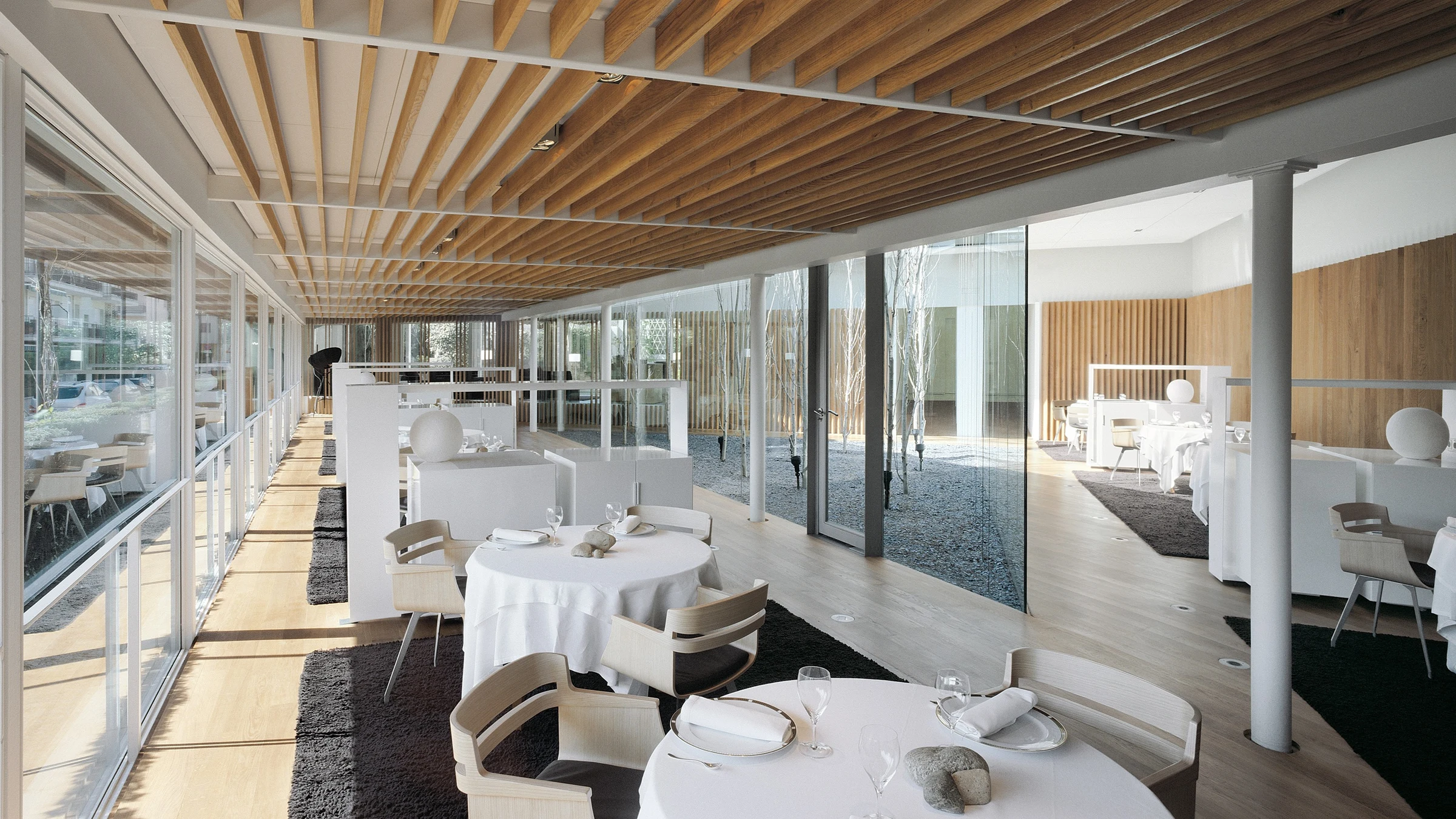
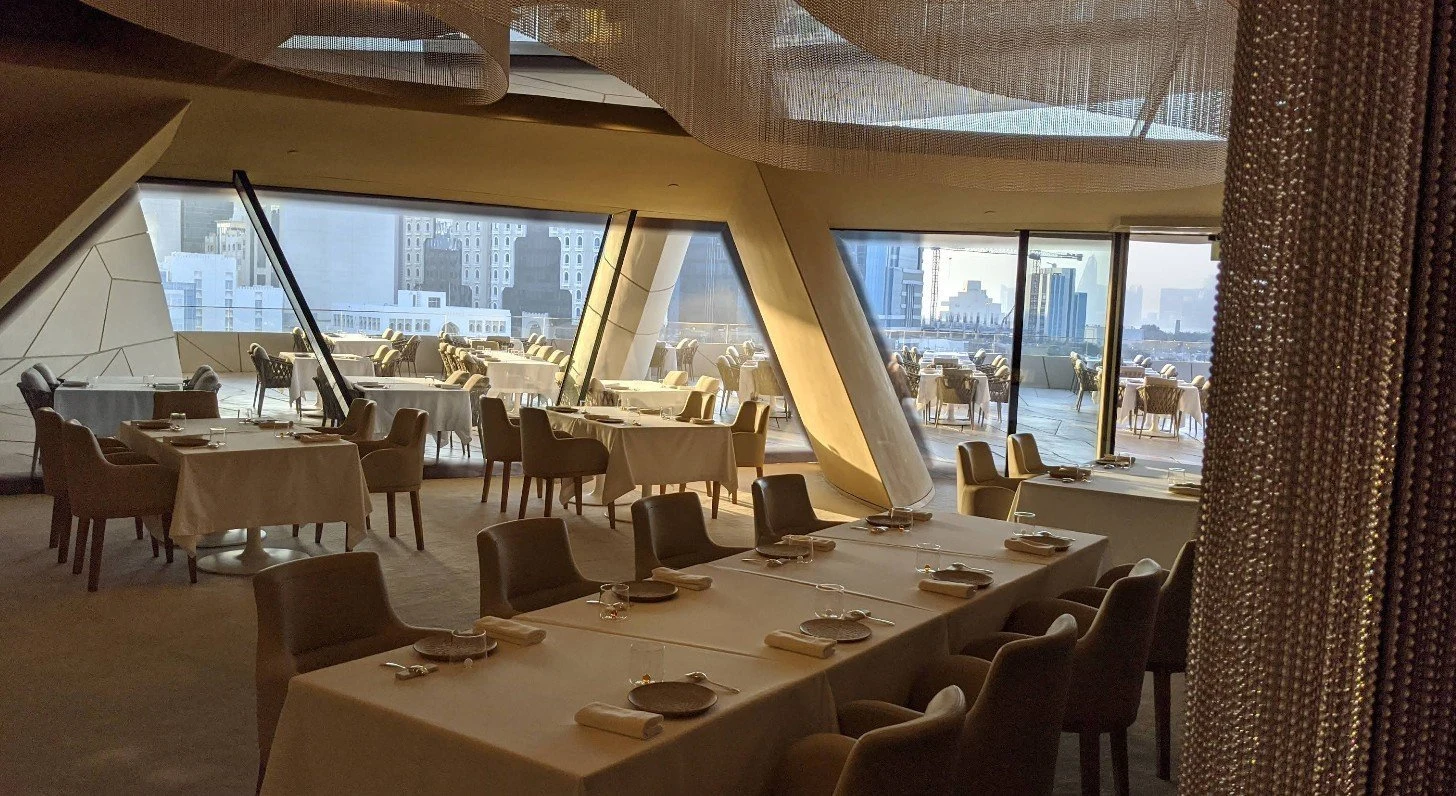
The National Museum of Qatar is itself an architectural argument: a structure modelled on the desert rose crystal, those flat disc-shaped formations of gypsum that emerge from arid sand. Dining on its fourth floor, then, is not merely a matter of location; it reframes the meal inside a broader cultural proposition. The port and the Corniche promenade stretch out below the terrace, and the view shifts through the day as the Gulf light moves from hard afternoon white to something softer at dusk. These are conditions that visitors often plan around, timing reservations to catch the transition.
Within Doha's museum-restaurant category, a tier that has grown steadily as Qatar has invested in its cultural infrastructure, Jiwan operates at a different register than the trophy-dining addresses that occupy the leading price brackets. Where venues such as IDAM by Alain Ducasse (﷼﷼﷼﷼, Michelin one star) pitch at international luxury travellers and special-occasion spend, Jiwan sits at ﷼﷼ and holds consecutive Michelin Bib Gourmand recognition for both 2024 and 2025. The Bib Gourmand designation is specific in what it signals: good cooking at prices below the starred tier. That recognition places Jiwan among Doha restaurants drawing repeat attention from inspectors.
What the Regulars Already Know
The audience that returns to Jiwan most reliably tends not to be museum tourists making a convenient lunch stop. It is the group that has worked out the tasting menu's relationship to the setting: a format designed for sharing, built around Middle Eastern culinary tradition reinterpreted with modern technique, in a room where the architecture does a portion of the work. Chef Hou Xinqing leads the kitchen, and the cooking's orientation, slow-cooked lamb shoulder with date and fennel, comforting flavours given structural discipline, reflects a kitchen interested in balance rather than provocation. Combinations are calibrated so that the sweetness of date does not overwhelm the fennel's anise note; richness is present but not the point.
That kind of calibration is what keeps a specific type of diner loyal. The sharing format means a table can move across the menu's range rather than committing each person to a single dish. The set menu offers breadth at a price point that reads as good value relative to the setting and the city's alternatives; the tasting menu extends that into a more deliberate sequence for those who want to move through the kitchen's logic rather than assemble their own. Regulars tend to have a position on which they prefer, and that preference itself signals engagement with the place's particular offer. For those exploring Doha's wider Middle Eastern dining scene, Baron and Bayt Sharq are adjacent addresses worth tracking alongside Jiwan.
Middle Eastern Cooking in Doha's Broader Dining Frame
Doha's restaurant market has developed unevenly. The upper price tier is dominated by international imports and French-influenced fine dining, while traditional Gulf and regional Middle Eastern cooking has historically appeared either at the lower price end or within hotel all-day venues. The Bib Gourmand position that Jiwan occupies is, in that context, a specific intervention: modern Middle Eastern cooking at a mid-market price, inside a flagship cultural institution, with enough consistency to attract repeat inspector attention. It is a model closer to what venues like Al Farah in Abu Dhabi or Bait Maryam in Dubai have pursued in their respective markets, regional tradition treated with the same seriousness applied to European cuisine, without inflating the price to match European fine-dining norms.
Internationally, Middle Eastern cooking has moved significantly in the past decade. In cities with more established dining cultures, venues such as Kismet in Los Angeles, Al Badawi in New York City, and Ayat in New York City have each found their own language for presenting the cuisine to audiences that arrive with varying degrees of prior knowledge. The Jiwan model is different in one respect: the audience arrives in a setting that is already doing curatorial work about Qatari identity and heritage. The kitchen's job is to extend that conversation through the food rather than explain the cuisine from scratch.
Other addresses in Doha's broader scene approach this from different angles. Saasna and SAWA by Sanad each carry their own orientation within the city's Middle Eastern dining tier, while Desert Rose Café takes the name of the same geological formation that inspired the museum's architecture, which creates an unintentional symmetry worth noting.
Beyond the Gulf, Adana Restaurant in Los Angeles, Astoria Seafood in New York City, and Adamá in Oaxaca each show how Middle Eastern culinary frameworks adapt when the surrounding context changes, useful reference points for understanding what is specific to Jiwan's Doha setting versus what belongs to the broader category.
Planning a Visit
Jiwan sits on the fourth floor of the National Museum of Qatar on the Corniche, which places it within the museum's visiting hours and access structure. The ﷼﷼ price point suits a considered lunch or dinner without the financial commitment of the city's top-tier addresses. Given both the terrace views and the Michelin recognition, the restaurant draws interest from visitors and residents alike; booking ahead is advisable, particularly for terrace seating during cooler months. The sharing format means the table works well with at least two people, and the tasting menu rewards a group willing to commit time rather than move quickly.
Questions
Frequently asked
What recognition does Jiwan hold?
Jiwan holds a Michelin Bib Gourmand.
How expensive is Jiwan?
Jiwan is listed at a price level of $$$.
Where is Jiwan and what does it serve?
Jiwan is in Al Mirqab/ Old Slata, Doha, serving Modern Qatari Fine Dining.
The field
How it compares
| Place | Cuisine | Notes | Awards |
|---|---|---|---|
| Jiwan | Modern Qatari Fine Dining | Al Mirqab/ Old Slata, $$$ | · |
| El Celler de Can Roca | Creative Catalan Fine Dining | Girona | Michelin 3 Stars, World's 50 Best |
| IDAM by Alain Ducasse | Contemporary French Mediterranean with Arabian influences | Doha | Michelin 1 Star, World's 50 Best |
| La Cime | Modern French with Japanese Ingredients | Osaka | Michelin 2 Stars, World's 50 Best |
| Les Amis | Classic French Haute Cuisine | Singapore | Michelin 3 Stars, World's 50 Best |
| Single Thread Farm | Japanese-influenced Californian Kaiseki | Healdsburg | Michelin 3 Stars, World's 50 Best |
| The Fat Duck | Modern British Molecular Gastronomy | Bray | Michelin 3 Stars, World's 50 Best |
Similar places
Creative Catalan Fine Dining
El Celler de Can Roca
Girona, Spain
★★★ · 50 Best
Contemporary French Mediterranean with Arabian influences
IDAM by Alain Ducasse
Doha, Qatar
★ · 50 Best
Modern French with Japanese Ingredients
La Cime
Osaka, Japan
★★ · 50 Best
Classic French Haute Cuisine
Les Amis
Singapore, Singapore
★★★ · 50 Best
Japanese-influenced Californian Kaiseki
Single Thread Farm
Healdsburg, United States
★★★ · 50 Best
Modern British Molecular Gastronomy
The Fat Duck
Bray, United Kingdom
★★★ · 50 Best