Made ByRestaurant
Julián de Tolosa
Chef in Residence
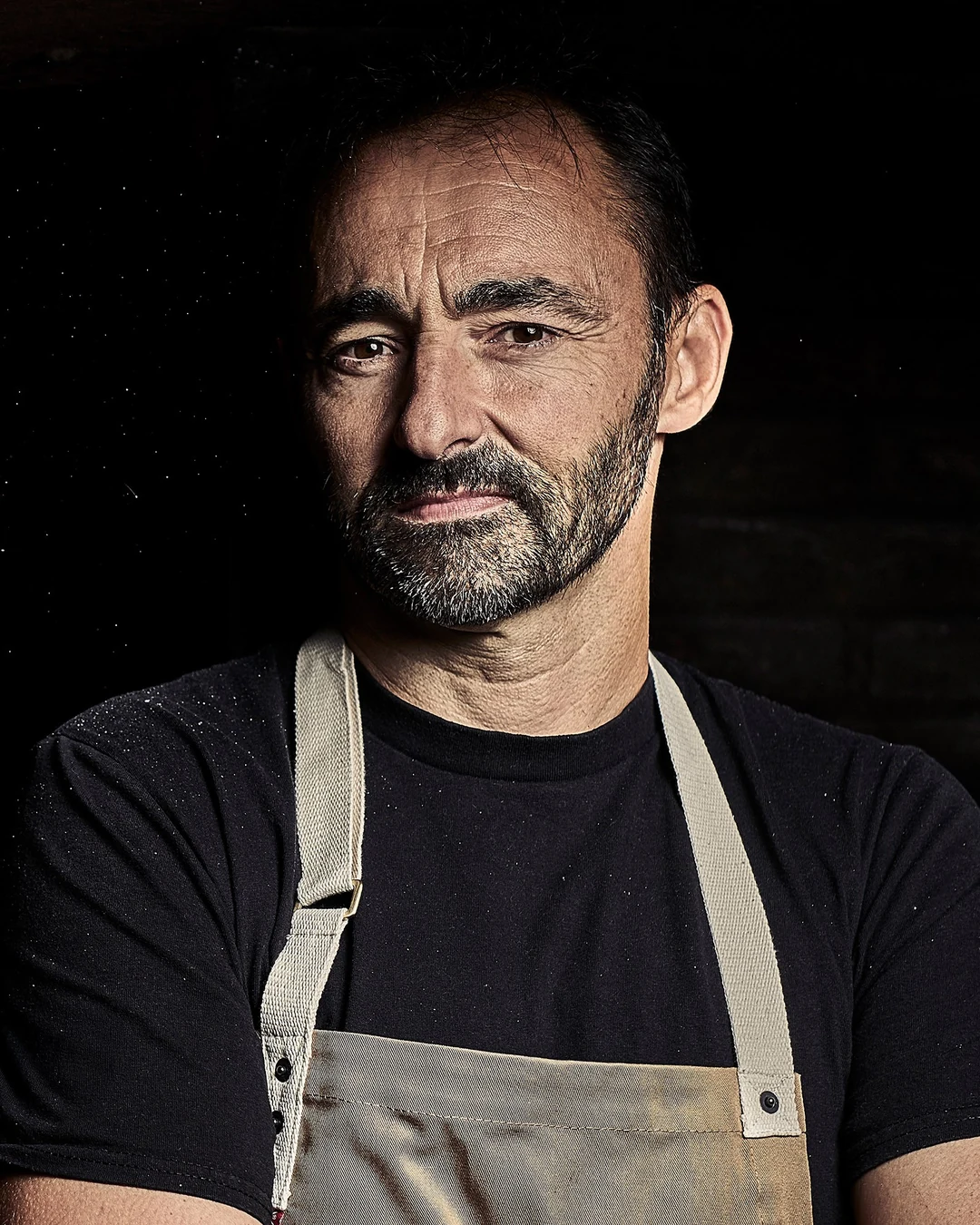
Mikel Gorrotxategi
Chef
- 01CuisineBasque Grilled Beef
- 02CityMadrid, Spain
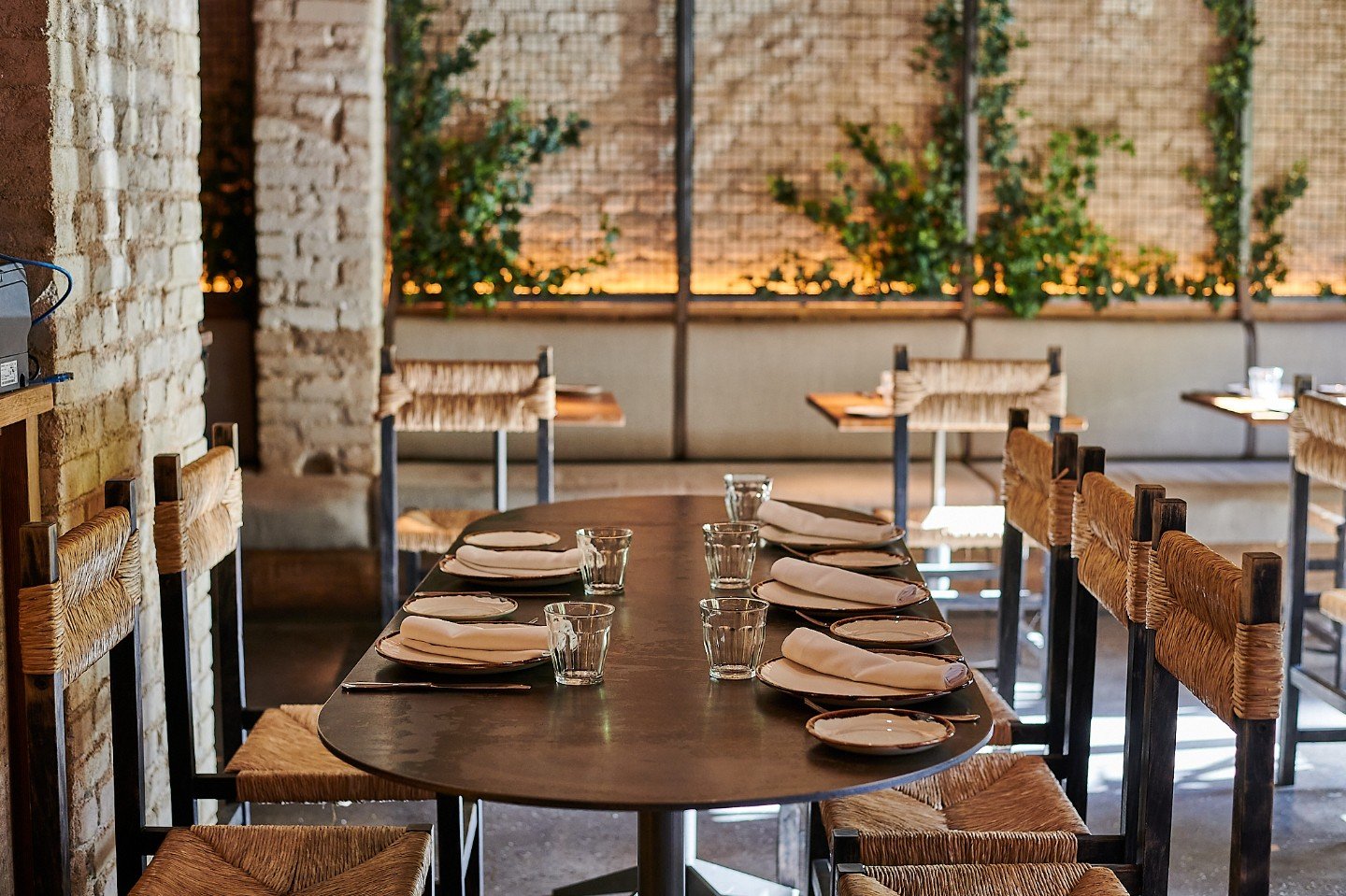
Among Madrid's Basque-leaning asadors, Julián de Tolosa occupies a distinct position: a Retiro-district address with consecutive Opinionated About Dining rankings and a format built around wood-fired meat at its most direct. The gap between a long Saturday lunch and a focused Tuesday dinner service captures the two very different registers this kitchen operates in.
At a glance
- Cuisine
- Basque Grilled Beef
- Price
- $$$
- Per person
- $65
- Hours
- Mon: 1:30–4 PM, 8:30 PM–12 AM; Tue: 1:30–4 PM, 8:30 PM–12 AM; Wed: 1:30–4 PM, 8:30 PM–12 AM; Thu: 1:30–4 PM, 8:30 PM–12 AM; Fri: 1:30–4 PM, 8:30 PM–12 AM; Sat: 1:30–4 PM, 8:30 PM–12 AM; Sun: 1:30–4 PM
- Neighborhood
- La Latina
- Rating
- 4.1 (1,009)
<h2>Fire, Smoke, and the Retiro's Quiet Seriousness</h2><p>Julián de Tolosa is a restaurant in Madrid serving Basque Grilled Beef. The city's tasting-menu circuit, anchored by <a href="https://www.enprimeurclub.com/restaurants/diverxo-madrid-restaurant">DiverXO</a>, <a href="https://www.enprimeurclub.com/restaurants/coque-madrid-restaurant">Coque</a>, and <a href="https://www.enprimeurclub.com/restaurants/deessa-madrid-restaurant">Deessa</a>, draws visitors looking for elaborate, multi-course progressions. Julián de Tolosa belongs to an entirely different tradition: the Basque asador, where the point is the fire, the meat, and very little interference in between. On Calle de Ibiza in the Retiro district, that tradition finds a quieter, more residential register than the tourist-facing rooms further north, the kind of address where regulars arrive knowing what they want before they sit down.</p><p>That sense of purpose is a defining quality of the serious asador format. In the Basque Country, the wood-fired grill is not a method but an institution, and the leading practitioners bring that weight south to Madrid. Julián de Tolosa, under chef Mikel Gorrotxategi, sits in that lineage, a Madrid outpost carrying Basque technique to a neighbourhood that understands and expects it.</p><h2>The Asador comparable set in Madrid</h2><p>Madrid's premium meat restaurants now operate across several distinct tiers. At one end, you have the avant-garde asador model, <a href="https://www.enprimeurclub.com/restaurants/smoked-room-madrid-restaurant">Smoked Room</a> holds two Michelin stars and applies a contemporary, creative lens to wood-fire cookery. At the other end sit the traditional churrasco and steak houses with broad menus and high covers. Julián de Tolosa positions itself in neither extreme: it is a format-focused, tradition-grounded asador with a documented record on the Opinionated About Dining (OAD) Casual Europe list, ranked 118th in 2023, 194th in 2024, and 227th in 2025. Those numbers tell a story about the venue's trajectory in a competitive ranking, but they also confirm consistent recognition by a peer network of serious diners across three consecutive cycles.</p><p>For context, the OAD Casual list weights diner expertise heavily: surveys are restricted to credentialed contributors, which means a ranking reflects repeat assessment by people eating at comparable restaurants across the continent. A presence across three consecutive years, even with movement in position, signals durability rather than a single moment of attention. Compared with La Taberna de Élia in Pozuelo de Alarcón, the other notable Madrid-area asador in the OAD set, Julián de Tolosa operates from a more central, denser urban context, with the Retiro neighbourhood providing a different diner profile.</p><h2>The Lunch vs. Dinner Divide</h2><p>In Madrid's serious restaurants, the split between lunch and dinner is rarely just about timing, it reshapes mood, pace, and often the full dining register. At Julián de Tolosa, the timetable is precise: both lunch and dinner services run on tightly defined windows, with the kitchen open from 1:30 to 4:00 pm and again from 8:30 pm to midnight, Monday through Saturday, with Sunday limited to lunch only.</p><p>That Sunday lunch-only policy is itself a signal. In the Basque tradition, Sunday midday is the week's most important meal, a social occasion that extends well past 3:00 pm, with families and groups occupying tables as a ritual rather than a convenience. By reserving Sunday exclusively for lunch and closing Sunday evening entirely, the format aligns with that cultural logic rather than maximising covers.</p><p>The lunch service, particularly on weekends, tends to draw a crowd with time to commit. In a city where the two-hour midday meal is a working norm and a three-hour weekend lunch is expected, the kitchen has space to pace a meal properly. Tables fill with local professionals and neighbourhood regulars who know the rhythm. The evening service carries a different energy, more purposeful, sometimes more intimate, with a quieter room after 9:00 pm that suits focused eating and wine conversation over an extended spread of starters and grilled meat.</p><p>For visitors, the practical difference matters: a Thursday dinner service in the 8:30 to 10:30 pm window tends to be more accessible on shorter notice than a prime Saturday lunch, where local demand is consistent. Neither service changes the kitchen's approach, the asador format doesn't shift register based on daypart, but the experience around the food changes considerably.</p><h2>Basque Grilling in a Madrid Context</h2><p>The Basque asador tradition that Julián de Tolosa draws on is worth understanding separately from the broader Spanish meat culture. The technique prioritises high-heat, minimal-intervention grilling over charcoal or wood, with the meat cut, typically txuletón, the large bone-in rib steak from aged Galician or Basque dairy cattle, arriving at the table as the centrepiece of the meal rather than one element among many. Accompaniments are deliberately restrained: pimientos del piquillo, dressed greens, perhaps a fried egg. The logic is that the quality of the raw material and the precision of the grill should carry the plate.</p><p>This is a format that does not obscure its produce. There is no sauce architecture, no technical distraction. In a city where <a href="https://www.enprimeurclub.com/restaurants/dstage-madrid-restaurant">DSTAgE</a> and <a href="https://www.enprimeurclub.com/restaurants/paco-roncero-madrid-restaurant">Paco Roncero</a> represent the creative Spanish kitchen at its most technically elaborate, the discipline of the classical asador reads as a different kind of seriousness, not less ambitious, but differently directed. Spain's most decorated regional kitchens, from <a href="https://www.enprimeurclub.com/restaurants/arzak-san-sebastian-restaurant">Arzak in San Sebastián</a> to <a href="https://www.enprimeurclub.com/restaurants/azurmendi-larrabetzu-restaurant">Azurmendi in Larrabetzu</a>, built their reputations on deep engagement with product quality, and the asador tradition shares that foundation even as it strips away the tasting-menu superstructure.</p><p>That shared emphasis on sourcing is what connects Madrid's leading asadors to the broader Spanish fine dining conversation, even when they sit outside the Michelin framework. <a href="https://www.enprimeurclub.com/restaurants/martin-berasategui-lasarte-oria-restaurant">Martín Berasategui</a>, <a href="https://www.enprimeurclub.com/restaurants/el-celler-de-can-roca-girona-restaurant">El Celler de Can Roca</a>, and <a href="https://www.enprimeurclub.com/restaurants/cocina-hermanos-torres-barcelona-restaurant">Cocina Hermanos Torres</a> operate in a different formal register, but the insistence on provenance and technique is the same logic expressed through a different format.</p><h2>What to Eat at Julián de Tolosa</h2><p id="cuisine">The menu at any serious Basque asador is organised around a central logic: the txuletón is the reason you are there. Starters serve as appetisers in the classical sense, something to eat while the grill works. Alongside the central cut, pimientos del piquillo in various preparations, salted anchovies, and simple dressed vegetables are standard Basque asador anchors that appear across the tradition's leading practitioners from San Sebastián to Madrid.</p><p>The wine list at an asador of this tier typically leans Rioja and Ribera del Duero, with red wines of structure and age to match the depth of long-grilled beef. The Basque tradition also supports a txakoli service with starters, the high-acid, low-alcohol white that cuts through fat and resets the palate before the main event.</p><p>For reference, the asador format is built for sharing. A table of two will typically split a single txuletón and work through starters at pace. Tables of four have more flexibility and can take wider coverage across the starter selection. Chef Mikel Gorrotxategi's approach follows the discipline of the tradition: the kitchen's role is to source well, control fire precisely, and stay out of the way of the product.</p><h2>Plan Your Madrid Visit</h2><p>Julián de Tolosa is one reference point in a broader Madrid dining scene that spans Michelin-starred creative cooking, neighbourhood bistros, and the serious wine-bar circuit. For comparison with Spain's broader fine dining circuit, the <a href="https://www.enprimeurclub.com/restaurants/aponiente-el-puerto-de-santa-maria-restaurant">Aponiente kitchen in El Puerto de Santa María</a> and the <a href="https://www.enprimeurclub.com/restaurants/le-bernardin">Le Bernardin model in New York</a> illustrate how product-focused discipline operates at the top of very different national traditions.</p>
Know before you go
- Dress code
- smart_casual
- Reservations
- essential
- Parking
- street
- Payment
- credit_card, cash
- Groups
- Welcomed
Frequently asked
What distinctions does Julián de Tolosa have?
Julián de Tolosa has received recognition including: Opinionated About Dining Casual in Europe Ranked #227 (2025); Opinionated About Dining Casual in Europe Ranked #194 (2024); Opinionated About Dining Casual in Europe Ranked #118 (2023).
When is Julián de Tolosa open?
Hours at Julián de Tolosa: Hours: Monday 1:30–4 pm, 8:30 pm–12 am Tuesday 1:30–4 pm, 8:30 pm–12 am Wednesday 1:30–4 pm, 8:30 pm–12 am Thursday 1:30–4 pm, 8:30 pm–12 am Friday 1:30–4 pm, 8:30 pm–12 am Saturday 1:30–4 pm, 8:30 pm–12 am Sunday 1:30–4 pm.
What should I eat at Julián de Tolosa?
The txuletón is the organising principle of the menu at any serious Basque asador, and Julián de Tolosa is no exception. Starters — typically Basque-tradition piquillos or white asparagus — function as a prelude, not a destination. Order the bone-in rib cut as the centrepiece; the Basque method prioritises aged beef cooked over high direct heat with minimal intervention. The kitchen is overseen by Mikel Gorrotxategi, whose grilling lineage places the restaurant firmly in the txuletón-focused tradition ranked among OAD's top casual European addresses three consecutive years (2023–2025).
What's Julián de Tolosa's location?
Julián de Tolosa is located at C. de Ibiza, 39, Retiro, 28009 Madrid, Spain, Madrid.
Who's behind the kitchen at Julián de Tolosa?
The chef associated with Julián de Tolosa is Mikel Gorrotxategi.
Address
C. de Ibiza, 39, Retiro, 28009 Madrid, Spain
La Latina
How it compares
- Notes
- Ibiza, Basque Grilled Beef
- Price
- $$$
- Notes
- Justicia, Uruguayan Steakhouse
- Price
- $$$
- Notes
- Ibiza, Traditional Spanish Tapas
- Price
- $$$
- Notes
- Justicia, Seasonal Spanish Fine Dining
- Price
- $$$
- Notes
- Castellana, Traditional Galician
- Price
- $$$
- Notes
- Chueca, Navarrese Farm-to-Table
- Price
- $$$
In residence
Similar places
Modern Spanish Fine Dining
Coque
Madrid, Spain
★★
Avant-Garde Spanish Tasting Menu
DiverXO
Madrid, Spain
★★★ · 50 Best
Avant-Garde Spanish Fine Dining
Paco Roncero
Madrid, Spain
★★
Avant-Garde Spanish Tasting Menus
DSTAgE
Madrid, Spain
★★
Classic Spanish Fine Dining
Saddle
Madrid, Spain
★
Modern Spanish Fine Dining with Flamenco
Corral de la Morería
Madrid, Spain
★