Kapok
- 01CuisineTraditional Cantonese Dim Sum
- 02CityMacau, Macau
Apricot broth, proofed sponge, roast pork
- Michelin Bib Gourmand · Michelin Guide
- Michelin Bib Gourmand · 2026
- Michelin Bib Gourmand · 2025
- Michelin Bib Gourmand · 2024
A Cantonese pass without ornament
The soups arrive clear and hot, and the rest of the room follows their tempo. Kapok stands at 60 Rua de Hong Chau in Taipa, Macau, behind the Altira, a long-established Cantonese house whose reputation rests on honest food rather than a named personality at the pass. It reads as a neighbourhood staple in a city where casino dining rooms compete on spectacle: no novelty dim sum shapes, no lacquered flourish, just har gow, double-boiled soups, roasted pork and tea, made the way regulars expect them. The kitchen’s ambition is narrow and hard to fake. Comfort has to be precise, and precision has to survive a full room.
Dim sum without the ornamental hand
Kapok’s program stays close to traditional Cantonese dim sum and à la carte cooking, with small plates leading into soups, seafood and homestyle dishes. The har gow noted by Michelin inspectors gains depth from diced pork fat folded into the filling. White sugar sponge depends on proofing cleanly, without the sourness that can make the fermentation announce itself before the crumb does. Green chillies stuffed with minced dace carry another kind of bench work: patient filling, clean frying, and the judgement to leave the fish paste springy rather than heavy. The apricot juice pig lung soup sits at the center of the house’s reputation. It belongs to the Cantonese soup discipline, a long extraction of offal, sweetness and almond-like perfume, and guests here have compared its register to a Portuguese chicken broth, which says something about how Macau’s two kitchens have learned from one another. The lungs are served separately for diners who want the broth without the full texture of the organ. Crispy roasted pork, steamed fish, chicken feet with black bean and garlic, rice noodle rolls with shrimp, beef balls and siu mai fill out the line.
The room keeps its old temperature
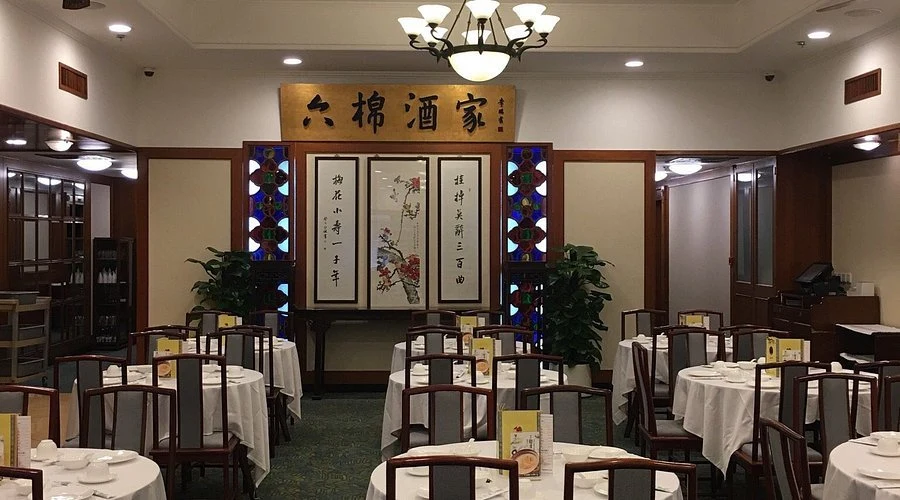
The room has the look of a Cantonese hall that has chosen repair over reinvention. Ceiling fans turn above bowl pendant lights. Lingnan-style stained glass catches the brightness, and wood, simple Chinese motifs and old-fashioned fittings keep the mood closer to family yum cha than casino polish. The atmosphere sits in a 1970s and 1980s register, with a yesteryear glamour that comes less from shine than from use, and the house has gone more than a decade without renovation. Older locals talk over tea. Families gather around the larger tables. The noise stays conversational, the kind of sound made by chopsticks, porcelain, servers crossing the floor and soup bowls landing at the table. The dining format matters here because the craft happens in repetition: a tray of dim sum, a clay pot, a roasted plate, another pot of tea.
Recognition held in the service of habit
Kapok carries Michelin Bib Gourmand recognition, and queues form even at off-peak hours, which is the more practical measure of a neighbourhood house. Awards can point a reader toward the address, but they do not explain why the same dishes endure. The house refuses to move its Cantonese cooking toward spectacle: a broth still judged by clarity, a sponge by its proof, a roast by skin and fat. The bowl that made the restaurant legible beyond Taipa was apricot juice pig lung soup.
Questions
Frequently asked
What kind of restaurant is Kapok?
Kapok is a traditional Cantonese dim sum restaurant in Taipa, Macau, with a menu that also moves into soups, seafood and homestyle dishes.
What is Kapok known for?
The house is known for its apricot juice pig lung soup, along with dishes such as green chillies stuffed with minced dace, crispy roasted pork, har gow and double-boiled soups.
Does Kapok have any recognition?
Kapok holds Michelin Bib Gourmand recognition.
What is the booking policy at Kapok?
Reservations are recommended.
What should visitors expect from the setting?
The room has an old Cantonese hall feel, with ceiling fans, bowl pendant lights, Lingnan-style stained glass and simple Chinese motifs, and the atmosphere is closer to family yum cha than casino polish.
The field
How it compares
| Place | Cuisine | Notes | Awards |
|---|---|---|---|
| Kapok | Traditional Cantonese Dim Sum | Taipa, $$ | · |
| 8 1/2 Otto e Mezzo Bombana (Macau) | Modern Sicilian Italian Fine Dining | Macau | Michelin 1 Star |
| Alain Ducasse at Morpheus | Contemporary French Fine Dining | Macau | Michelin 2 Stars |
| Chef Tam's Seasons | Modern Cantonese Fine Dining | Macau | Michelin 2 Stars, World's 50 Best |
| Jade Dragon | Three Michelin-Star Cantonese Fine Dining | Macau | Michelin 3 Stars, World's 50 Best |
| Palace Garden | Modern Cantonese Fine Dining | Macau | Michelin 1 Star |
| Robuchon au Dôme | Contemporary French Fine Dining | Macau | Michelin 3 Stars |
Similar places
Modern Sicilian Italian Fine Dining
8 1/2 Otto e Mezzo Bombana (Macau)
Macau, Macau
★
Contemporary French Fine Dining
Alain Ducasse at Morpheus
Macau, Macau
★★
Modern Cantonese Fine Dining
Chef Tam's Seasons
Macau, Macau
★★ · 50 Best
Three Michelin-Star Cantonese Fine Dining
Jade Dragon
Macau, Macau
★★★ · 50 Best
Modern Cantonese Fine Dining
Palace Garden
Macau, Macau
★
Contemporary French Fine Dining
Robuchon au Dôme
Macau, Macau
★★★