Kawabata Doki
- 01CuisineTraditional Japanese Sweets
- 02CityKyoto, Japan
From the people index
Recommended by
One trusted voice points here.
- Tabelog 100 #9: 3.9pts · 2023
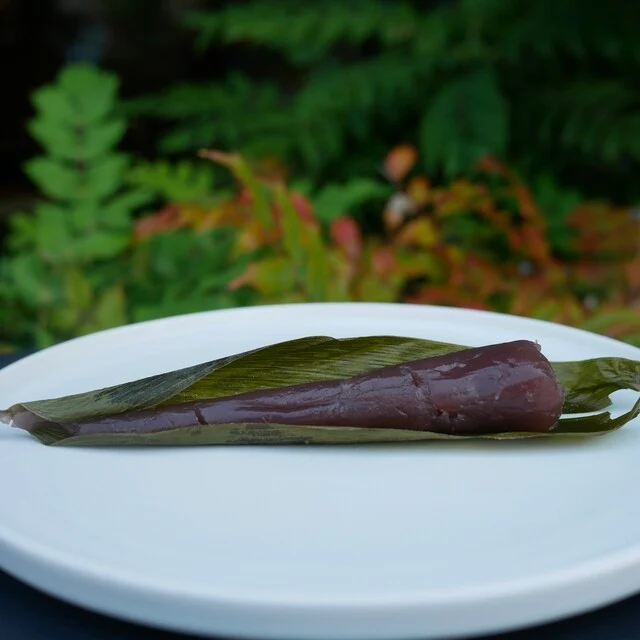
North Kyoto changes tempo around Shimogamo and Kitayama. The city’s tourist center gives way to quieter streets, university-adjacent routines, and shops where the object of attention may be a single box of sweets rather than a full meal. In that setting, Kyoto wagashi behaves less like dessert and more like a curated service: season, texture, packaging, and tea compatibility carry the weight that a cellar carries in a serious dining room.
Kawabata Doki sits inside that tradition. Its recognition in Tabelog 100 for Japanese traditional sweets and sweets gives it a measurable place in western Japan’s wagashi conversation, but the stronger point is the format. This is not the Kyoto of long counter menus or hotel pastry vitrines. It is a reservation-only, take-out operation, which means the purchase is planned, carried away, and folded into another setting: a tea appointment, a private gathering, or a quiet return to a hotel room. That structure changes the way a traveler should read it. The value is not in lingering; it is in understanding how Kyoto treats sweets as part of cultural scheduling.
The Sunday letter
Find new places through the people who run them.
Our Sunday email brings you the chefs, winemakers and hoteliers behind our newest stories. See a sample before you subscribe.
See a sample of the Sunday emailOne email a week. Unsubscribe from any issue.
Wagashi as Kyoto's quiet form of curation
In European restaurants, the wine list often reveals the real intelligence of the house: producers chosen with restraint, older vintages held back, pairings shaped around sequence rather than spectacle. Kyoto’s wagashi culture works on a parallel logic. The craft is not only sugar and bean paste; it is calibration. A sweet has to sit against bitter tea, the weather, the formality of the occasion, and the visual grammar of the season. In the city’s older confectionery world, abundance is less persuasive than precision.
That is why Kawabata Doki reads differently from casual sweet shops in the same northern orbit. Nearby comparison venues such as Marie France Kitayama ten, Grandir Shimogamo ten, Briant Kitayama honten, Radio Bagel, and CLIMA serve a broader everyday appetite, from bakery runs to Spanish dining. The wagashi tier asks for another kind of attention. A JPY 3,000–3,999 spend here signals a specialist purchase rather than a snack stop, and the absence of eat-in service keeps the experience closer to a commissioned item than a café break.
Kyoto gives travelers many ways to eat between temples and train lines, but wagashi has a stricter social role than a pastry case might suggest. It belongs to gift-giving, tea practice, seasonal exchange, and the city’s habit of making small things carry large codes. For a broader restaurant map, Our full Kyoto restaurants guide is the natural starting point, while nearby dining contrasts can be read through 3TOKU6MI Shijo karasuma ten, 551蓬莱, [ki:], and Abbesses. Those addresses speak to Kyoto’s range; this one speaks to its discipline.
The serious end of the sweets spectrum
Tabelog’s repeated selections across sweets and Japanese traditional sweets categories place Kawabata Doki in a category where reputation depends on continuity. The 2023 Japanese traditional sweets and Japanese sweets café WEST selection is the clearest current credential, with earlier sweets selections listed for 2017, 2018, 2019, 2020, and 2022. Awards in this field matter differently from restaurant stars. They identify shops that retain customer attention in a genre where technique is often quiet, local loyalty is demanding, and the margin for novelty is small.
The comparison with Aburi Mochi Honke Nemoto Kazariya is useful because both sit within Kyoto’s sweet tradition, yet they point to different habits. Aburi mochi is tied to shrine-side immediacy and a public eating rhythm. Reservation-only take-out wagashi belongs to planning, gifting, and the private table. Neither is a substitute for the other. Together they show why Kyoto’s sweets culture cannot be reduced to dessert after dinner.
The city’s broader hospitality frame matters here. A traveler staying in northern Kyoto or planning tea-focused days will read this kind of shop more fluently than someone moving through the city on a tight sightseeing loop. For that wider itinerary architecture, Our full Kyoto hotels guide, Our full Kyoto bars guide, Our full Kyoto wineries guide, and Our full Kyoto experiences guide help place sweets alongside lodging, drinking, wine, and cultural formats. The point is sequencing: Kyoto rewards the visitor who treats a confectionery stop with the same care as a kaiseki reservation.
That sequencing also explains the cellar analogy. A serious sommelier does not merely collect labels; the work is selection, condition, timing, and context. Kyoto wagashi asks similar questions in another register. What is the occasion? Who receives it? How long will it travel? What drink will frame it? Kawabata Doki’s format pushes those questions forward because there is no dining room to soften the decision. The purchase has to make sense before arrival.
How it fits a Japan dining itinerary
For travelers building a Japan route around food rather than landmarks alone, Kawabata Doki is a reminder that small formats can carry as much cultural information as full-service restaurants. The same itinerary might move from Kyoto wagashi to Tokyo seafood, Osaka cafés, regional curry, or Los Angeles sake bars without treating them as equivalent experiences. The editorial thread is format literacy: know when a place is built for a meal, a drink, a gift, or a specific ritual.
That wider network can include -Grilled beef Sukiyaki- KAMAKURA TANUKIAN 鎌倉 たぬき庵 in Kamakura,. 鮪と炭火焼き うお炭 秋葉原店 in Tokyo,.cafe in Osaka,.know in Kumamoto, (Shoku) Vietnam in Kawasaki, [Curry Senmon Ten] Maruyama Kyoju. in Sapporo, Jōdo Saké Bar in Los Angeles, and Onigiri Time in Pasadena. Read together, they show how Japanese food culture travels across counter, take-out, bar, café, and regional specialist forms.
The editorial verdict is direct: this is for travelers who already understand that Kyoto’s quieter food traditions require planning. It is not a spontaneous café pause and not a substitute for lunch. Its appeal lies in the city’s older habit of making a carefully chosen sweet carry social meaning, seasonal awareness, and technical restraint in a compact form.
Questions
Frequently asked
How expensive is Kawabata Doki?
Kawabata Doki is listed at a price level of $$.
Where is Kawabata Doki and what does it serve?
Kawabata Doki is in Sakyō, Kyoto, serving Traditional Japanese Sweets.
The field
How it compares
| Place | Cuisine | Notes | Awards |
|---|---|---|---|
| Kawabata Doki | Traditional Japanese Sweets | Sakyō, $$ | · |
| Gion Sasaki | Modern Kaiseki | Kyoto | Michelin 3 Stars |
| Isshisoden Nakamura | Traditional Kyoto Kaiseki | Kyoto | Michelin 3 Stars |
| Kikunoi Honten | Kyoto Kaiseki Ryotei | Kyoto | Michelin 3 Stars |
| Miyama Sou | Tsumikusa Kaiseki | Kyoto | Michelin 3 Stars |
| Mizai | Traditional Kaiseki | Kyoto | Michelin 3 Stars |
| Ogata | Kaiseki Omakase | Kyoto | Michelin 2 Stars |
Similar places
The Sunday letter
Get the next Made By story in your inbox.
We send one email every Sunday morning with the places and people we covered that week.
See a sample of the Sunday emailOne email a week. Unsubscribe from any issue.