Klösterle Hof
- 01CuisineRegional German Seasonal
- 02CityBad Rippoldsau, Germany
Black Forest trout and Maultaschen
- Michelin Bib Gourmand · Michelin Guide
- Michelin Bib Gourmand · 2026
- Michelin Bib Gourmand · 2025
- Michelin Bib Gourmand · 2024
Season first at the Black Forest pass
The plate changes with the weather. Markus Klein is the executive chef and master chef at Klösterle Hof in Bad Rippoldsau, keeping the work close to the Black Forest rather than to display. His brief here is regional German and seasonal: Maultaschen, Gaisburger Marsch, Kalbsbäckchen, Forelle, wild game when the landscape gives it, fresh herbs from the old monastery garden when the season allows, and trout from local farms. He runs the house with his wife, and the two of them pour heart and soul into the operation.
Klösterle Hof asks for a kind of cooking that can survive plain reading. Filled pasta with onion sauce does not hide behind architecture. Trout needs clean timing. A cheek cooked until it yields must still taste of calf, stock, wine, and patience, not of technique laid over product. The stated philosophy is quality over complexity, and the Bib Gourmand recognition belongs to this address. From 2016 through 2024 the credit has stayed with the same hand, for dishes made with love and skill rather than with flourish, which is the plainest compliment a country kitchen can earn.
Trout, game, garden herbs
The method at Klösterle Hof is built from the region outward. The menu is à la carte, with the old Black Forest grammar intact: trout from local farms, wild game, Swabian filled pasta, stews, greens, and sauces that do their work without calling attention to themselves. Forelle gives the kitchen a test of heat and restraint. Maultaschen gives it a test of filling, fold, and seasoning. Gaisburger Marsch and deer ragout ask for a slower hand, stock deep enough to support the dish, and enough control to keep comfort from turning heavy. Mains are vegetable-light and balanced by considered starters, a green salad among them, which keeps the sequence from becoming one long braise.
The house also keeps a curated wine program, with regional bottles beside Spanish, French, and Austrian selections. That matters here because the cooking is not isolated from the table. A Black Forest trout and a filled pasta with onion sauce need different company in the glass; a game stew needs another register again. The program supports the pass rather than pulling focus from it.
A former monastery with the fire lit
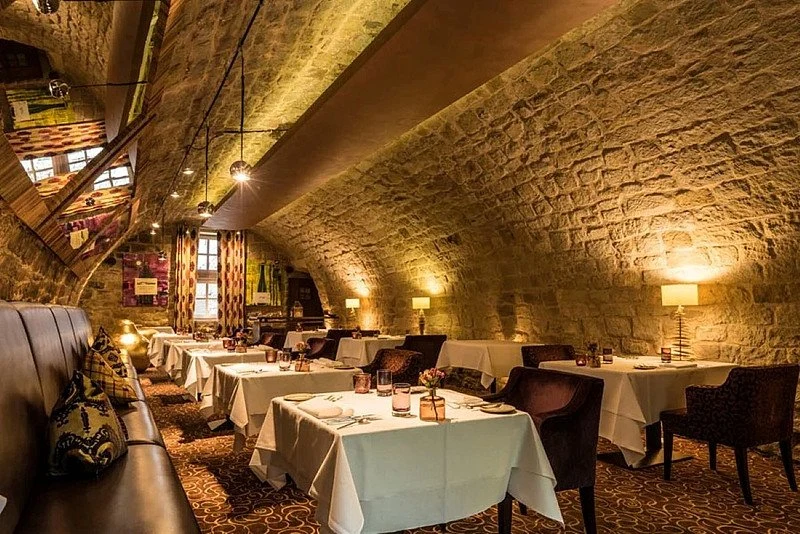
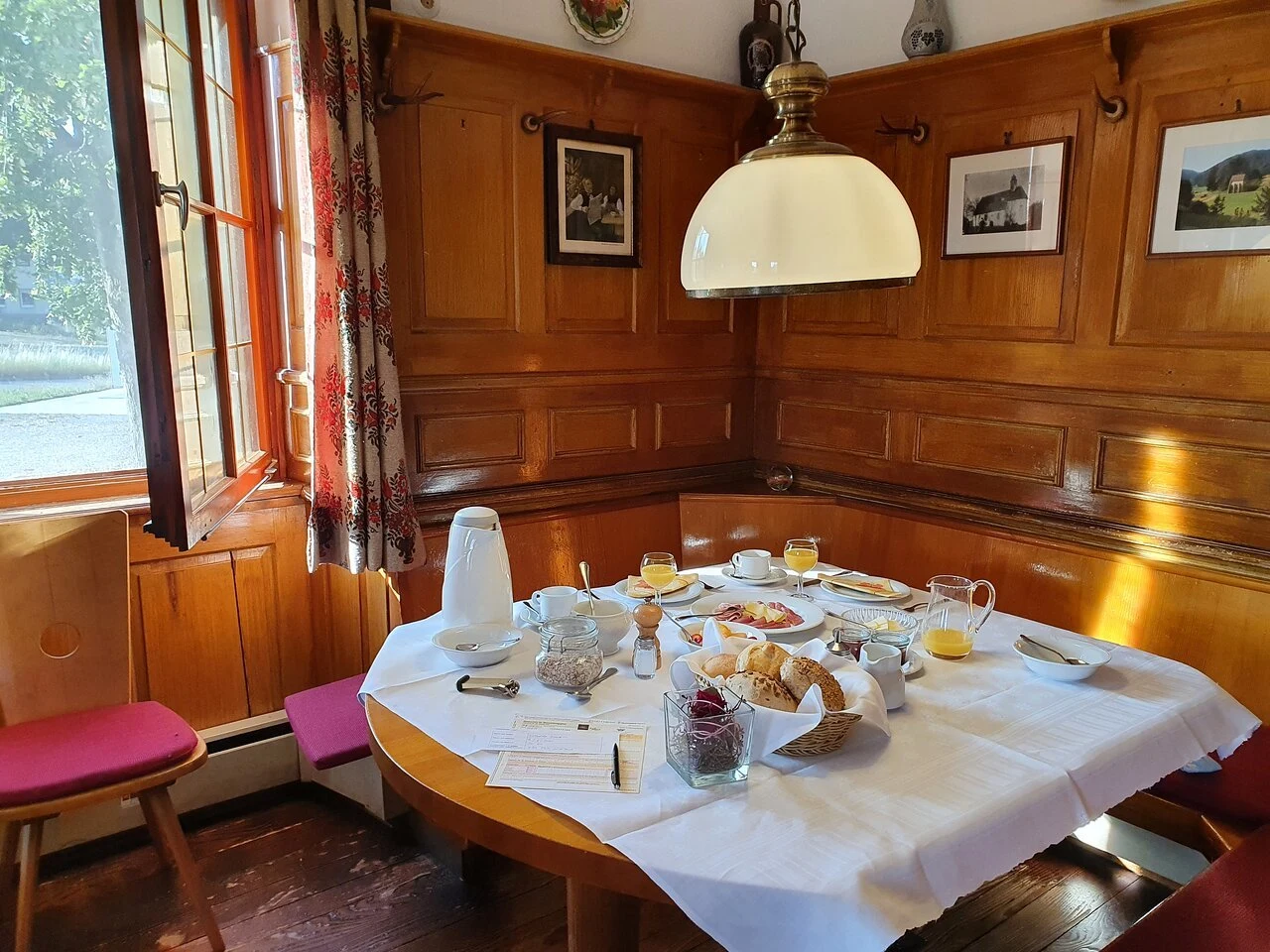
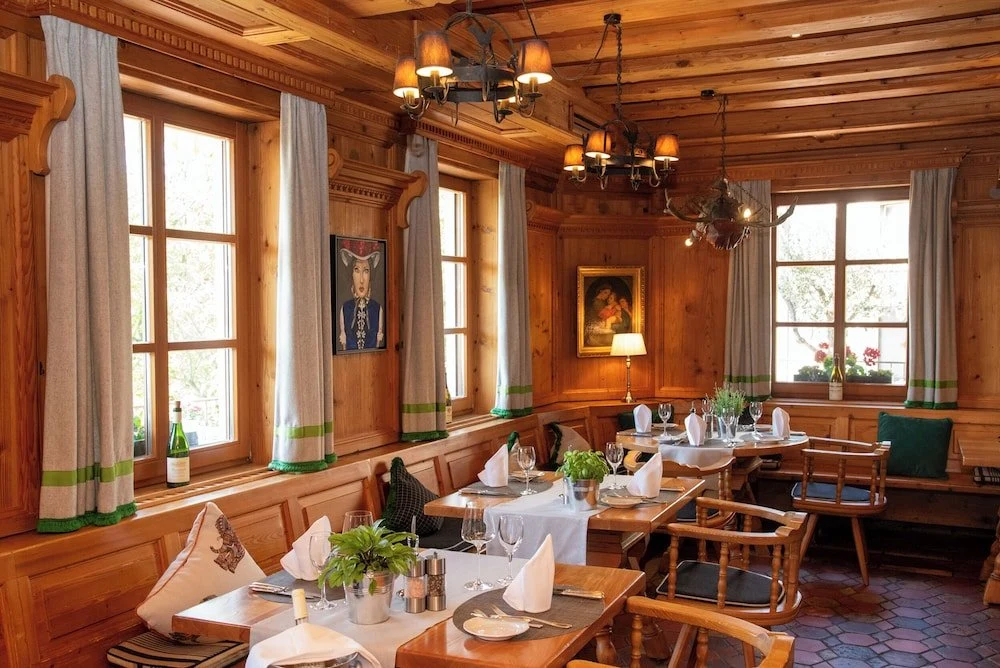
The room carries its age quietly. Klösterle Hof occupies a former monastery with more than 400 years behind it, and the restaurant keeps the texture of a rural Black Forest guesthouse: warm light, traditional decor, a rustic fireplace, the sort of quiet that lets cutlery and conversation set the pace. This is not an urban dining room borrowing country signals. It sits inside the Black Forest Nature Park, the forest is close, the weather is part of the appetite, and the cooking makes sense after a walk, a wet afternoon, or a drive through the valley.
At the pass, that setting narrows the choices. The plate cannot drift too far from the house around it. Seasonal cooking here means reading the place before writing the menu, then letting Maultaschen, Kalbsbäckchen, Forelle, and the monastery garden do the speaking.
Questions
Frequently asked
Who cooks at Klösterle Hof?
Markus Klein is the executive chef and master chef at Klösterle Hof, and he runs the house with his wife.
What kind of cooking does Klösterle Hof do?
The kitchen focuses on regional German and seasonal cooking, with an approach that stays close to the Black Forest. The menu is à la carte and built around dishes such as Maultaschen, Gaisburger Marsch, Kalbsbäckchen, Forelle, and wild game when the season allows.
What is the restaurant known for?
Klösterle Hof is known for quality over complexity, and it holds a Michelin Bib Gourmand. The cooking includes trout from local farms, Swabian filled pasta, stews, and sauces that are kept straightforward rather than showy.
What is the setting like?
The restaurant sits in a former monastery in Bad Rippoldsau-Schapbach, inside the Black Forest Nature Park. It has the feel of a rural guesthouse, with warm light, traditional decor, and a rustic fireplace.
Is it necessary to book a table?
Reservations are recommended.
The field
How it compares
| Place | Cuisine | Notes | Awards |
|---|---|---|---|
| Klösterle Hof | Regional German Seasonal | Bad Rippoldsau-Schapbach, $$$ | · |
| Addison | Modern California Fusion Fine Dining | San Diego | Michelin 3 Stars, World's 50 Best |
| Emeril’s | Modern Creole-Cajun Fine Dining | New Orleans | Michelin 2 Stars, World's 50 Best |
| Martin Berasategui | Modern Basque Fine Dining | Lasarte - Oria | Michelin 3 Stars, World's 50 Best |
| Pierre Gagnaire | Avant-Garde French Fine Dining | Paris | Michelin 3 Stars, World's 50 Best |
| Regional Friesoythe | Regional German Seasonal | Friesoythe | · |
| Zur Krone | Regional German Seasonal | Großheubach | · |
Similar places
Modern California Fusion Fine Dining
Addison
San Diego, United States
★★★ · 50 Best
Modern Creole-Cajun Fine Dining
Emeril’s
New Orleans, United States
★★ · 50 Best
Modern Basque Fine Dining
Martin Berasategui
Lasarte - Oria, Spain
★★★ · 50 Best
Avant-Garde French Fine Dining
Pierre Gagnaire
Paris, France
★★★ · 50 Best
Regional German Seasonal
Regional Friesoythe
Friesoythe, Germany
Regional German Seasonal
Zur Krone
Großheubach, Germany