Koch Winery in Borota earned a Pearl 2 Star Prestige rating in 2025, placing it among a select group of Hungarian producers attracting serious attention outside the country's more prominent wine regions. Located in Bács-Kiskun county on the southern Great Plain, the winery operates in terrain that challenges easy categorisation, making its recognition all the more pointed for those tracking Hungary's wider wine geography.
<h2>A Wine Country Outlier on the Southern Plain</h2><p>Hungary's wine story is told, most often, through the northeast: the volcanic slopes of Tokaj, the Eger cellars carved into hillside tuff, the Villány corridor running toward the Croatian border. Borota sits outside all of that. The village lies in Bács-Kiskun county, on the sandy soils of the Great Hungarian Plain, a stretch of land that has long been treated as an agricultural workhorse rather than a fine-wine address. That makes Koch Winery a geographically pointed signal, with a 2025 Pearl 2 Star Prestige award and a listed price point of about $35 per person. Prestige-tier recognition in a region not traditionally associated with premium production says something about where Hungarian wine is moving, and which producers are doing the convincing.</p><p> The well-trodden circuit connects <a href="https://www.enprimeurclub.com/wineries/disznoko-mezozombor-winery">Disznókő in Mezőzombor</a>, <a href="https://www.enprimeurclub.com/wineries/royal-tokaji-mad-winery">Royal Tokaji in Mád</a>, <a href="https://www.enprimeurclub.com/wineries/tokaj-hetszolo-tokaj-winery">Tokaj Hétszőlő in Tokaj</a>, and <a href="https://www.enprimeurclub.com/wineries/tokaj-oremus-tolcsva-winery">Tokaj Oremus in Tolcsva</a> into a coherent narrative of volcanic terroir and noble rot. Koch Winery tells a different story, and that difference is the reason to seek it out.</p><h2>What Sandy Soil Means for the Wine in the Glass</h2><p>The Great Plain's sandy substrates have historically been both a liability and, in certain contexts, a defining characteristic. Phylloxera, the root louse that devastated European viticulture in the nineteenth century, cannot survive well in loose, sandy soil, which means some producers in this region cultivate vines on their own roots rather than grafted American rootstock. Ungrafted vines draw from the soil differently, producing fruit with textural and aromatic profiles that differ measurably from grafted equivalents grown on heavier ground. The broader sandy-soil context of Bács-Kiskun is well documented and shapes how producers in the region approach site and variety selection.</p><p>Sandy soils in this part of Hungary drain quickly and retain heat during the day before releasing it at night, producing a diurnal temperature shift that helps preserve acidity in the fruit. Combined with continental climate patterns, the growing season on the plain can be long and warm, favouring varieties that need extended hang time to develop complexity without losing freshness. These are not the mineral-driven, volcanic-conditioned wines of Tokaj or the structured, clay-heavy reds of Villány. The fruit character and structural profile that the Great Plain produces occupies a separate register, one that rewards drinkers willing to set aside regional hierarchy and assess the wine on its own terms.</p><h2>Reading the 2025 Pearl 2 Star Prestige</h2><p>The Pearl 2 Star Prestige designation, awarded to Koch Winery for 2025, places the producer inside a tier that implies consistency of quality and a degree of ambition that separates it from volume-oriented regional peers. Prestige-level ratings in the Pearl system carry weight precisely because they are applied across diverse categories and regions, meaning a 2 Star in Borota is not adjusted for the difficulty of the postcode. It is held to the same standard as producers in more celebrated Hungarian appellations.</p><p>For context, this is the kind of signal that tends to precede broader international recognition. Producers who earn Prestige-tier marks in less-established regions often do so by working in ways that run counter to local convention: lower yields, longer ageing, more selective variety choices, or a willingness to hold wine back until it is ready rather than releasing on a commercial cycle. The pattern is well established across European wine regions where Prestige recognition has arrived ahead of mainstream attention.</p><p>Among Hungarian producers that have attracted comparable notice through different institutional channels, <a href="https://www.enprimeurclub.com/wineries/arvay-winery-ratka-winery">Árvay Winery in Rátka</a> and <a href="https://www.enprimeurclub.com/wineries/beres-winery-erdobenye-winery">Béres Winery in Erdőbénye</a> offer instructive comparison points in the Tokaj region. Further afield within the Hungarian system, <a href="https://www.enprimeurclub.com/wineries/bock-winery-villany-winery">Bock Winery in Villány</a>, <a href="https://www.enprimeurclub.com/wineries/bodri-winery-szekszard-winery">Bodri Winery in Szekszárd</a>, and <a href="https://www.enprimeurclub.com/wineries/bolyki-winery-eger-winery">Bolyki Winery in Eger</a> each represent how regional identity and production ambition can produce recognised quality outside the Tokaj axis.</p><h2>Approaching Borota</h2><p>Borota is a small settlement in the southern portion of Bács-Kiskun county, closer to the Serbian border than to Budapest. The address on record is Borota, V. ker. 5., 6445. The surrounding area is agricultural flatland, with the visual register of the Great Plain: wide sky, low horizon, and a pace of life shaped by farming rhythms rather than tourism infrastructure. Visitors should plan accordingly. This is not a region set up for casual drop-in visits in the manner of Villány's cellar-door trail or Eger's tourist-oriented cave cellars.</p><p>Advance contact through local tourism networks would be advisable before making the journey. The distance from Budapest is substantial enough that combining a visit to Koch Winery with other producers or points of interest in the southern plain makes logistical sense.</p><p>For those building a wider Hungarian wine itinerary, the contrast between Koch Winery's Great Plain setting and the more established wine tourism infrastructure of regions like those served by <a href="https://www.enprimeurclub.com/wineries/babarczi-winery-gyor-winery">Babarczi Winery in Győr</a>, <a href="https://www.enprimeurclub.com/wineries/bussay-pince-csornyefold-winery">Bussay Pince in Csörnyeföld</a>, or <a href="https://www.enprimeurclub.com/wineries/carpinus-winery-bodrogkisfalud-winery">Carpinus Winery in Bodrogkisfalud</a> is part of what makes the visit meaningful. Internationally, the category of recognised producers operating in less obvious terroir has precedent across a wide range, from <a href="https://www.enprimeurclub.com/wineries/aberlour-aberlour-winery">Aberlour in Aberlour</a> to <a href="https://www.enprimeurclub.com/wineries/accendo-cellars">Accendo Cellars in St. Helena</a>, where reputation is earned rather than inherited from the address.</p><h2>What to Expect at the Winery</h2><p>The atmosphere at Koch Winery will reflect the character of the Great Plain rather than the polished cellar-door presentation of Tokaj's heritage estates or Villány's design-led tasting rooms. Sandy-soil wine country in Bács-Kiskun operates on a quieter register. The landscape is open and unhurried, and producers in this area tend to work without the supporting infrastructure of wine tourism circuits that have developed in Hungary's better-known regions over the past two decades.</p><p>What that means in practice: expect directness, a focus on the wine itself rather than the staging around it, and a visit shaped more by the producer's own schedule than by a formalised tasting programme. Advance booking is recommended. The 2025 Pearl 2 Star Prestige rating is the primary trust signal for first-time visitors assessing whether the journey warrants the effort. At that tier, the answer tends to be yes for anyone with a serious interest in how lesser-discussed Hungarian terroir translates into the bottle.</p><h2>Planning Your Visit</h2><p>Koch Winery is located at Borota, V. ker. 5., 6445, in Bács-Kiskun county, southern Hungary. The winery is priced at about $35 per person, with casual dress and reservations recommended. Visitors should seek current contact details through local tourism boards or Hungarian wine trade channels before travelling. The region is not densely served by public transport, and a private vehicle or organised transfer from a larger hub such as Kecskemét or Pécs would give the most flexibility.</p><section class="faq">
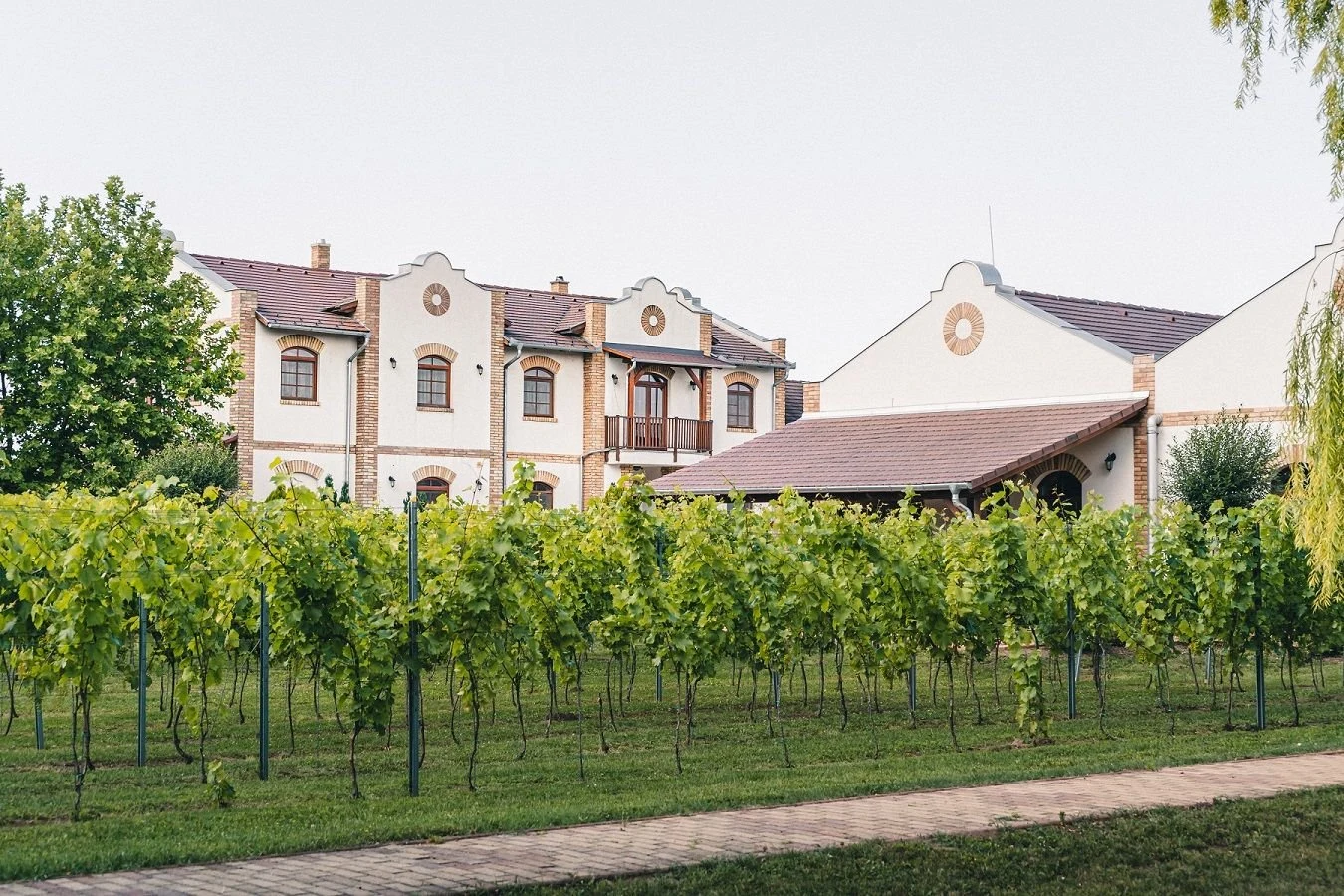
Borota is a small agricultural village in Bács-Kiskun county, closer to the Serbian border than to the polished cellar-door circuits of Tokaj or Villány. The setting reflects the working character of the Great Hungarian Plain: flat, agricultural, without theatrical scenery. Koch Winery's 2025 Pearl 2 Star Prestige award signals a producer focused on wine quality rather than visitor infrastructure, so expect a producer-first encounter rather than a curated tasting experience.
Koch Winery has received recognition including: Pearl 2 Star Prestige (2025).
Specific wines and varieties are not listed in current records for Koch Winery, but the Great Plain's deep sandy soils historically favour varieties that survived the 19th-century phylloxera crisis ungrafted, alongside later plantings of indigenous and international grapes suited to the continental climate. The 2025 Pearl 2 Star Prestige designation indicates consistent quality at a level that warrants deliberate attention. Contacting the winery directly before visiting is advisable to confirm current availability.
Koch Winery is located at Borota, V. ker. 5., 6445, Borota.
Borota, V. ker. 5., 6445
Borota