Kodaiji Jugyuan
In Residence
Shinya Takamasu
Chef
- 01CuisineTraditional Kyoto Kaiseki
- 02CityKyoto, Japan
- 03RecognitionTwo Michelin Stars
Kaiseki beside Jugyuan Garden
- 2 Michelin Stars · Michelin Guide
- Michelin 2 Stars · 2026
- Michelin 2 Stars · 2025
- Michelin 1 Star · 2024
Kyoto as the working compass
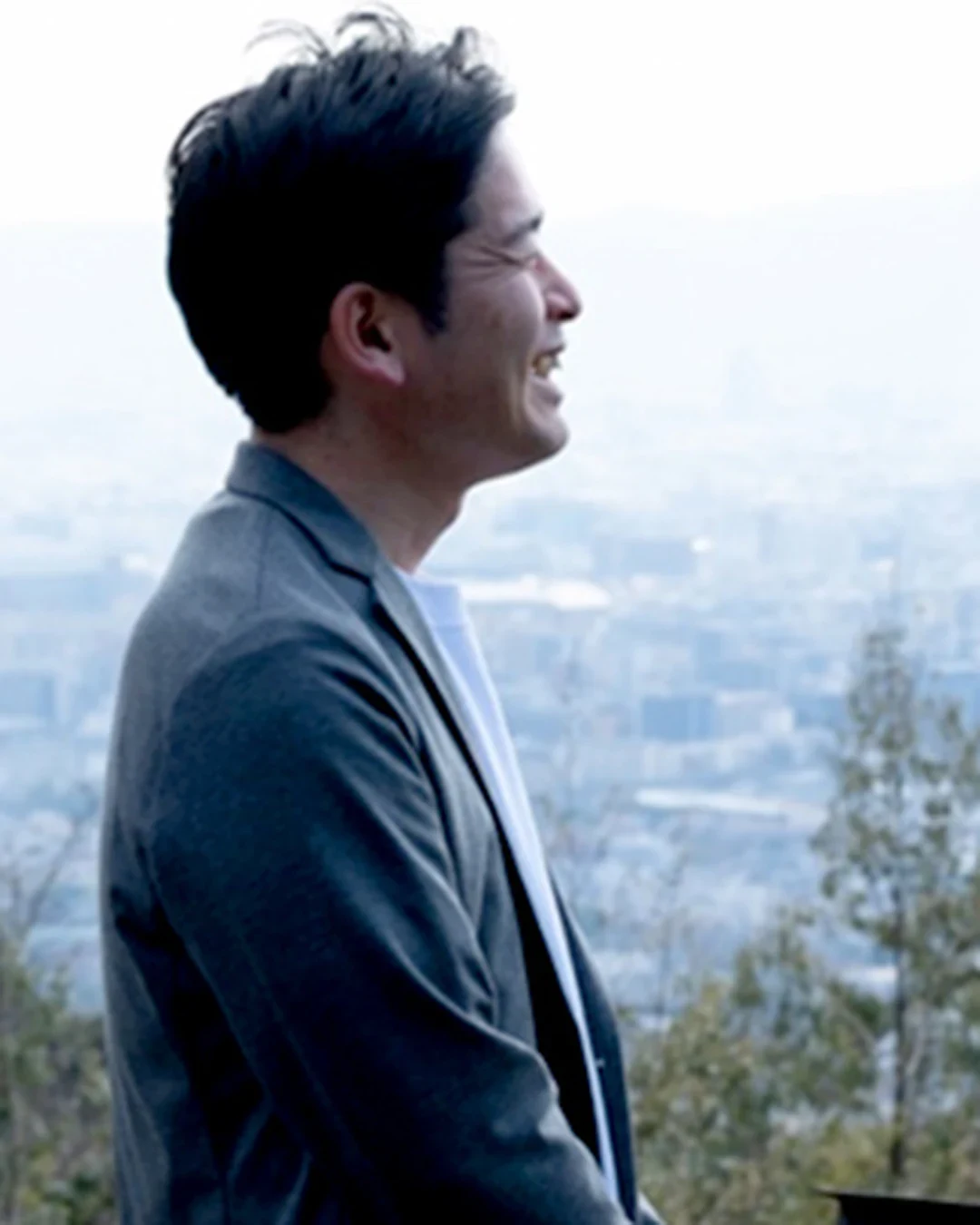
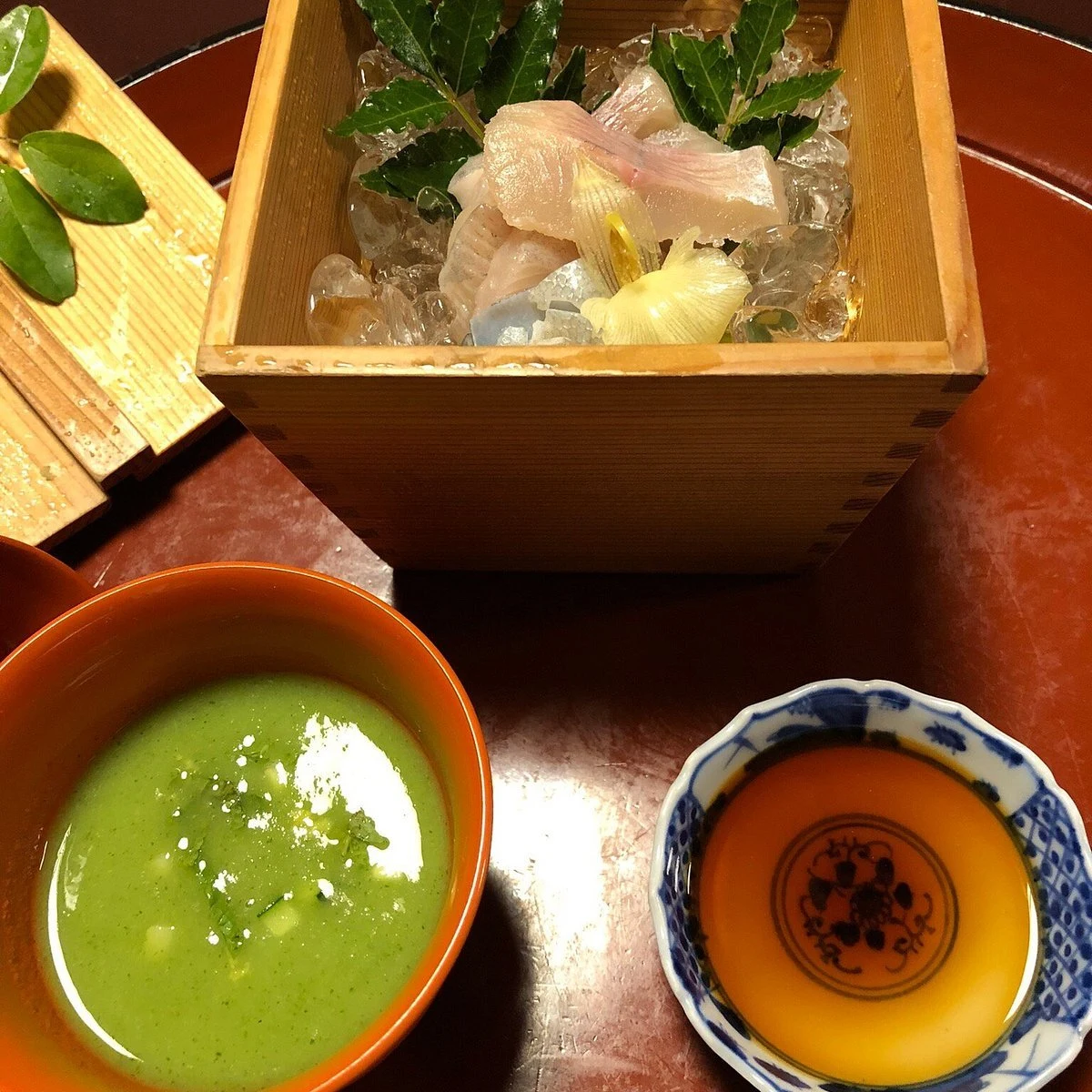
With grouper soup arriving with maake mushrooms, yuba and yuzu, Shinya Takamasu is executive chef at Kodaiji Jugyuan in Kyoto. The two Michelin stars the restaurant holds in the 2025 Guide were earned under him, an upgrade from one. He was raised in Hirado, a seaside town in Nagasaki, diving daily and coming home to the smell of rice, and that pairing of sea and grain still sets his order of attention. In Kyoto he works by walking: hills, riversides, shrines. He calls the city his inner compass. The habit is not decorative. It decides what reaches the bench, because a kaiseki menu built around festivals and seasonal strength has to come from somewhere other than a supplier list.
Set kaiseki with meat given a place
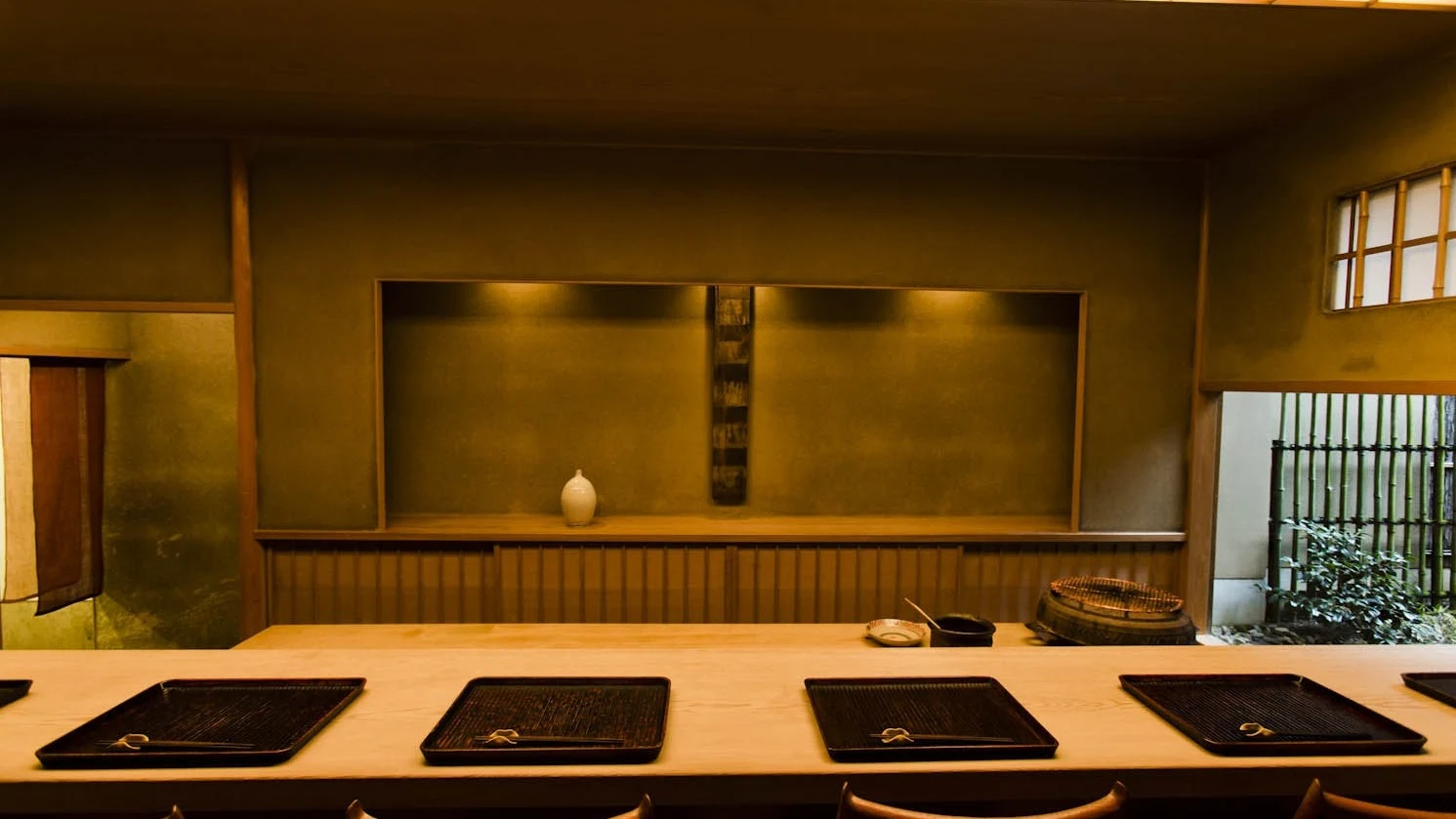
There is no à la carte here, only set menus, and they rotate with the season rather than with a mood. A documented meal ran from osekihan, celebration rice with a whisper of salt, through walnut tofu built from prawns, fried walnuts and caramelised pistachios, then grouper soup, bonito sashimi that dissolves on the bite, hassun, grilled Kyoto pork loin, ayu sweetfish, rice with pickles and miso, a uiro bellflower dessert and ceremonial matcha. Takamasu buys dry-aged meat from a butcher in Shiga Prefecture and fish from the morning markets, with produce drawn from across Japan as the calendar allows. Meat holds a stronger place here than in most vegetable-led kaiseki rooms, handled with the Western flame control the Hiramatsu group brought to the kitchen, including grilling in the room itself. Sake supports the progression, Kyoto bottles among them, and a light sweet pour follows the osekihan as a reset.
The Sunday letter
Find new places through the people who run them.
Our Sunday email brings you the chefs, winemakers and hoteliers behind our newest stories. See a sample before you subscribe.
See a sample of the Sunday emailOne email a week. Unsubscribe from any issue.
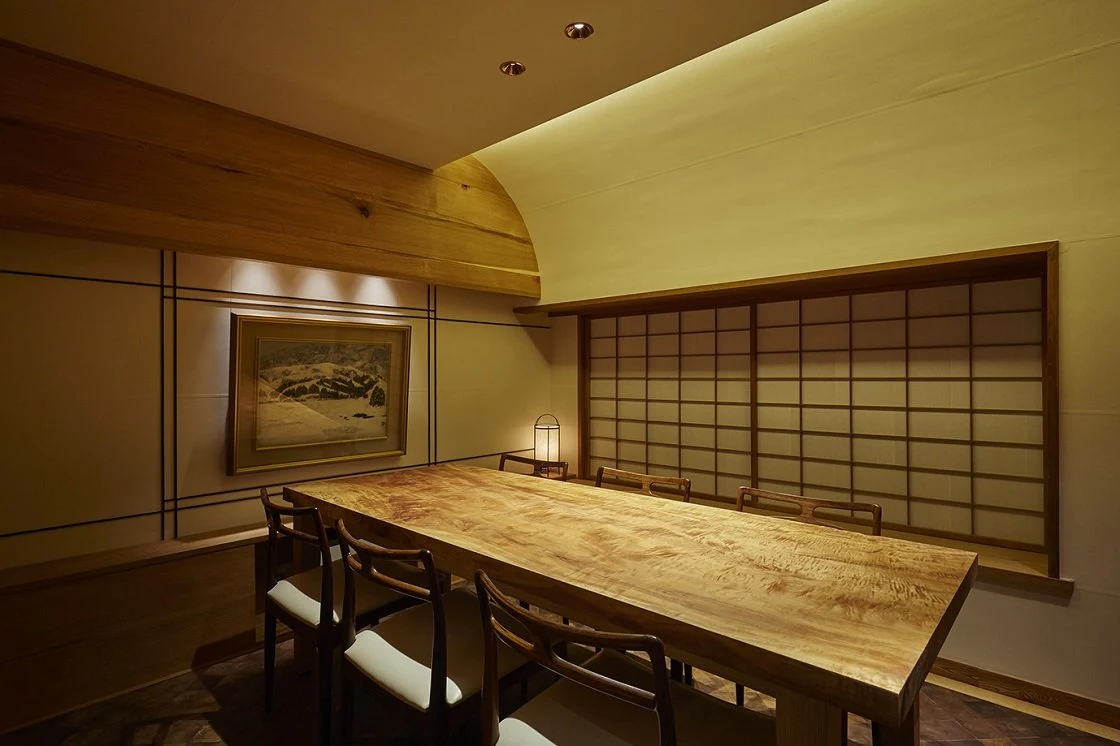
Private rooms facing Jugyuan Garden
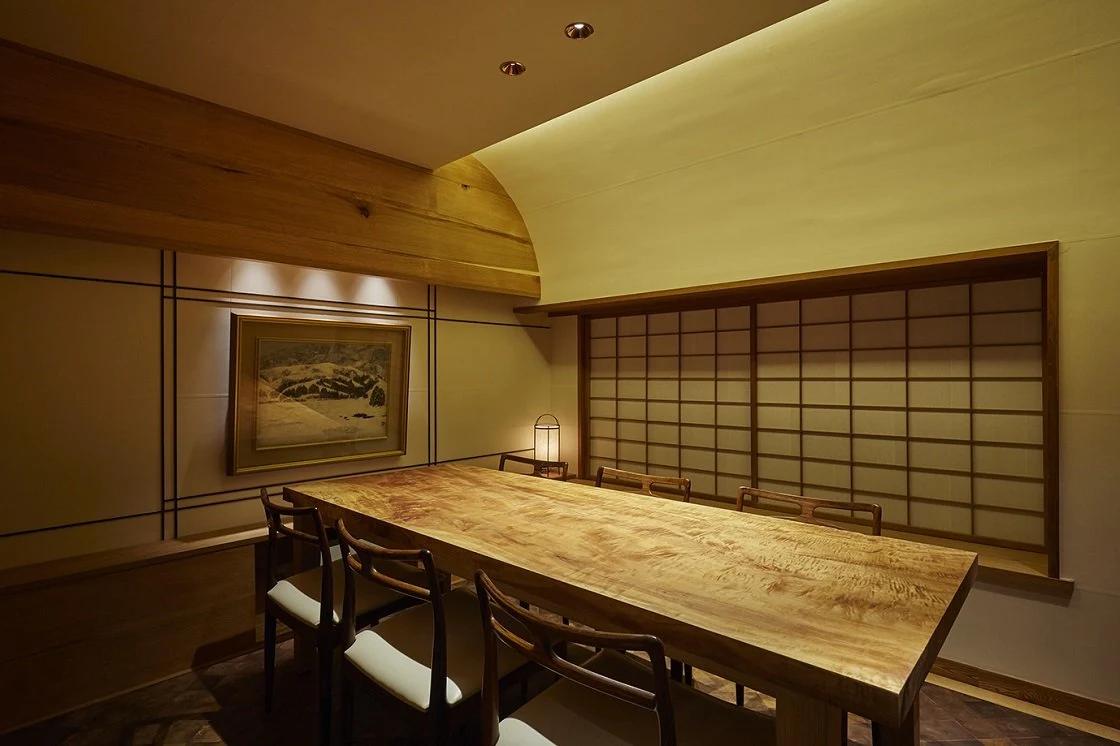
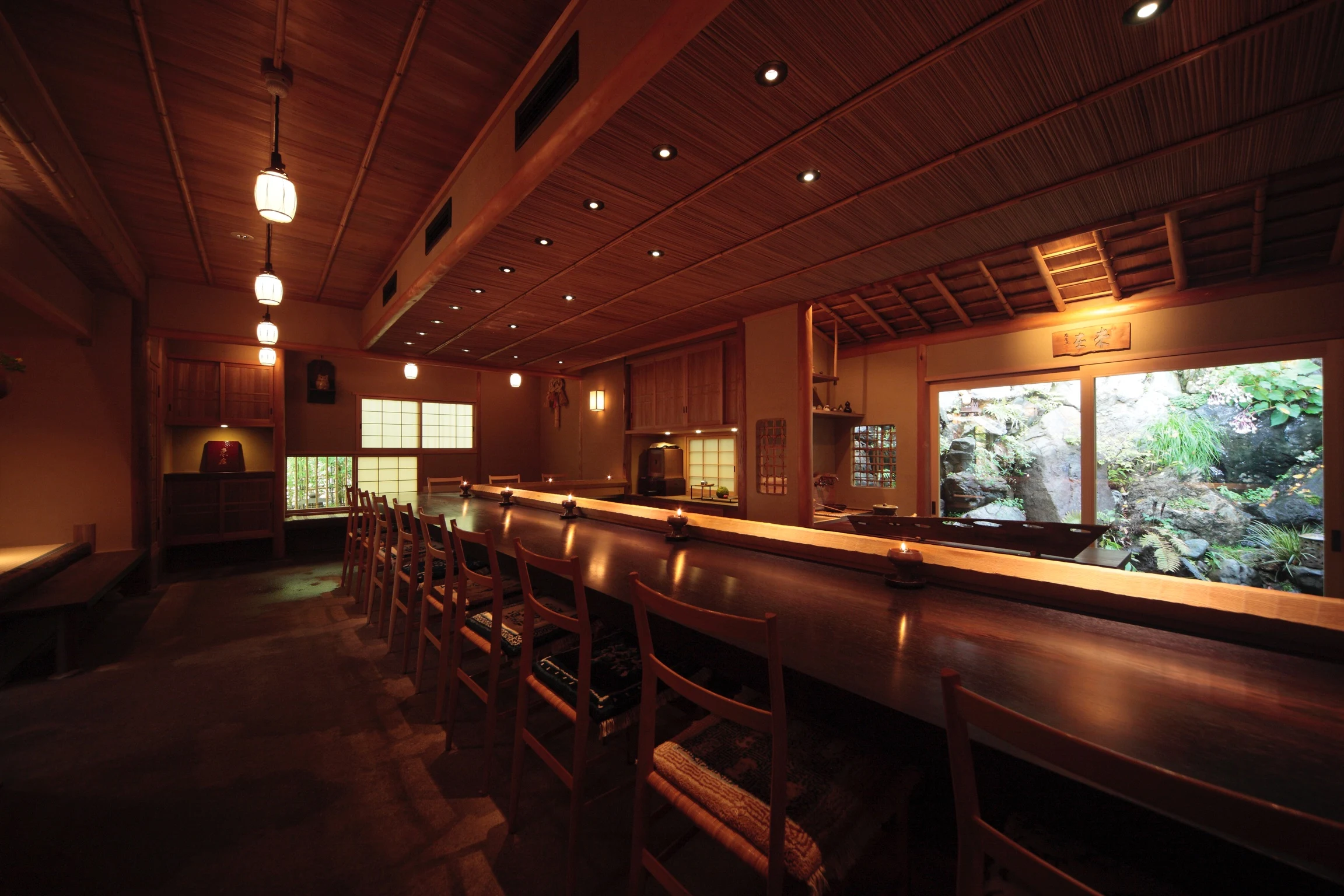
The room asks for a slower eye. Large windows carry soft natural light across old wood, and the first-floor private rooms look directly into Jugyuan Garden, laid out by the seventh-generation gardener Jibei Ogawa, where the view turns with spring growth and autumn colour. From the second floor the city opens up. The site runs to roughly 2,000 tsubo, about 6,600 square metres, yet the meal stays intimate because the architecture breaks that scale into rooms, thresholds and framed views. The building is over 110 years old, Meiji-era sukiya work by Asajiro Uesaka and Sutejiro Kitamura, and a rare survivor in a city that has burned repeatedly. Takamasu has studied kintsugi at Ko-jitsu-kyo and has bought antique tableware at Kobijutsu Nagata since he was young, so the ceramic reaching the table belongs to the same practice as the food. A 400-year-old plate has appeared in service.
Ten oxen, one temple
The restaurant opened on 23 September 2017 on the grounds of Kodaiji Temple, built in memory of Nene, the wife of Toyotomi Hideyoshi. Its name comes from the Zen painting series Jugyuzu, the Pictures of Ten Oxen, a sequence about looking rather than arriving. Just off Ninen-zaka, the pass stays mostly hidden, as ryotei service intends, and the craft reaches the table in measured arrivals: lacquer, ceramic, broth, grilled meat, rice. The last trace is usually the matcha, green and still, in a private room above Jugyuan Garden.
Questions
Frequently asked
Who is the chef at Kodaiji Jugyuan?
Shinya Takamasu is the executive chef, and the restaurant’s two Michelin stars in the 2025 Guide were earned under his direction.
What kind of cooking does Kodaiji Jugyuan serve?
It serves traditional Kyoto kaiseki as set menus only, with courses that change with the season.
What is the setting like?
The restaurant sits on the grounds of Kodaiji Temple in Higashiyama, and the first-floor private rooms look directly into Jugyuan Garden.
Is a reservation needed?
Yes. Reservations are essential, and bookings are made through Omakase.
What should guests know about dress and pricing?
The dress code is smart casual, and the venue is in the $$$$ price tier at about $150 per person.
The field
How it compares
| Place | Awards | Cuisine | Notes |
|---|---|---|---|
| Kodaiji Jugyuan | Michelin 2 Stars | Traditional Kyoto Kaiseki | Higashiyama, $$$$ |
| Gion Sasaki | Michelin 3 Stars | Modern Kaiseki | Kyoto |
| Isshisoden Nakamura | Michelin 3 Stars | Traditional Kyoto Kaiseki | Kyoto |
| Kikunoi Honten | Michelin 3 Stars | Kyoto Kaiseki Ryotei | Kyoto |
| Miyama Sou | Michelin 3 Stars | Tsumikusa Kaiseki | Kyoto |
| Mizai | Michelin 3 Stars | Traditional Kaiseki | Kyoto |
| Ogata | Michelin 2 Stars | Kaiseki Omakase | Kyoto |
In residence
Similar places
The Sunday letter
Get the next Made By story in your inbox.
We send one email every Sunday morning with the places and people we covered that week.
See a sample of the Sunday emailOne email a week. Unsubscribe from any issue.