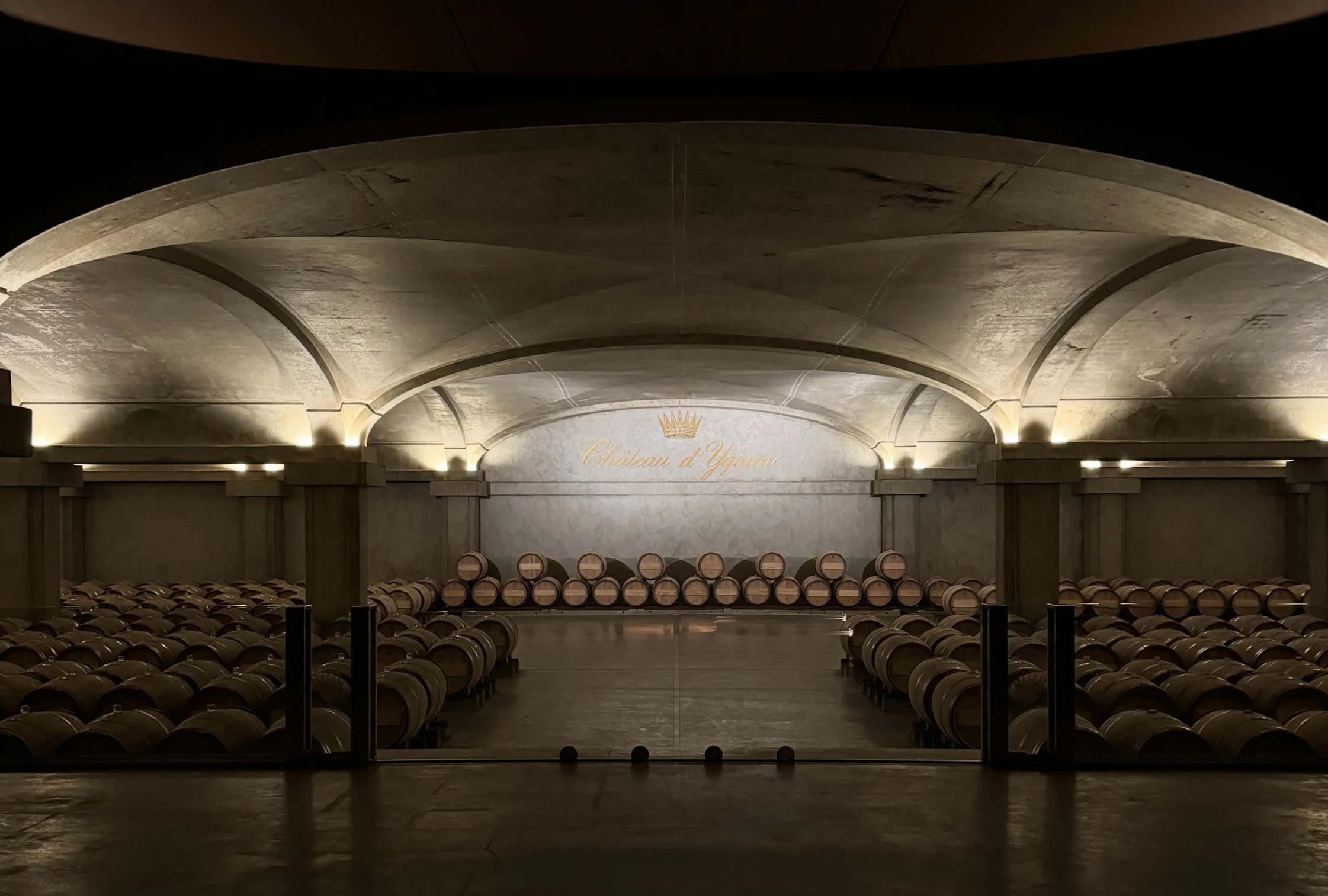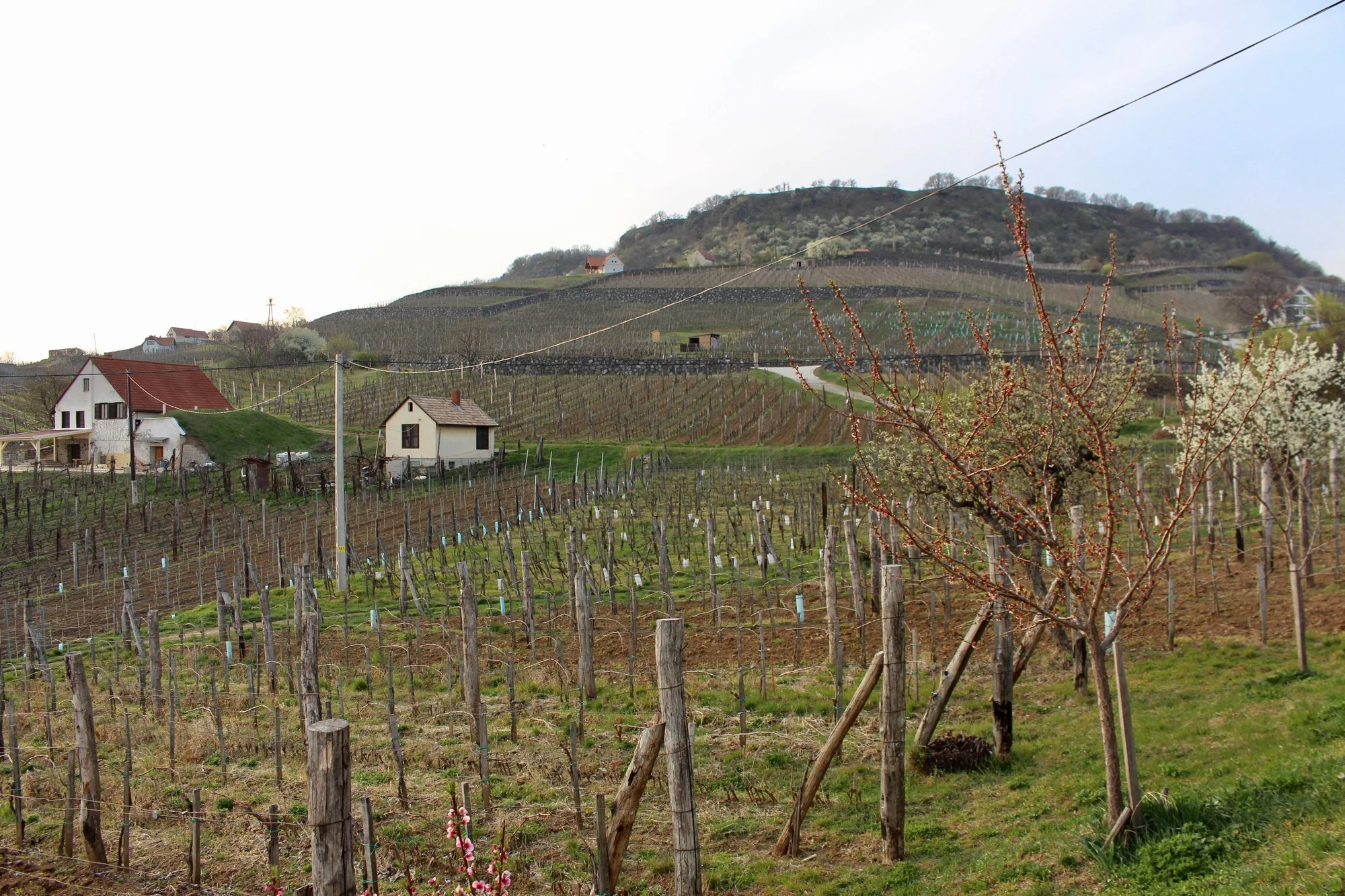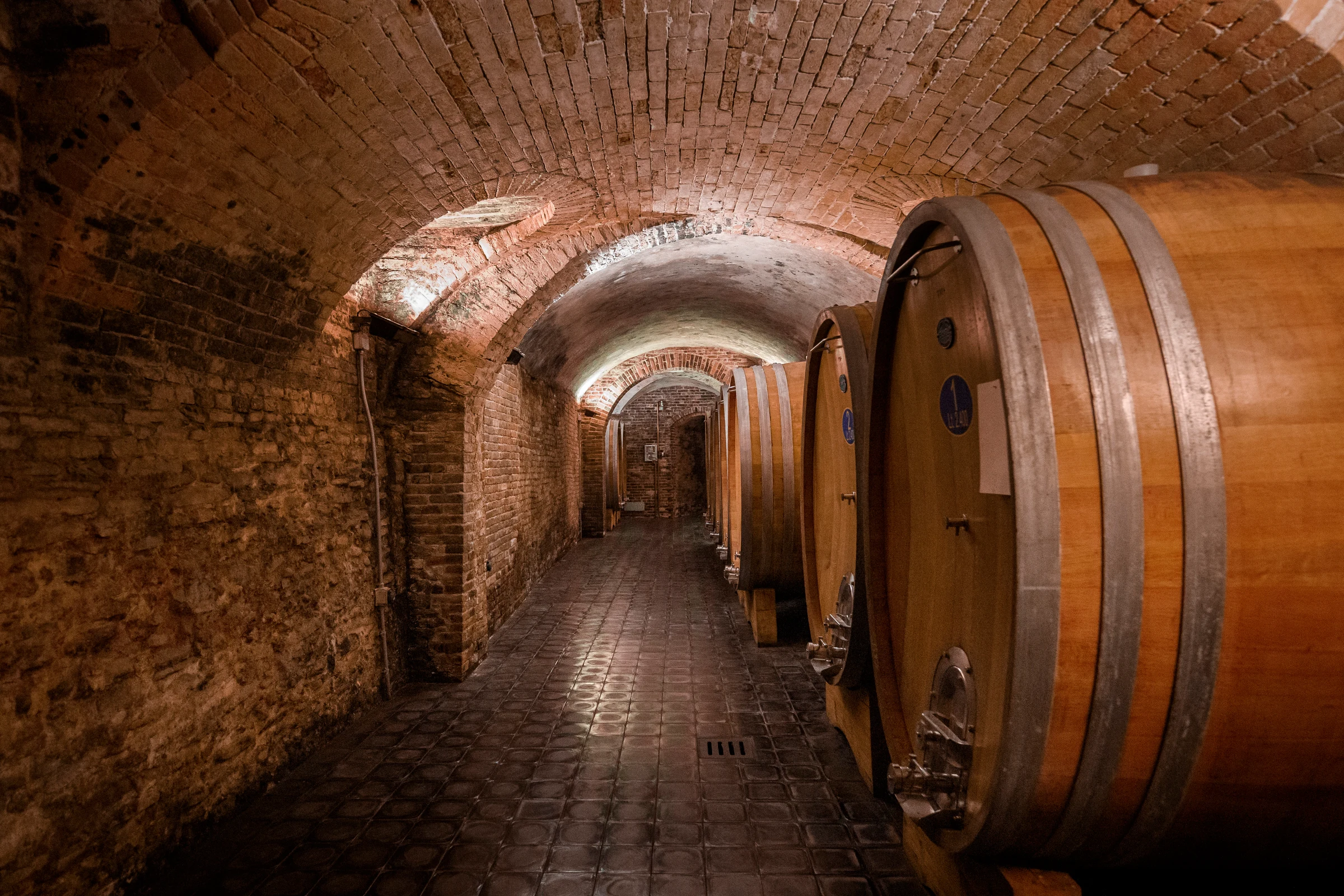
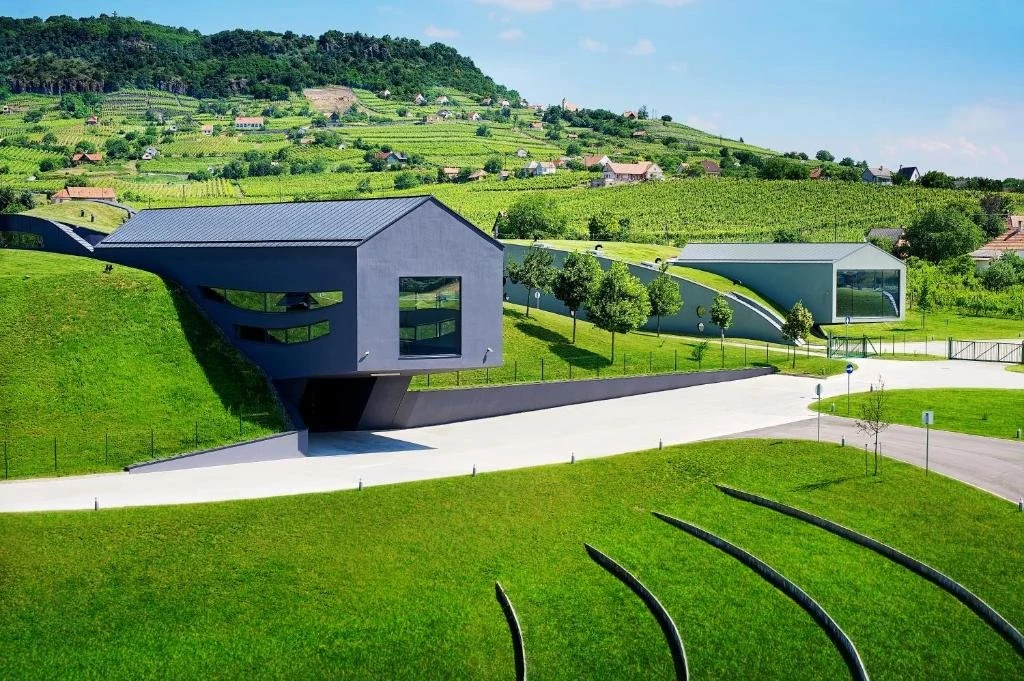
Kreinbacher Birtok sits on the volcanic slopes of Somló hill in western Hungary, holding a Pearl 2 Star Prestige award (2025) that places it among the region's most formally recognised producers. The estate represents the serious, terroir-driven tier of Somló winemaking, where ancient basalt soils and a commitment to indigenous varieties shape wines of genuine depth and structural tension.
<h2>Volcanic Ground, Deliberate Wine</h2><p>Approaching Somló is not like approaching most Hungarian wine country. The hill rises abruptly from the flat Pannonian plain west of Lake Balaton, a dormant volcanic cone whose basalt-rich soils have been cultivated for wine since at least the medieval period. Historically, Somló was one of the most coveted wine regions in the Habsburg Empire; its Furmint and Juhfark were kept for royal courts and reportedly consumed by newlyweds to improve the odds of male heirs. That mythology has faded, but the geology has not, and it is that geology that makes any serious estate on the hill worth examining.</p><p>Kreinbacher Birtok occupies this terrain at a high level of formal recognition. The estate holds a Pearl 2 Star Prestige rating for 2025, which positions it firmly within the upper tier of Hungarian wine producers receiving independent critical assessment. Google reviewers rate it 4.7 stars from 874 reviews. In a country where Tokaj has historically claimed most of the international attention, a 2-star prestige distinction for a Somló producer signals something the broader wine world is still catching up to: that Hungary's quality conversation extends well beyond the Tokaj appellation.</p><h2>What the Basalt Does</h2><p>Somló's volcanic terroir is the defining argument for the hill's wines. Basalt weathers into soils with high mineral content and excellent drainage, and the hill's steep gradients create sharp diurnal temperature swings that preserve acidity in the grapes. The result, across producers working with indigenous varieties like Juhfark, Furmint, Olaszrizling, and Hárslevelű, tends toward wines with pronounced mineral tension, firm structure, and a capacity for age that is unusual at Somló's modest production scale.</p><p>Kreinbacher's positioning at the 2-star prestige level suggests the estate is working with these conditions seriously and consistently. In a region with a relatively small number of internationally profiled producers, formal recognition at this tier acts as a reliable proxy for deliberate viticulture, careful cellar work, and wines that hold up under comparative scrutiny. The estate can be considered alongside <a href="https://www.enprimeurclub.com/wineries/fekete-pince-somlo-somlovasarhely-winery">Fekete Pince (Somló)</a> as one of the producers giving the hill a coherent critical identity.</p><h2>Somló in the Hungarian Wine Context</h2><p>Hungarian wine operates across a range of appellations with very different international profiles. Tokaj remains the reference point for outsiders: its Aszú wines, botrytis-driven and oxidative, carry centuries of documented prestige, and producers like <a href="https://www.enprimeurclub.com/wineries/disznoko-mezozombor-winery">Disznókő in Mezőzombor</a>, <a href="https://www.enprimeurclub.com/wineries/royal-tokaji-mad-winery">Royal Tokaji in Mád</a>, <a href="https://www.enprimeurclub.com/wineries/tokaj-hetszolo-tokaj-winery">Tokaj Hétszőlő in Tokaj</a>, <a href="https://www.enprimeurclub.com/wineries/tokaj-oremus-tolcsva-winery">Tokaj Oremus in Tolcsva</a>, and <a href="https://www.enprimeurclub.com/wineries/arvay-winery-ratka-winery">Árvay Winery in Rátka</a> operate within a framework of global recognition that Somló has not yet achieved at scale.</p><p>That gap, however, is narrowing. Wine critics working with central European appellations have increasingly written about Somló as an area where the terroir argument is as compelling as anywhere in the country, and where the leading producers are working with varieties and methods that deserve a wider audience. The estate sits in that expanding tier, where producers in less-documented regions attract attention precisely because their wines offer something that well-trodden appellations often cannot: a clear terroir signal without the price premium of a globally famous label.</p><p>Comparison with estate-focused producers elsewhere in Hungary is instructive. <a href="https://www.enprimeurclub.com/wineries/babarczi-winery-gyor-winery">Babarczi Winery in Gyor</a> and <a href="https://www.enprimeurclub.com/wineries/beres-winery-erdobenye-winery">Béres Winery in Erdőbénye</a> operate in similarly specialist positions within their respective appellations, where formal recognition and deliberate terroir focus define the tier. Internationally, the analogy of a small, recognised estate working in a non-famous appellation with strong geological distinctiveness applies equally to producers like <a href="https://www.enprimeurclub.com/wineries/abadia-retuerta-sardon-de-duero-winery">Abadía Retuerta in Sardón de Duero</a>, where the conversation about place and method precedes the marketing of the bottle.</p><h2>The Winemaking Approach at This Level</h2><p>At the Pearl 2 Star Prestige tier, the expectation across any region's critical framework is consistency of quality across vintages, a clear house style that reflects both terroir and intentional winemaking decisions, and wines that perform under blind comparative tasting. For Somló specifically, this means handling the hill's naturally high-acid, mineral-driven raw material in a way that either emphasises those characteristics or deliberately moderates them through cellar choices.</p><p>The volcanic terroir at Somló tends to produce Juhfark with notable austerity in youth, high acidity, firm phenolic grip, and a mineral note that can read as almost saline. Furmint from the hill, while sharing a variety with Tokaj, expresses differently here: less oxidative, more tensile, with the basalt contributing a textural weight that distinguishes it from the limestone-influenced versions further east. Any producer working at a recognised level on Somló is making deliberate choices about how to present these characteristics, whether through extended ageing, specific vessel selection, or careful timing of harvest.</p><h2>Planning a Visit to Somló</h2><p>Somlóvásárhely is a small village at the foot of Somló hill, accessible from Budapest in roughly two to two and a half hours by road, or via rail connections through the regional hub of Győr. The hill itself is compact, and the village is the main practical base for visiting producers. Given the limited accommodation infrastructure in the immediate area, many visitors use Győr or the Lake Balaton resort towns as a base and make Somló a day trip, though the quality of the wines justifies more deliberate planning.</p><p>For those building a wider itinerary around Hungarian wine, the western Transdanubia region that includes Somló can be paired with Badacsony and other Balaton-adjacent appellations, offering a concentrated look at volcanic terroir wines that sits in genuine contrast to the dessert wine focus of Tokaj.</p><p>Hours, tasting formats, and advance booking requirements should be confirmed before travel. Reservations are recommended.</p>
Kreinbacher Birtok has received recognition including: Pearl 2 Star Prestige (2025).
Kreinbacher Birtok is located at H-8481 Somlóvásárhely, Somló hegy, hrsz. 022/14, Hungary, Somlóvásárhely.
Somló's basalt-derived soils produce wines with a mineral density and structural grip that sets them apart from other Hungarian appellations. Kreinbacher holds a Pearl 2 Star Prestige rating for 2025, placing the estate among Hungary's critically recognised producers — their range is built on this volcanic identity. Contact the estate directly for current release availability.
Kreinbacher's strength is translating Somló's distinctive basalt terroir into wines with critical standing: the estate carries a Pearl 2 Star Prestige award for 2025, a tier that demands consistency across vintages and a defined house style. Within Hungary, where Tokaj dominates international attention, Somló-based estates like Kreinbacher represent the case for the country's volcanic west.
H-8481 Somlóvásárhely, Somló hegy, hrsz. 022/14, Hungary
Somlóvásárhely
Pannonhalmi Apátsági Pincészet