La Fonda Restaurante
- 01CuisineModern Spanish Tapas
- 02CityMarbella, Spain
Ravioli under chapel light
- Relais Chateaux Award · 2026
- Relais Chateaux Award · 2025
Spice at the pass
The lamb rack meets Pedro Ximénez at the pass at La Fonda Restaurante in Marbella’s old town, inside the restored Ermita de San Sebastián. Jorge González Carmona leads the kitchen as executive chef, arriving with a consolidated career from Madrid’s Ritz and from Joël Robuchon’s establishments, where he built a style that joins luxury precision to a freer hand. His stated philosophy is the reinvention of classics through a fusion of Andalusian and Mediterranean tradition with influences gathered from travel, worked from fresh, local, seasonal and organic ingredients.
That brief suits a house with memory in the walls. The predecessor history is not treated as décor. The original La Fonda restaurant received a Michelin star in 1978 and held it until 1995, under Gustav Horcher, known as Moppy, son of Otto Horcher. The present kitchen cooks in the wake of that lineage without imitating it, and the intention stated around the food is unusually direct: unique sensations in every bite, drawn from regional produce rather than from imported prestige.
Ravioli, artichoke, Pedro Ximénez
The program works a modern Spanish vocabulary with Andalusian and Mediterranean weight: à la carte, small plates, and a tasting menu, with wine pairing treated as part of the meal rather than an afterthought. The signatures named by the house are lamb rack, organic chicken, and ravioli, but the more precise gestures sit in the details: pata negra folded into pasta, lamb perfumed with Pedro Ximénez, carabinero cut as carpaccio with coral oil and sesame tuile, sea bass set with green sauce, squid, and courgette tagliatelle. Flame-grilled artichoke brings smoke to the pass, while ravioli gives the kitchen a compact test of seasoning, texture, and heat.
From 2024 onward the same two words keep returning, exquisite and perfectly prepared, with a creamy freekeh worked like risotto singled out beside the ravioli. The cellar stays close to the food. The restaurant is known for curated wine pairing, including regional selections by the glass and pairings built around seafood, freekeh, tuna, and the sweetness of Pedro Ximénez. The point of the pairing is fit rather than display, which is the same argument the kitchen makes on the plate.
The chapel and the room
The room asks for restraint before the first plate arrives. La Fonda Restaurante occupies the restored 16th-century Ermita de San Sebastián at Plaza del Santo Cristo, within the La Fonda Heritage Hotel, and the old chapel still gives the dining room its scale. Honey-stone walls, arches, columns, murals, frescoes, and a glass roof hold the service in a softened light; the courtyard and garden pull the old town in without making the meal feel exposed to it. Candlelight does not need to compete with the pass.
The place has passed through several lives: private residence, church, school, hotel, then a restaurant known well beyond Marbella. Its restoration took seven years and uncovered the nave of the church of San Sebastián, along with 18th-century murals and original architectural fabric. It sits alongside sister venues, La Bodega de La Fonda for tapas and Los Patios for courtyard dining, which lets the main room stay formal without carrying every service. The plates now move through a house built from those layers, with lamb rack and ravioli leaving the pass under the glass roof of the Ermita de San Sebastián.
Questions
Frequently asked
Who is the chef at La Fonda Restaurante?
Jorge González Carmona leads the kitchen as executive chef. His background includes work at Madrid’s Ritz and at Joël Robuchon’s establishments.
What kind of food does La Fonda Restaurante serve?
The restaurant serves modern Spanish tapas with Andalusian and Mediterranean influence. The menu includes à la carte dishes, small plates, and a tasting menu, with wine pairing available alongside the meal.
What are the signature dishes?
The house signatures are lamb rack, organic chicken, and ravioli. The kitchen also works with dishes such as lamb with Pedro Ximénez, flame-grilled artichoke, and carabinero carpaccio.
What is the setting like?
La Fonda Restaurante is inside the restored 16th-century Ermita de San Sebastián in Marbella’s old town, within the La Fonda Heritage Hotel. The dining room has honey-stone walls, arches, columns, murals, frescoes, and a glass roof.
Do I need to book a table?
Reservations are recommended.
The field
How it compares
| Place | Cuisine | Notes | Awards |
|---|---|---|---|
| La Fonda Restaurante | Modern Spanish Tapas | Old Town, $$$ | · |
| BACK | Modern Andalusian Tapas | Marbella | Michelin 1 Star |
| Cañitas Maite Gastro | Modern Spanish Tapas | Casas-Ibáñez | · |
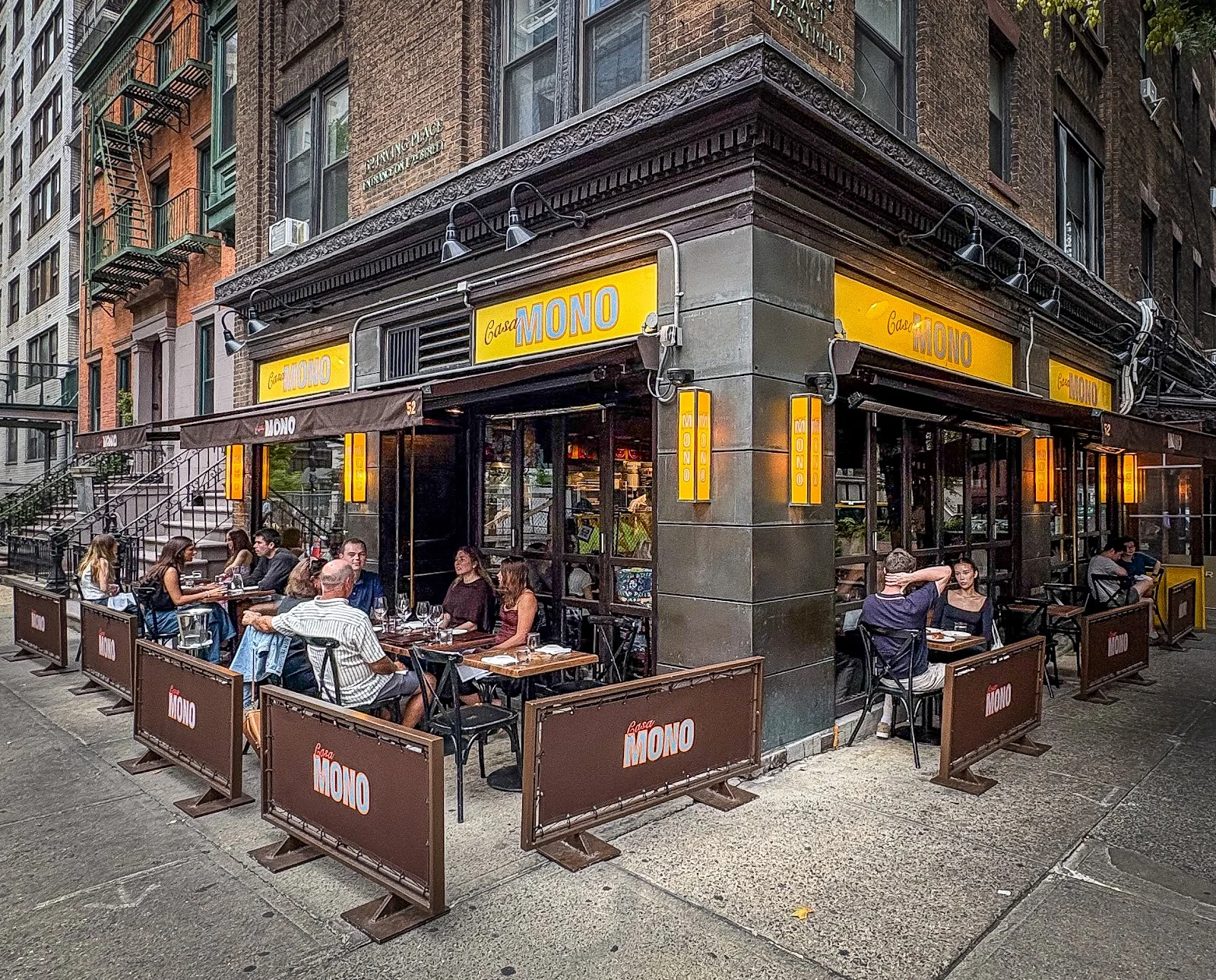
| Casa Mono | Modern Spanish Tapas | New York City | Michelin 1 Star |
| Kava | Modern Mediterranean Tasting Menu | Marbella | · |
| Suculent | Modern Spanish Tapas | Barcelona | · |
| TA-KUMI | Modern Japanese Omakase & Fusion | Marbella | · |
Similar places
Modern Andalusian Tapas
BACK
Marbella, Spain
★
Modern Spanish Tapas
Cañitas Maite Gastro
Casas-Ibáñez, Spain
Modern Spanish Tapas
Casa Mono
New York City, United States
★
Modern Mediterranean Tasting Menu
Kava
Marbella, Spain
Modern Spanish Tapas
Suculent
Barcelona, Spain
Modern Japanese Omakase & Fusion
TA-KUMI
Marbella, Spain