Labyrinth
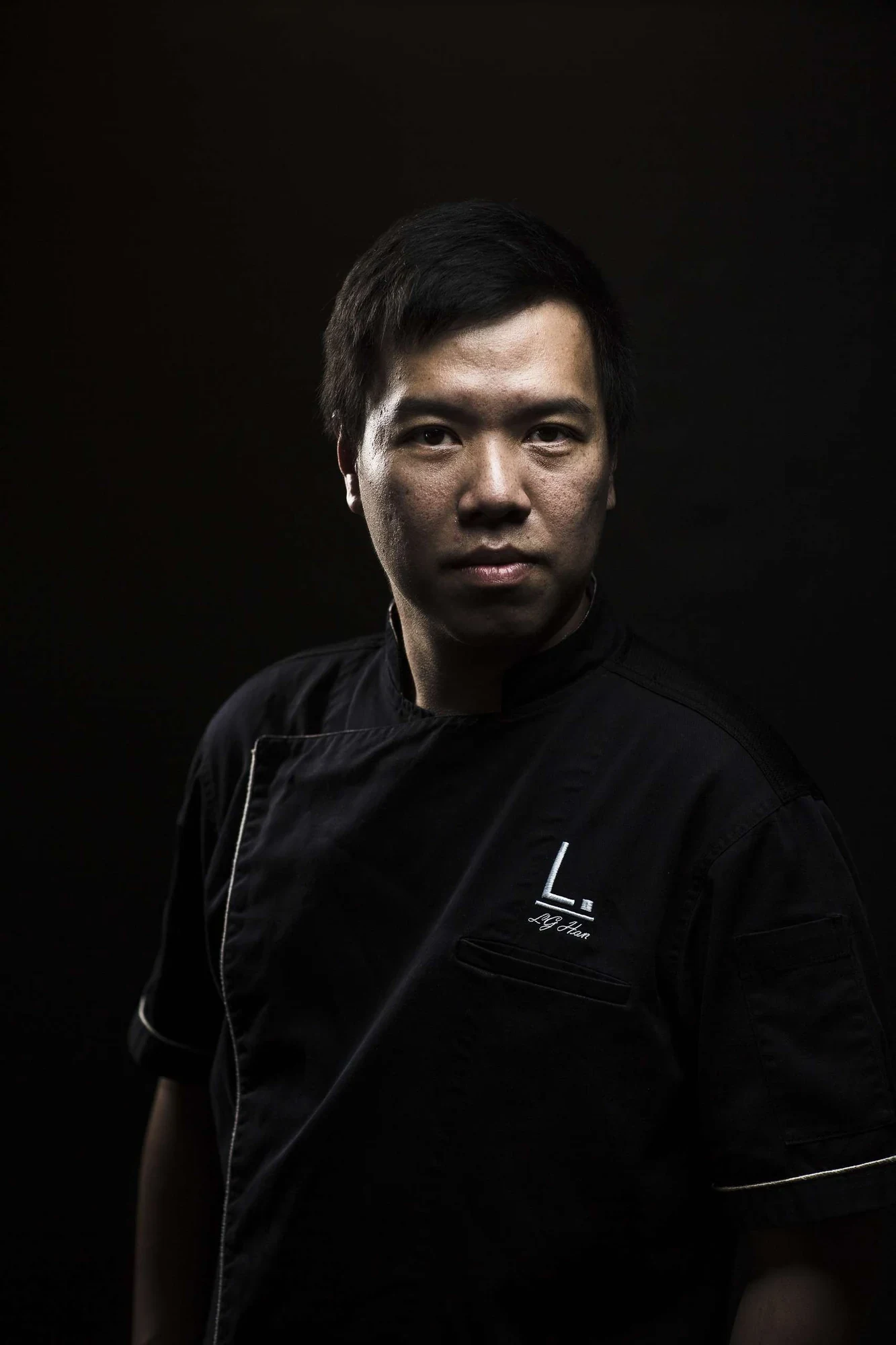
In Residence
LG Han
Chef
- 01CuisineModern Singaporean
- 02CitySingapore, Singapore
- 03RecognitionOne Michelin Star
From the people index
Recommended by
One trusted voice points here.
- 1 Michelin Star · Michelin Guide
- World's 50 Best · #37 · World's 50 Best Restaurants
- Opinionated About Dining Top Restaurants in Asia Ranked #60 · 2026
- Michelin Guide 1 Star · 2026
- World's 50 Best Asia's Best Restaurants #40 · 2026
- Tatler Listed in Best Restaurants Asia-Pacific · 2025
- Opinionated About Dining Top Restaurants in Asia Ranked #65 · 2025
- Michelin 1 Star · 2025
- World's 50 Best Best Restaurants #97 · 2025
- World's 50 Best Asia's Best Restaurants #37 · 2025
- World's 50 Best Best Restaurants #92 · 2024
- Opinionated About Dining Top Restaurants in Asia Ranked #60 · 2024
- Michelin 1 Star · 2024
- World's 50 Best Best Restaurants #97 · 2023
A Dark Room Built Around Memory
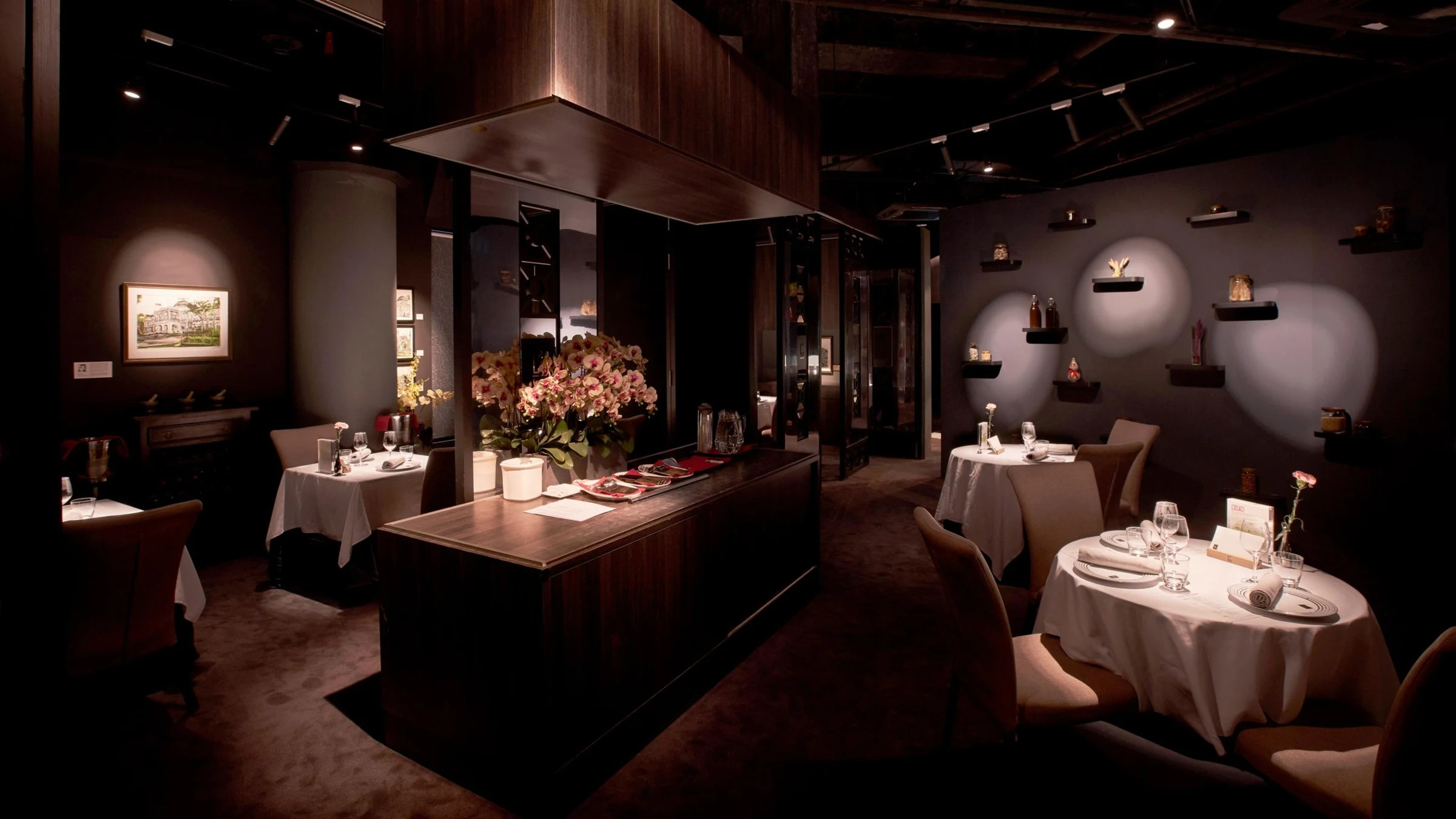
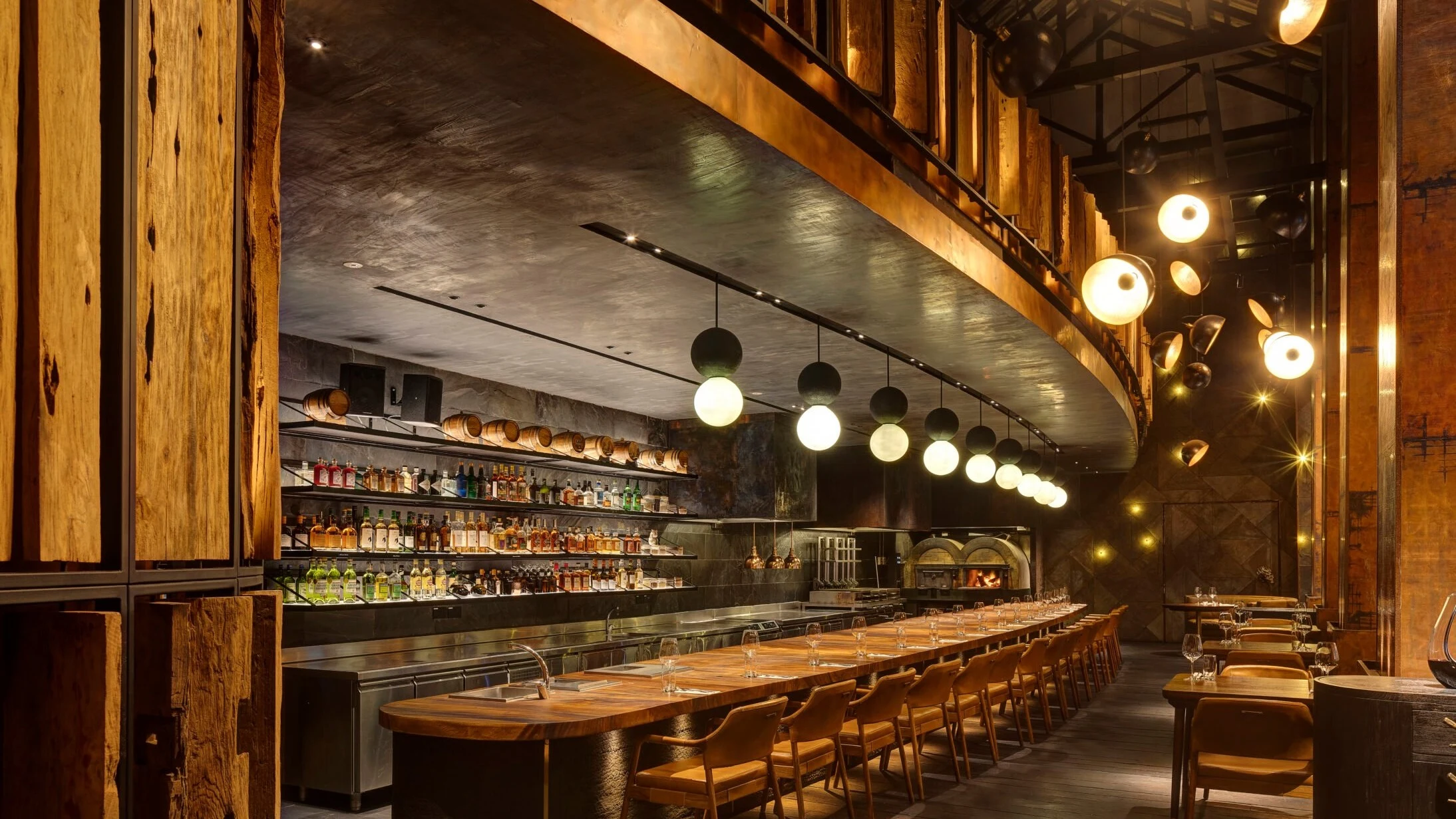
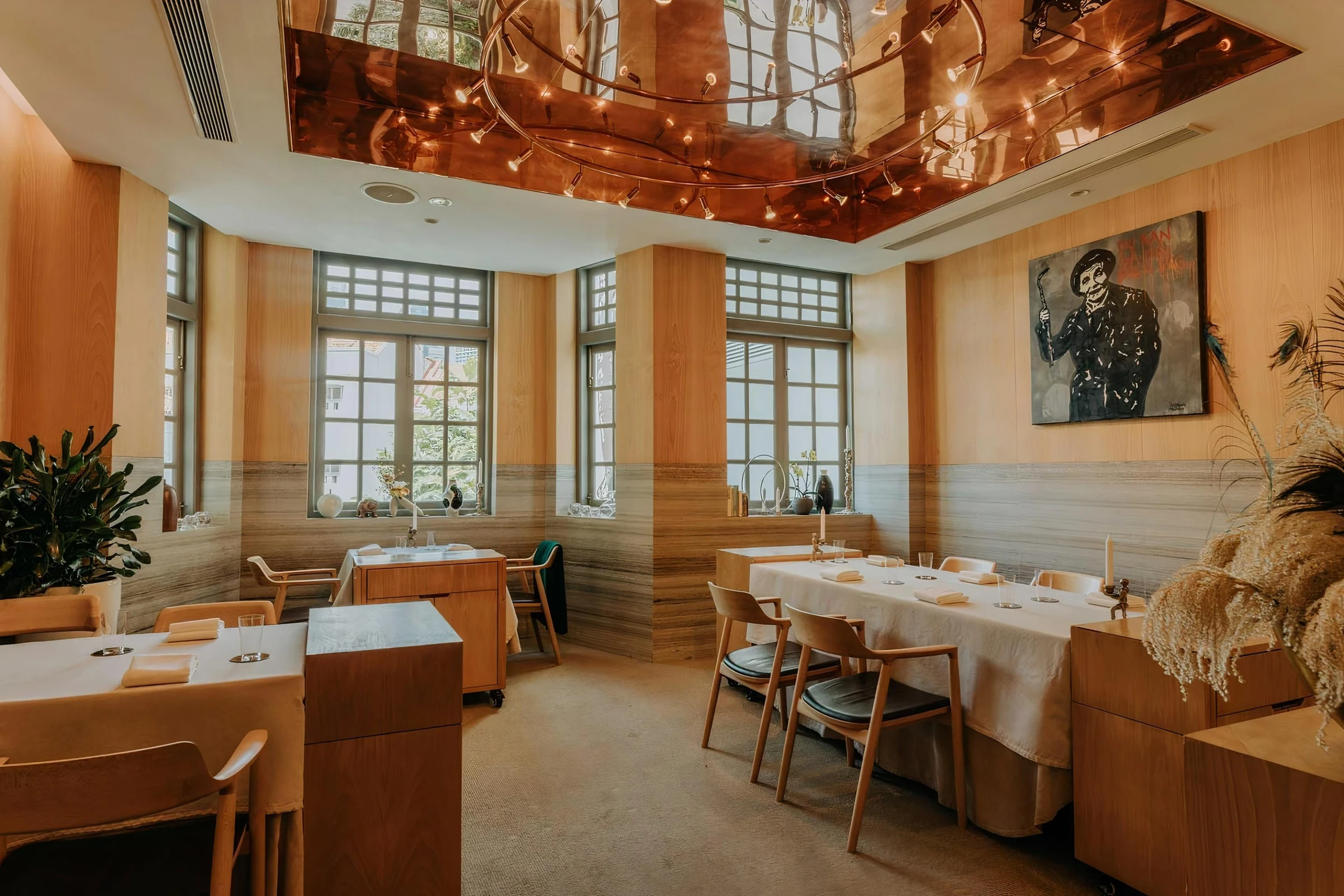
The dining room at Labyrinth operates on contrast. The space is intentionally spare: black walls, a controlled absence of visual noise, and razor-sharp directional lighting that pulls focus onto the plate. In Singapore's fine-dining circuit, where maximalist interiors have long competed for attention, that restraint is a deliberate editorial choice. The room instructs you to pay attention to the food, not to the architecture around it. Labyrinth is a one-Michelin-star restaurant in Singapore serving Modern Singaporean cuisine at about USD 300 per person.
Located at 8 Raffles Avenue in the Esplanade Mall, the restaurant sits within one of Singapore's most prominent cultural and commercial zones, surrounded by concert halls and waterfront views that belong to the city's tourist geography. Inside, those reference points dissolve. The service team reinforces the focus: the pacing is measured, the knowledge specific, and the intent clear from the first course.
The Sunday letter
Find new places through the people who run them.
Our Sunday email brings you the chefs, winemakers and hoteliers behind our newest stories. See a sample before you subscribe.
See a sample of the Sunday emailOne email a week. Unsubscribe from any issue.
What the $$$ Price Point Buys You Here
Singapore's fine-dining tier splits roughly into two price bands. At the upper end, restaurants like Born and Zén operate at $$$$ and position themselves against a European-contemporary comparable set that references global luxury. At the $$$ level, a smaller number of restaurants make a case for comparable seriousness with a different culinary proposition. Labyrinth is among the more credentialed entries in that second group.
The value proposition is not one of low price. It is one of recognition density relative to cost. A Michelin star, a position at #37 on the World's 50 Best Restaurants list, and a ranking of #37 on Asia's Leading Restaurants 2025 represent a tier of external validation that most $$$ restaurants in Asia do not carry. For the price bracket, the credential stack is unusually heavy.
Peer comparison sharpens the picture. Thevar, also at $$$, works in a comparable register of modern reinterpretation applied to a specific culinary heritage. Cloudstreet occupies similar pricing territory with a different creative framework. What separates Labyrinth within that bracket is the specificity of its source material: Singapore's hawker culture, not Southeast Asian cooking in a generalised sense, and not European technique applied to Asian ingredients as a loose concept.
The Menu as Cultural Argument
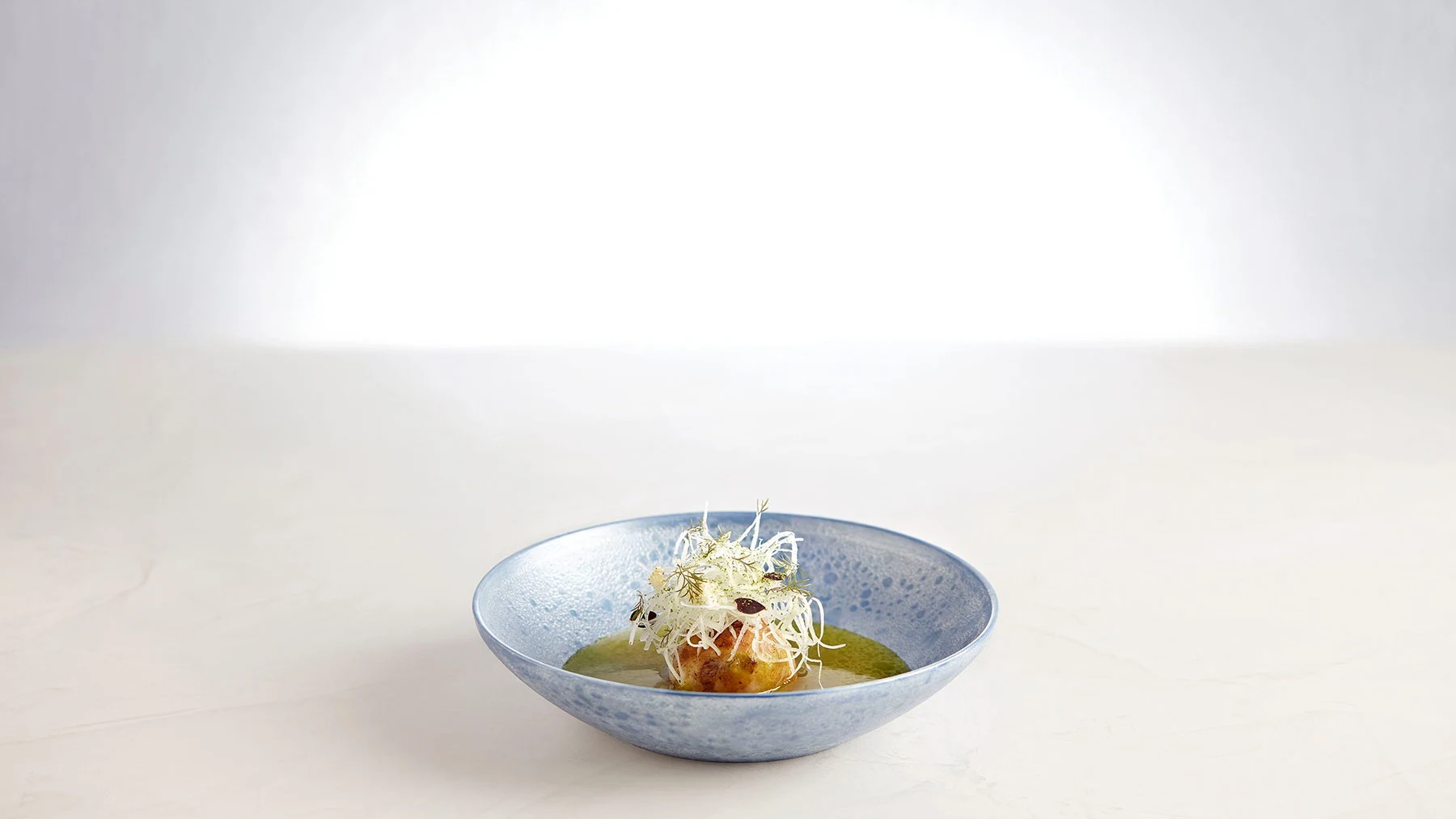
The set menu at Labyrinth uses dishes from Singapore's hawker canon as raw material for reconstruction. Chicken rice and bak chor mee, two dishes embedded in everyday Singaporean food culture, appear not as reference points or garnishes but as the structural basis for courses. The kitchen works with homegrown produce from Singapore, a logistical constraint that also functions as a creative and philosophical position: the ingredients come from the same geography as the food memories being reinterpreted.
The technique involves transforming familiar textures and flavours into new forms, with reductions, lardo preparations, and precision cooking methods used to shift the register of recognisable dishes without abandoning the flavour logic that makes them identifiable. This approach places Labyrinth inside a broader category of restaurants across Asia that treat national or regional food identity as a serious fine-dining subject rather than a marketing backdrop. Meta works in a related mode within Singapore. Across the region, comparable arguments are being made at Soigné and alla prima in Seoul, at Vea in Hong Kong, and at MAZ in Tokyo. The format differs in each city, but the underlying premise, that a national food culture is a serious creative medium, is consistent across the category.
Chef LG Han's role in that argument is one of sustained authorship. He uses recognisable local flavours and childhood food memories as his starting point, then reinterprets them with high-specification ingredients sourced across Singapore. The result, as documented by the restaurant's recurring recognition from both mainstream and critic-driven bodies, is a set menu that surprises within a framework the guest already understands. That balance, between the familiar and the transformed, is technically harder than it appears. It requires the kitchen to manage two sets of expectations simultaneously: what the dish is supposed to taste like, and what this version of it does differently.
Where Labyrinth Sits Among Singapore's Innovative Tier
Singapore has produced a concentrated cluster of innovative restaurants over the past decade, several of which have achieved international ranking. Araya and Chaleur represent different approaches within the broader creative-cuisine category. What distinguishes Labyrinth from most of its Singapore peers is the degree to which its creative logic is geographically bounded. The menu does not draw from a pan-Asian or globally eclectic ingredient vocabulary. It stays close to Singapore's specific food culture, which gives the restaurant a more defined editorial position and a clearer point of differentiation within the city's fine-dining field.
In the wider Asian innovative-restaurant tier, that kind of geographic specificity has proven commercially and critically durable. Fujiya 1935 and KAHALA in Osaka, and Shimmonzen Yonemura in Kyoto, all operate within tight cultural and geographic frames. Evett in Seoul takes a different route, layering international technique over a Korean base. Labyrinth's trajectory, steady improvement across three years of OAD and 50 Best rankings, suggests the locally anchored model is holding.
Planning a Visit
| Venue | Cuisine | Price | Michelin | 50 Best Global (2025) |
|---|---|---|---|---|
| Labyrinth | Innovative / Singaporean | $$$ | 1 Star | #97 |
| Thevar | Modern Indian | $$$ | 1 Star | , |
| Jaan by Kirk Westaway | British Contemporary | $$$ | 1 Star | , |
| Burnt Ends | Australian Barbecue | $$$ | 1 Star | , |
| Born | Creative / Innovative | $$$$ | 2 Stars | , |
| Zén | European Contemporary | $$$$ | 3 Stars | , |
Questions
Frequently asked
What recognition does Labyrinth hold?
Labyrinth holds 1 Michelin star and a place on the World's 50 Best list at number 37.
Who works at Labyrinth?
Made By profiles LG Han (Chef) at Labyrinth.
How expensive is Labyrinth?
Labyrinth is listed at a price level of $$$$.
Where is Labyrinth and what does it serve?
Labyrinth is in MARINA CENTRE, Singapore, serving Modern Singaporean.
The field
How it compares
| Place | Awards | Cuisine | Notes |
|---|---|---|---|
| Labyrinth | Michelin 1 Star, World's 50 Best #37 | Modern Singaporean | MARINA CENTRE, $$$$ |
| Born | Michelin 1 Star, World's 50 Best | Contemporary Fusion Fine Dining | Singapore |
| Burnt Ends | Michelin 1 Star, World's 50 Best | Modern Australian Barbecue | Singapore |
| Jaan by Kirk Westaway | Michelin 2 Stars, World's 50 Best | Modern British Fine Dining | Singapore |
| Les Amis | Michelin 3 Stars, World's 50 Best | Classic French Haute Cuisine | Singapore |
| Odette | Michelin 3 Stars, World's 50 Best | Modern French Fine Dining | Singapore |
| Zén | Michelin 3 Stars, World's 50 Best | Neo-Nordic with Japanese Influences | Singapore |
In residence
Similar places
Contemporary Fusion Fine Dining
Born
Singapore, Singapore
★ · 50 Best
Modern Australian Barbecue
Burnt Ends
Singapore, Singapore
★ · 50 Best
Modern British Fine Dining
Jaan by Kirk Westaway
Singapore, Singapore
★★ · 50 Best
Classic French Haute Cuisine
Les Amis
Singapore, Singapore
★★★ · 50 Best
Modern French Fine Dining
Odette
Singapore, Singapore
★★★ · 50 Best
Neo-Nordic with Japanese Influences
Zén
Singapore, Singapore
★★★ · 50 Best
The Sunday letter
Get the next Made By story in your inbox.
We send one email every Sunday morning with the places and people we covered that week.
See a sample of the Sunday emailOne email a week. Unsubscribe from any issue.