L'Anthocyane
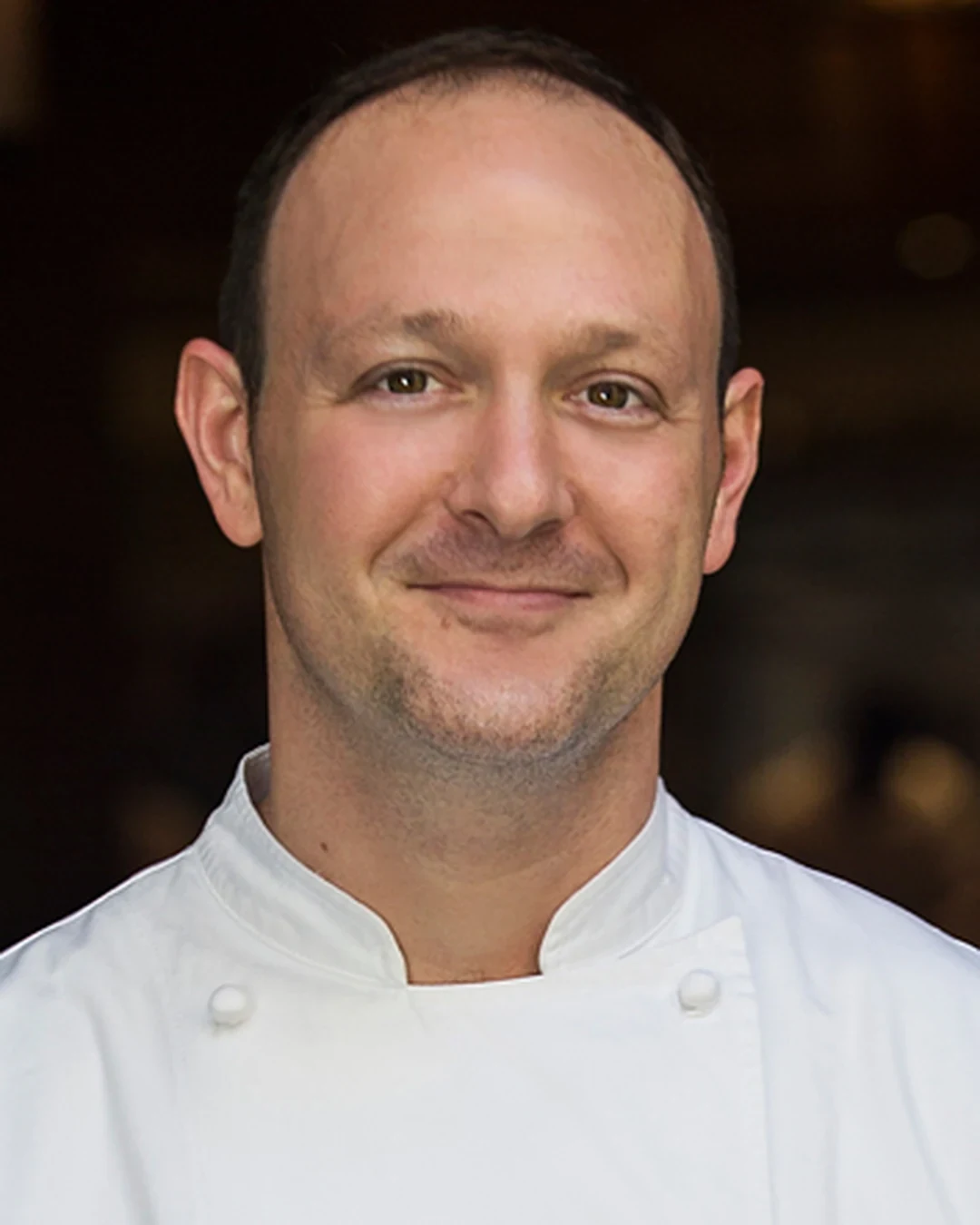
In Residence
Alex Becker
Chef
- 01CuisineModern French with Japanese Influences
- 02CityLannion, France
- 03RecognitionOne Michelin Star
- 1 Michelin Star · Michelin Guide
- Michelin 1 Star · 2026
- Gault & Millau Remarkable Restaurant: 15pts · 2025
- Michelin 1 Star · 2025
- Michelin 1 Star · 2024
Lannion's Michelin-Starred Argument for Franco-Japanese Cooking
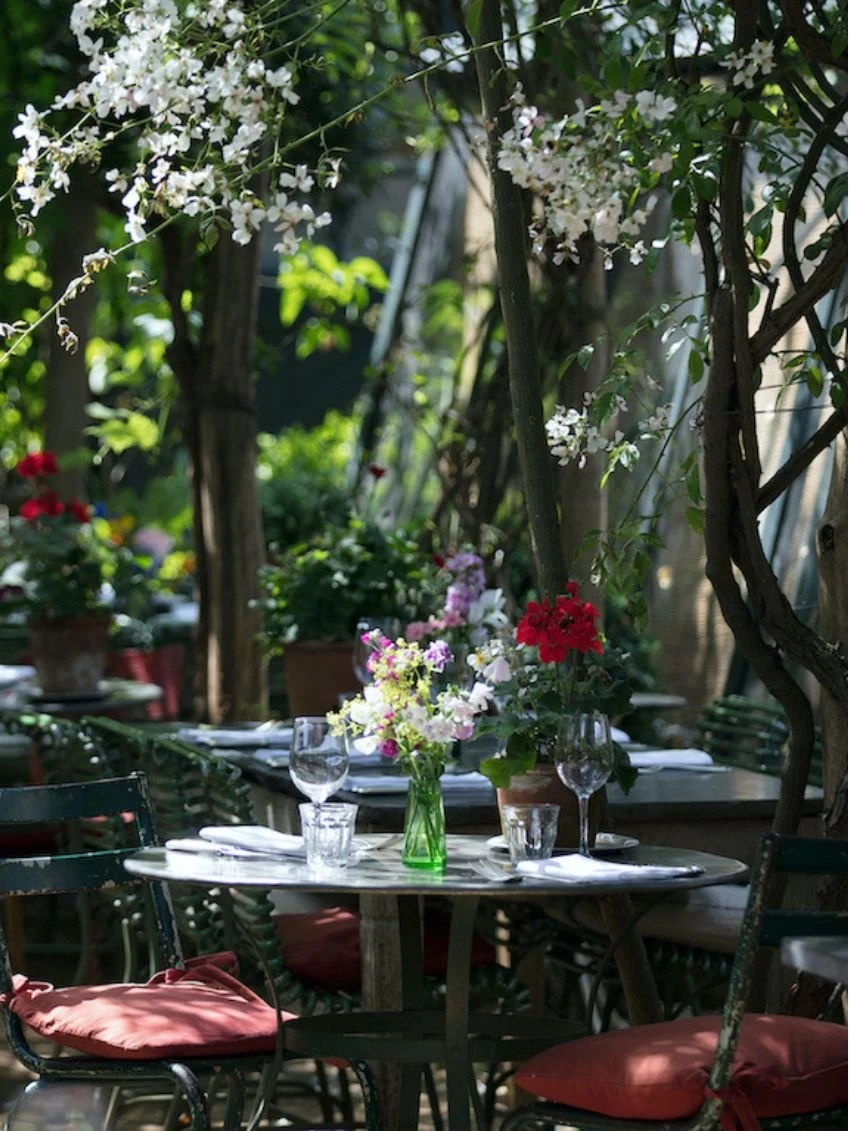
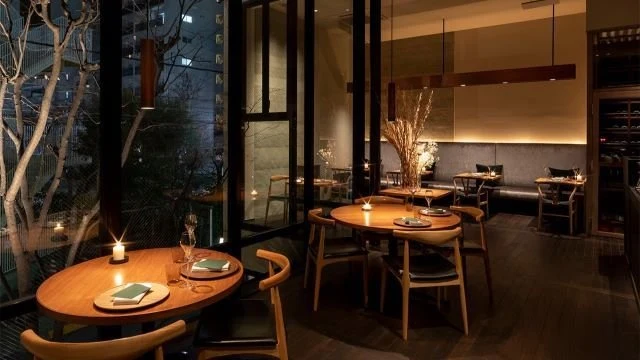
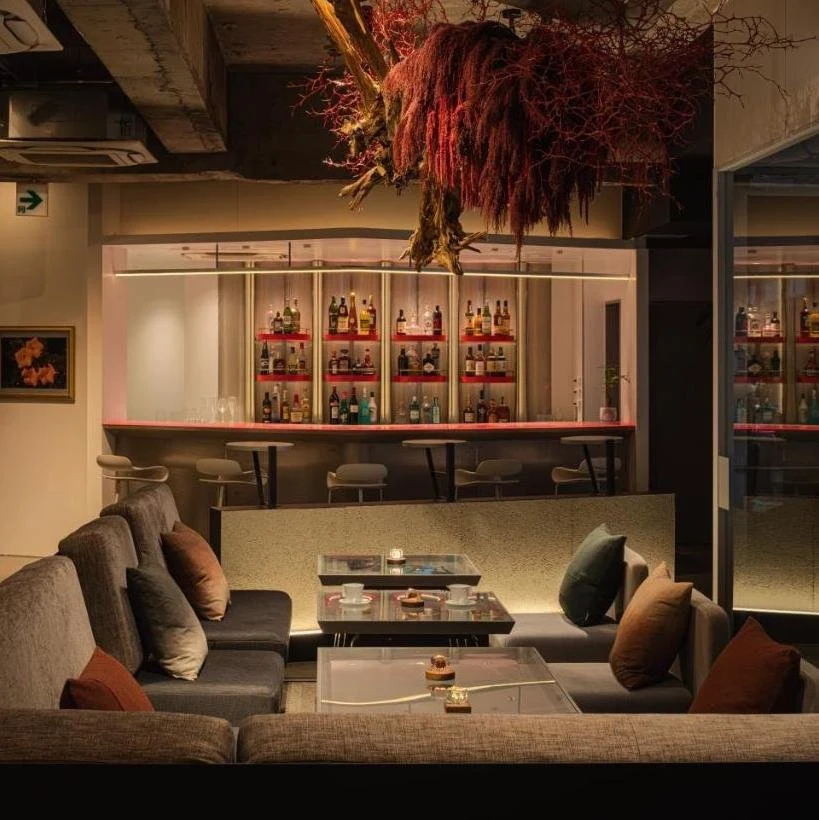
Avenue Ernest Renan is not a street that announces itself as a dining destination. Lannion is a mid-sized Breton town, better known for its telecommunications industry and timber-framed medieval centre than for its restaurant scene. Which makes the warm, colour-saturated interior of L'Anthocyane, at number 25, about as central as it gets, something of a recalibration. The room signals seriousness without austerity: considered decor, attentive service, the kind of setting that tells you the kitchen has thought carefully about the full arc of an evening rather than just what lands on the plate.
That framing matters, because L'Anthocyane is doing something that a provincial Breton address rarely attempts. Chef Alex Becker has built a menu that takes the finest raw materials the Atlantic coast produces and runs them through a dual register: classical Gallic precision on one hand, Japanese influence on the other. Yuzu, miso, and shiitake are not deployed as novelties here. They function as structural ingredients, shaping flavour in the same way a well-placed beurre blanc might in a more conventional Breton kitchen. The Michelin Guide's 2024 one-star recognition, alongside a 4.8 rating from 395 Google reviews, confirms that this approach has found its footing.
The Sunday letter
Find new places through the people who run them.
Our Sunday email brings you the chefs, winemakers and hoteliers behind our newest stories. See a sample before you subscribe.
See a sample of the Sunday emailOne email a week. Unsubscribe from any issue.
Where Brittany's Coastline Meets Japanese Technique
The Franco-Japanese hybrid is well-established at the upper end of French dining. In Paris, the interplay between the two traditions has produced some of the most technically demanding restaurants of the past two decades. What Becker is doing in Lannion sits inside that broader current, but with a regional specificity that is harder to replicate elsewhere. Brittany produces langoustine, lobster, and John Dory of a quality that puts the region's seafood in competition with any coastal produce in Europe. Pairing that with Japanese umami logic, miso deepening a crustacean's natural sweetness, yuzu cutting through richness where a squeeze of lemon might feel too blunt, is a credible and considered editorial choice, not a marketing affectation.
The high-precision approach the Michelin entry describes is worth taking seriously. Plating at this level of technical ambition requires a brigade working in close coordination, which in a town the size of Lannion implies genuine investment in kitchen culture rather than a team assembled for a single season. The visual register of each dish is treated as part of the recipe, not an afterthought. For context, restaurants working in this mode at the top of the French scale, Alléno Paris au Pavillon Ledoyen in Paris or Mirazur in Menton, treat plating as inseparable from the flavour architecture of a dish. L'Anthocyane is operating inside that tradition at a regional scale.
A Chef Shaped by Obsession Rather Than Geography
French cooking has always been susceptible to the influence of chefs who developed strong attachments to foreign traditions. The pattern runs from Bocuse-era exchanges through to the generation of chefs who trained in Japan and returned to reshape their approach to technique and restraint. At Bras in Laguiole, the founding commitment to terroir produced a house style so specific it became its own reference point. At Flocons de Sel in Megève, Alpine produce is treated with a similar discipline. What connects these addresses is not geography but the depth of a single culinary conviction carried consistently across an entire menu.
Alex Becker's declared passion for Japan reads less as a stylistic gimmick and more as the organising principle of a kitchen. The Michelin description uses the word "passion" in a specific sense: this is a chef for whom Japanese ingredients and philosophy are not borrowed vocabulary but a genuine second language. In practical terms, that means the Japanese elements in his cooking are integrated at the level of structure, how flavours are balanced, how umami is used as a seasoning logic, how restraint shapes the visual composition of a plate, rather than applied as garnish. That depth of integration is what separates a coherent Franco-Japanese kitchen from a Breton restaurant that simply adds miso butter to a scallop.
L'Anthocyane operates in the same intellectual tradition, applied to a specifically Breton larder.
Reading L'Anthocyane Against Its Provincial Peers
One-star restaurants in provincial France occupy a specific position in the Michelin hierarchy. They represent cooking that the Guide judges to be worth a detour, not merely competent local dining, but a genuine reason to adjust a journey. In Brittany, a region that produces exceptional primary ingredients but has historically exported them to higher-profile kitchens in Paris and beyond, a restaurant that retains that quality and applies serious technique to it locally carries real significance. Le Brélévenez, also in Lannion, represents the town's other serious dining option, giving the area a denser culinary offer than its size would suggest.
The price positioning at €€€ places L'Anthocyane below the multi-star Parisian tier, houses like Assiette Champenoise in Reims or Au Crocodile in Strasbourg, while sitting clearly above casual Breton dining. That bracket corresponds to what a serious tasting menu at a one-star provincial address typically costs in France: enough to signal genuine investment in produce and technique, accessible to travellers who are not calibrating their trip around three-star price points. The €€€ level at a restaurant of this technical ambition, in a town without Paris-level overheads, often represents better value per plate than the comparable spend in a major city.
Planning a Visit
The service window is tightly structured. L'Anthocyane opens for lunch from midday to 1:30 PM and for dinner from 7:30 PM to 9:15 PM, Wednesday through Saturday, with Sunday lunch service added at the same times. Monday and Tuesday are closed. The restaurant sits at 25 Avenue Ernest Renan in central Lannion, within easy walking distance of the old town.
Visitors arriving in Lannion for the first time will find the town compact enough to cover on foot. For those building a longer circuit of serious French regional cooking, Troisgros - Le Bois sans Feuilles in Ouches, Auberge de l'Ill in Illhaeusern, and Paul Bocuse - L'Auberge du Pont de Collonges in Collonges-au-Mont-d'Or represent the benchmark addresses at the upper end of that tradition.
Questions
Frequently asked
What recognition does L'Anthocyane hold?
L'Anthocyane holds 1 Michelin star.
Who works at L'Anthocyane?
Made By profiles Alex Becker (Chef) at L'Anthocyane.
How expensive is L'Anthocyane?
L'Anthocyane is listed at a price level of $$$$.
Where is L'Anthocyane and what does it serve?
L'Anthocyane is in centre ville, Lannion, serving Modern French with Japanese Influences.
The field
How it compares
| Place | Awards | Cuisine | Notes |
|---|---|---|---|
| L'Anthocyane | Michelin 1 Star | Modern French with Japanese Influences | centre ville, $$$$ |
| Crony | Michelin 2 Stars, World's 50 Best | Modern French with Japanese Influences | Tokyo |
| ESqUISSE | Michelin 2 Stars, World's 50 Best | Modern French with Japanese Influences | Tokyo |
| est | Michelin 1 Star | Modern French with Japanese Influences | Tokyo |
| HOMMAGE | Michelin 2 Stars, World's 50 Best | Modern French with Japanese Influences | Tokyo |
| Kei | Michelin 3 Stars, World's 50 Best | Modern French with Japanese Influences | Paris |
| L'Effervescence | Michelin 3 Stars, World's 50 Best | Modern French with Japanese Influences | Tokyo |
In residence
Similar places
Modern French with Japanese Influences
Crony
Tokyo, Japan
★★ · 50 Best
Modern French with Japanese Influences
ESqUISSE
Tokyo, Japan
★★ · 50 Best
Modern French with Japanese Influences
est
Tokyo, Japan
★
Modern French with Japanese Influences
HOMMAGE
Tokyo, Japan
★★ · 50 Best
Modern French with Japanese Influences
Kei
Paris, France
★★★ · 50 Best
Modern French with Japanese Influences
L'Effervescence
Tokyo, Japan
★★★ · 50 Best

The Sunday letter
Get the next Made By story in your inbox.
We send one email every Sunday morning with the places and people we covered that week.
See a sample of the Sunday emailOne email a week. Unsubscribe from any issue.