Le Cime Basse
- 01CityMatelica, Italy
- Falstaff Winery - Listed · 2026
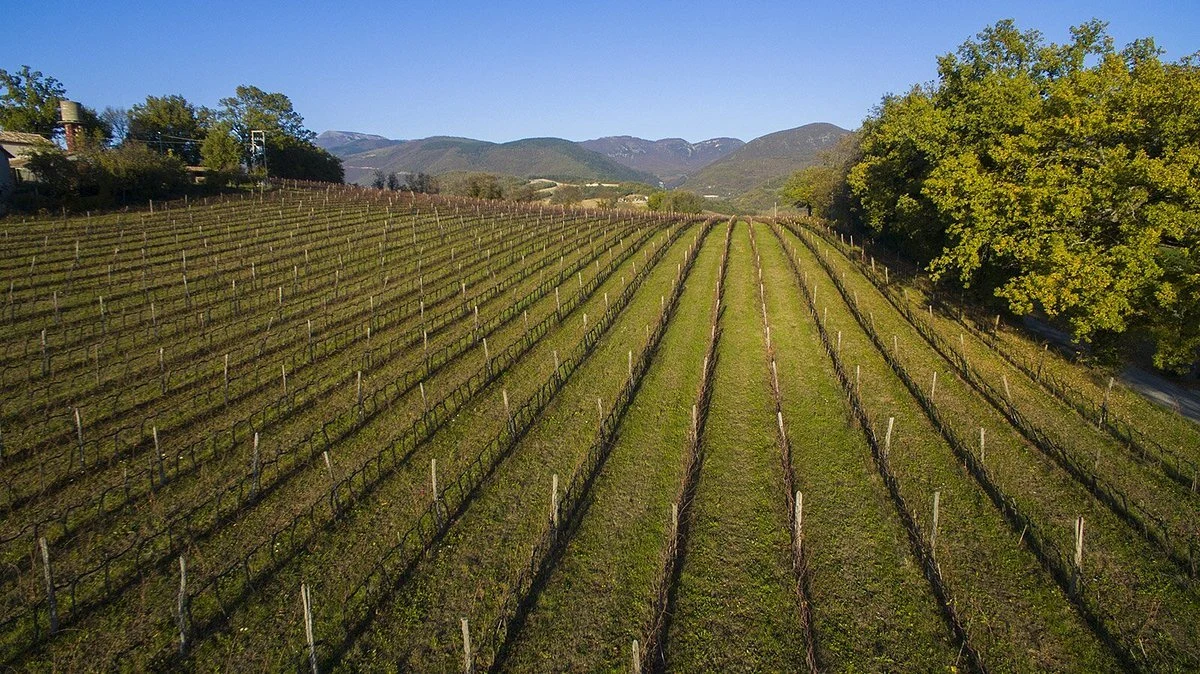
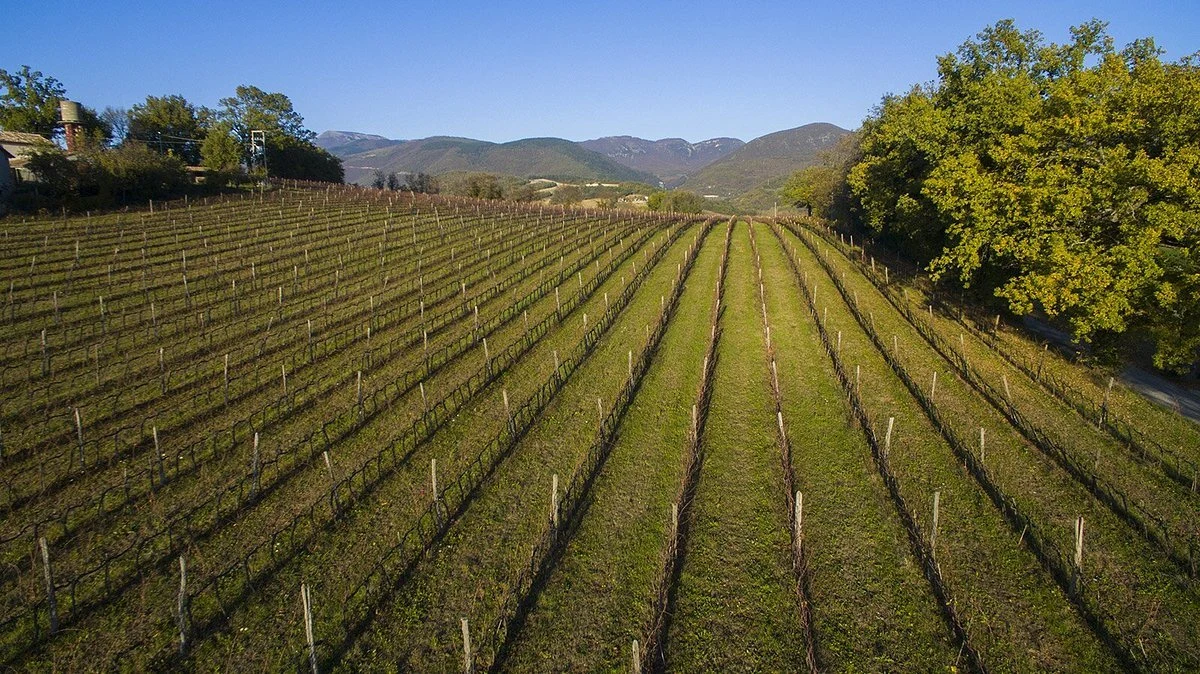
Approaching a rural Matelica estate, the wine story begins before the glass: vines share the agricultural frame with olive trees and orchards, and the altitude matters as much as the cellar. In this part of Marche, Verdicchio has a different register from the broader, easier shorthand of Italian white wine. The inland position and higher vineyard sites can give the grape a firmer acid line, less about immediate softness and more about structure, aromatic lift, and a mineral sense of place.
Le Cime Basse belongs to that quieter reading of Matelica. The estate works eight hectares in total, with about three hectares devoted to Verdicchio across the Balzani and Grotta Grifoni localities. Those sites sit at 420 and roughly 488 meters, a useful clue to the house style: this is not a warm, broad, tropical interpretation of the grape, but a producer built around freshness and precision. Production remains under 50,000 bottles a year, which places the winery firmly in the small-estate bracket rather than the export-volume category.
High-elevation Verdicchio, not broad-brush Marche white wine
Matelica rewards patience because its identity is narrower and more geological than many casual drinkers expect. Verdicchio di Matelica DOC is the core reference here, supported by dry white, rosé, and traditional-method production. That range is compact enough to keep the focus on place, while broad enough to show how the estate is building a portfolio from a young base.
The first vintage is listed as 2022, with Balzani as the debut wine; Rosebe and Valimaro followed in 2024. That chronology matters. Mature estates can lean on inherited reputation, long back-vintage proof, and established collector language. A younger Matelica producer has to communicate through harder signals: vineyard altitude, scale, grape focus, and cellar choices. Le Cime Basse has those signals clearly aligned.
The cellar work follows the same logic. Grapes are harvested manually in the coolest hours of the day, a practical decision that protects freshness before fermentation. Vinification uses non-vitrified cement and steel tanks under temperature control, avoiding the more obvious imprint of new oak and keeping the emphasis on acidity, aromatic definition, and textural restraint. Giovanni Lippera is named in a cellar role, but the stronger editorial point is not biography; it is the way the production model supports a cooler, site-led expression of Verdicchio.
An eight-hectare farm model with biodiversity built into the frame
Estate’s land use is one of its more persuasive details. Only part of the property is vineyard; the remaining hectares are planted with olive groves and mixed orchards. In a region where wine tourism can be tempted into scenic shorthand, that agricultural mix gives the place a more convincing identity. It suggests a working rural system, not a monoculture dressed for visitors.
Viticultural language combines conventional and sustainable practices, with biodiversity explicitly tied to the olive and orchard plantings. That is not the same as a certification claim, but it is still meaningful. For drinkers who care about the relationship between farming and flavor, the point is practical: lower vine density across the wider property, diversified plant life, and manual harvesting all reinforce a small-scale, hands-on approach.
Recognition here is trade-facing rather than award-led. Le Cime Basse has appeared at Wine Paris as a co-exhibitor with Area 39 by Gate 39, a useful signal for a young producer seeking importer, sommelier, and distributor attention. There are no medals or critic scores needed to explain its current position. The evidence is more structural: under 50,000 bottles, high vineyard sites, a Verdicchio-led portfolio, and a cellar program that favors cement and steel.
How to place it in a Matelica itinerary
This is a low-key, appointment-led winery for travelers who prefer agricultural context to spectacle. The fit is strongest for wine education, solo exploration, or a quiet rural tasting built around Verdicchio rather than a high-volume tasting-room circuit. Outdoor seating and vineyard-tour formats are part of the experience profile, while food pairing is not the draw. The price level sits in the $$ range, so the value proposition rests less on luxury staging and more on access to a small producer working a specific inland Marche identity.
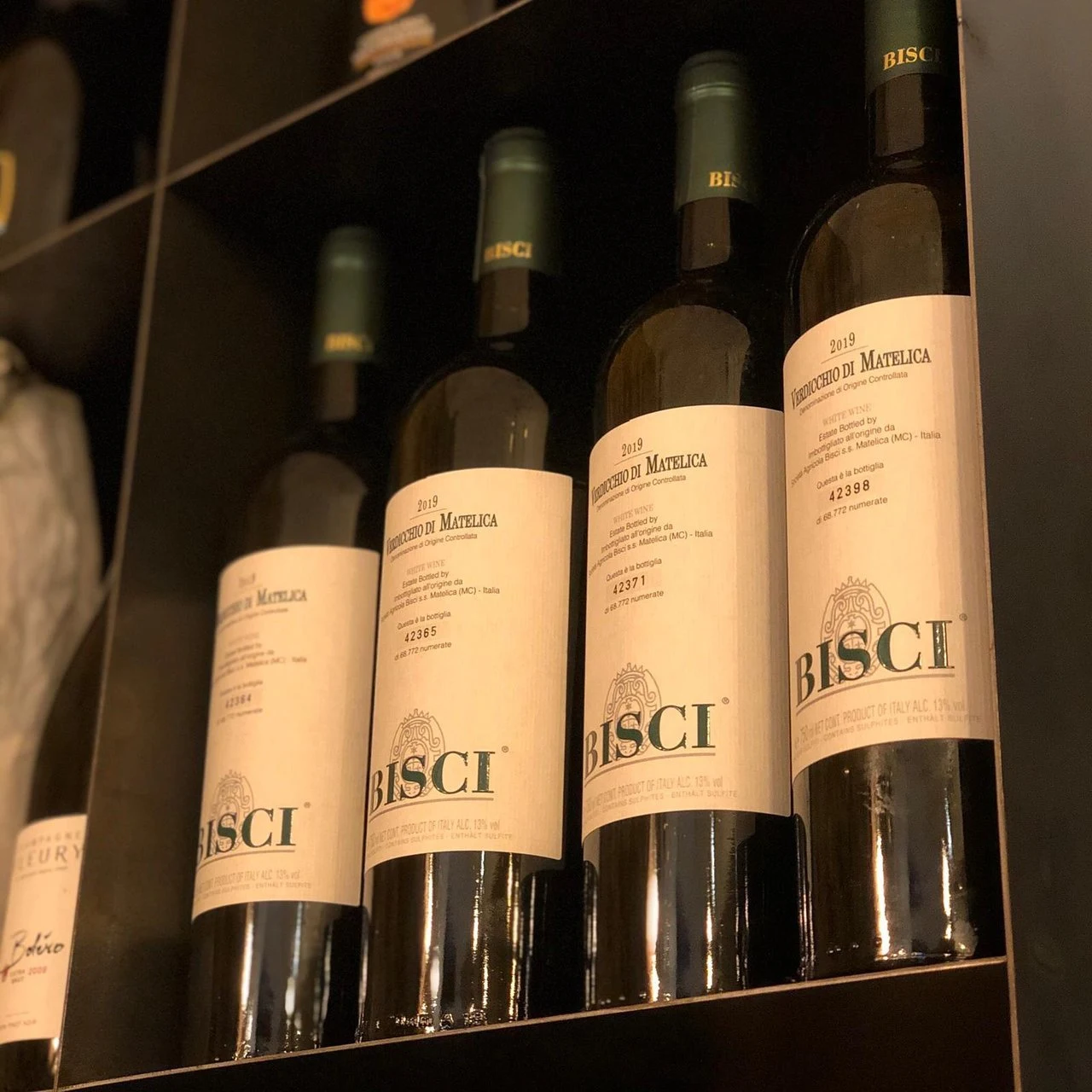
For wider trip planning, Matelica has enough depth to reward a focused route rather than a quick detour. Use Our full Matelica wineries guide to build the wine side, then cross-check meals, stays, and evening plans through Our full Matelica restaurants guide, Our full Matelica hotels guide, Our full Matelica bars guide, and Our full Matelica experiences guide. Nearby wine reading can also include Bisci, Cantine Belisario, Cantine Provima, Casa Lucciola, and Colpaola. For broader European winery context, compare how small producers present themselves across regions via 3GP SRL in Treviso, 47 Anno Domini in Trebaseleghe, A Mano Wine in Noci, »der Steiner« Hans Steiner in Podersdorf am See, and & Handwein in Mannheim.
Questions
Frequently asked
How expensive is Le Cime Basse?
Le Cime Basse is listed at a price level of $$.
The field
How it compares
| Place | Notes |
|---|---|
| Le Cime Basse | $$ |
| Bisci | Matelica |
| Cantine Belisario | Matelica |
| Cantine Provima | Matelica |
| Casa Lucciola | Matelica |
| Colpaola | Matelica |
| Domaine François Raveneau | Chablis |