Lisa Elmqvist
In Residence
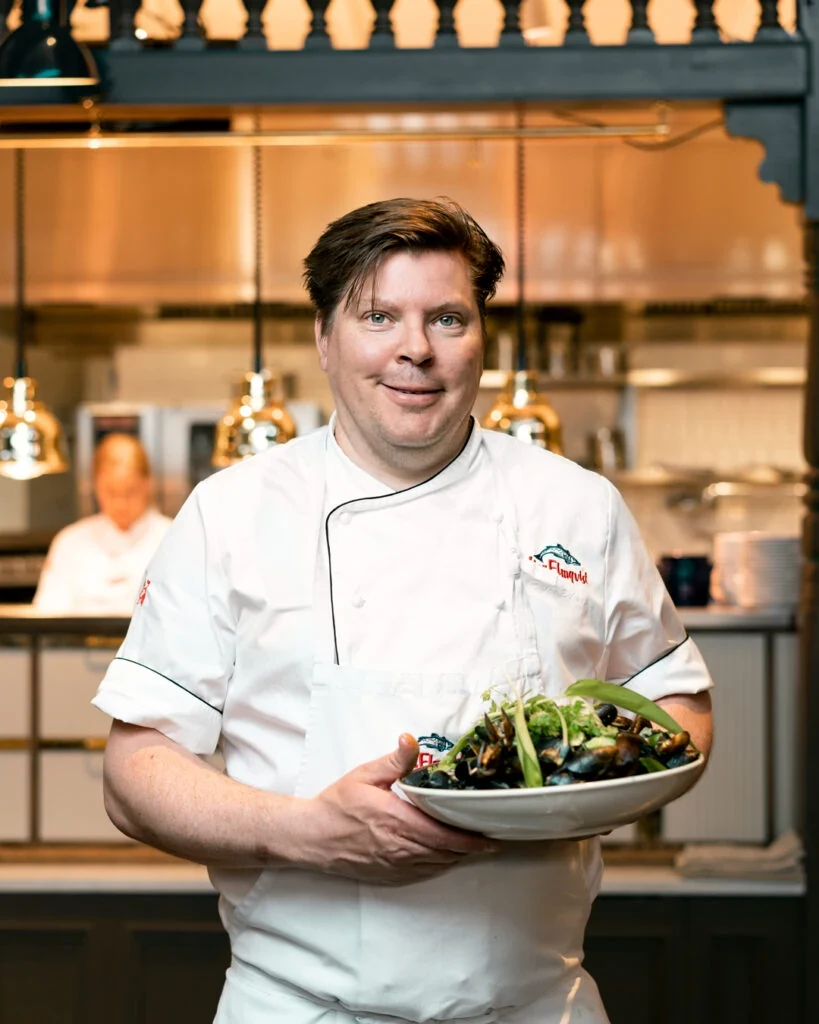
Stefan Eckert
Chef
- 01CuisineTraditional Swedish Seafood
- 02CityStockholm, Sweden
- Opinionated About Dining Casual in Europe Recommended · 2026
- Star Wine List · 2026
- Opinionated About Dining Casual in Europe Ranked #605 · 2025
- Opinionated About Dining Casual in Europe Ranked #516 · 2024
- Opinionated About Dining Casual in Europe Recommended · 2023
Inside the Hall: Where the Market and the Kitchen Meet
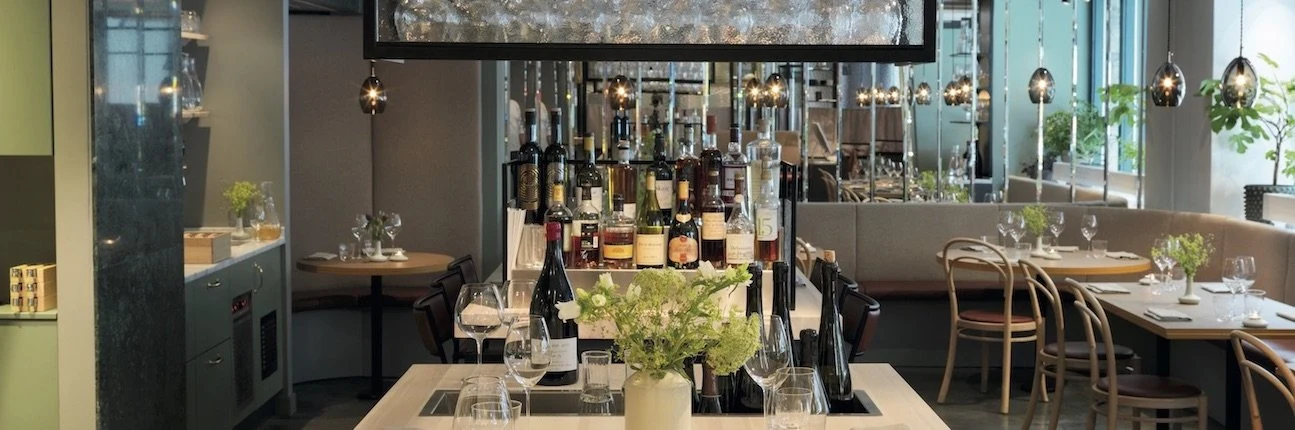
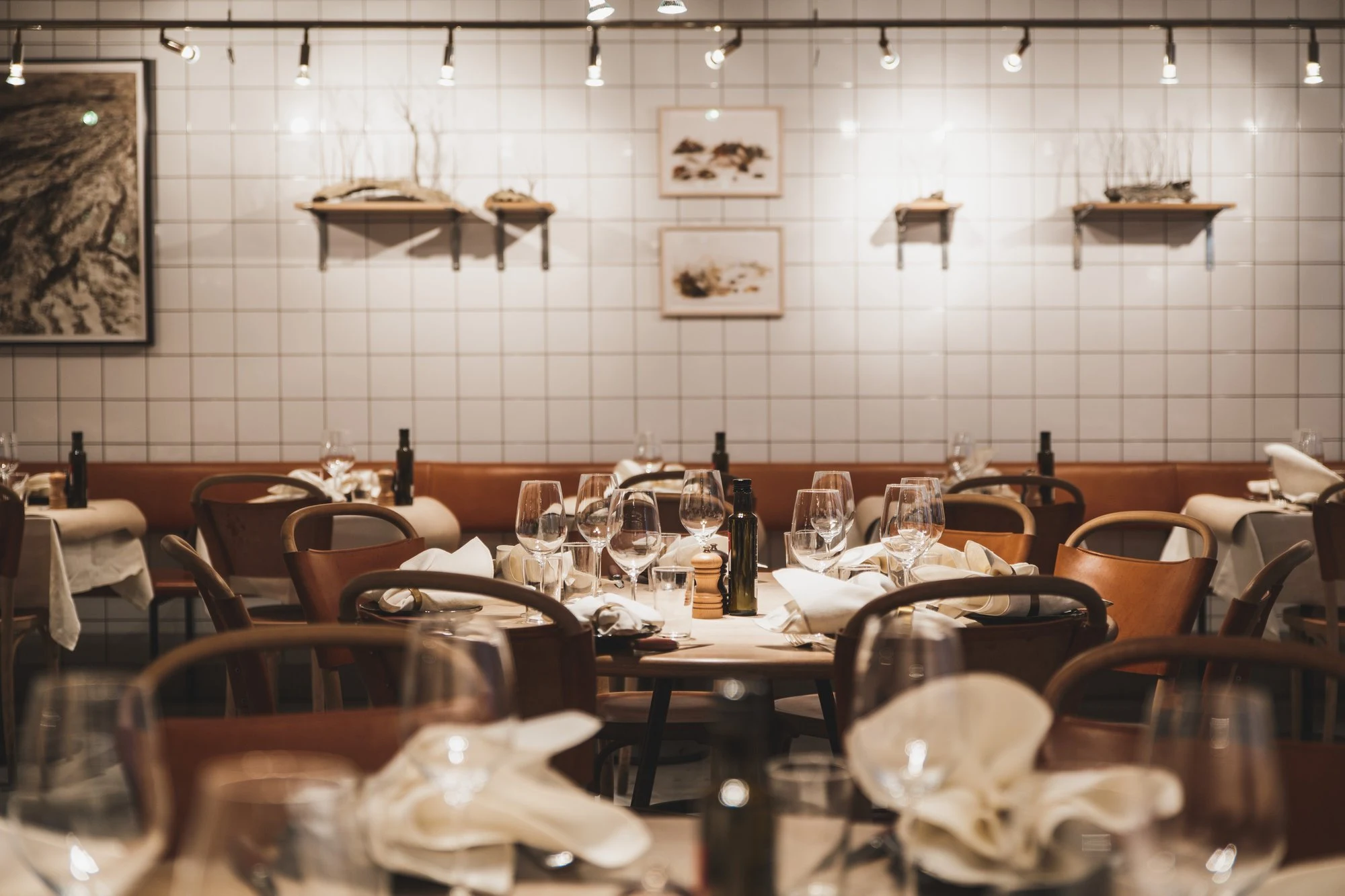
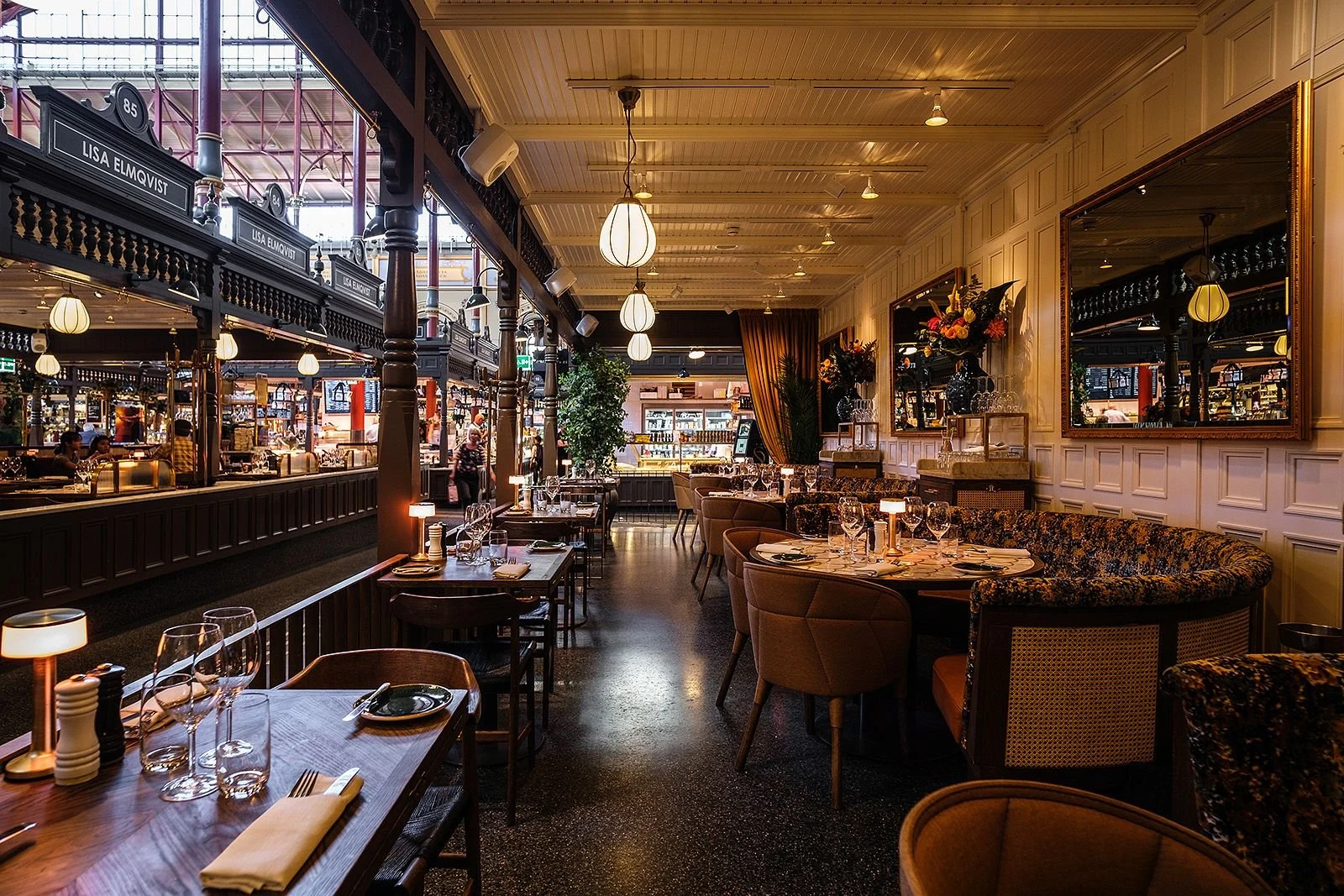
Östermalms Saluhall on Nybrogatan is one of the few European food markets where the architecture still disciplines the food. The red-brick hall, built in 1888, sets a tone of measured seriousness: high vaulted ceilings, butcher-tiled stalls, a cool ambient temperature that suits the produce rather than the customer. Lisa Elmqvist operates within that environment, and the environment matters. Dining at a counter inside a market hall is an exercise in transparency that most restaurant formats cannot replicate. The fish arrives from the same supply chain that stocks the retail display behind you. There is no curated distance between the ingredient and the plate.
Stockholm's seafood tradition runs deep and specific. Cold-water species from the Baltic and the Swedish west coast, including herring, Arctic char, pike-perch, and shrimp from Kosterfjord, carry different characteristics than Atlantic equivalents. The fat content, texture, and salinity of fish caught in these waters respond differently to classical European technique, and the kitchens that understand that difference produce something neither purely Nordic in character nor straightforwardly French. Lisa Elmqvist occupies that middle position, which is less a compromise than a distinct culinary register that has been refined over many decades of operation.
The Seafood Counter Tradition and Where This One Sits
Across Northern Europe, the market-hall seafood counter has followed two divergent paths. One has become casual and tourist-facing, trading on location and nostalgia rather than kitchen discipline. The other has maintained a professional standard that aligns it more closely with dedicated seafood restaurants than with market food stalls. Lisa Elmqvist belongs to the second category. That positioning is significant in Stockholm, where the fine-dining conversation is largely dominated by tasting-menu formats at venues such as Frantzén, AIRA, and Aloë, and where New Nordic frameworks have become the default critical lens. A seafood counter operating with classical European technique and a market-sourcing model sits in a different register entirely.
The comparison most useful for international visitors is to the great European fish brasseries: places where technique is classical, sourcing is provenance-specific, and the format is neither casual nor ceremonial. Le Bernardin in New York City represents the formal end of that spectrum. Lisa Elmqvist sits closer to the informal end, where the counter setting and market context keep the experience grounded without reducing the kitchen ambition. The lack of omakase pricing or chef's-table theatre does not signal a lesser standard; it signals a different set of priorities.
Local Ingredients, Classical Technique
Sweden's cold-water seafood is among the more ingredient-driven raw material available to any European kitchen. Kosterfjord shrimp, landed on the west coast, have a sweetness that resists heavy reduction-based sauces. Baltic herring, cured, smoked, or briefly marinated, operates within a flavour vocabulary entirely shaped by Swedish preservation traditions. Arctic char from northern rivers carries a delicacy that classical French poaching and butter-based sauces can support rather than overwhelm. The editorial question for any Stockholm seafood kitchen is how it applies technique to these ingredients: whether it imposes a method or allows the method to serve the product.
The broader Swedish restaurant scene has largely answered that question through New Nordic frameworks, with raw, fermented, and minimally processed presentations now standard across the tasting-menu tier. Venues such as Adam/Albin and Operakällaren each represent different inflections of that Swedish fine-dining tradition. A market counter applying classical European technique to the same local species is making a different argument: that the imported method and the indigenous product can coexist productively, with the product determining the pace and the technique providing the vocabulary.
This approach has precedent outside Stockholm. Regional Swedish kitchens have long navigated the tension between classical training and local sourcing. Vollmers in Malmö and VYN in Simrishamn both apply classical structures to Swedish coastal produce in ways that diverge from the New Nordic template without rejecting its sourcing ethics. ÄNG in Tvååker and Knystaforsen in Rydöbruk take similarly place-anchored approaches further from the capital. Lisa Elmqvist in central Stockholm represents the urban, market-embedded version of that wider Swedish conversation.
Timing and Planning
Östermalms Saluhall operates on market-hall hours, which differ meaningfully from restaurant scheduling. Lunch is the primary meal period; the hall does not support late dinner service in the way a standalone restaurant would. Visitors planning around Lisa Elmqvist should treat it as a midday destination.
Östermalms Saluhall sits in the Östermalm district, within walking distance of the city's luxury hotel and gallery quarter. For visitors building a broader Stockholm itinerary, the hall functions as a daytime anchor that pairs logically with afternoon gallery visits or evening reservations elsewhere in the city.
Questions
Frequently asked
Who works at Lisa Elmqvist?
Made By profiles Stefan Eckert (Chef) at Lisa Elmqvist.
How expensive is Lisa Elmqvist?
Lisa Elmqvist is listed at a price level of $$$.
Where is Lisa Elmqvist and what does it serve?
Lisa Elmqvist is in Östermalm, Stockholm, serving Traditional Swedish Seafood.
The field
How it compares
| Place | Cuisine | Notes | Awards |
|---|---|---|---|
| Lisa Elmqvist | Traditional Swedish Seafood | Östermalm, $$$ | · |
| Adam / Albin | Modern Scandinavian Fine Dining | Stockholm | Michelin 1 Star |
| AG | Premium Nordic Steakhouse | Stockholm | · |
| Ekstedt | Wood-Fire Nordic Fine Dining | Stockholm | Michelin 1 Star |
| Frantzén | Modern Nordic Fusion with Japanese Influences | Stockholm | Michelin 3 Stars, World's 50 Best |
| Nour | Nordic-Japanese Fusion | Stockholm | Michelin 1 Star |
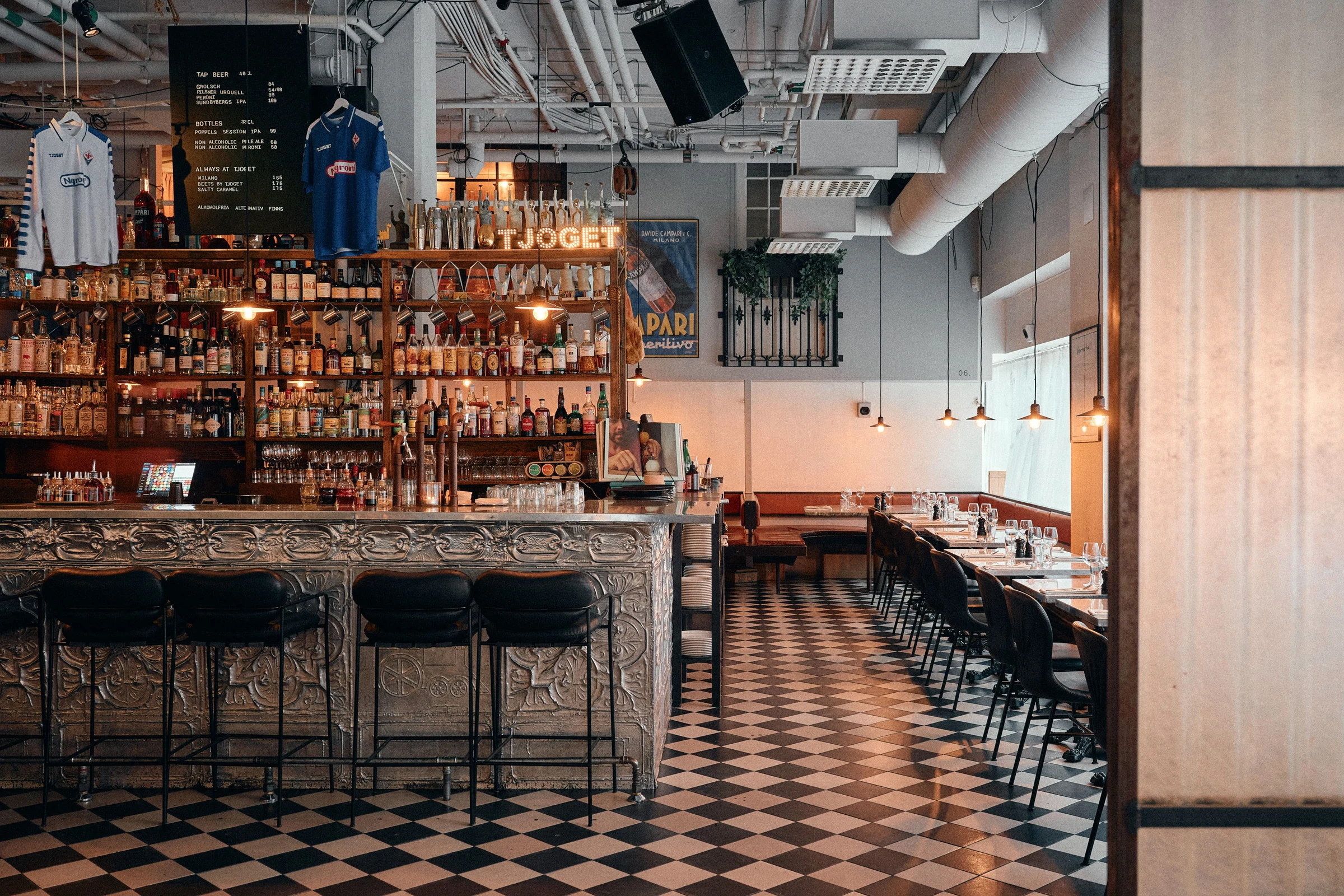
| Tjoget | Modern Mediterranean Small Plates | Stockholm | · |
In residence
Similar places
Modern Scandinavian Fine Dining
Adam / Albin
Stockholm, Sweden
★
Premium Nordic Steakhouse
AG
Stockholm, Sweden
Wood-Fire Nordic Fine Dining
Ekstedt
Stockholm, Sweden
★
Modern Nordic Fusion with Japanese Influences
Frantzén
Stockholm, Sweden
★★★ · 50 Best
Nordic-Japanese Fusion
Nour
Stockholm, Sweden
★
Modern Mediterranean Small Plates
Tjoget
Stockholm, Sweden