Lo Ponts
- 01CuisineTraditional Catalan
- 02CityPonts, Spain
- Michelin Bib Gourmand · Michelin Guide
- Macarfi 7.2 Food Rating · 2026
- Michelin Bib Gourmand · 2026
- Michelin Bib Gourmand · 2025
- Michelin Bib Gourmand · 2024
Regional Catalan Cooking in Lleida Province
The road into Ponts through the Segre valley sets the context before you arrive at the restaurant. This is inland Catalonia, not the coastal strip around Barcelona where Catalan cuisine tends to get its international press. The agricultural hinterland of Lleida province has a different register: pulse crops, pork traditions, river-fed produce, and a cooking culture that has never needed to perform for tourists. Lo Ponts, on Carretera Calaf at the edge of town, sits squarely inside that tradition, then pushes it forward. The restaurant is recognised for its value-driven cooking at a price point that makes the high-end Spanish dining circuit look like a different economy.
For reference on that circuit, venues like Disfrutar in Barcelona, El Celler de Can Roca in Girona, and Arzak in San Sebastián operate in a €€€€ bracket that requires a different budget conversation entirely. Lo Ponts operates at €, and the Bib Gourmand designation exists precisely to signal this kind of value-quality ratio. It is a separate recognition for cooking that delivers pleasure relative to price. At Lo Ponts, the recognition suggests the kitchen is not coasting.
How the Menu Is Structured
Catalan food culture has historically centred on hearty, ingredient-led dishes built around whatever the season and the land provide rather than around small-plate grazing formats. The sharing and ordering philosophy here reflects that: several menu options give the table choices in how they approach the meal, from more casual arrangements to a tasting option that must be booked in advance. That pre-booking requirement for the tasting menu is standard practice across Spain, from houses like Martin Berasategui in Lasarte-Oria and Mugaritz in Errenteria down through Bib Gourmand level. It allows the kitchen to control product sourcing and reduce waste, which in a restaurant focused on locally sourced and organic ingredients is operationally logical rather than merely aspirational.
The wine list is described as varied, which at a Lleida-province restaurant should prompt curiosity: the DO Costers del Segre appellation produces wines in conditions markedly different from coastal Catalan appellations, with higher altitude and more continental temperature swings. A varied list paired with Bib Gourmand-level cooking typically implies a curation that supports the food without outpricing it.
The Signature Dish and What It Says About the Kitchen
Rice casserole with butifarra confit and pork rib: this is the dish the Michelin entry specifically flags, and it repays attention as an editorial object. Butifarra is the emblematic sausage of Catalan cooking, appearing in different forms across the region, from fresh white versions to cured black varieties. Confiting the butifarra changes its texture and concentrates its fat-based flavour. Pork rib in the same vessel adds structural weight and another layer of rendered pork fat into the cooking liquid. Rice absorbs all of that into each grain. The dish is not subtle and is not trying to be; it is a confident execution of a deeply regional preparation.
Chef Alex Yoon leading this kind of cooking is itself an editorial point about contemporary Spanish gastronomy. The country's dining scene has absorbed chefs from across Asia and beyond into regional kitchens at every price tier, with results that range from fusion confusion to, in stronger cases, a sharper outside perspective on the ingredients and traditions already present. The emphasis here on updated regional cuisine with personality rather than on east-west fusion suggests the latter approach: the kitchen using local products and Catalan technique as the primary language. The signature dish supports that reading.
The Dining Room and the Experience Format
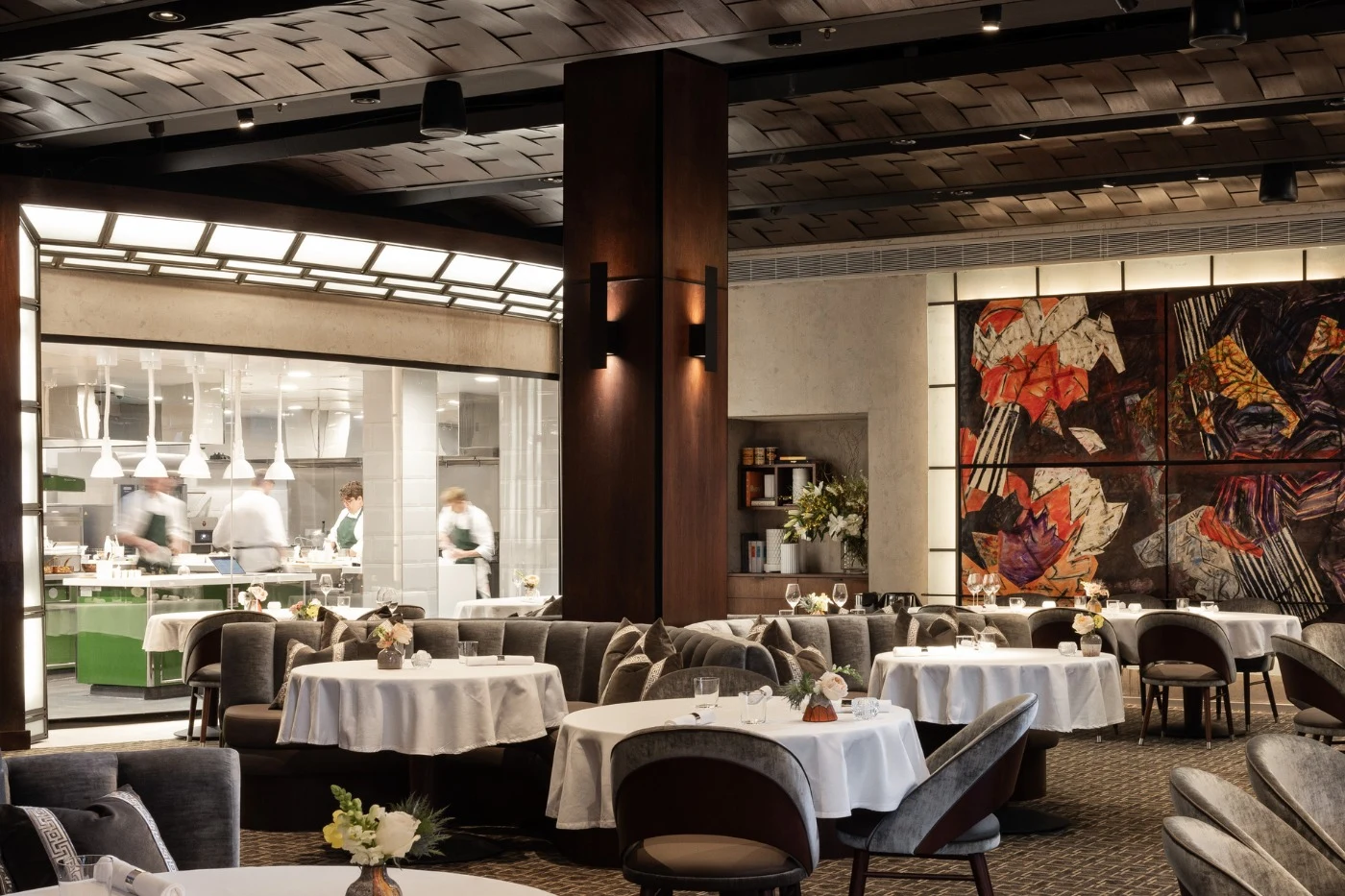
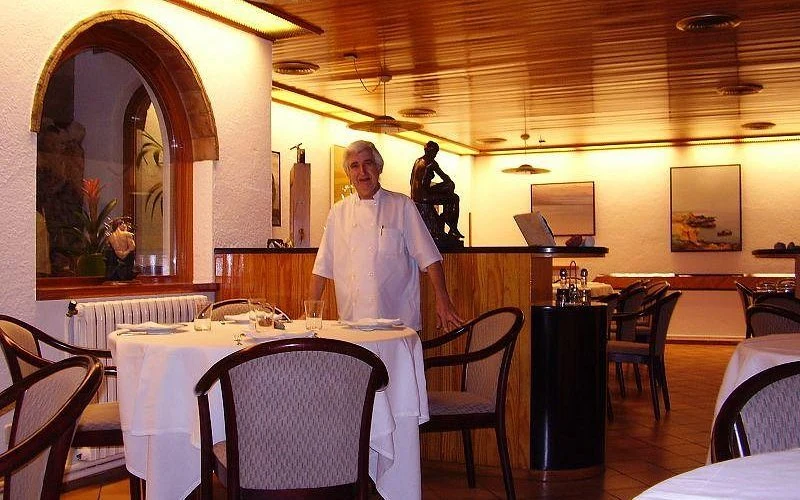
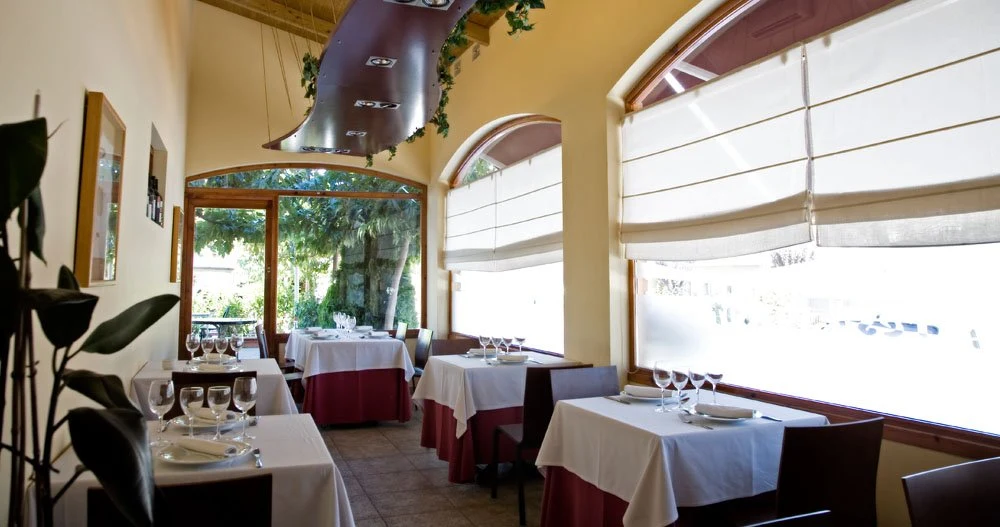
Three modern and functional dining rooms replace the single rustic sala that older-generation Catalan restaurants often retain as a point of regional identity. The description suggests a considered update rather than a heritage-preservation exercise: functional layout, modern execution, a family-owned operation that has chosen professionalism over nostalgia. The balance between passion and professionalism is the operating distinction that separates well-regarded regional restaurants from their more variable peers. Plenty of family-owned Catalan houses in this price tier carry the passion component; the professionalism is harder to sustain through service consistency and kitchen discipline across years of operation.
Spain's regional dining scene has seen a broader pattern of smaller provincial restaurants achieving sustained recognition by taking their local product base seriously rather than reaching for a cosmopolitan reference set. Ricard Camarena in València, Quique Dacosta in Dénia, and Azurmendi in Larrabetzu all operate from strong regional product identities, even at star level. Lo Ponts operates within the same logic at a different price point and scale. For Catalan cooking specifically, 7 Portes in Barcelona represents a very different tradition, urban and historic; B44 in San Francisco transplants the reference set entirely. Lo Ponts stays rooted.
Planning Your Visit
Ponts sits in Lleida province roughly midway between Barcelona and the Pyrenean foothills, making it a plausible stop on a route toward Andorra or the ski stations of the Aran Valley rather than a standalone city-break destination. The address on Carretera Calaf places it on a through-road, accessible by car without navigating a historic town centre. If you are considering the tasting menu, pre-booking is required, and given the Google rating of 4.5 across 1,344 reviews, walk-in availability on peak service periods is not guaranteed. The price range at € means the meal represents significant value for a Bib Gourmand-recognised kitchen, keeping the total cost well below what a comparable quality level would cost in Barcelona or Girona. Aponiente in El Puerto de Santa María to DiverXO in Madrid and Atrio in Cáceres illustrates the range of what Spain's dining scene currently covers at the leading end, against which Lo Ponts represents a very different but equally purposeful point on the map.
Questions
Frequently asked
What recognition does Lo Ponts hold?
Lo Ponts holds a Michelin Bib Gourmand.
How expensive is Lo Ponts?
Lo Ponts is listed at a price level of $$.
Where is Lo Ponts and what does it serve?
Lo Ponts is in Ponts, Ponts, serving Traditional Catalan.
The field
How it compares
| Place | Cuisine | Notes | Awards |
|---|---|---|---|
| Lo Ponts | Traditional Catalan | Ponts, $$ | · |
| Emeril’s | Modern Creole-Cajun Fine Dining | New Orleans | Michelin 2 Stars, World's 50 Best |
| Hélène Darroze at The Connaught | Three Michelin-Star Modern French Fine Dining | London | Michelin 3 Stars |
| La Grenouillère | Contemporary French Terroir | La Madelaine-sous-Montreuil | Michelin 2 Stars, World's 50 Best |
| Sala | Traditional Catalan | Olost | Michelin 1 Star |
| Single Thread Farm | Japanese-influenced Californian Kaiseki | Healdsburg | Michelin 3 Stars, World's 50 Best |
| Vea | Modern Chinese-French Fusion | Hong Kong | Michelin 1 Star, World's 50 Best |
Similar places
Modern Creole-Cajun Fine Dining
Emeril’s
New Orleans, United States
★★ · 50 Best
Three Michelin-Star Modern French Fine Dining
Hélène Darroze at The Connaught
London, United Kingdom
★★★
Contemporary French Terroir
La Grenouillère
La Madelaine-sous-Montreuil, France
★★ · 50 Best
Traditional Catalan
Sala
Olost, Spain
★
Japanese-influenced Californian Kaiseki
Single Thread Farm
Healdsburg, United States
★★★ · 50 Best
Modern Chinese-French Fusion
Vea
Hong Kong, Hong Kong
★ · 50 Best