Locanda Nerello
- 01CuisineModern Sicilian Fine Dining
- 02CityZafferana Etnea, Italy
Ancient seeds on volcanic land
- Relais Chateaux Award · 2026
Ancient grain at the station
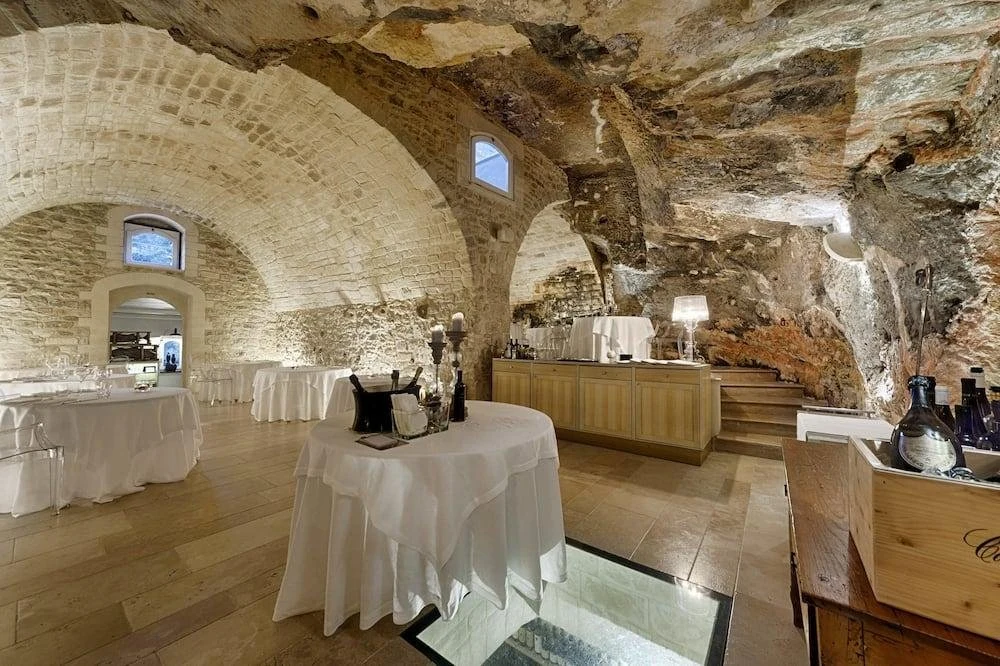
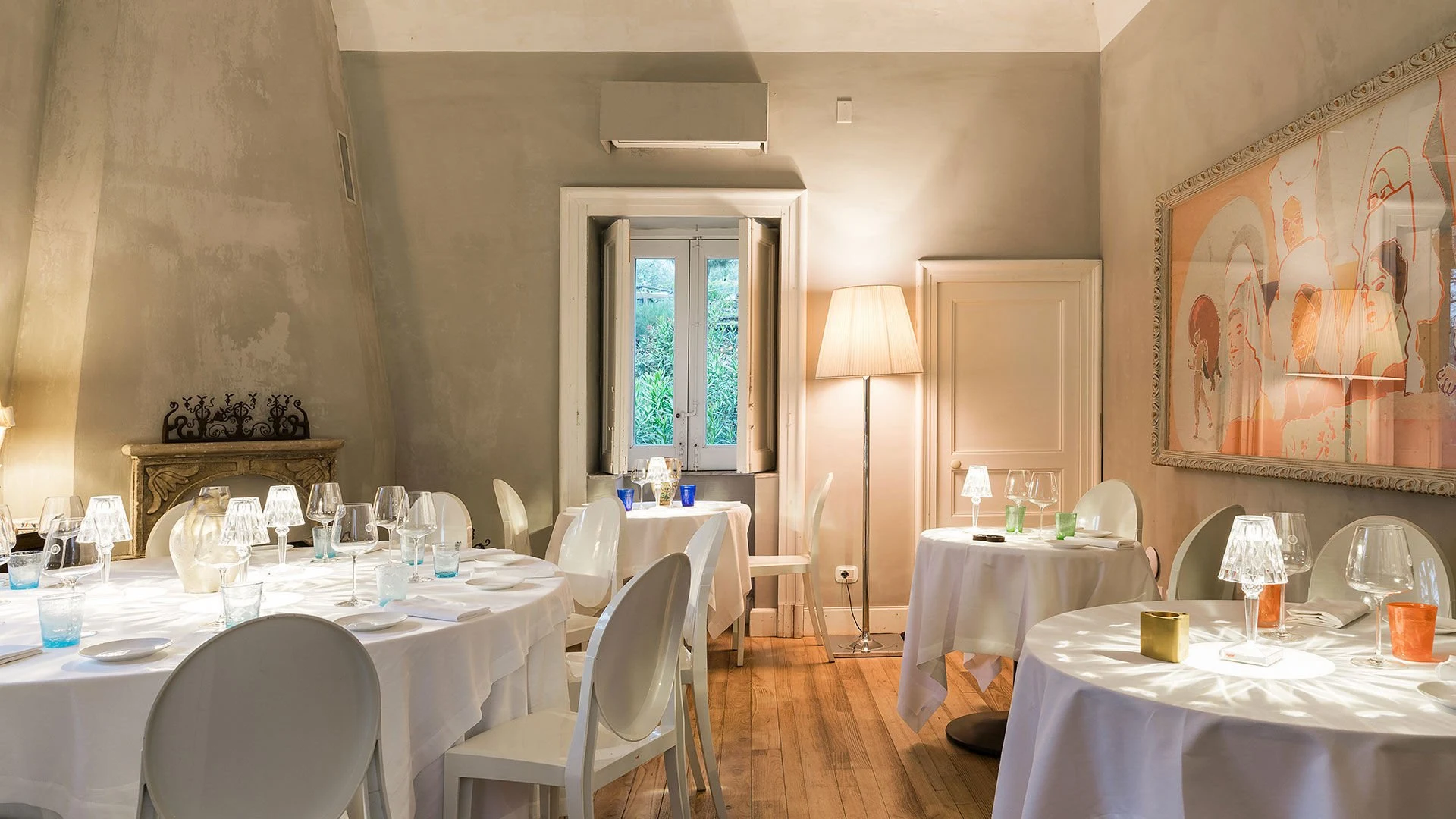
Ravioli di grano antico puts the first decision in the flour. Locanda Nerello in Zafferana Etnea works that grain into a kitchen tied to the black volcanic land around Monaci delle Terre Nere. The restaurant sits inside an 18th-century baronial house converted into a boutique hotel and Etna wine estate, and its food has to answer to that setting without becoming scenery.
No chef is named to the public here. At Locanda Nerello the kitchen cooks from an estate identity already set by its organic farm, its wine production and its Slow Food position, and the hand enters through restraint, seasoning, texture, and the order of a plate that must still taste of Etna. Ravioli di grano antico, Ovo trunzu, Parmigiana dei monaci, and Maialino Nero are not neutral signatures. They ask for a cook willing to let seed, vegetable, pork, and monastery memory keep their shape. Guido Coffa owns the estate that sets those terms.
The garden sets the grammar
The method here begins outside the pass. Monaci delle Terre Nere works 60 fertile volcanic acres, and the restaurant draws from that land for organic produce, native fruits, and ancient seeds. The estate has recovered 30 varieties of ancient seeds and cultivates 150 types of native fruits and trees in its vegetable garden. Those figures matter because they change the mise en place: the kitchen does not begin with a market list alone, but with what the estate has chosen to keep alive.
Locanda Nerello's cooking follows seasonality and avoids ready-made or processed foods. That discipline shows in dishes built around local raw materials rather than imported luxury signals: beef belly with wild fennel, cuttlefish risotto, scabbardfish ragout, ancient zucchini parmigiana. The wine program belongs to the same circuit. Etna wines from the estate and the surrounding territory sit close to the food, guided by a sommelier who reads the table, with the cellar acting less like decoration than a second station. A plate of Maialino Nero needs structure beside it; the glass supplies that architecture.
The room, the terrace, the volcano
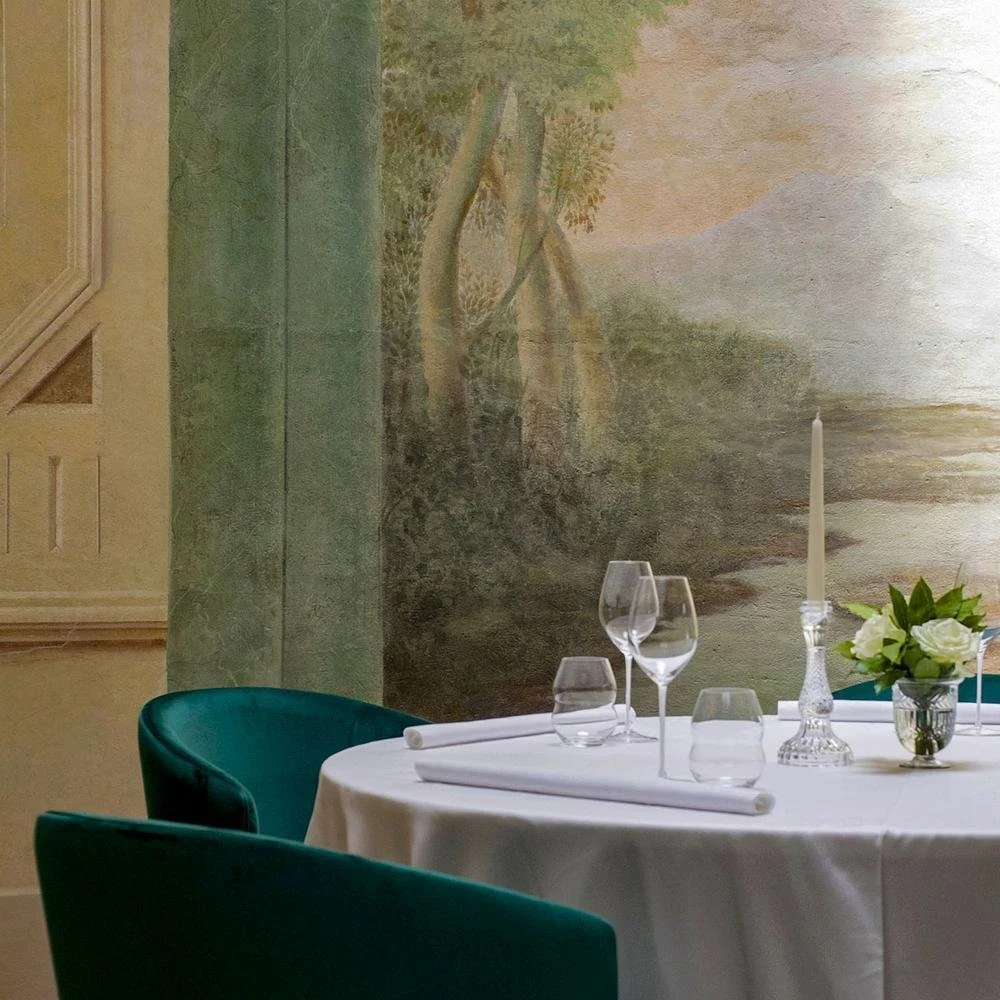
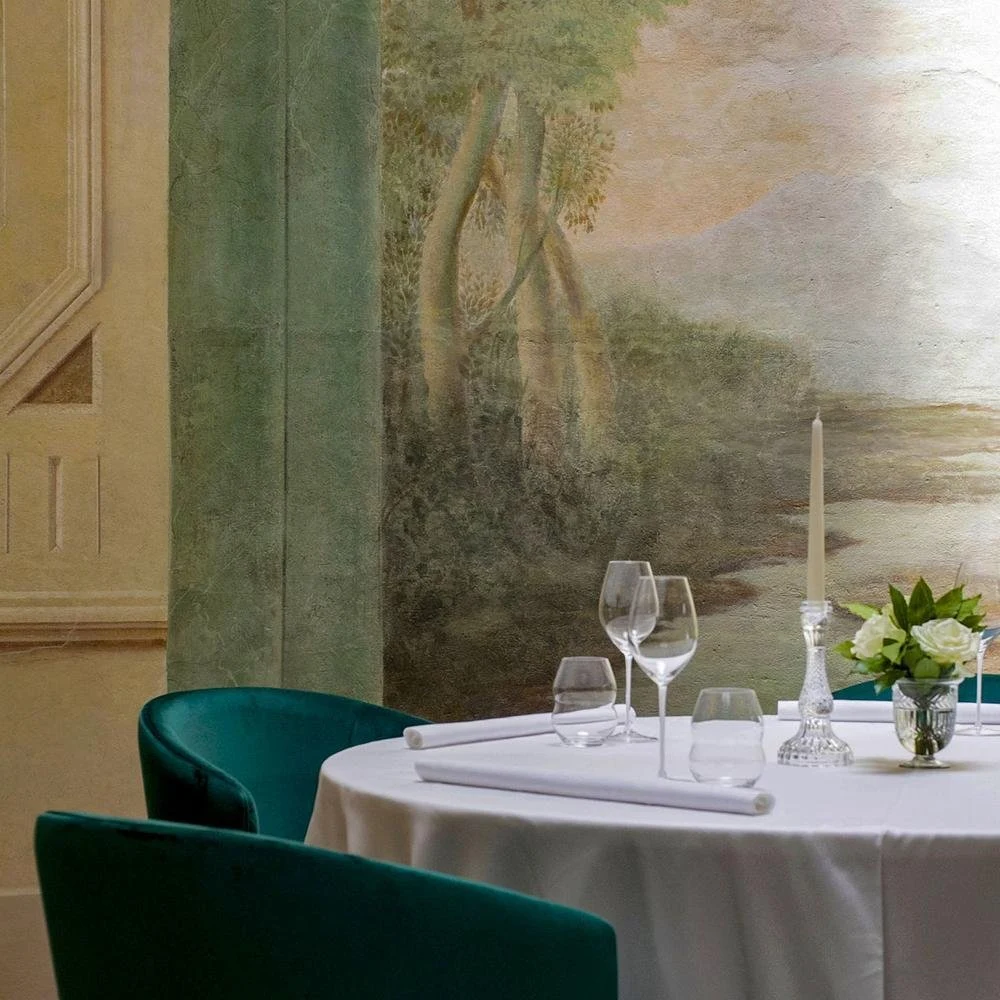
The room carries the polish of Monaci delle Terre Nere, but Locanda Nerello is most plainly itself when service moves toward the terrace. Mount Etna holds one side of the view, the Ionian Sea the other. Between them, the pass sends out food made from the same volcanic slope the eye keeps returning to. That can be a difficult kind of beauty for a kitchen, because the room is already making promises before the first plate arrives.
In winter, the house turns inward, with dining by the fire. In warmer months, the terrace changes the tempo; plates arrive into open air, and the wine program has more space around it. The craft is not in competing with the view. It is in keeping Ravioli di grano antico precise while Etna fills the room.
Questions
Frequently asked
What kind of restaurant is Locanda Nerello?
Locanda Nerello is a modern Sicilian fine dining restaurant in Zafferana Etnea. It sits inside Monaci delle Terre Nere, an 18th-century baronial house that has been converted into a boutique hotel and Etna wine estate.
What is Locanda Nerello known for?
The kitchen works from the estate’s organic volcanic land, with seasonality, native produce and ancient seeds shaping the menu. Signature dishes include Ravioli di grano antico, Ovo trunzu, Parmigiana dei monaci and Maialino Nero.
Who cooks at Locanda Nerello?
No chef is named publicly for Locanda Nerello. The page describes a kitchen guided by the estate’s identity, its organic farm, its wine production and its Slow Food position.
What is the setting like?
The restaurant is set within Monaci delle Terre Nere in Zafferana Etnea, with Mount Etna on one side of the view and the Ionian Sea on the other. In winter, dining moves inward by the fire, while in warmer months service opens onto the terrace.
Is it worth booking ahead?
Reservations are recommended at Locanda Nerello. The restaurant is open every day for lunch from 12:30 pm to 3 pm and for dinner from 7:30 pm to 10:30 pm, and the dress code is smart casual.
The field
How it compares
| Place | Cuisine | Notes | Awards |
|---|---|---|---|
| Locanda Nerello | Modern Sicilian Fine Dining | Zafferana Etnea, $$$ | · |
| Crocifisso | Modern Sicilian Fine Dining | Noto | Michelin 1 Star |
| I Pupi | Modern Sicilian Fine Dining | Bagheria | Michelin 1 Star |
| La Madia | Modern Sicilian Fine Dining | Licata | Michelin 2 Stars |
| Locanda Don Serafino | Modern Sicilian Fine Dining | Ragusa | Michelin 1 Star |
| Otto Geleng | Modern Sicilian Fine Dining | Taormina | Michelin 1 Star |
| Principe Cerami | Modern Sicilian Fine Dining | Taormina | Michelin 1 Star |
Similar places
Modern Sicilian Fine Dining
Crocifisso
Noto, Italy
★
Modern Sicilian Fine Dining
I Pupi
Bagheria, Italy
★
Modern Sicilian Fine Dining
La Madia
Licata, Italy
★★
Modern Sicilian Fine Dining
Locanda Don Serafino
Ragusa, Italy
★
Modern Sicilian Fine Dining
Otto Geleng
Taormina, Italy
★
Modern Sicilian Fine Dining
Principe Cerami
Taormina, Italy
★