L'OSIER
In Residence
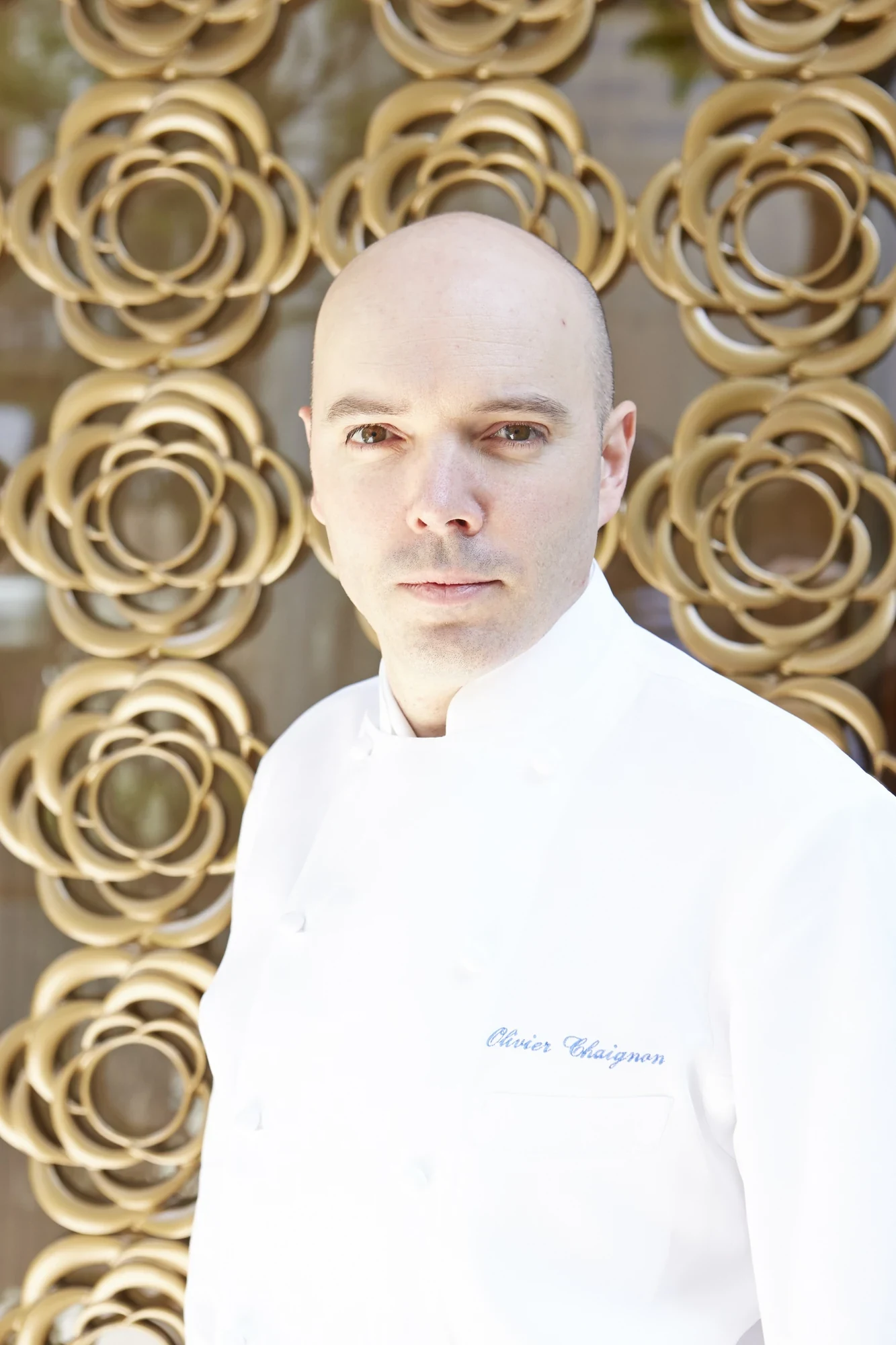
Olivier Chaignon
Chef
- 01CuisineClassic French Fine Dining
- 02CityTokyo, Japan
- 03RecognitionThree Michelin Stars
- 3 Michelin Stars · Michelin Guide
- La Liste Top Restaurants: 98pts · 2026
- Opinionated About Dining Top Restaurants in Japan Ranked #89 · 2026
- Michelin 3 Stars · 2026
- Tabelog Silver #70: 4.5pts · 2026
- Michelin 3 Stars · 2025
- The Best Chef One Knife · 2025
- Tabelog Silver · 2025
- Tabelog 100 #77: 4.4pts · 2025
- La Liste Top Restaurants: 98pts · 2025
- Opinionated About Dining Top Restaurants in Japan Ranked #78 · 2025
- Michelin 3 Stars · 2024
- Opinionated About Dining Top Restaurants in Japan Ranked #67 · 2024
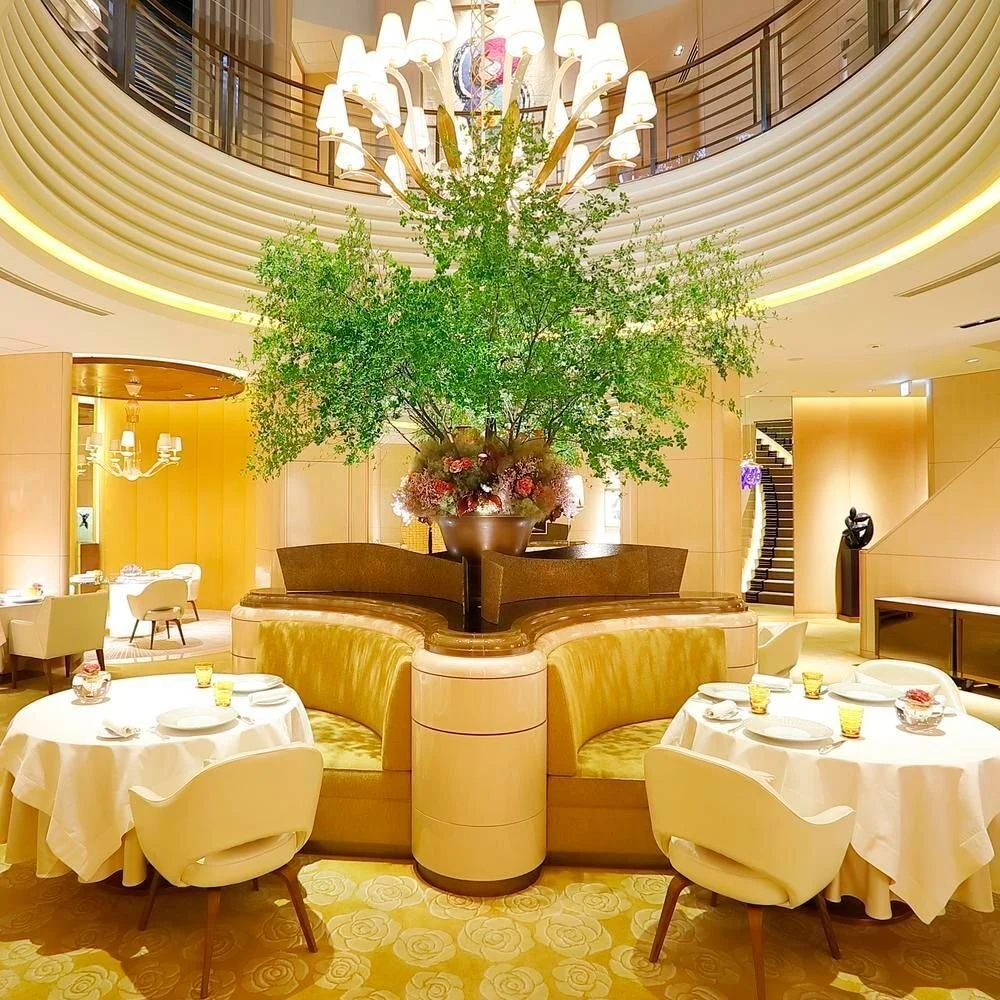
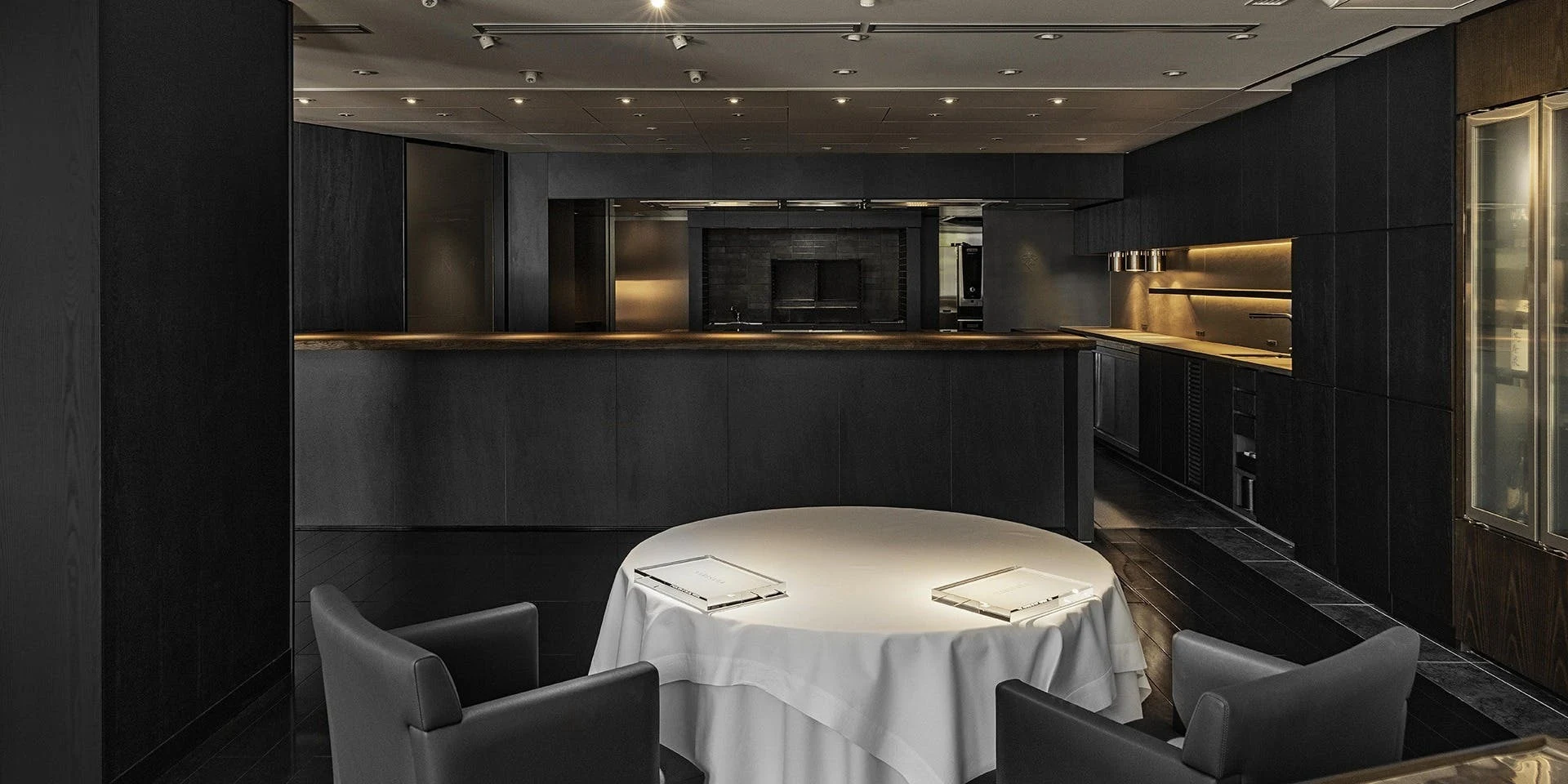
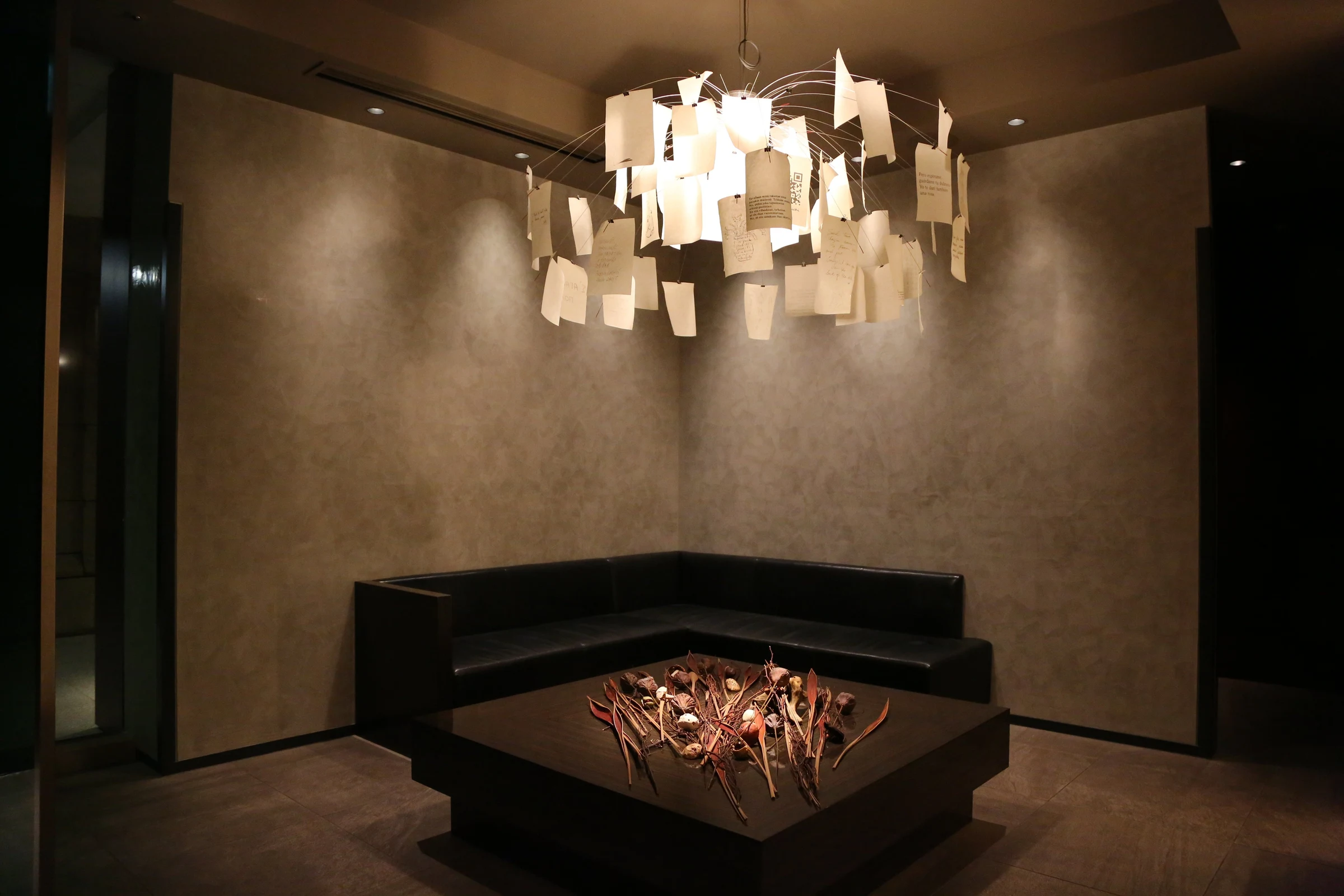
Ginza does ceremony with unusual discipline. The approach to a serious French dining room here is not the loosened rhythm of a Paris bistro, where chalkboards, zinc counters, and late tables shape the mood; it is polished arrival, controlled pacing, and a room designed for quiet concentration. At L'OSIER Tokyo, the first signal is symbolic rather than theatrical: guests are met by glass artwork depicting a willow tree. That detail matters because Tokyo’s French scene has long treated France less as imported decoration than as a structure to be reinterpreted through Japanese service culture.
The useful way to read L'OSIER is not as a bistro in the casual sense, but as a formal counterpoint to the bistro tradition. Bistros were built around repetition, neighborhood trust, modest scale, and a room where regulars knew the grammar. Ginza’s grand maison version takes those same values, consistency, recognisable hospitality, a fixed relationship between kitchen and guest, and pushes them into a higher register. The result belongs to Tokyo’s luxury French comparable set rather than the city’s everyday French dining category, with Michelin three stars in 2024 and 2025, La Liste 98 points in 2025 and 2026, and The Tabelog Award 2026 Silver with a 4.47 score.
The Sunday letter
Find new places through the people who run them.
Our Sunday email brings you the chefs, winemakers and hoteliers behind our newest stories. See a sample before you subscribe.
See a sample of the Sunday emailOne email a week. Unsubscribe from any issue.
Ginza French dining after the bistro
Tokyo has never copied French restaurant culture in a single line. The city absorbed the bistro, the brasserie, the haute cuisine dining room, and the hotel restaurant, then sorted them through local expectations around seasonality, precision, and reservation discipline. A true bistro depends on informality, but it is not careless: the food has to be direct, the room has to move, and the tariff has to make repeat dining plausible. In Tokyo, that tradition appears in neighborhood French rooms as much as in wine bars with compact menus. Ginza, however, tends to translate French dining into status architecture, where address, service choreography, cellar depth, and table spacing all carry weight.
L'OSIER sits in that latter category. The listed dinner budget of JPY 50,000 to JPY 59,999, with lunch at JPY 20,000 to JPY 29,999, places it far above the bistro economy and inside a competitive bracket where French technique is assessed against global luxury dining rooms. That distinction helps avoid the lazy assumption that every French restaurant in Tokyo is chasing Paris. The question here is sharper: how does a Japanese grand maison preserve the emotional intelligence of French dining, including warmth and regularity, while operating at a price and recognition level that demands exactness?
Chef Olivier Chaignon’s name belongs in the discussion as a credential, not as the whole story. Chef Olivier Chaignon leads a kitchen connected to producers around Japan and cooking French cuisine in a contemporary register. That is consistent with a wider Tokyo pattern: French technique is often treated as a framework for Japanese sourcing, particularly fish, vegetables, and seasonal produce, rather than as a museum piece. The focus on fish, wine, sake, and cocktails points to a dining program built for pairing breadth rather than a narrow Old World script.
How it compares with Tokyo's French dining rooms
Tokyo’s serious French restaurants now divide into several recognizable camps. There are nature-led rooms such as L'Effervescence, polished hotel-era and international-luxury addresses such as Sézanne, Ginza dining rooms with high formal control such as ESqUISSE, and more contemporary Japanese-French expressions such as Florilège. The grand restaurant model also has a theatrical European lineage in Tokyo, visible at Château Restaurant Joël Robuchon. Against that field, L'OSIER reads as Ginza classicism with current recognition, less about disruption than about sustaining a demanding formal category.
The awards record supports that reading. Tabelog lists The Tabelog Award Silver for 2026, 2025, 2024, 2023, 2020, 2019, and 2018, Gold for 2022 and 2021, and Bronze for 2017, along with selection for Tabelog French TOKYO “Tabelog 100” in 2025, 2023, and 2021. The 2025 Tabelog 100 French Tokyo list was announced on 10 June 2025, with a selection criteria date of 21 April 2025. Opinionated About Dining placed the restaurant in its Japan rankings at number 70 in 2023, number 67 in 2024, and number 78 in 2025. These are not interchangeable badges; together they show durability across Japanese user-weighted dining culture, international list culture, and Michelin’s inspection model.
That durability is central to the reader decision. New Tokyo restaurants often attract attention through scarcity and novelty. A long-running grand maison has a different test: it has to justify formality to diners who have alternatives across sushi counters, kappo rooms, kaiseki houses, and contemporary French tasting menus. For a visitor comparing one high-spend French meal in Tokyo, the relevant question is not whether the room feels casual. It does not. The question is whether a formal Ginza address offers a clearer expression of Tokyo French than a looser, younger format. The evidence suggests this is a restaurant for diners who value continuity, recognition, and a service culture designed around controlled pacing.
The bistro tradition, translated upward
The bistro was historically a social restaurant before it was a luxury reference point. Its identity came from accessibility, familiar dishes, and a room that belonged to the neighborhood. When that tradition travels into a city like Tokyo, its spirit often separates from its price. The casualness may disappear, but other bistro values survive: a sense of returning, a compact social contract between staff and guest, and a menu structure built around appetite rather than spectacle. In a 34-seat formal restaurant, those values become quieter. They show up in table comfort, pacing over more than 2.5 hours, private-room options, and the presence of a sommelier rather than in clatter and chalk.
L'OSIER makes more sense through this cultural lens. Ginza is not Montparnasse, and Tokyo’s luxury French dining has never needed to imitate the Parisian corner bistro to feel French. It can instead preserve the architecture of French hospitality, aperitif, cellar, courses, cheese or dessert culture where offered, while allowing Japanese expectations to govern timing, quiet, and spatial restraint. What can be stated is that the restaurant is categorized as French, notes a particular attention to fish, and supports wine, sake, and cocktails, an unusually broad beverage field for a French fine-dining context.
This is also where price becomes editorially useful rather than merely practical. Dinner at JPY 50,000 to JPY 59,999 and a 15 percent service charge mean the meal competes with Tokyo’s highest-spend restaurant decisions. Lunch at JPY 20,000 to JPY 29,999 creates a separate strategic choice: a diner can access the same formal address at a lower listed budget, though the room and dress expectations remain serious. That lunch-to-dinner spread is common in luxury French dining because the restaurant must serve both celebratory dinners and business or travel itineraries that demand precision during the day.
Service, room, and recognition signals
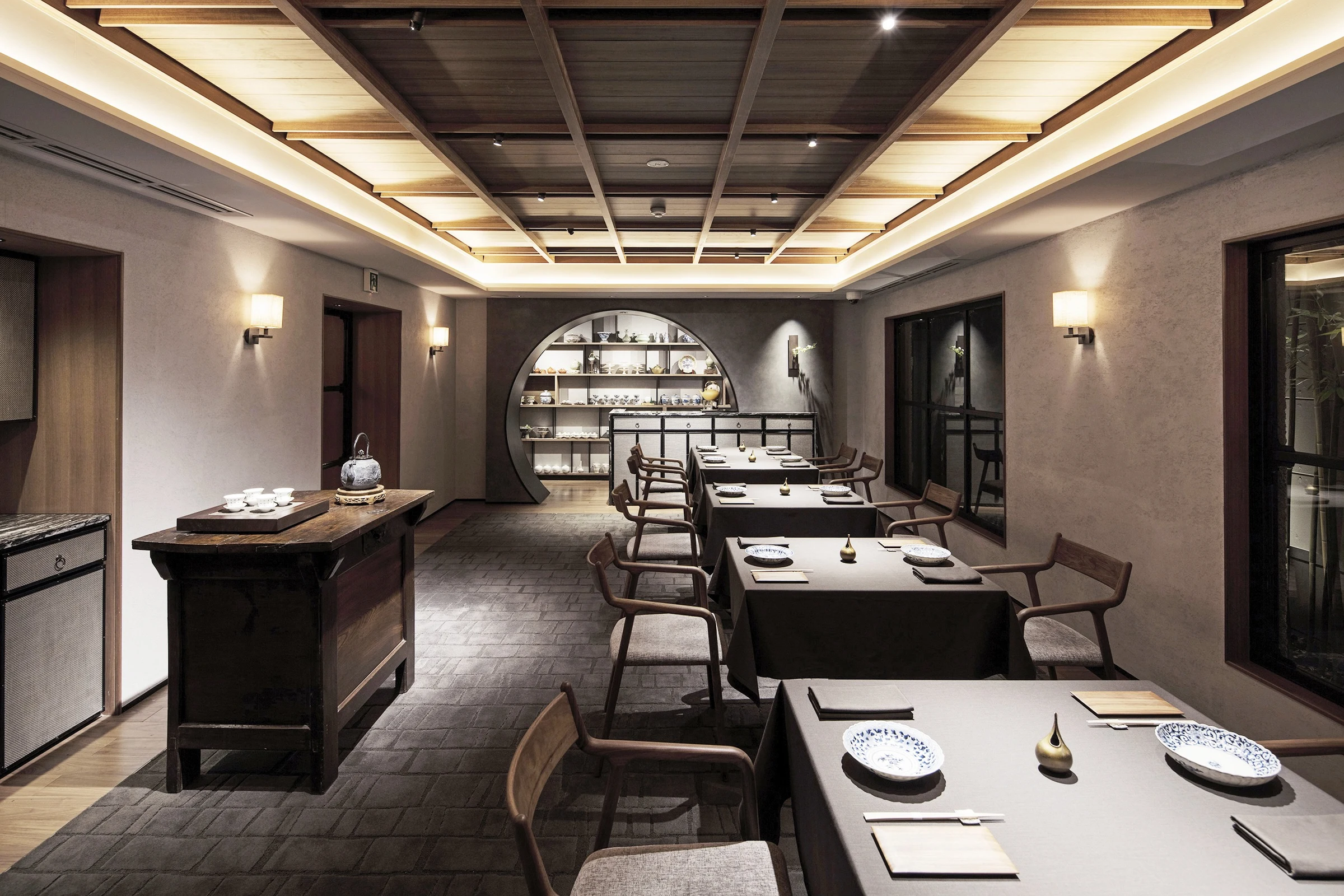
The room is listed at 34 seats, with private rooms available for 2, 4, 6, and 8 people, plus private use and a maximum seated party size of 44. Those figures describe a restaurant built for controlled capacity, not volume. Private rooms are typically available for groups of 7 to 10 with a room charge of ¥11,000 at lunch and ¥22,000 at dinner. For 2 to 4 people, the listed private-room charge is ¥55,000 at either lunch or dinner. This matters in Ginza, where French dining often serves business hosting, family celebrations, and international visitors who need privacy without surrendering formal restaurant service.
The service infrastructure is equally telling. Tabelog lists a sommelier, English multilingual menus, English-speaking staff, birthday plate service, non-smoking policy, wheelchair accessibility, free Wi-Fi, sofa seating, and spacious seating. Credit cards are accepted, including VISA, Master, JCB, AMEX, Diners, and UnionPay; electronic money is not accepted; QR code payments are accepted through PayPay, d Barai, Rakuten Pay, au PAY, Alipay, and WeChat Pay. These details are not glamorous, but they separate a polished international dining room from a restaurant that only works smoothly for local regulars.
Google review signal, 4.7 from 790 reviews, adds a broad public layer to the more specialist awards. Michelin three stars in 2024 and 2025 places the restaurant in the formal international inspection tier. La Liste 98 points in 2025 and 2026 gives another global comparative marker. Tabelog’s 4.47 score for 2026 and Silver award are especially relevant in Japan, where high scores in the upper dining categories are difficult to accumulate and sustain. The combined record is a stronger trust signal than any single accolade because it spans different audiences and methodologies.
Planning a meal in Ginza
Reservations are required. Reservations are required. Opening hours are Tuesday through Saturday, 11:30 AM to 3:00 PM and 5:30 PM to 10:00 PM. Monday and Sunday are closed. That schedule makes Saturday the obvious pressure point for travelers, while weekday lunch is the more efficient fit for a tightly planned Ginza day.
The address is 7 Chome-5-5 Ginza, Chuo City, Tokyo 104-0061. Tabelog’s transportation notes put it a 7-minute walk from Ginza Station on the Tokyo Metro, a 6-minute walk from the Ginza Exit of JR Shimbashi Station, and an 8-minute walk from JR Yurakucho Station. Parking is available, with 10 spaces, but the restaurant asks guests to mention parking needs when making the reservation.
The dress code is explicit: male guests are asked to wear a jacket, and shorts and sandals are not permitted. The restaurant is available only to guests in junior high school or older, so it is not designed for young children. The non-smoking policy, private-room structure, and jacket guidance all push the experience toward adult, formal dining. In practical terms, this is a restaurant to schedule with enough time around it, not between shopping appointments with casual clothing and loose timing.
Who should choose it
L'OSIER is strongest for diners who want Tokyo French in its grand maison form: formal, expensive, award-heavy, and grounded in Ginza’s culture of controlled hospitality. It is not the right comparison point for a neighborhood bistro, even though the bistro tradition helps explain what has been transformed. The warmth of bistro dining here is not expressed through noise or looseness; it is expressed through recognition, spacing, staff fluency, and the confidence to let French structure coexist with Japanese produce and service discipline.
For a broader restaurant itinerary, place this meal against the wider city rather than only against other French rooms. Our full Tokyo restaurants guide is the natural starting point for comparing sushi, kaiseki, French, and contemporary tasting menus. Travelers building a complete stay can pair that with Our full Tokyo hotels guide, Our full Tokyo bars guide, Our full Tokyo wineries guide, and Our full Tokyo experiences guide. The point is to understand which format each night should serve.
Japan’s high-end dining map also rewards comparison beyond Tokyo. The precision of a Ginza French room sits differently beside HAJIME in Osaka, the Kyoto dining culture around Gion Sasaki in Kyoto, the regional focus of Tsukumo in Nara, the Kyushu perspective at Goh in Fukuoka, the seafood context of Aji Arai in Oita, and the Hokkaido coastal simplicity of Aotsuka Shokudo in Hokkaido (Otaru). For international French comparisons, Les Amis, French in Singapore and Hotel de Ville Crissier, French in Crissier help frame how French luxury dining changes when the city, clientele, and service codes change.
Essential details
- Restaurant: L'OSIER
- Category: French, Ginza, Tokyo
- Address: 7 Chome-5-5 Ginza, Chuo City, Tokyo 104-0061, Japan
- Chef: Olivier Chaignon
- Recognition: Michelin three stars in 2024 and 2025; La Liste 98 points in 2025 and 2026; The Tabelog Award 2026 Silver, score 4.47; Tabelog French TOKYO “Tabelog 100” 2025 selection; Opinionated About Dining Japan ranking number 78 in 2025
- Budget: Dinner JPY 50,000 to JPY 59,999; lunch JPY 20,000 to JPY 29,999; 15 percent service charge listed
- Hours: Tuesday to Saturday, lunch 11:30 AM to 3:00 PM with last order at 12:30 PM; dinner 5:30 PM to 10:00 PM with last order at 7:00 PM; closed Monday and Sunday
- Reservations: Reservation only; phone reservation hours 10:00 AM to 8:00 PM on business days only
- Seats: 34 seats; private rooms and private use available
- Dress: Jacket requested for male guests; shorts and sandals not permitted
Questions
Frequently asked
What recognition does L'OSIER hold?
L'OSIER holds 3 Michelin stars.
Who works at L'OSIER?
Made By profiles Olivier Chaignon (Chef) at L'OSIER.
How expensive is L'OSIER?
L'OSIER is listed at a price level of $$$$.
Where is L'OSIER and what does it serve?
L'OSIER is in Chūō, Tokyo, serving Classic French Fine Dining.
The field
How it compares
| Place | Awards | Cuisine | Notes |
|---|---|---|---|
| L'OSIER | Michelin 3 Stars | Classic French Fine Dining | Chūō, $$$$ |
| Den | Michelin 2 Stars, World's 50 Best | Modern Japanese Kaiseki | Tokyo |
| Florilège | Michelin 2 Stars, World's 50 Best | Modern French-Japanese Plant-Based Fine Dining | Tokyo |
| Narisawa | Michelin 2 Stars, World's 50 Best | Modern Japanese Satoyama Fine Dining | Tokyo |
| Quintessence | Michelin 3 Stars | Modern French Fine Dining | Tokyo |
| Sazenka | Michelin 3 Stars, World's 50 Best | Modern Chinese Fine Dining | Tokyo |
| Sézanne | Michelin 3 Stars, World's 50 Best | Modern French Fine Dining | Tokyo |
In residence
Similar places
Modern Japanese Kaiseki
Den
Tokyo, Japan
★★ · 50 Best
Modern French-Japanese Plant-Based Fine Dining
Florilège
Tokyo, Japan
★★ · 50 Best
Modern Japanese Satoyama Fine Dining
Narisawa
Tokyo, Japan
★★ · 50 Best
Modern French Fine Dining
Quintessence
Tokyo, Japan
★★★
Modern Chinese Fine Dining
Sazenka
Tokyo, Japan
★★★ · 50 Best
Modern French Fine Dining
Sézanne
Tokyo, Japan
★★★ · 50 Best
The Sunday letter
Get the next Made By story in your inbox.
We send one email every Sunday morning with the places and people we covered that week.
See a sample of the Sunday emailOne email a week. Unsubscribe from any issue.