Made ByWinery
- Michelin 1 Grape · 2026
- Falstaff Winery - Listed · 2026
- Pearl 3 Star Prestige · 2025
The Sunday letter
Find new places through the people who run them.
Our Sunday email brings you the chefs, winemakers and hoteliers behind our newest stories. See a sample before you subscribe.
See a sample of the Sunday emailOne email a week. Unsubscribe from any issue.
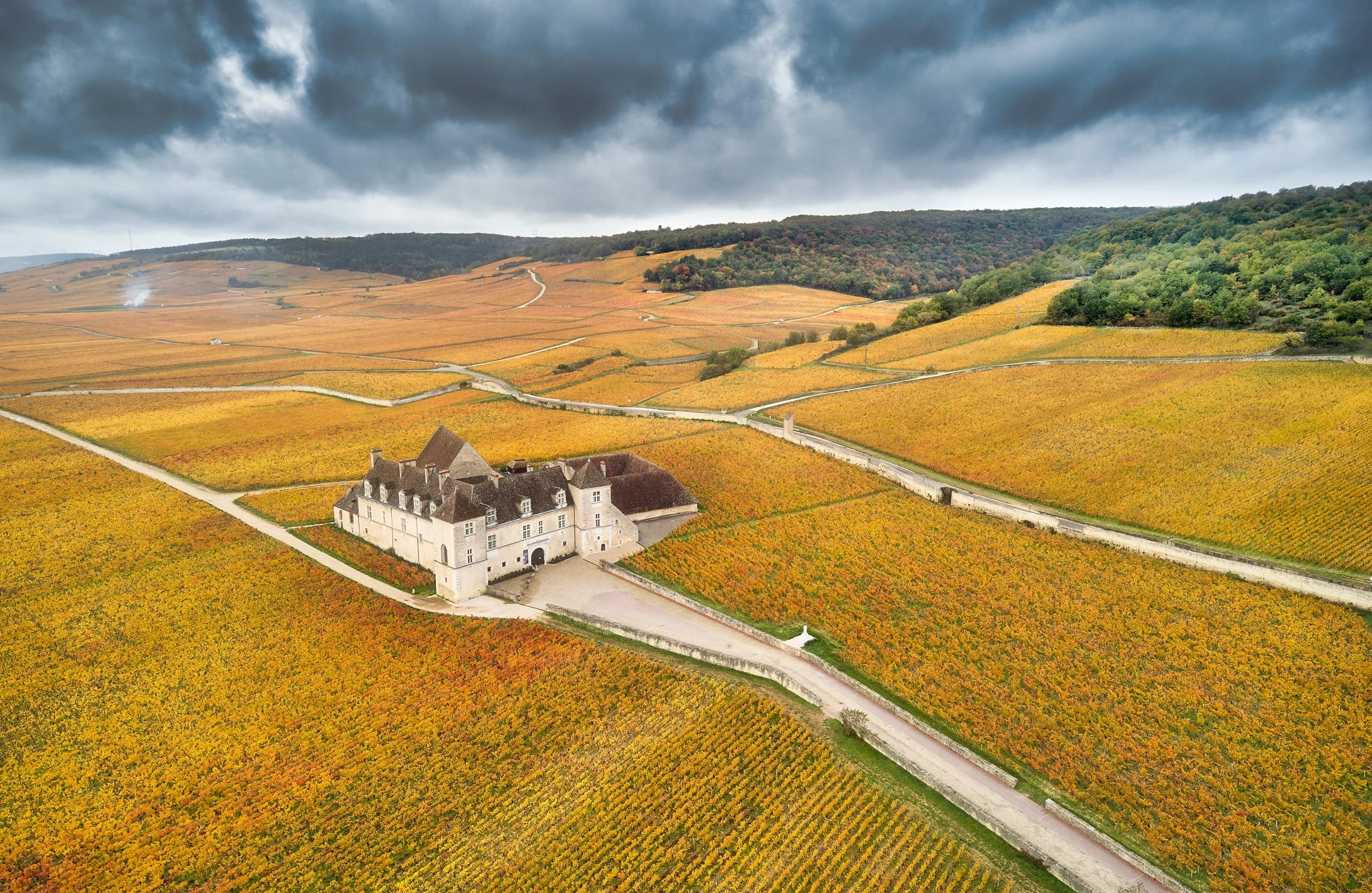
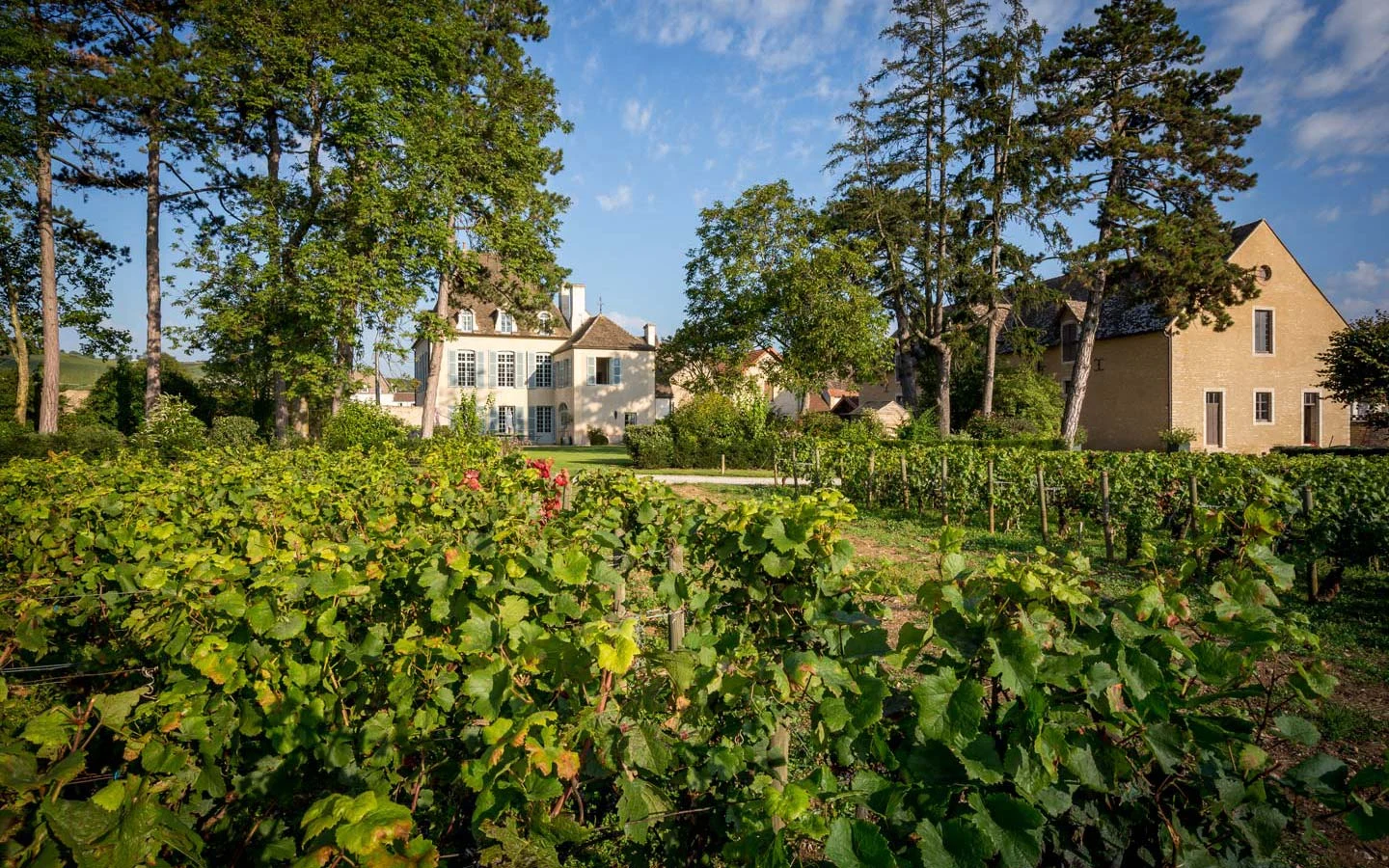
Burgundy's négoce-éleveur model, the practice of purchasing must or wine from contracted growers, then maturing and bottling under the négociant's label, emerged in the nineteenth century as a counterweight to the extreme fragmentation of Burgundian vineyard ownership. Maison Joseph Drouhin, founded in Beaune in 1880, operates inside that model with a discipline and cellar architecture that positions it among the appellation's longest-tenured houses. The domaine now holds approximately 100 hectares of owned vineyards across the Côte d'Or, with an additional négoce program drawing from contract growers in classified climats spanning Chablis to Beaujolais. Véronique Drouhin, fourth-generation member of the family and the current lead winemaker for the Oregon arm of the operation (Domaine Drouhin Oregon, founded 1988), represents a lineage transmission that has kept the house under family direction since its founding.
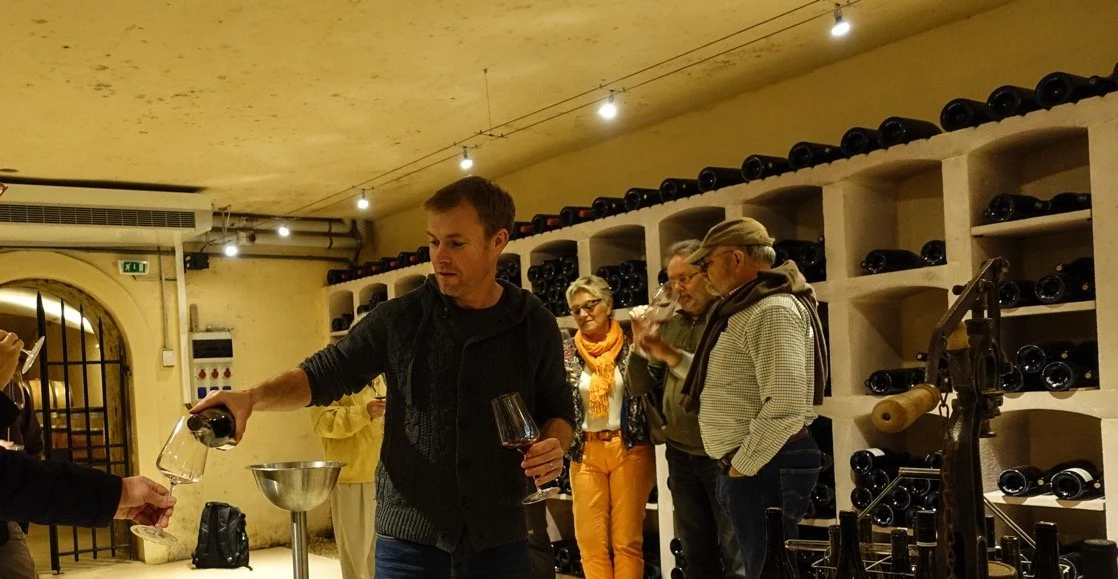
The 1880 founding date places Drouhin in the cohort of Beaune négociants that survived phylloxera, the World Wars, and the post-1970s shift toward domaine-bottled wine. The house's cellar holdings in Beaune itself, a series of vaulted stone caves dating to the twelfth and thirteenth centuries, originally constructed by the Dukes of Burgundy and later repurposed for wine storage, are among the deepest and most stable in the appellation, with natural humidity and temperature regulation that obviate mechanical climate control. The caves span multiple levels beneath the Place de la Halle, with some chambers reaching fifteen meters below street level. This infrastructure supports extended élevage programs that run longer than the regional norm: Grand Cru whites typically spend sixteen to eighteen months in barrel, Premier Cru reds eighteen to twenty-two months, with the house style favoring a measured oxidative evolution rather than the reductive regimes now common among smaller domaines.
Drouhin's vineyard holdings include parcels in Musigny, Bonnes-Mares, Grands-Échézeaux, Griotte-Chambertin, Chambertin-Clos de Bèze, Corton-Charlemagne, and Montrachet, a portfolio concentrated in the upper tiers of the Burgundian hierarchy. The house does not own vineyards in every climat it bottles; the négoce arm sources from long-term contracted growers in appellations where Drouhin does not hold land, with contracts often spanning multiple generations of grower families. The separation between domaine fruit (from owned vineyards) and négoce fruit (from contracted growers) is maintained through separate vinification and labeling protocols: domaine wines carry the phrase "Domaine Joseph Drouhin" on the label, while négoce wines carry "Maison Joseph Drouhin." This labeling distinction, formalized in Burgundy's appellation laws, signals the provenance of the fruit to the trade.
The house's oak regime sits in the moderate-toast, French-cooperage tradition that dominated Burgundy before the 1990s expansion of new-oak use. Drouhin typically employs 20% to 30% new oak for Premier Cru reds, 30% to 40% for Grand Cru reds, and 25% to 35% for Grand Cru whites, with the remainder of the barrels drawn from one- to three-year-old stock. The cooperage is sourced primarily from Burgundy-based tonneliers, François Frères, Berthomieu, Rousseau, and the toast level is specified as "medium" rather than "medium-plus," a distinction that limits caramelization and preserves the wine's ability to express site rather than barrel. The house does not ferment in new oak; fermentation occurs in stainless steel or older wood, with the wine moving to barrel only after malolactic conversion is complete. This sequence is closer to the pre-1980s Burgundian standard than to the new-oak fermentation protocols that gained currency in Napa and were later imported back into Burgundy by a subset of younger winemakers.
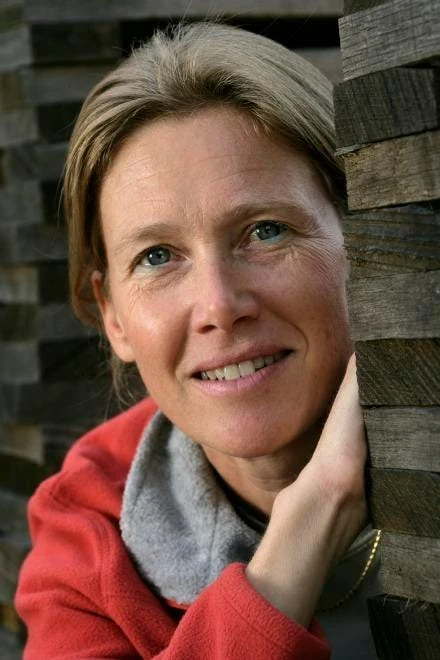
Véronique Drouhin, who joined the family operation in 1986 and took primary responsibility for the Oregon vineyards in 1988, represents the fourth generation of Drouhin family leadership. Her work at Domaine Drouhin Oregon, a 225-acre estate in the Dundee Hills AVA, extended the family's Burgundian protocols to Willamette Valley Pinot Noir, with vine density, trellising, and harvest timing modeled on Côte d'Or practices. The Oregon arm produces approximately 15,000 cases annually, named for Véronique's daughter, has been listed by wine directors at Eleven Madison Park, The French Laundry, and Per Se, and appears on Vinous and Wine Advocate vintage reports as a reference bottling for Dundee Hills terroir. The transmission from Beaune to Oregon is not merely familial but technical: the same extended élevage timelines, the same cooperage sources, the same preference for moderate toast and for site legibility over extraction.
The house's Chablis program, sourced from contracted growers and from a small parcel of owned vines in Vaudésir Grand Cru, employs stainless steel and neutral oak rather than new wood, a protocol that aligns with the region's historical rejection of barrique aging. Drouhin's Chablis bottlings, particularly the Vaudésir and the Premier Cru "Vaillons", are positioned in the trade as reference examples of the appellation's flinty, high-acid style, with the house's cellar infrastructure in Beaune providing the controlled environment for slow reduction that Chablis requires. The wines spend twelve to fourteen months on fine lees in tank, a timeline longer than the eight- to ten-month span typical of cooperative-bottled Chablis but shorter than the eighteen- to twenty-four-month programs employed by domaines such as Domaine Cécile Tremblay and Domaine Georges Roumier for their top cuvées.
Drouhin's peer set in Beaune includes the other family-controlled négoce-éleveur houses that survived consolidation: Bouchard Père & Fils (founded 1731, now owned by Champagne Henriot but still operating under the Bouchard family protocols), Maison Louis Jadot (founded 1859, now owned by the Kopf family but retaining the Gagey family as operational directors), and Domaine Albert Bichot (founded 1831, still family-held). The structural distinction is ownership: Drouhin remains entirely family-controlled, with no outside investment or acquisition, a status that is increasingly rare among Burgundy's large négoce houses. The house produces approximately 2.5 million bottles annually across all appellations, a volume below the largest Beaune négociants but above the boutique négoce houses such as Benjamin Leroux and Dominique Lafon's Héritiers du Comte Lafon négoce program.
Access to Drouhin's wines is structured through a global allocation system for the domaine-bottled Grand Cru and Premier Cru releases, with the house maintaining direct relationships with importers in the United States (Dreyfus Ashby), the United Kingdom (Corney & Barrow), and Japan (Jalux). The négoce-bottled village and regional wines are distributed more widely and do not require allocation queue placement. The house operates a tasting room and boutique at 7 Rue d'Enfer in Beaune, with cellar tours available by appointment; the tours include access to the twelfth-century caves and a walk through the barrel aging rooms, but do not include vineyard visits (the vineyards themselves are scattered across the Côte d'Or and are not contiguous with the Beaune cellars). Trade buyers and sommeliers can arrange private tastings through the house's export managers, with vertical tastings of the Musigny and Montrachet holdings available for credentialed buyers.
The house's bottlings appear regularly in Wine Advocate, Vinous, Decanter, and Burghound vintage reports, with the domaine-bottled Musigny typically scoring in the mid-90s and the Montrachet in the high 90s on the 100-point scale. Allen Meadows at Burghound has cited Drouhin's Musigny as a reference bottling for the climat, noting the wine's "ultra-fine tannins" and "exceptionally long finish" in his 2019 and 2020 vintage reports. The house does not release wines en primeur; all releases occur after the wines have completed their élevage and have been bottled, a policy that distinguishes Drouhin from the en primeur-focused négociants in Bordeaux and from a small number of Burgundy domaines that have adopted futures programs.
Drouhin's technical signature, extended élevage, moderate oak, measured oxidative handling, and a preference for site legibility over extraction, positions the house inside the classical Burgundian school rather than inside the post-2000 high-ripeness, high-extraction lineage that has shaped a subset of younger Burgundy producers. The house sits closer to the Jadot and Bouchard protocols than to the reductive, minimal-oak protocols of the natural-wine-influenced domaines, and closer to the Côte d'Or tradition than to the Beaujolais carbonic school. For sommeliers building Burgundy lists and for collectors seeking reference bottlings of classified climats, Drouhin functions as a benchmark producer whose wines express the appellation's hierarchical structure with technical clarity and with the archival stability that comes from controlled cellar conditions and from a family transmission now entering its fifth generation.
Questions
Frequently asked
Who works at Maison Joseph Drouhin?
Made By profiles Véronique Drouhin (Winemaker) at Maison Joseph Drouhin.
How expensive is Maison Joseph Drouhin?
Maison Joseph Drouhin is listed at a price level of $$$.
The field
How it compares
| Place | Notes |
|---|---|
| Maison Joseph Drouhin | Beaune, $$$ |
| Domaine Bouchard Père et Fils | Beaune |
| Lucien Le Moine | Beaune |
| Maison Albert Bichot | Beaune |
| Maison Benjamin Leroux | Beaune |
| Maison Louis Jadot | Beaune |
| Maison Louis Latour | Beaune |
In residence
Similar places

The Sunday letter
Get the next Made By story in your inbox.
We send one email every Sunday morning with the places and people we covered that week.
See a sample of the Sunday emailOne email a week. Unsubscribe from any issue.