Maltes hidden kitchen

In Residence
Malte Kuhn
Chef
- 01CuisineModern German with Asian Influences
- 02CityBaden-Baden, Germany
- 03RecognitionOne Michelin Star
Char poached gently in oil
- 1 Michelin Star · Michelin Guide
- Michelin 1 Star · 2026
- Michelin 1 Star · 2025
- Michelin 1 Star · 2024
Oil poaching as a house grammar
Char poaches gently in oil while Malte Kuhn, chef at Maltes hidden kitchen in Baden-Baden, builds the plate around spinach, crustacean foam, and trout caviar. The gesture suits the room: quiet heat, a main element left intact, seasoning held until it has work to do. Kuhn has been chef and proprietor here since 2018, after training as a chef trainee at Hotel Dollenberg from 2010-2013 and later cooking at Althoff Seehotel Überfahrt on Lake Tegernsee and Lakeside Restaurant at The Fontenay Hotel in Hamburg. Martin Herrmann is the named teacher from the Dollenberg years, and that early discipline still shows in the way Kuhn narrows a dish before service rather than adding breadth at the pass. At this address, ownership makes the method visible from product choice through the last spooned sauce. Regional taste stays close to the plate, but it does not settle into nostalgia. Japanese acidity, Mexican depth, Swiss cheese work, and French sauce craft appear when they sharpen the idea. In 2022, Maltes hidden kitchen received 1 Michelin star for this house, not for a previous kitchen.
Reduction before ornament
The menu works through tasting formats and a small à la carte selection, with dishes pared until each component has a job. Hare with mole brings winter game into a darker register; white halibut with caviar beurre blanc lets fat, salt, and clean fish muscle carry the pass; guinea fowl breast with truffle, beans, and shallot keeps luxury in the cut and the seasoning rather than the plate design. Robiola Tris with cranberry, pumpernickel, and violet moves the cheese course into the same syntax, a clear base note, an acidic line, then a floral finish. The kitchen also uses Ikejime fish, ponzu, yuzu, enoki, hollandaise, Rossini richness, Belper Knolle, and house-baked sourdough with rosemary butter and Malabar pepper. None of those references operates as decoration. Kuhn uses them as tools: lift, salinity, smoke, bitterness, cream, crunch. The vegetarian menu changes monthly, a useful sign of how the bench thinks about season rather than substitution.
The Sunday letter
Find new places through the people who run them.
Our Sunday email brings you the chefs, winemakers and hoteliers behind our newest stories. See a sample before you subscribe.
See a sample of the Sunday emailOne email a week. Unsubscribe from any issue.
Behind the sliding panel
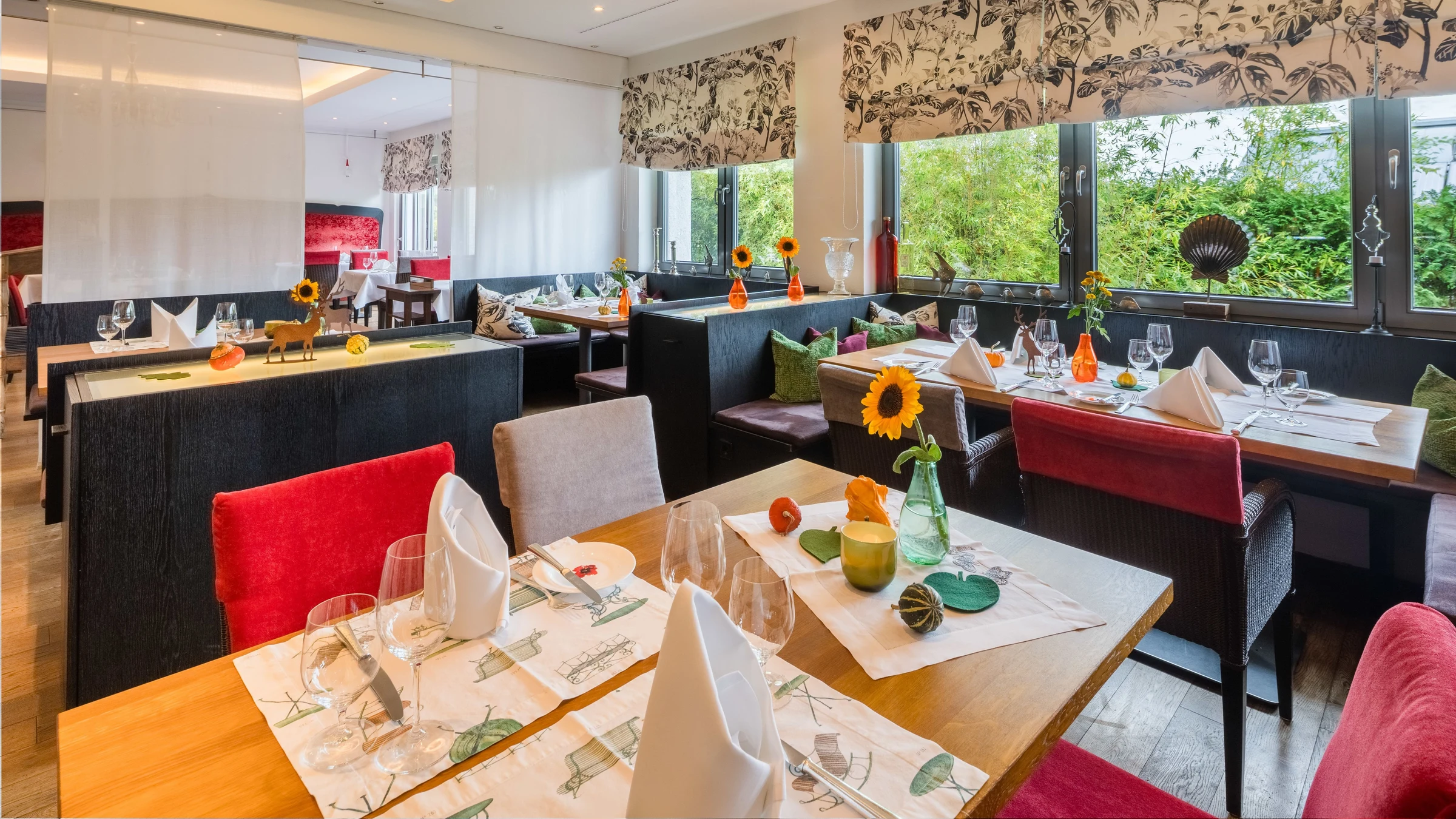
The room begins with a daytime coffee-house face, then the fine-dining kitchen appears behind a sliding panel after the shift changes. That concealment is not theatre for its own sake; it changes the scale of attention. Dark wooden floors, muted colour, and dim tables make the plates read without the room raising its voice. Cooks are close enough to the guests for the work to feel bench-side, and the service remains formal without turning stiff. The beverage program follows the same dual identity. Wine pairings sit beside a non-alcoholic pairing that draws from the coffee shop’s teas, so the cup and the glass both answer the food rather than simply accompany it. At Maltes hidden kitchen, the smallest decisions carry: the foam over the char, the pepper in the butter, the sliding panel.
Questions
Frequently asked
What kind of restaurant is Maltes hidden kitchen?
Maltes hidden kitchen is a restaurant in Old Town Baden-Baden serving modern German cuisine with Asian influences. The room has a daytime coffee-house face, with the fine-dining kitchen appearing behind a sliding panel after the shift changes.
Who is the chef behind the kitchen?
Malte Kuhn is the chef and proprietor of Maltes hidden kitchen. He has been in charge there since 2018, after training at Hotel Dollenberg and cooking later at Althoff Seehotel Überfahrt on Lake Tegernsee and Lakeside Restaurant at The Fontenay Hotel in Hamburg.
What is the booking policy?
Reservations are essential, and bookings are made directly.
What recognition does the restaurant hold?
Maltes hidden kitchen received 1 Michelin star in 2022.
What dishes are known on the menu?
Signature dishes listed for Maltes hidden kitchen include hare with mole, white halibut with caviar beurre blanc, guinea fowl breast with truffle, and Robiola Tris cheese.
The field
How it compares
| Place | Awards | Cuisine | Notes |
|---|---|---|---|
| Maltes hidden kitchen | Michelin 1 Star | Modern German with Asian Influences | Old Town Baden-Baden, $$$$ |
| Alchemist | Michelin 2 Stars, World's 50 Best | Avant-Garde Molecular Gastronomy with Social Commentary | Copenhagen |
| Gaggan Anand | Michelin 1 Star, World's 50 Best | Progressive Indian | Bangkok |
| Le Jardin de France im Stahlbad | Michelin 1 Star | Classic French Fine Dining | Baden-Baden |
| Quique Dacosta | Michelin 3 Stars, World's 50 Best | Avant-Garde Spanish Fine Dining | Dénia |
| Ricard Camarena | Michelin 2 Stars, World's 50 Best | Modern Vegetable-Focused Mediterranean Fine Dining | València |
| Weinstube zum Engel | · | Modern Regional Baden Cuisine | Baden-Baden |
In residence
Similar places
Avant-Garde Molecular Gastronomy with Social Commentary
Alchemist
Copenhagen, Denmark
★★ · 50 Best
Progressive Indian
Gaggan Anand
Bangkok, Thailand
★ · 50 Best
Classic French Fine Dining
Le Jardin de France im Stahlbad
Baden-Baden, Germany
★
Avant-Garde Spanish Fine Dining
Quique Dacosta
Dénia, Spain
★★★ · 50 Best
Modern Vegetable-Focused Mediterranean Fine Dining
Ricard Camarena
València, Spain
★★ · 50 Best
Modern Regional Baden Cuisine
Weinstube zum Engel
Baden-Baden, Germany
The Sunday letter
Get the next Made By story in your inbox.
We send one email every Sunday morning with the places and people we covered that week.
See a sample of the Sunday emailOne email a week. Unsubscribe from any issue.