Marotta
In Residence
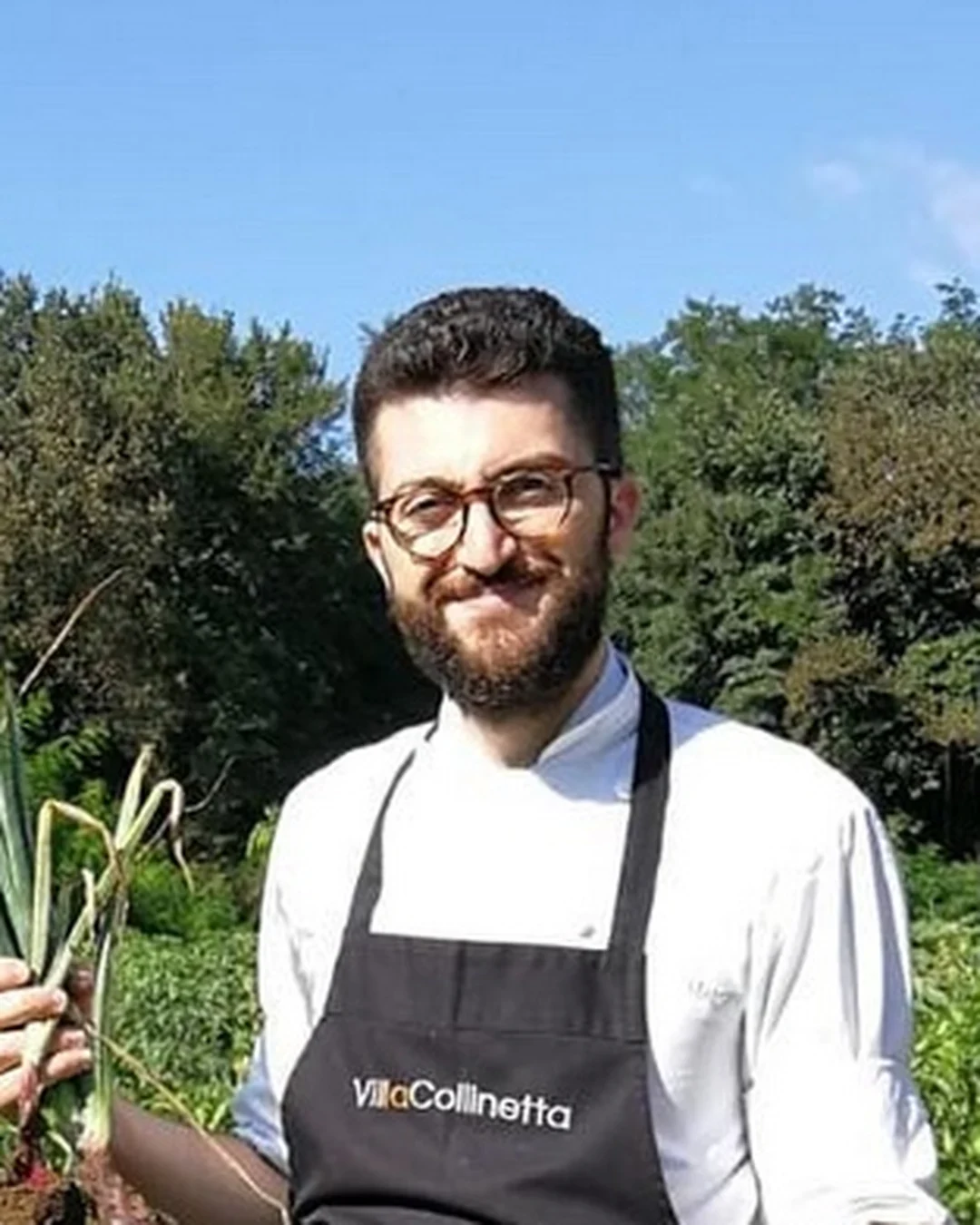
Domenico Marotta
Chef
- 01CuisineModern Italian Fine Dining
- 02CitySquille, Italy
- 03RecognitionOne Michelin Star
- 1 Michelin Star · Michelin Guide
- Michelin 1 Star · 2026
- Opinionated About Dining Top Restaurants in Europe Recommended · 2026
- Opinionated About Dining Top Restaurants in Europe Ranked #319 · 2025
- The Best Chef Two Knives · 2025
- Michelin 1 Star · 2025
- Michelin 1 Star · 2024
- Opinionated About Dining Top Restaurants in Europe Ranked #320 · 2024
- Opinionated About Dining Top New Restaurants in Europe Recommended · 2023
Where the Upper Caserta Hills Meet the Plate
Marotta is a one-star Michelin restaurant in Squille, in Italy's Caserta province, serving modern Italian fine dining at about €80 per person. The road climbs through the Campanian interior, past terraced cultivation and villages that rarely appear in itineraries built around Naples or the coast. By the time you reach Via Marrochelle, the premise of Marotta as a restaurant is already taking shape: this is a part of Italy where the agricultural calendar still governs what ends up on the table, and where a chef working with serious intent operates in near-total obscurity from the circuits that feed European dining tourism. That combination, remote setting and rigorous kitchen, is not as rare as it once was in Italy, but it remains a specific and valuable thing.
The Caserta Interior and What It Produces
The Upper Caserta province sits between the better-known gastronomic corridors of Campania. Naples pulls the coastal and urban dining story; the Amalfi and Sorrentine peninsulas absorb the luxury weekend market. The interior, by contrast, has traditionally been agricultural ground rather than restaurant destination, which is precisely what makes it interesting for kitchens like this one. The terrain supports a different ingredient vocabulary: vegetables grown in dense volcanic-influenced soils, small-scale producers with no incentive to scale up, and culinary references that stretch northward toward Molise and Abruzzo rather than staying within Campania's coastal identity. Marotta's menu reads against that geography, drawing on local kitchen garden produce and applying a minimalist, modern approach that owes as much to the broader Italian contemporary movement as it does to regional tradition.
A Kitchen Shaped by Evolution, Not Convention
Editorial angle that matters here is not biographical, it is developmental. Domenico Marotta represents a particular generation of Italian chef: young, working in a region without an established fine-dining infrastructure, building a vocabulary through the discipline of local sourcing rather than through proximity to established houses. The result is a menu that moves between precision and generosity in a way that the Campanian interior rarely signals from the outside. Three tasting menus and a short à la carte structure the offer, which positions the kitchen formally within the contemporary Italian fine-dining format without locking guests into a single mandatory sequence. That flexibility is a considered choice in a region where the dining public has not been systematically trained to accept tasting-menu-only formats.
Approach to vegetables deserves particular attention as an editorial point, not a decorative one. Across Italian fine dining, the promotion of vegetables from garnish to protagonist has been one of the defining structural shifts of the past decade. At restaurants like Reale in Castel di Sangro and Piazza Duomo in Alba, that shift happened with significant resource backing and years of iteration. At Marotta, it is happening within a tighter operational framework, which makes the execution the more notable signal. The kitchen garden feeding the menu is not a marketing gesture; it is an ingredient-sourcing constraint that shapes what the kitchen can and cannot do each season.
Recognition and What It Signals
Marotta holds a Michelin star, confirmed in the 2024 guide, and appears in Opinionated About Dining's ranking of Leading Restaurants in Europe at position 319 in 2025, having entered the same list at 320 the previous year. The OAD entry in 2023 came through the Leading New Restaurants in Europe recommendation, which establishes a timeline: the kitchen was building its identity and earning critical attention within a relatively compressed period. That trajectory matters because OAD rankings are crowd-sourced from an informed dining public rather than awarded by a single anonymous inspector, giving them a different evidential weight than Michelin. Together, the two signals place Marotta within a peer group that includes starred kitchens across Italy operating at the €€€ price tier with serious critical traction.
For comparative context, most of the starred Italian restaurants with comparable OAD recognition operate in established cities or tourist corridors. Osteria Francescana in Modena, Enoteca Pinchiorri in Florence, and Dal Pescatore in Runate all operate in regions with deep culinary infrastructure and established visitor traffic. Enrico Bartolini in Milan and Le Calandre in Rubano benefit from urban proximity. Marotta does not have those structural advantages, which makes its recognition a sharper editorial signal about what the kitchen is actually doing. The same logic applies when you look at Atelier Moessmer Norbert Niederkofler in Brunico, where geographic remoteness combined with critical standing has itself become part of the restaurant's identity.
The Front of House as Editorial Evidence
The sommelier and head waiter at Marotta has drawn specific commentary in the restaurant's critical coverage: detailed explanations, genuine enthusiasm, and a guiding approach that matches the kitchen's ambition rather than simply facilitating a transaction. This matters as a structural point about what makes a small, remote restaurant function at fine-dining standard. The front-of-house team at this level is not a finishing detail; it is a core part of the format. When a kitchen serves modern, interpretive food in a region without a deep dining-out culture, the service team carries a translation function, bridging the gap between what is on the plate and what the guest understands about it. The fact that this bridge exists at Marotta, and that critics have noted it specifically, signals operational coherence rather than just culinary talent.
Planning a Visit
Marotta opens Wednesday through Sunday from 10 AM to 11 PM, with Monday and Tuesday closed. The address is Via Marrochelle, 52, Squille, in the CE postal area of Caserta province. Squille is not on a rail line, and the practical reality of dining here is that it requires a car and a degree of intentionality that the coastal or urban dining circuit does not demand. That is a feature as much as a logistical note: the commitment required to reach the Upper Caserta hills tends to self-select for guests who are genuinely engaged rather than opportunistic. For visitors coming from Naples, the drive runs through the Caserta hinterland, making it a natural extension of a broader Campania itinerary that might include the royal palace at Caserta before heading into the hills. The price tier sits at €€€, placing it below the €€€€ bracket occupied by most of its OAD comparable set, which at this level of critical recognition represents a real differential for visitors calibrating cost against ambition.
The Broader Italian Fine Dining Frame
Italy's modern restaurant scene has, over the past decade, expanded its critical geography. Regions that once sat entirely outside the conversation, the Molise, the Basilicata, the Campanian interior, are now producing kitchens that earn serious attention without migrating to established centres. Uliassi in Senigallia and Quattro Passi in Marina del Cantone both made cases for provincial settings with serious kitchens before that shift became a recognisable pattern. Casa Perbellini 12 Apostoli in Verona demonstrates how a historically significant location can anchor contemporary fine dining. Marotta fits this expanded map: a kitchen doing work that would earn attention anywhere, located somewhere that requires the diner to come to it rather than the other way around. For international visitors whose Italian dining instinct runs toward the canonical, comparing the trajectory here with internationally visible modern kitchens like Frantzén in Stockholm or FZN by Björn Frantzén in Dubai is a useful exercise in what ambition looks like at different scales and price points.
Questions
Frequently asked
What recognition does Marotta hold?
Marotta holds 1 Michelin star.
Who works at Marotta?
Made By profiles Domenico Marotta (Chef) at Marotta.
How expensive is Marotta?
Marotta is listed at a price level of $$$$.
Where is Marotta and what does it serve?
Marotta is in Squille, Squille, serving Modern Italian Fine Dining.
The field
How it compares
| Place | Awards | Cuisine | Notes |
|---|---|---|---|
| Marotta | Michelin 1 Star | Modern Italian Fine Dining | Squille, $$$$ |
| 8 1/2 Otto e Mezzo Bombana (Shanghai) | Michelin 2 Stars | Modern Italian Fine Dining | Shanghai |
| La Pergola | Michelin 3 Stars | Modern Italian Fine Dining | Rome |
| Le Calandre | Michelin 3 Stars, World's 50 Best | Modern Italian Fine Dining | Rubano |
| Reale | Michelin 3 Stars, World's 50 Best | Modern Italian Fine Dining | Castel di Sangro |
| Seta | Michelin 2 Stars | Modern Italian Fine Dining | Milan |
| Villa Crespi | Michelin 3 Stars | Modern Italian Fine Dining | Orta San Giulio |
In residence
Similar places
Modern Italian Fine Dining
8 1/2 Otto e Mezzo Bombana (Shanghai)
Shanghai, China
★★
Modern Italian Fine Dining
La Pergola
Rome, Italy
★★★
Modern Italian Fine Dining
Le Calandre
Rubano, Italy
★★★ · 50 Best
Modern Italian Fine Dining
Reale
Castel di Sangro, Italy
★★★ · 50 Best
Modern Italian Fine Dining
Seta
Milan, Italy
★★
Modern Italian Fine Dining
Villa Crespi
Orta San Giulio, Italy
★★★