Mas de Boislauzon
- 01CityOrange, France
- Falstaff Winery - Listed · 2026
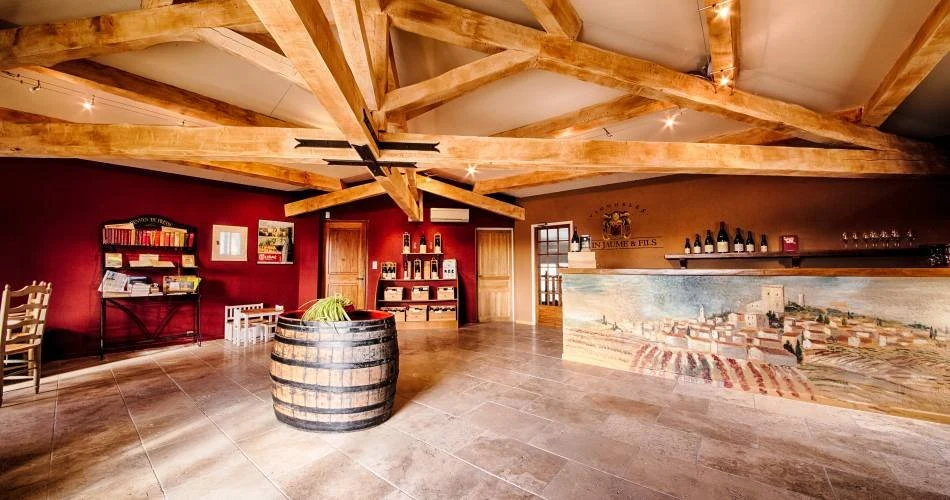
The Gard stone cellar sets the tone before the wines do: rustic rather than polished, built for people who want to understand why this corner of the southern Rhône tastes the way it does. In Orange, where Châteauneuf-du-Pape prestige can easily flatten nuance into label-hunting, Mas de Boislauzon is more useful as a study in borders, parcels and family continuity. The estate works across Châteauneuf-du-Pape AOC and Côtes du Rhône Villages AOC, with a production footprint of about 34 hectares under vine and a cellar-door format that keeps the emphasis on vineyard explanation rather than theatre.
Châteauneuf-du-Pape through a parcel mosaic, not a single postcard view
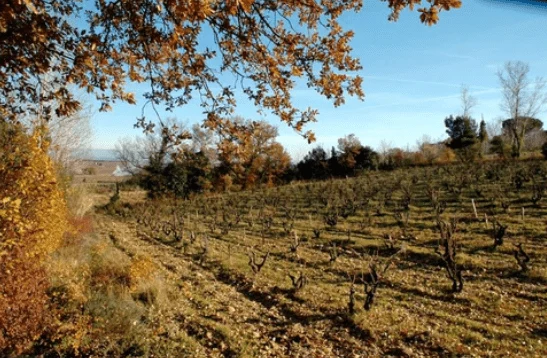
The stronger reading here is terroir before brand. The estate’s holdings sit around Orange and the Boislauzon district, with Châteauneuf-du-Pape parcels distributed across named sectors including Cabrières, Boislauzon, La Gardiole, Palestor, Pignan and Les Brusquières. That spread matters because Châteauneuf-du-Pape is not one soil type or one expression. Sand, loam, limestone, stones, pebbles and clay all enter the equation, and the estate’s wines come from that mixed geography rather than from a simplified idea of the appellation.
Grenache and Mourvèdre carry the red-wine identity, supported by Syrah and Carignan, while Roussanne and Clairette place the whites in the classic southern Rhône register. The oldest Mourvèdre vines reach more than 70 years of age, a meaningful detail in a region where old-vine material can bring density, structure and savory depth to blends. The farming credential is also clear: the vineyards have been certified organic since 2012 and are worked biodynamically. In practical terms, that puts the estate in the Rhône camp where farming is treated as a central quality argument, not a decorative sustainability line.
The portfolio evidence points to a house language built around Grenache-Mourvèdre variation rather than radical reinvention. The 2016 Châteauneuf-du-Pape red was noted as 70% Grenache and 30% Mourvèdre, aged in stainless steel and oak barrels, and scored 92+/100 from Social Vignerons. The same vintage of Tintot shifted the balance to 85% Mourvèdre and 15% Grenache, scoring 92/100, while Cuvée du Quet moved to 80% Grenache and 20% Mourvèdre, also at 92/100. Those figures are useful not as trophy language, but because they show a producer using the same regional grammar to produce different structural outcomes.
A family cellar where education is part of the format
Family continuity gives the estate its rhythm. Daniel and Christine Chaussy are associated with the sixth generation of the family at the property, and the estate traces its modern identity to a long-running family holding rather than a recent acquisition model. The point is not biography for its own sake; in Châteauneuf-du-Pape, generational stewardship often explains why a property has parcels in several sectors, mature vine material and a working relationship with both appellation and village-designated land.
The tasting experience follows that same grounded line. The format includes bar tastings, guided tastings and estate visits, with French and English available. The setting is small in scale, conversational in noise level, and practical in layout: on-site parking, accessible parking, wheelchair access, a children’s play area and cellar displays of winemakers’ tools make the visit more approachable than many prestige-region tastings. Tour duration sits around 60 to 90 minutes, which is the right scale for guests who want appellation context without turning the day into a seminar.
Food pairing is not the point here. The stronger reason to come is to connect the glass to the vineyard map: why Mourvèdre behaves differently from Grenache, why mixed soils matter, and why a producer can work across Châteauneuf-du-Pape, Côtes du Rhône Villages and Vin de France without losing a coherent southern Rhône identity. For travellers building a wine-led day in Orange, this is a good counterweight to purely retail-led tastings because the visitor setup gives enough structure to learn something, while staying informal enough for families and small groups.
How to place it in an Orange wine itinerary
Orange works well as a base for appellation-focused tasting because the city gives access to Châteauneuf-du-Pape without forcing every stop into the same register. Mas de Boislauzon suits travellers who care about organic farming, old-vine Mourvèdre, Grenache-led blends and a cellar-door experience with educational depth. Reservations are recommended, and the visit type is by reservation, so planning ahead is the sensible move, especially for guided formats or groups.
For a broader local edit, use Our full Orange wineries guide, then balance the trip with Our full Orange restaurants guide, Our full Orange hotels guide, Our full Orange bars guide and Our full Orange experiences guide. Nearby winery reading includes Château Maucoil, Domaine de Ferrand, Domaine de la Vieille Julienne, Domaine de Marcoux and Domaine de Villeneuve. For a wider European wine trail, compare formats through A. Margaine in Villers-Marmery, Abbaye de Fontfroide in Narbonne, Abbotts & Delaunay in Marseillette, »der Steiner« Hans Steiner in Podersdorf am See and & Handwein in Mannheim.
Questions
Frequently asked
How expensive is Mas de Boislauzon?
Mas de Boislauzon is listed at a price level of $$.
The field
How it compares
| Place | Notes |
|---|---|
| Mas de Boislauzon | Quartier Boislauzon, $$ |
| Château Maucoil | Orange |
| Domaine de la Vieille Julienne | Orange |
| Domaine de Marcoux | Orange |
| Domaine Grand Veneur – Alain Jaume | Orange |
| Perrin et Fils SAS | Orange |
| Philip Shaw Wines | Orange |