Made ByWinery
Moraitis Winery
- 01CityParos, Greece
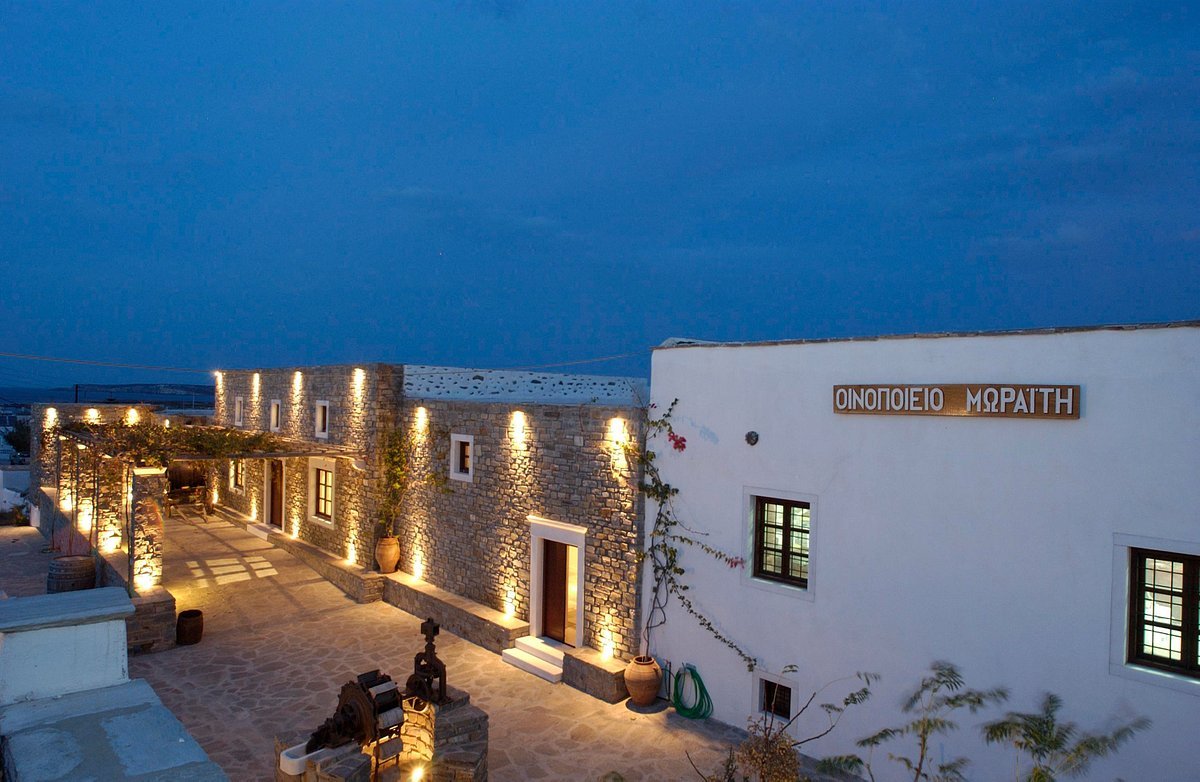
Moraitis Winery sits in the Naoussa area of Paros, producing wines from one of the Aegean's most distinctive island terroirs. The winery holds a Pearl 2 Star Prestige rating for 2025, placing it among a small tier of recognised Greek producers. For visitors exploring Paros beyond its beaches, this is a serious address on the island's wine map.
At a glance
- Price
- $$$
- Per person
- $45
- Hours
- Mon: Closed; Tue: 11 AM–7 PM; Wed: 11 AM–7 PM; Thu: 11 AM–7 PM; Fri: 11 AM–7 PM; Sat: 11 AM–7 PM; Sun: Closed
- Neighborhood
- Naoussa
- Rating
- 4.7 (430)
Cycladic Stone, Marble Soil, and the Wines They Make
Approach the Naoussa end of Paros and the landscape gives you the argument before any wine does. The terrain is spare and wind-scoured, the soil interrupted by the same white marble that made this island famous long before tourism arrived. Viticulture here is not a decorative addition to the economy; it predates most of what visitors come to see. Moraitis Winery occupies this older Paros, set along the Naoussa-Marpissa road in a part of the island where the vine rows make more visual sense than the boutique hotels that now define the coastline.
The Cyclades as a wine-producing region operate under conditions that demand adaptation. Exposure to the Meltemi winds, thin and mineral-heavy soils, and summer heat that builds without the moderating altitude of mainland Greek appellations all push grape varieties toward concentration and early aromatic development. In Paros specifically, the traditional response has been to blend: the red grape Mandilaria, which brings deep colour and tannin, historically married to Monemvasia (a white variety) to soften the wine's structure. That blending tradition, unusual by most European standards, is as much a product of the island's agricultural pragmatism as any winemaker's preference.
What the Pearl 2 Star Prestige Recognition Signals
In 2025, Moraitis Winery was awarded Pearl 2 Star Prestige by EP Club, a rating that positions the winery within a select bracket of Greek producers receiving formal critical recognition. For context, EP Club ratings function as a curatorial signal rather than a purely numerical score: they identify venues that deliver meaningfully against a quality threshold, not simply those with high production volume or marketing presence. A 2 Star Prestige designation in this system indicates a producer operating with consistency and intent, placing Moraitis alongside a relatively small number of island wineries nationally that receive this level of external assessment.
Greece's wine scene has shifted considerably over the past two decades. The generation of producers who studied in France or Germany and returned to apply continental techniques to indigenous varieties has matured, and a second generation is now making decisions about how much of that international framework to retain versus how much to let the local terroir dictate. Island producers, including those on Paros, tend to operate at a further remove from the prestige appellations of the Peloponnese or northern Greece, but that distance has increasingly read as differentiation rather than disadvantage. Producers from Alpha Estate in Amyntaio to Aidarinis Winery in Goumenissa demonstrate how geographically distinct appellations across Greece are building individual identity rather than competing against a single national benchmark. Moraitis fits that pattern from its Cycladic vantage point.
Island Terroir as the Defining Variable
The editorial case for Paros wine rests almost entirely on terroir specificity. The marble and schist subsoils contribute measurable mineral expression to whites; the Meltemi, which arrives with regularity through the summer growing season, slows ripening and preserves acidity in a way that continental heat alone would eliminate. These are not abstract winemaking claims. They are observable in the wine's structure: Parian whites, particularly those based on Monemvasia, tend to carry a salinity and textural precision that connects directly to the geology underfoot.
For red wines, Mandilaria presents a different kind of challenge. The grape is deeply pigmented, naturally tannic, and prone to austerity when handled without care. Island producers who have worked longest with the variety understand that extraction must be managed conservatively, and that the wine generally benefits from time in bottle. The island's winemaking identity, built around both varieties, remains less internationally known than Santorini's Assyrtiko or Nemea's Agiorgitiko, which creates a quieter kind of appeal for visitors who have moved past the obvious Greek wine itinerary.
Comparing across Greek producers helps calibrate expectations. Acra Winery in Nemea works within a more internationally recognized appellation framework, while Abraam's Vineyards in Komninades represents a different regional expression again. The contrast underlines how fragmented and interesting the Greek wine map has become when read at the regional rather than national level. Moraitis, reading from the Cycladic side of that map, occupies a distinct address within it.
Visiting Moraitis: Practical Considerations
Moraitis Winery is located on the Epar. Od. Naoussas-Marpissas road in the Naoussa area (postal code 844 01), a position that places it within reasonable distance of Naoussa village and accessible by car from Parikia, the island's main port. Paros is served by ferry from Piraeus and by a regional airport with seasonal connections, meaning the winery sits at the end of a direct island journey rather than a complicated logistical sequence.
Phone and website details are not confirmed in current records, so direct contact details should be verified locally or through current listings before visiting. The same applies to specific visiting hours and tasting formats: Cycladic wineries of this scale often operate seasonally and sometimes by appointment, and confirming arrangements before arrival saves the kind of wasted journey that recurs in island travel when visitors assume mainland operating norms. For a fuller view of where Moraitis sits among Paros's food and drink addresses, the island's producers can be explored in detail through related guides.
Those building a broader Greek winery itinerary can extend the comparison set considerably. Achaia Clauss in Patras represents a very different historical scale and style. Aiolos Winery in Palaio Faliro and Akrathos Newlands Winery in Panagia sit in their own distinct regional positions. For those whose itinerary extends beyond Greece entirely, Abadía Retuerta in Sardón de Duero and Anatolikos Vineyards in Xanthi offer comparative reference points across European wine traditions. And for something at the other end of the spectrum entirely, Aberlour in Aberlour makes the point that serious production and a specific landscape have driven quality recognition far beyond wine.
Back on Paros, visitors who want more than the winery itself can explore the island's other dimensions through related guides, which together give a fuller picture of the island beyond the summer beach circuit.
Know before you go
- Dress code
- casual
- Reservations
- recommended
- Parking
- street
- Outdoor seating
- Yes
- Groups
- Welcomed
Frequently asked
What kind of setting is Moraitis Winery?
Moraitis Winery sits on the Epar. Od. Naoussas-Marpissas road in the Naoussa area of Paros, a spare, wind-exposed stretch of the Cyclades where the terrain does most of the explaining. The surroundings are working agricultural land rather than manicured estate grounds — stone, marble subsoil, and the Aegean light that shapes everything grown here. It is the kind of place that rewards visitors who arrive for the wines rather than the scenery.
Where do I go for Moraitis Winery?
Moraitis Winery is located at Epar. Od. Naoussas-Marpissas, Naousa 844 01, Paros, Greece, Paros.
What recognition does Moraitis Winery have?
Moraitis Winery has received recognition including: Pearl 2 Star Prestige (2025).
What's the must-try wine at Moraitis Winery?
What the Pearl 2 Star Prestige recognition from EP Club in 2025 does signal is that the winery's output from Paros's marble and schist soils has earned a position within a select bracket of Greek producers. Ask the winery directly at the time of your visit for the release they consider most representative of the current vintage.
What's the defining thing about Moraitis Winery?
The defining factor is terroir specificity. Paros sits on marble and schist subsoils that impart a measurable mineral character distinct from the volcanic profiles of Santorini or the continental soils of Nemea. That geological argument, expressed consistently enough to earn a Pearl 2 Star Prestige rating from EP Club in 2025, is what separates Moraitis from producers working in less geologically distinctive ground.
Do they take walk-ins at Moraitis Winery?
Walk-in policies are not confirmed in current records for Moraitis. The winery is located on the Epar. Od. Naoussas-Marpissas road in Naoussa, Paros (844 01), and visiting during shoulder or peak season without prior contact carries risk of unavailability. Contacting the winery directly before arrival is the sensible approach, particularly given its Pearl 2 Star Prestige standing, which draws a more deliberate visitor than casual passing trade.
Why is Moraitis Winery considered one of Paros's serious wine producers?
EP Club awarded Moraitis Winery a Pearl 2 Star Prestige in 2025, placing it among a select tier of Greek wine producers recognised for consistent quality and terroir expression. Paros remains less internationally profiled than Santorini despite comparable geological complexity, which means a producer earning formal recognition there is doing so without the marketing infrastructure that drives attention to more famous Aegean appellations. That combination of marble-soil specificity and independent editorial validation is what positions Moraitis as a reference point for serious Greek island wine.
Address
Epar. Od. Naoussas-Marpissas, Naousa 844 01, Paros, Greece
Naoussa
How it compares
Moraitis Winery
- Awards
- 1 recognition
- Notes
- Naoussa, Malagousia, Assyrtiko
Venetsanos Winery
- Awards
- 1 recognition
- Notes
- Megalochori, Assyrtiko, Nykteri
Artemis Karamolegos Winery
- Awards
- 1 recognition
- Notes
- Exo Gonia, Assyrtiko, Aidani
Agathangelou Distillery
- Awards
- 1 recognition
- Notes
- Winery
Vassaltis Vineyards
- Awards
- 1 recognition
- Notes
- Vourvoulos, Assyrtiko, Aidani
Domaine Skouras
- Awards
- 1 recognition
- Notes
- Nemea, Agiorgitiko, Moschofilero