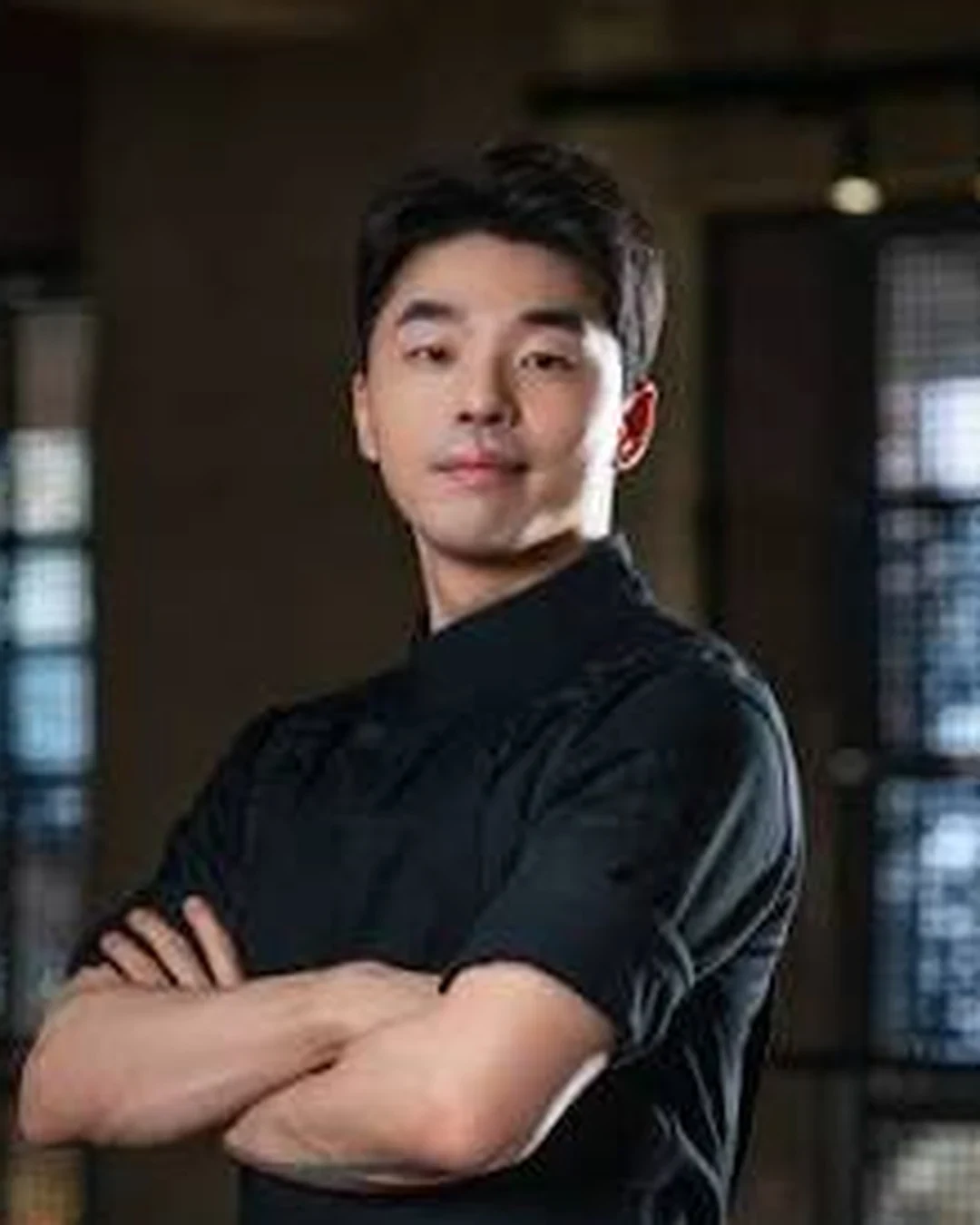
Chef Tom Ryu leads Nabi in Changning, Shanghai, shaping a modern Korean tasting menu around sea, leaf and noodle at the counter.
- Black Pearl 1 Diamond · 2026
- Opinionated About Dining Top Restaurants in Asia Recommended · 2026
Sea, leaf and noodle at the counter
Sweet shrimp, abalone sauce, sea urchin and gamtae meet in the bowl before Tom Ryu , chef at Nabi in Changning, Shanghai, lets the dish settle into its point. His language here is Korean by structure and Shanghai by daily practice: marine sweetness, saline depth, a leaf or seaweed note held close enough to give the noodle its edge without crowding it. Ryu came to Nabi after Jeju Izakaya and Jeju Sagye in Shanghai, then built his work further through P.I.E and WULI, with Nabi opening in 2024 as the sharper, more composed expression upstairs at WYSH on Wuyi Lu. The cooking is inventive Korean, but the force comes from restraint. Each element has to earn its place, especially in dishes that carry luxury ingredients without letting them become the argument.
A menu built through import and restraint
Ryu’s method at Nabi begins before the pass. He started his own import company to bring in lesser-seen ingredients from Korea, a practical move that gives the kitchen access to products that can define flavor rather than decorate it. That control shows in the tasting menu’s sequence: Bumbeok with corn, glutinous rice and minari; Juk with abalone, truffle and carabinero shrimp; Muchim with Brittany blue lobster, black garlic, eggplant and self-imported persimmon vinegar. Myeon brings Korean noodles together with gamtae and Dalian sea urchin, while Guyi sets UYYU wagyu M8/9 striploin beside jang condiments. Bap & Guk gathers sea cucumber, shrimp, abalone and lobster with seafood rice, banchan and a beef, squid, tofu and fermented chili paste broth. The restaurant has worked in named menu cycles: a second menu running until August, a third menu launching in September. That cadence matters. It gives the bench a way to test texture, season and sourcing without turning the meal into a fixed display case.
The black room and the open pass
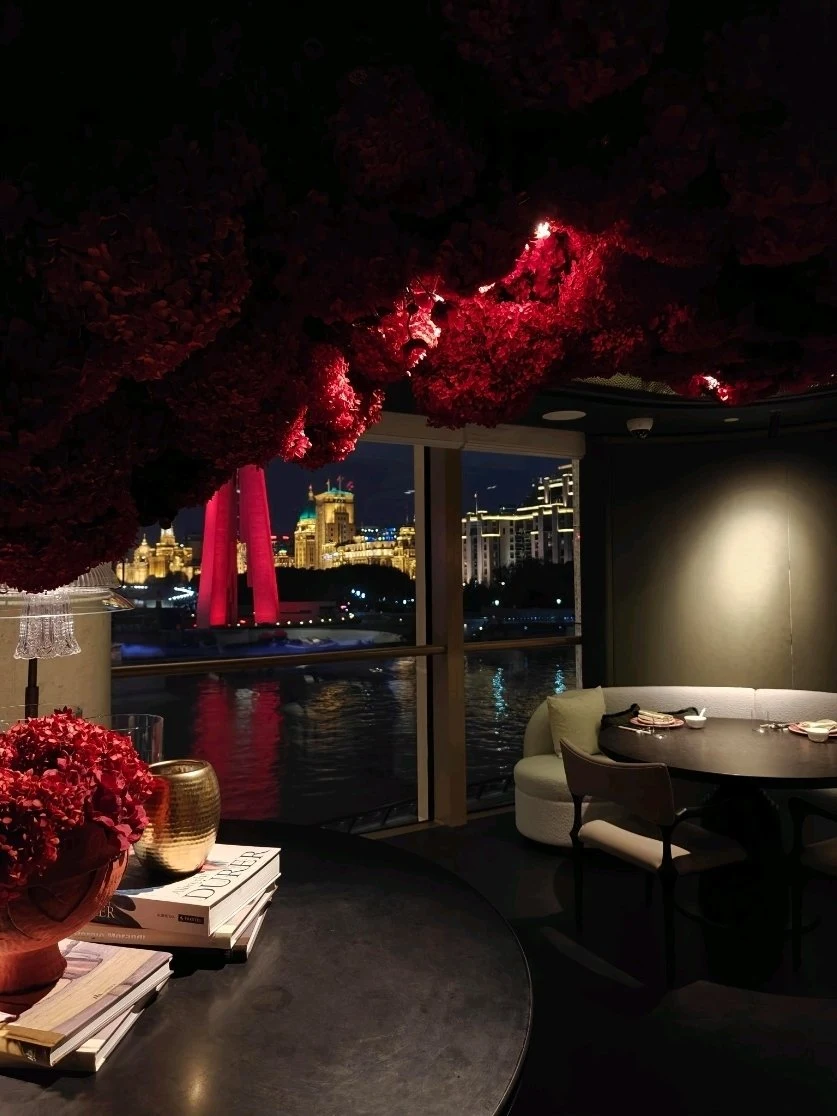
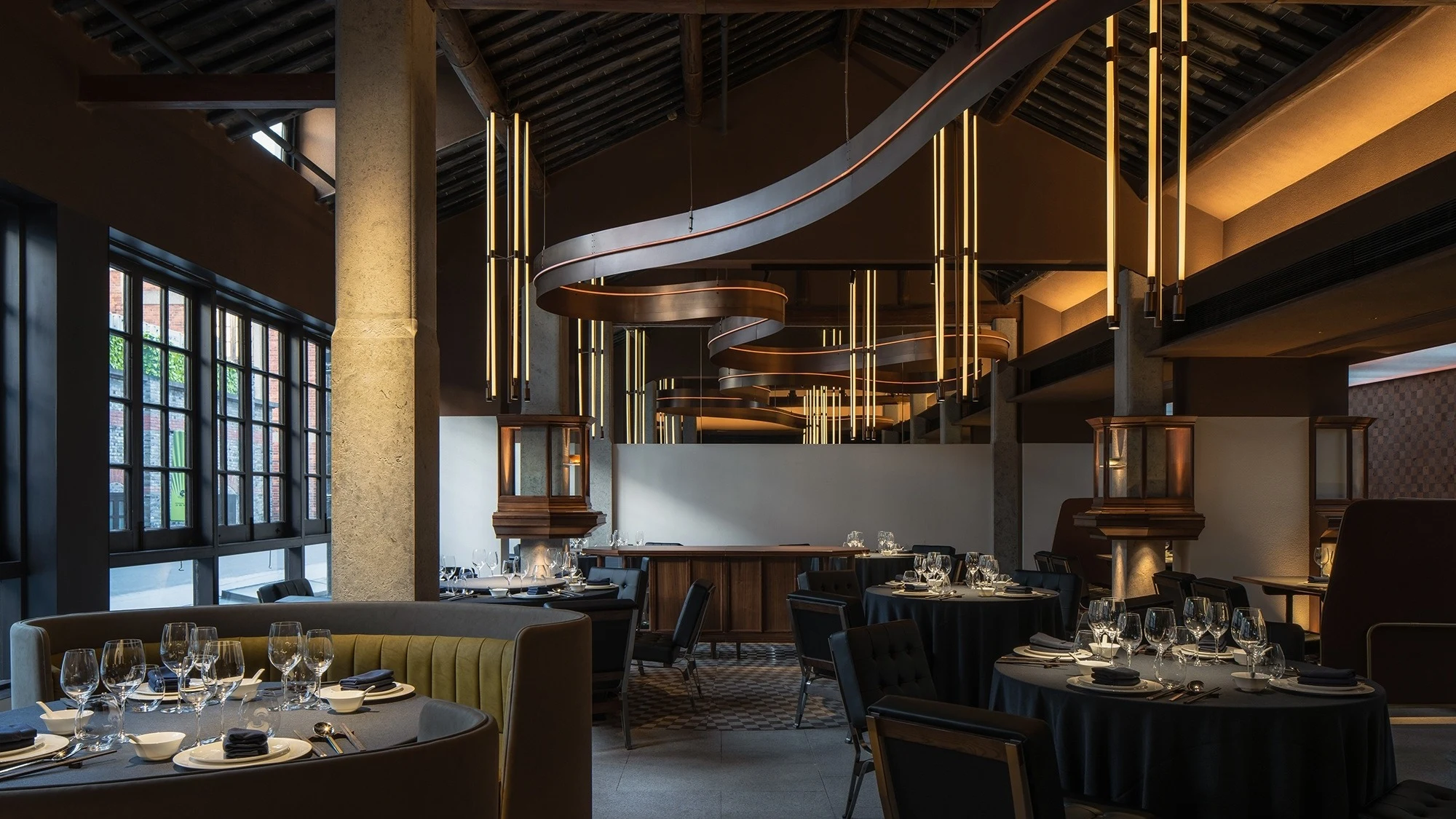
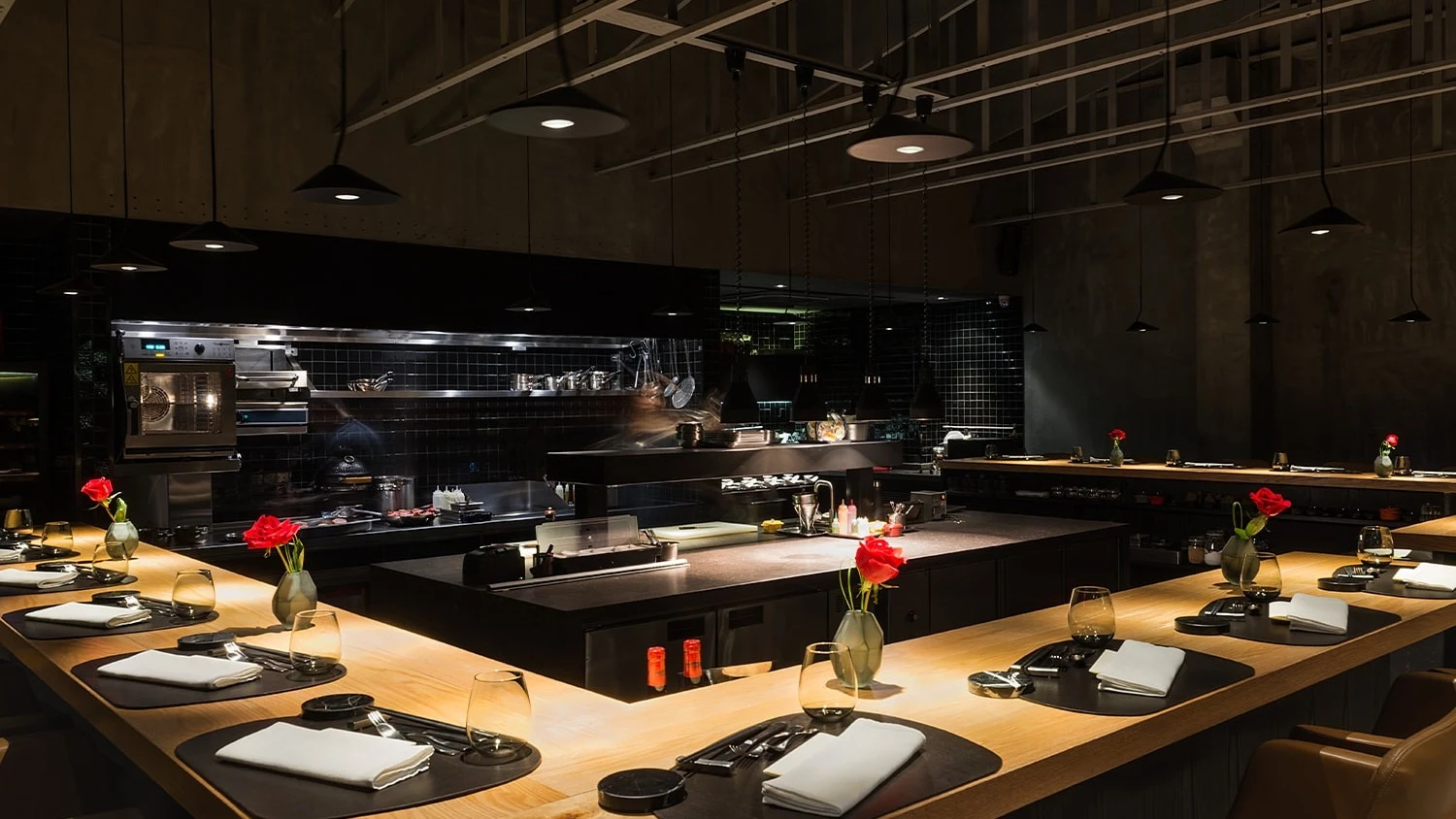
The room keeps its light low. Nabi sits on the second floor of WYSH, above WULI, and the all-black interior draws attention toward the imposing counter and the open kitchen rather than away from them. Service moves with formal timing, but the room stays intimate enough for the pass to read as a working station, not a distant stage. Ryu has been described moving through the dining room to introduce dishes himself, which places the maker inside the service rather than behind it. Park, the sommelier, carries the beverage side with a Korean drinks pairing and wine in the rhythm of the meal. The effect is controlled, but not sealed. At the counter, the guest watches the sequence tighten: broth, noodle, jang, gamtae, caviar, rice.
The change is built into the cycle
Nabi’s future is not framed as expansion here; it is already inside the seasonal menu. Ryu has made change part of the operating method, with one menu giving way to the next rather than the kitchen protecting a single set of signatures. That makes the room less about permanence than repetition under pressure, the same hands returning to abalone, sea urchin, minari and jang with a different decision each cycle. For now, the clearest marker is still the bowl where Myeon carries Korean noodles, gamtae and Dalian sea urchin.
Questions
Frequently asked
Who is behind Nabi?
Chef Tom Ryu leads Nabi in Changning, Shanghai. He came to the restaurant after work at Jeju Izakaya and Jeju Sagye in Shanghai, then built further through P.I.E and WULI.
What kind of restaurant is it?
Nabi is a modern Korean tasting menu restaurant in Changning. The cooking is organised around sea, leaf and noodle at the counter, with an open kitchen and a low-lit room upstairs at WYSH on Wuyi Lu.
What are some of the dishes on the menu?
The tasting menu has included Brittany blue lobster with burnt eggplant, black garlic and caviar, Juk with abalone, truffle and carabinero shrimp, Myeon with Korean noodles, gamtae and sea urchin, Guyi with UYYU wagyu M8/9 striploin and jang condiments, and Bap & Guk with seasoned seafood rice, banchan and a beef-squid broth.
What should a booking at Nabi be like?
Reservations are essential, and the dress code is smart casual. The restaurant sits in the $$$$ price tier, with an approximate spend of $200 per person.
The field
How it compares
| Place | Cuisine | Notes | Awards |
|---|---|---|---|
| Nabi | Modern Korean Tasting Menu | Changning, $$$$ | · |
| 8 1/2 Otto e Mezzo Bombana (Shanghai) | Modern Italian Fine Dining | Shanghai | Michelin 2 Stars |
| Fu He Hui | Modern Seasonal Vegetarian Fine Dining | Shanghai | Michelin 2 Stars, World's 50 Best |
| Ling Long Shanghai | Modern Chinese Fine Dining | Shanghai | Michelin 1 Star, World's 50 Best |
| Meet the Bund | Modern Fujianese Fine Dining | Shanghai | Michelin 1 Star, World's 50 Best |
| Taian Table | Modern European with Asian Influences | Shanghai | Michelin 3 Stars |
| Ultraviolet by Paul Pairet | Avant-Garde French Multi-Sensory | Shanghai | Michelin 3 Stars, World's 50 Best |
In residence
Similar places
Modern Italian Fine Dining
8 1/2 Otto e Mezzo Bombana (Shanghai)
Shanghai, China
★★
Modern Seasonal Vegetarian Fine Dining
Fu He Hui
Shanghai, China
★★ · 50 Best
Modern Chinese Fine Dining
Ling Long Shanghai
Shanghai, China
★ · 50 Best
Modern Fujianese Fine Dining
Meet the Bund
Shanghai, China
★ · 50 Best
Modern European with Asian Influences
Taian Table
Shanghai, China
★★★
Avant-Garde French Multi-Sensory
Ultraviolet by Paul Pairet
Shanghai, China
★★★ · 50 Best