Nomad Marrakech
- 01CuisineModern Moroccan
- 02CityMarrakech, Morocco
The Medina's Rooftop Register
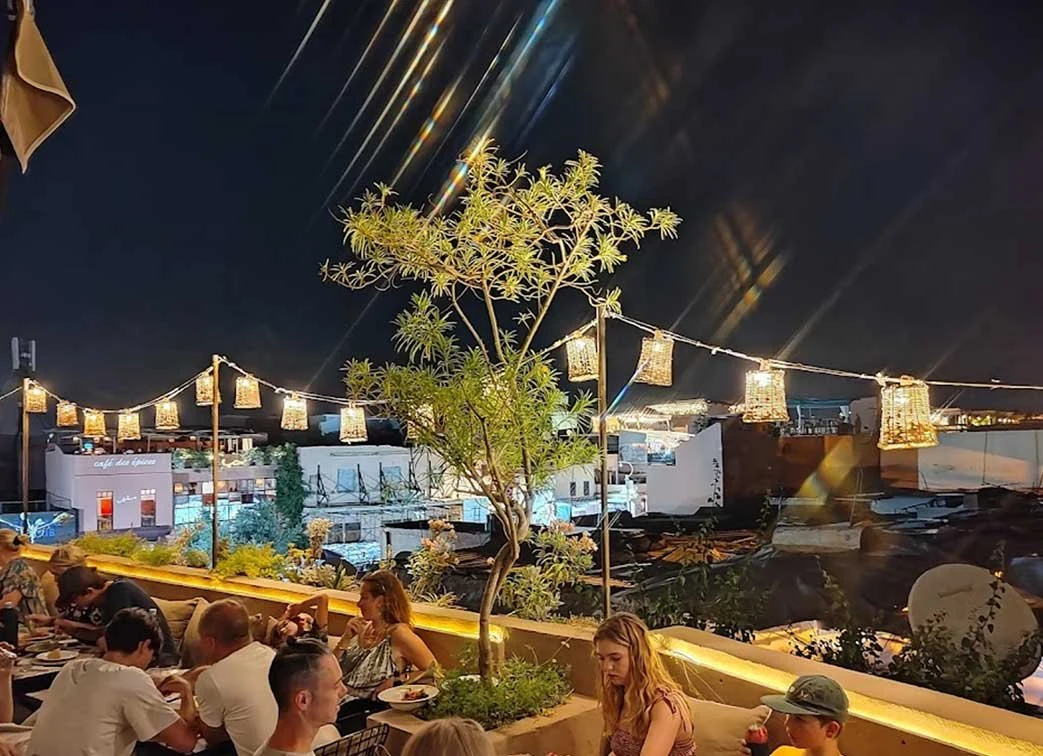
Nomad Marrakech is a Modern Moroccan restaurant in Marrakesh, Morocco, with a $35-per-person price point and a 4.0 Google rating. Marrakech's medina has developed a distinct restaurant tier over the past decade: rooftop venues that sit above the souks, drawing on Moroccan culinary tradition while addressing an international visitor who wants context alongside comfort. This tier is not the grand riad dining room of the luxury circuit, nor the street-food stall at Jemaa el-Fna. It occupies a middle register, and Nomad Marrakech, at 1 Derb Aarjane, has become one of its more closely watched addresses.
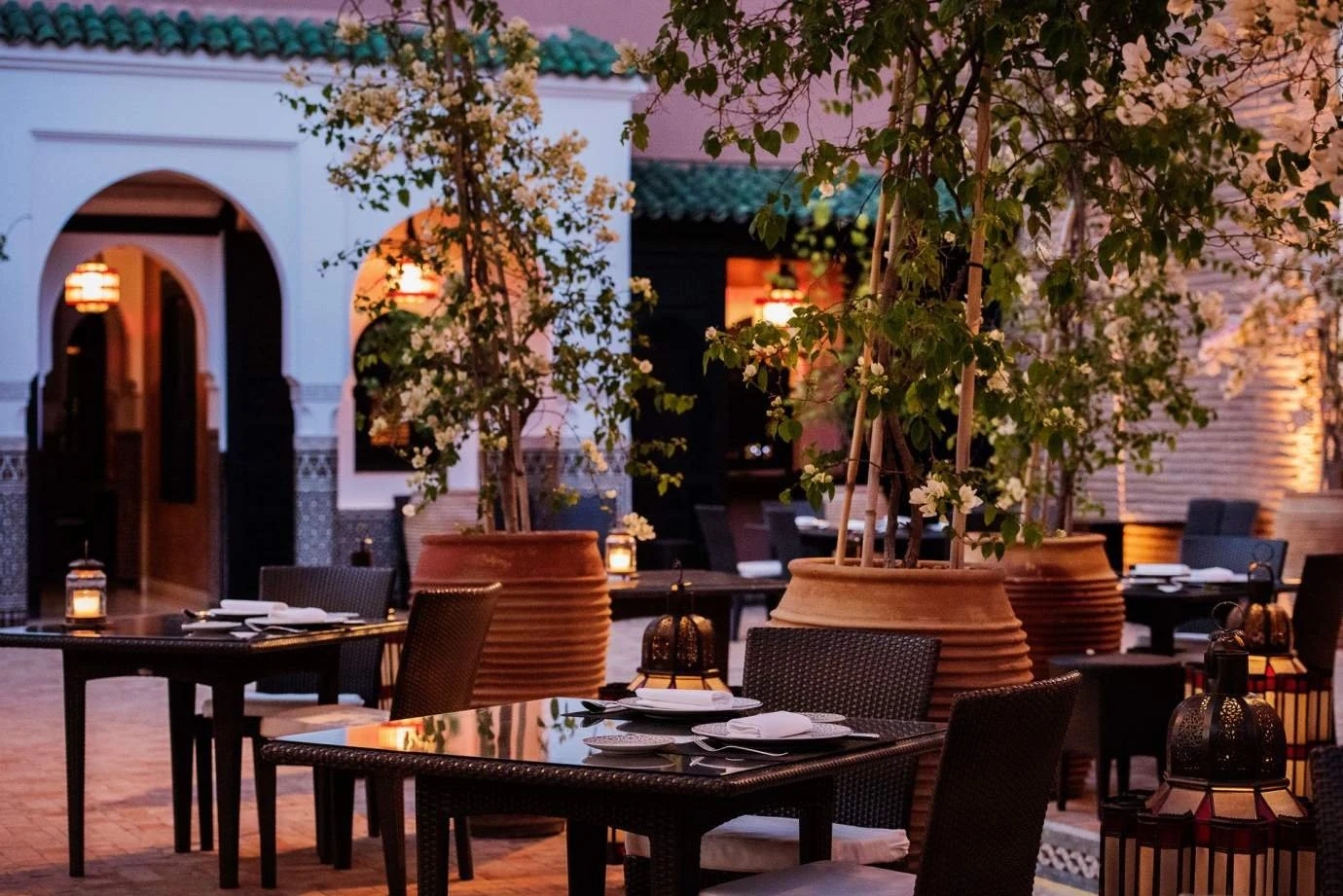
The approach from the street is characteristically medina: a narrow derb, a discreet entrance, then a vertical climb through a converted space that opens onto terraced seating above the roofline. That spatial progression, from compressed alley to open sky, is not incidental. It sets the terms of the meal before a plate arrives. The medina's soundscape, the call to prayer, the percussive noise of craftsmen in adjacent workshops, arrives softened at terrace height, which is precisely the register this kind of venue is built to exploit.
The Sunday letter
Find new places through the people who run them.
Our Sunday email brings you the chefs, winemakers and hoteliers behind our newest stories. See a sample before you subscribe.
See a sample of the Sunday emailOne email a week. Unsubscribe from any issue.
How the Menu Is Built
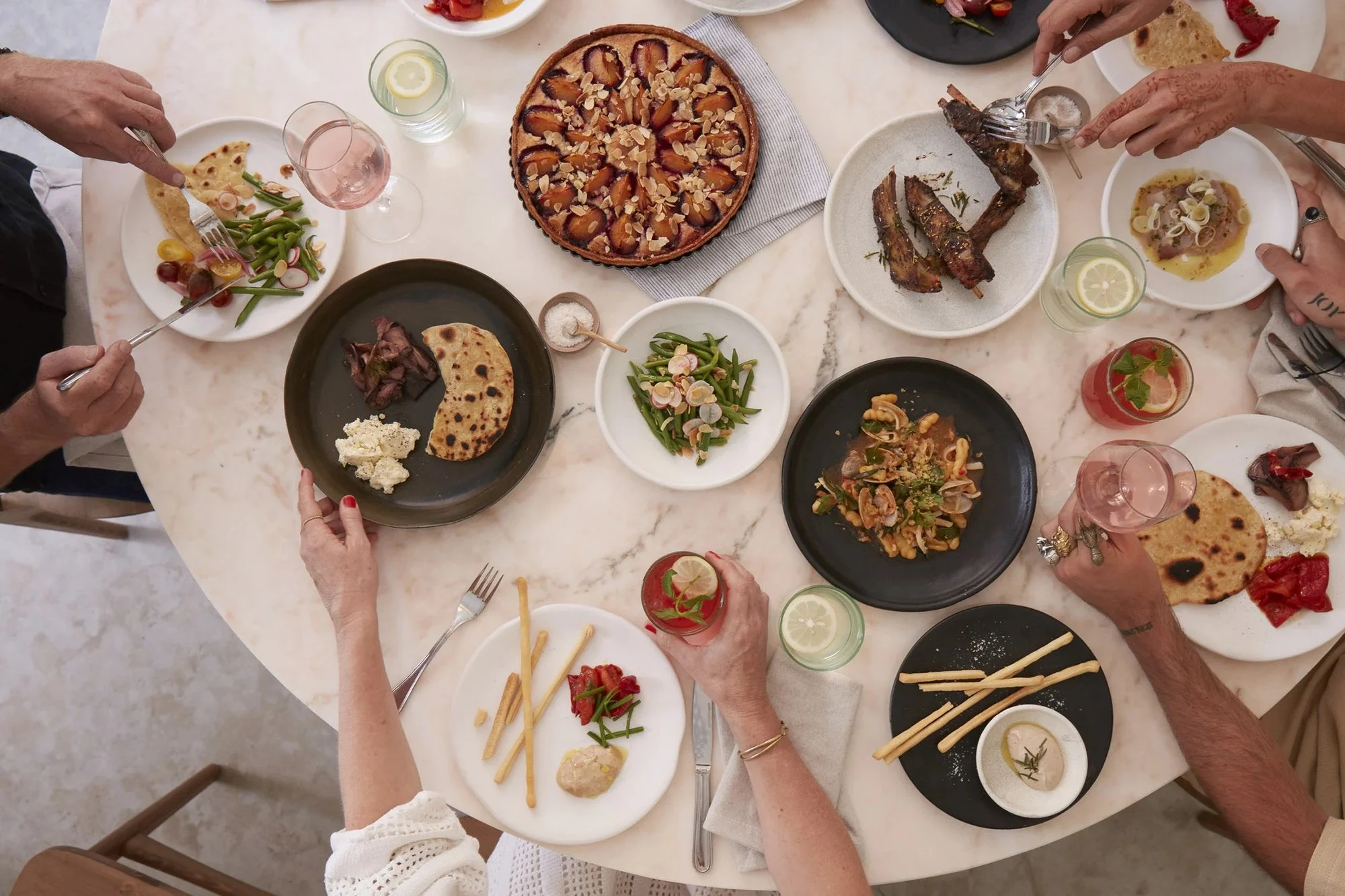
The structural logic of Nomad's menu is what separates it from the more formulaic medina dining rooms. Rather than presenting a linear procession of Moroccan classics in the order that guided tours have trained visitors to expect, the kitchen organises the offer around smaller, shareable formats, with dishes that draw selectively from Moroccan ingredient traditions without being bound to their canonical presentations.
This is a meaningful distinction in the Marrakech context. The city's middle-tier restaurants have historically defaulted to a fixed sequence: bread and dips, a pastilla or two, a central tagine, fruit and mint tea. That structure is not wrong, but it places the cuisine in a museum frame rather than a living one. A menu that instead builds around sharing plates of varied scale and composition gives the kitchen more room to make editorial choices about what Moroccan cooking can do in 2024.
The sourcing orientation skews local, with vegetables and herbs that reflect what the surrounding region grows rather than what international hotel kitchens import. This is less a philosophical statement than a practical one in a city where the weekly souks still function as genuine supply chains. Venues in Marrakech that build menus around local seasonal produce are working with real constraints and real advantages simultaneously, and the results tend to read more honestly on the plate.
Within Morocco's restaurant scene more broadly, this approach to menu architecture sits somewhere between the formal grandeur of La Grande Table Marocaine and the stripped-back, produce-first ethos of La Famille, another medina address that has built its reputation on similar sourcing principles. The difference is in tone: Nomad skews slightly younger, slightly more urban in its presentation, while La Famille leans harder into the garden-to-table register.
Where Nomad Sits in the Marrakech Dining Picture
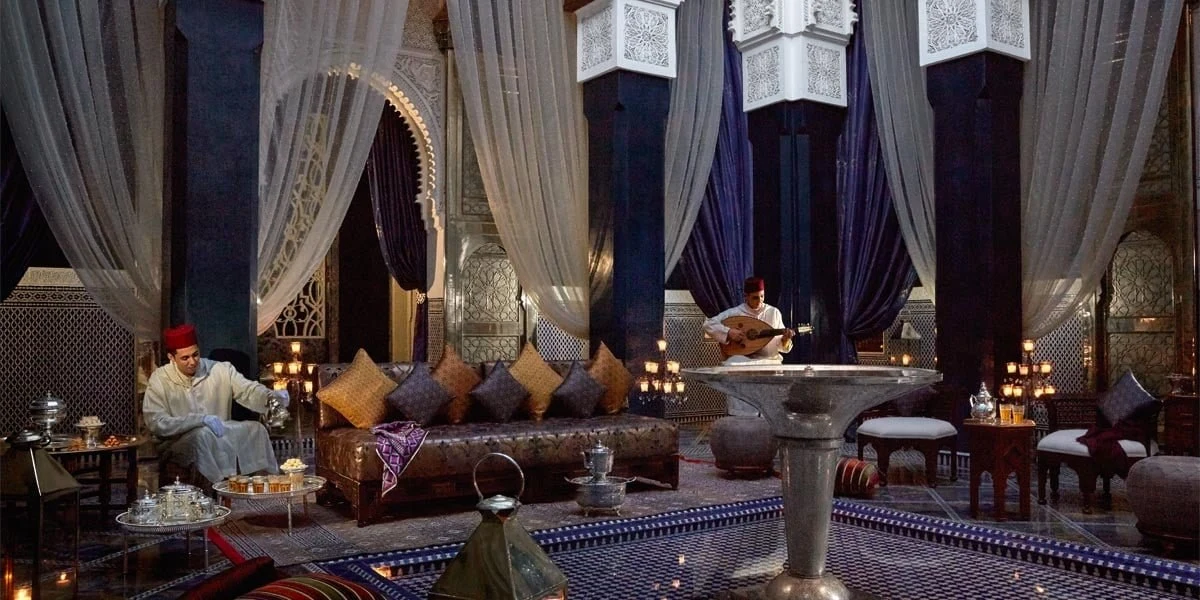
The Marrakech restaurant scene has fragmented considerably from the period when a handful of riad dining rooms and tourist-facing tagine houses accounted for almost everything. There are now at least three recognisable tiers operating in parallel: the luxury hotel and palace category, represented by addresses like La Grande Table Marocaine at Royal Mansour; the neighbourhood Gueliz bistro set, which includes addresses like Grand Café de la Poste and the social mission-led Amal Gueliz Center; and the medina rooftop tier, where Nomad has established a position.
Each tier draws a different peer comparison. The rooftop medina tier competes primarily on setting, menu coherence, and the degree to which it can give visiting diners a legible but non-reductive account of Moroccan cooking. Nomad has built its recognition partly on doing that reasonably well, without tipping into the kind of Instagram-optimised superficiality that has compromised some of its neighbours.
For comparison across Morocco's cities, the challenge of presenting regional cuisine to an international audience while maintaining kitchen integrity appears at different venues in different forms. Cafe Clock in Fes navigates a similar brief in a different medina context, while Andalus in Tangier operates within a city whose culinary identity is shaped by its proximity to Andalusian and Mediterranean traditions rather than the Atlas and desert influences that mark Marrakech. The challenge is city-specific, but the structural question is the same: how much do you adapt, and how much do you preserve?
Beyond Morocco, the broader conversation about how contemporary kitchens engage with traditional culinary architecture connects to venues working at very different price points and latitudes, from Le Bernardin in New York City, where classical French technique shapes every menu decision, to Lazy Bear in San Francisco, where the communal format is itself the editorial statement.
Practical Considerations for the Medina Visit
Reaching 1 Derb Aarjane requires either a confident reading of medina geography or a willingness to ask directions in the final hundred metres. The derb system does not reward maps in the conventional sense. Most visitors arrive on foot from the direction of the Mouassine mosque or from the central medina arteries near the souks, a walk of ten to fifteen minutes from the main northern entrance to the old city. Taxis drop at the nearest point a vehicle can reach, which leaves a short walk regardless of approach.
The rooftop orientation means the experience differs materially by time of day. Lunch, with the medina's ambient noise at full pitch and direct light on the terrace, is a different proposition from early evening, when the temperature drops and the city transitions between its afternoon and night registers. Both have their advocates. The evening sitting tends to book ahead more reliably, particularly during peak travel months from October through April, when Marrakech draws the largest volume of European visitors. Marrakech's summer heat between June and August means rooftop dining is most comfortable after sunset during those months.
Elsewhere in the region, Le Salon Oriental in Essaouira represents the coastal equivalent of the medina rooftop format, while BÔ ZIN in Tassoultante takes a different approach entirely, operating as a garden destination south of the city. Le Bistro Arabe in the medina adds a live music dimension that shifts its register away from pure dining focus.
Questions
Frequently asked
How expensive is Nomad Marrakech?
Nomad Marrakech is listed at a price level of $$$$.
Where is Nomad Marrakech and what does it serve?
Nomad Marrakech is in Marrakech-Médina, Marrakech, serving Modern Moroccan.
The field
How it compares
| Place | Cuisine | Notes | Awards |
|---|---|---|---|
| Nomad Marrakech | Modern Moroccan | Marrakech-Médina, $$$$ | · |
| +61 | Modern Australian Fusion | Marrakech | World's 50 Best |
| Kato | Modern Taiwanese Fine Dining | Los Angeles | Michelin 2 Stars, World's 50 Best |
| La Grande Table Marocaine | Traditional Moroccan Fine Dining | Marrakech | World's 50 Best |
| Le Marocain - La Mamounia | Traditional Moroccan | Marrakech | · |
| Le Petit Cornichon | Modern French Bistronomique | Marrakech | World's 50 Best |
| Sesamo | Modern Italian Fine Dining | Marrakech | World's 50 Best |
Similar places
Modern Australian Fusion
+61
Marrakech, Morocco
50 Best
Modern Taiwanese Fine Dining
Kato
Los Angeles, United States
★★ · 50 Best
Traditional Moroccan Fine Dining
La Grande Table Marocaine
Marrakech, Morocco
50 Best
Traditional Moroccan
Le Marocain - La Mamounia
Marrakech, Morocco
Modern French Bistronomique
Le Petit Cornichon
Marrakech, Morocco
50 Best
Modern Italian Fine Dining
Sesamo
Marrakech, Morocco
50 Best
The Sunday letter
Get the next Made By story in your inbox.
We send one email every Sunday morning with the places and people we covered that week.
See a sample of the Sunday emailOne email a week. Unsubscribe from any issue.