Olmo
- 01CuisineModern Italian Fine Dining
- 02CityCornaredo, Italy
- 03RecognitionOne Michelin Star
- 1 Michelin Star · Michelin Guide
- Michelin 1 Star · 2026
- Michelin 1 Star · 2025
- Opinionated About Dining Top Restaurants in Europe Ranked #413 · 2025
- Michelin 1 Star · 2024
A Small Square, a Large Elm, and Fourteen Seats
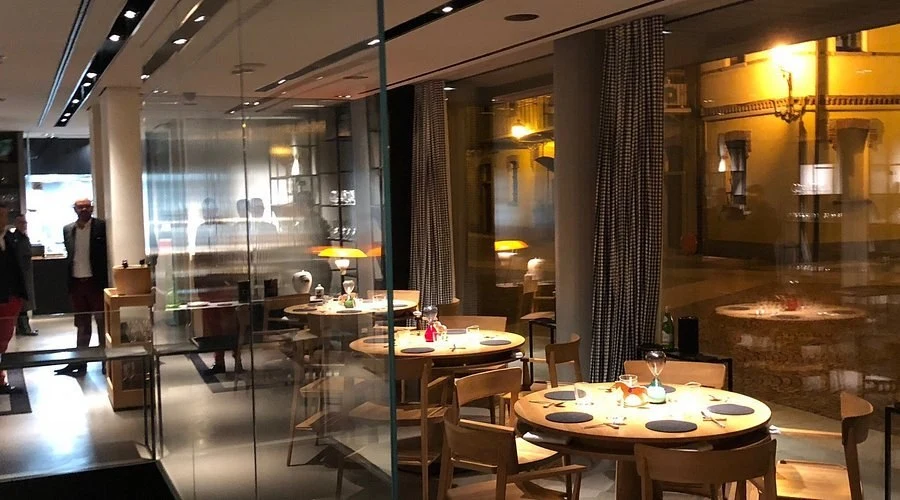
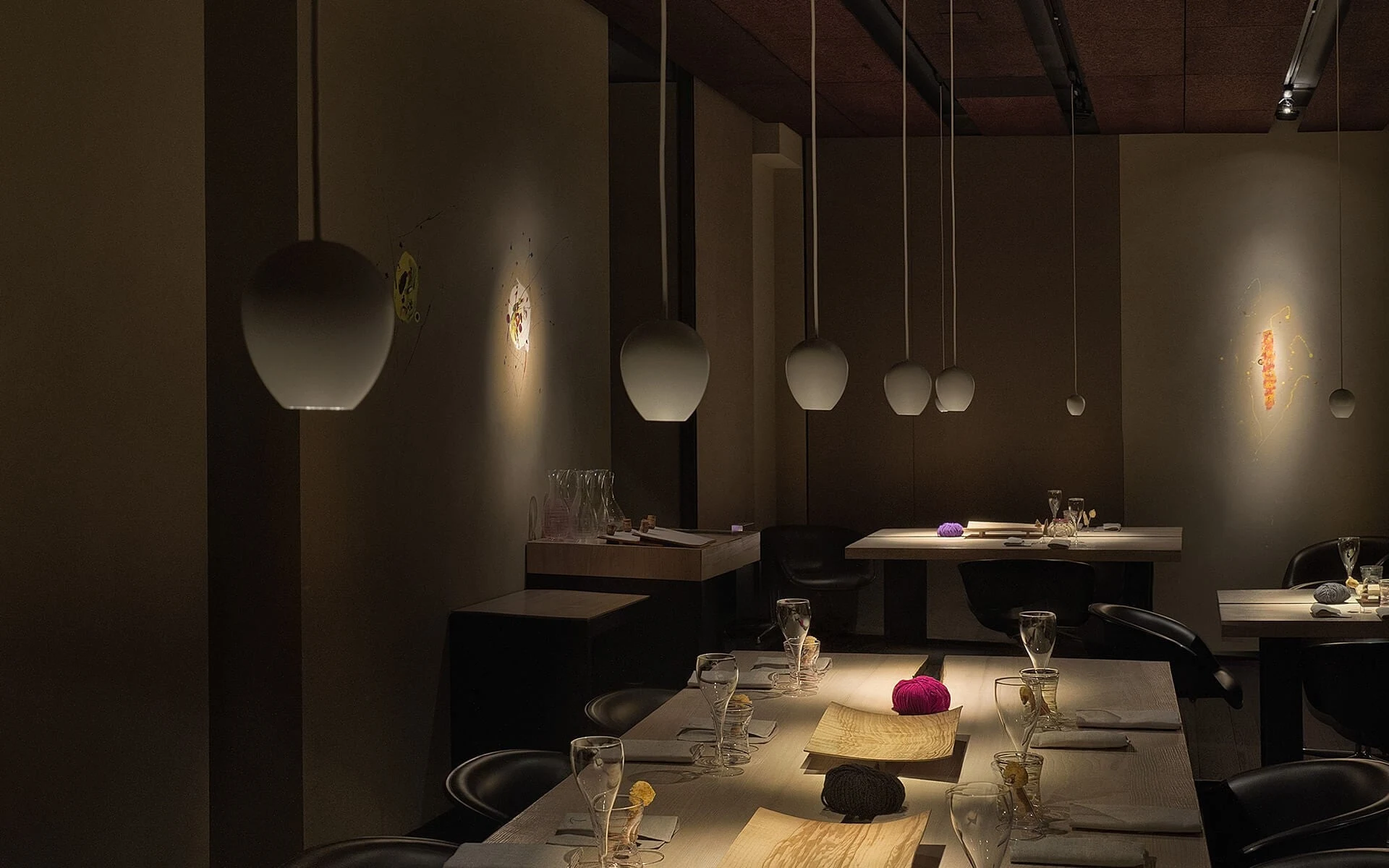
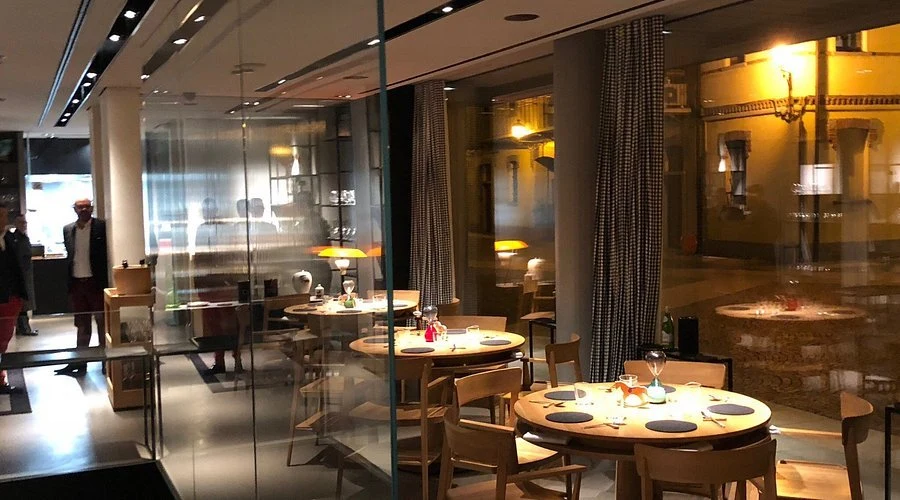
Olmo is a one-star Michelin restaurant in Cornaredo, Italy, serving modern Italian fine dining at about €125 per person. Positioned on Milan's western fringe, the town's modest central piazza is anchored by an elm tree, the olmo in Italian, that gives the restaurant its name and its coordinates. The piazza is pedestrianised, which means arriving at Olmo involves a short walk from wherever you leave your car or step off public transport: you approach the square on foot, past low residential facades, before the open-view kitchen becomes visible through the glass. The physical approach is part of the frame. At fourteen maximum covers across just three tables, this is a room designed to function at the scale of a private dinner, not a restaurant in the conventional sense.
That scale places Olmo in a specific and increasingly deliberate tier of Italian fine dining. Across the country, a cohort of high-end modern cuisine addresses has moved toward tighter seat counts as a way of controlling quality, sourcing precision, and the pacing of service. Dal Pescatore in Runate and Le Calandre in Rubano operate at larger scale but with comparable commitments to seasonal ingredient sourcing. Olmo takes that logic further by compressing the dining room to a point where every decision, what is on the plate, where it came from, how it reads on the palate, is magnified by the intimacy of the space.
Where the Ingredients Come From, and Why That Matters Here
Modern Italian cuisine at the €€€€ tier has divided into at least two identifiable camps. The first draws on deep regional tradition, treating Italian larder staples, aged cheese, cured meat, preserved vegetables, dried pasta, as the fixed reference points around which creativity operates. The second uses Italy's agricultural density as a starting point for a broader seasonal conversation, one that might include French technique, Nordic influence, or simply an insistence on produce at peak moment rather than produce defined by region. Olmo sits in the second camp.
The tasting menu's stated philosophy, seasonal ingredients, balance, and a considered play between texture and temperature, is a working description of sourcing-led cooking rather than a stylistic flourish. When a kitchen has three tables and no ability to absorb waste at volume, the selection of what comes through the back door is not peripheral to the restaurant's identity: it is the identity. The six-course format is long enough to demonstrate a coherent seasonal argument but short enough to prevent the kind of late-menu fatigue that plagues longer tasting formats. A three-course option at lunch offers the same sourcing discipline at a more accessible entry point, which, for a €€€€ address, is worth noting.
Italy's modern cuisine restaurants that have made sourcing their editorial thread tend to reward repeat visits across the year more than those built around a static signature dish repertoire. Reale in Castel di Sangro and Piazza Duomo in Alba operate on similar seasonal logic at higher capacity. At Olmo's scale, the seasonal turn is felt more sharply: when fourteen people are eating at a given moment, the kitchen's relationship to what is available that week is direct in a way that larger operations cannot replicate.
Chef Training and What It Signals About the Kitchen
Resident chef Riccardo Merli's training in French restaurants before returning to Olmo is evident in the kitchen's focus on ingredient quality, texture, and temperature contrast. French kitchens at the serious end of the spectrum teach a specific relationship to ingredient quality, the ability to assess produce on arrival, to understand what preparation reveals or obscures, and to build texture and temperature contrast deliberately rather than decoratively. That training is legible in Olmo's stated approach, where the interplay between texture and temperature is described as an intentional design element rather than a byproduct of cooking.
The broader Italian modern cuisine circuit has absorbed French classical training at multiple levels. Enrico Bartolini in Milan and Enoteca Pinchiorri in Florence represent the Italian-French synthesis at the highest tier. Olmo positions itself in that tradition without requiring the reader to map it against a celebrity chef résumé: the kitchen's logic is self-evident in the format it has chosen, tasting menu, open-view kitchen, maximum fourteen guests.
The open kitchen format is worth considering separately. At three tables, the kitchen is not performing for a large audience. The transparency is structural: it reinforces the sense that what is being prepared and how it is being prepared are central to the evening, not backstage mechanics hidden from the dining experience.
Olmo Within the Milan Periphery Dining Circuit
Assumption that serious Italian cooking clusters inside major city centres has been challenged over the past decade by a pattern of destination restaurants establishing themselves in smaller towns within commuting distance of Milan, Florence, or Bologna. Cornaredo itself is home to D'O, the address associated with Davide Oldani, whose involvement with Olmo gives the restaurant its founding context. That two significant modern cuisine addresses exist within the same small town is a function of deliberate relocation rather than coincidence: lower property costs, quieter operating environments, and a self-selecting audience willing to travel for the table are all factors that make this model viable.
Olmo's 2025 ranking of 413th among Opinionated About Dining's leading restaurants in Europe is a useful competitive coordinate. That list covers thousands of addresses across a continent with the highest density of serious restaurants in the world. Presence at that rank for a fourteen-seat restaurant in a Milanese suburb signals that the kitchen is operating above its weight class relative to its physical footprint. For comparison, entries from Italy in the same list's upper reaches include addresses like Osteria Francescana in Modena, Uliassi in Senigallia, Quattro Passi in Marina del Cantone, and Atelier Moessmer Norbert Niederkofler in Brunico, all operating at larger scale or with longer-established track records. For visitors arriving from Stockholm or Dubai, comparable modern cuisine formats at this level of intimacy can be found at Frantzén in Stockholm and FZN by Björn Frantzén in Dubai, both of which operate tight-capacity tasting formats in a similar price bracket.
Planning Your Visit
Olmo is closed on Sundays and Mondays. Lunch service runs Tuesday, Wednesday, Friday, and Saturday from 12:00 PM to 2:30 PM; dinner runs Tuesday through Saturday from 7:30 PM to 10:00 PM, with Thursday offered for dinner only. The three-table maximum means availability is genuinely constrained, booking ahead is not precautionary, it is practical. At fourteen maximum covers, a single group booking can fill the room; the tables can be combined to accommodate parties up to that capacity, which makes Olmo a viable option for a private event or a group dinner where the room is effectively exclusive. The restaurant sits at Piazza della Chiesa, 7, in Cornaredo, accessible from Milan by car in under thirty minutes depending on traffic from the western ring road.
Questions
Frequently asked
What recognition does Olmo hold?
Olmo holds 1 Michelin star.
How expensive is Olmo?
Olmo is listed at a price level of $$$$.
Where is Olmo and what does it serve?
Olmo is in San Pietro All'Olmo, Cornaredo, serving Modern Italian Fine Dining.
The field
How it compares
| Place | Awards | Cuisine | Notes |
|---|---|---|---|
| Olmo | Michelin 1 Star | Modern Italian Fine Dining | San Pietro All'Olmo, $$$$ |
| D'O | Michelin 2 Stars | Modern Italian Pop Cuisine | Cornaredo |
| La Pergola | Michelin 3 Stars | Modern Italian Fine Dining | Rome |
| Le Calandre | Michelin 3 Stars, World's 50 Best | Modern Italian Fine Dining | Rubano |
| Reale | Michelin 3 Stars, World's 50 Best | Modern Italian Fine Dining | Castel di Sangro |
| Seta | Michelin 2 Stars | Modern Italian Fine Dining | Milan |
| Villa Crespi | Michelin 3 Stars | Modern Italian Fine Dining | Orta San Giulio |
Similar places
Modern Italian Pop Cuisine
D'O
Cornaredo, Italy
★★
Modern Italian Fine Dining
La Pergola
Rome, Italy
★★★
Modern Italian Fine Dining
Le Calandre
Rubano, Italy
★★★ · 50 Best
Modern Italian Fine Dining
Reale
Castel di Sangro, Italy
★★★ · 50 Best
Modern Italian Fine Dining
Seta
Milan, Italy
★★
Modern Italian Fine Dining
Villa Crespi
Orta San Giulio, Italy
★★★