Panizzi
- 01CitySan Gimignano, Italy

- Falstaff Winery - 4 Stars · 2026
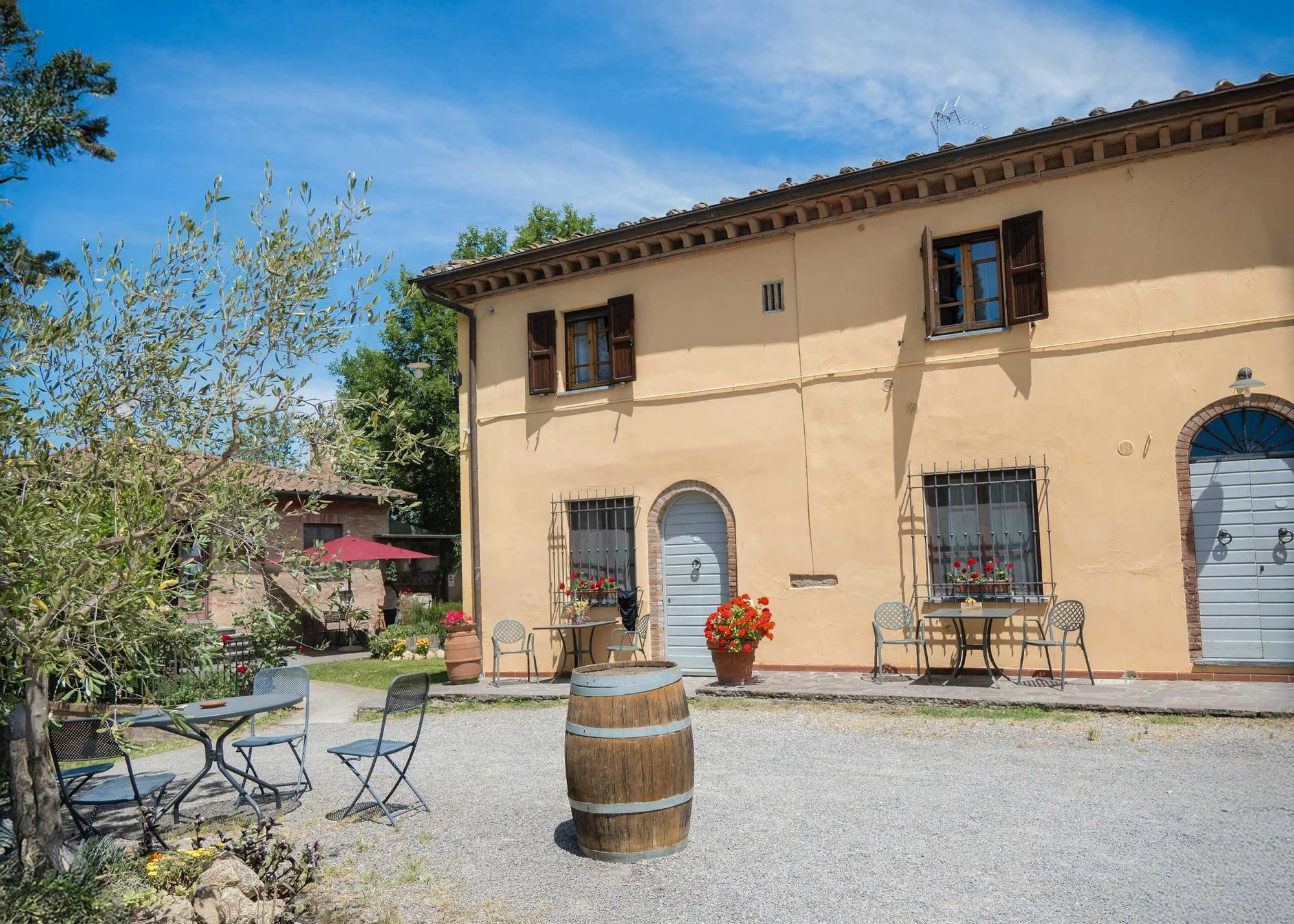
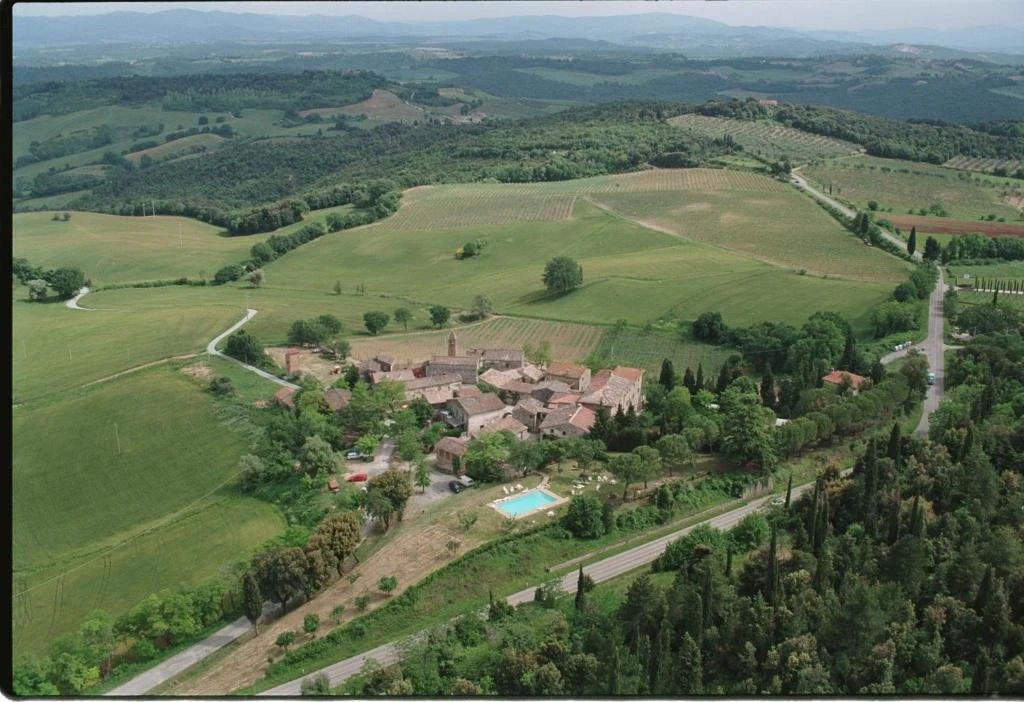
In Larniano, the wine experience starts with the agricultural frame: old farmhouse walls, vineyard rows, olive groves, and woodland rather than a polished urban tasting salon. San Gimignano’s wine culture is often read through its medieval skyline, but the more useful lens is soil and altitude. Vernaccia di San Gimignano DOCG depends on freshness, phenolic grip, and a faintly bitter close; the better producers treat it as a structured white with aging intent, not a quick aperitivo poured before the reds arrive.
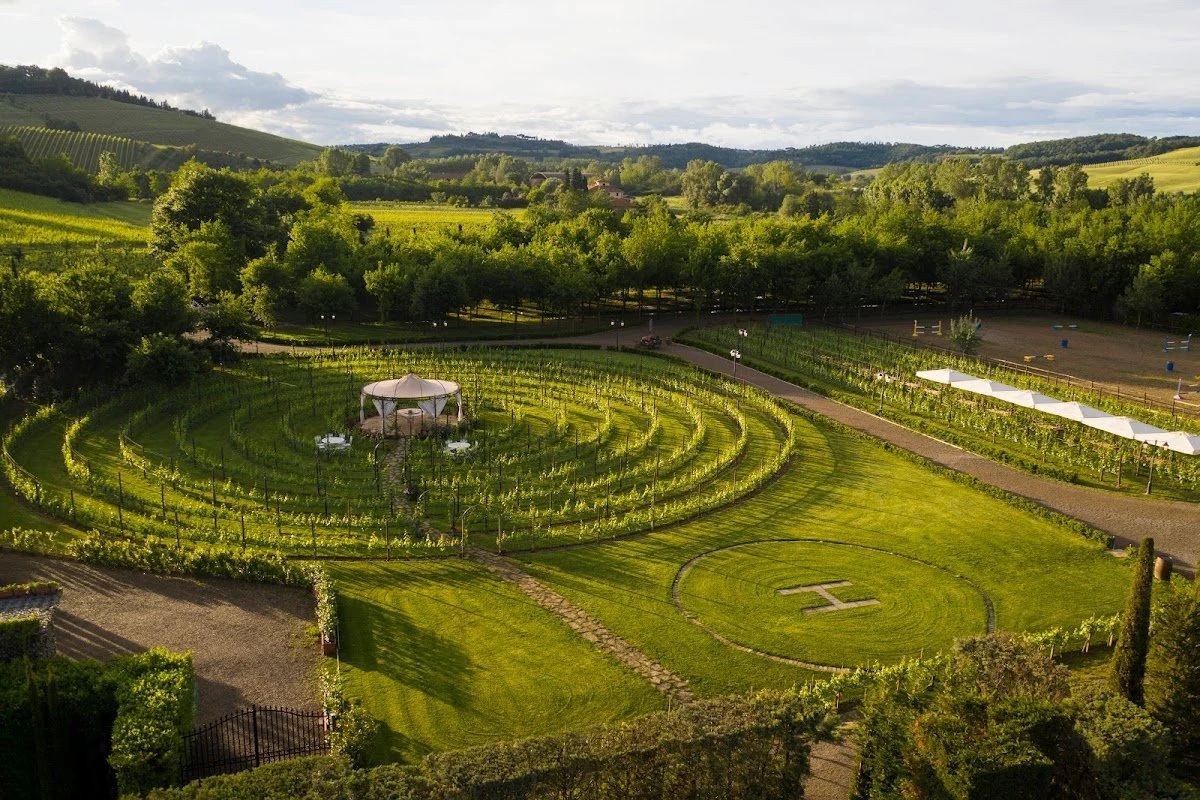
Panizzi belongs to that more serious Vernaccia conversation. The estate traces its modern identity to 1989, the year of its first Vernaccia di San Gimignano after a decade of experimentation, and it works from a larger agricultural base than many casual visitors expect: 60 hectares across Santa Margherita, Larniano, Montagnana, Lazzaretto, and Pian dei Cerri Seggiano on the slopes of Mount Amiata. That multi-site structure matters. It lets a winery build an estate expression from different exposures, elevations, and soils rather than asking one parcel to carry the whole argument.
Vernaccia treated as a wine of structure, not a tourist pour
San Gimignano has long had the problem of being famous before it is understood. The town’s towers pull visitors in, while Vernaccia can be reduced to a local white ordered because it is local. The stronger interpretation is more demanding: a white from hilly Tuscan sites, often defined by acidity, dry extract, and a savory finish. Panizzi’s position is clear inside that frame. Its organic Vernaccia di San Gimignano DOCG is made from Vernaccia with small portions of Manzoni and Trebbiano, together accounting for 5–7% of the blend, and it draws fruit from the totality of the estate’s vineyards rather than a single named plot.
The technical choices point toward clarity and steadiness. Grapes are harvested between the second and third week of September, softly pressed, fermented in stainless steel at 19°C, then kept on the lees in steel for five months. That is not an oak-led style. It is a way of protecting freshness while giving the wine enough middle and texture to avoid the thinness that can make Vernaccia feel merely serviceable. The stated drinking horizon of at least four to five years also places it in a more ambitious category than immediate-drinking whites built only for terrace service.
The vineyard facts support the same reading. The San Gimignano production zone here sits at 220 to 260 meters above sea level, on hilly clay-calcareous soils. In practical wine terms, that combination can help explain why the house language keeps returning to evolution and structure: altitude helps preserve lift, while clay and limestone can add firmness and shape. The estate also grows Pinot Noir, Sangiovese, and Trebbiano, but Vernaccia remains the interpretive center of gravity.
Organic farming and a broader Tuscan field of inquiry
Sustainability claim has concrete agricultural content rather than only a soft-focus estate slogan. Farming is described as organic and sustainable, with no chemical fertilizers, herbicides, or harmful pesticides. Soil inputs include green manure, residual biomass from harvest, and matured animal manure. Those details matter because Vernaccia’s appeal depends heavily on line and texture; farming that protects soil life is not decorative in this context, it is part of the wine’s structural logic.
Panizzi’s identity also carries a reformist thread. Giovanni Panizzi bought Podere Santa Margherita in 1979, beginning with two hectares of vineyard, and later became associated with Vernaccia’s renaissance, including a term as president of the Consorzio from 2003 to 2009. Today the Nicolai family works with winemaker Valter Sovran, and the estate’s language around long macerations and Pinot Noir shows a producer testing the limits of a zone often treated too narrowly. The useful point is not biography for its own sake; it is that San Gimignano’s white-wine tradition is being handled here as a living technical subject.
For travelers building a wider San Gimignano wine day, the context is worth mapping before the tasting. Nearby winery research can start with Casa Alle Vacche, Casa Lucii, Cesani, Fattoria di Fugnano, and Fattoria San Donato. Broader planning sits in Our full San Gimignano wineries guide, with supporting city coverage through Our full San Gimignano restaurants guide, Our full San Gimignano hotels guide, Our full San Gimignano bars guide, and Our full San Gimignano experiences guide.
A farmhouse tasting format built around place
The tasting room format suits the wine. A hall created from an old farmhouse frames the visit around landscape, agricultural continuity, and a quiet rural tempo. Tastings are guided and reservation-led, with a small-capacity feel, so the experience reads closer to wine education than cellar-door throughput. The setting is also part of the content: Larniano is a medieval-origin village near the Via Francigena, and the views over vineyards, olive groves, and woodland make the estate’s farming choices easier to understand in situ.
That does not make the visit rustic in the careless sense. Payment by credit card, debit card, and contactless methods is listed, shipping is available, and food pairing is part of the experience. Dress remains casual, which is appropriate for a working winery rather than a formal dining room. The stronger reason to go is the chance to taste Vernaccia in the place that explains it: hilly sites, calcareous clay, organic vineyard work, and a producer history that treats San Gimignano’s white grape as a serious long-form subject.
Readers comparing wine travel beyond Tuscany can also browse 3GP SRL in Treviso, 47 Anno Domini in Trebaseleghe, A Mano Wine in Noci, »der Steiner« Hans Steiner in Podersdorf am See, and & Handwein in Mannheim. The value of Panizzi, by contrast, is tightly local: Vernaccia, San Gimignano, and a tasting format where the room, vineyards, and glass all point in the same direction.
Questions
Frequently asked
How expensive is Panizzi?
Panizzi is listed at a price level of $$.
The field
How it compares
| Place | Notes |
|---|---|
| Panizzi | Larniano, $$ |
| Casa Alle Vacche | San Gimignano |
| Fattoria di Fugnano | San Gimignano |
| Fattoria San Donato | San Gimignano |
| La Lastra | San Gimignano |
| Palagetto | San Gimignano |
| Teruzzi | San Gimignano |