- Opinionated About Dining Top Restaurants in North America Recommended · 2026
- Michelin Plate · 2026
- Forbes 4-Star · 2026
- Forbes 4-Star · 2025
- Michelin Plate · 2025
- Michelin Plate · 2024
Where Collins Avenue Meets the Pacific Rim
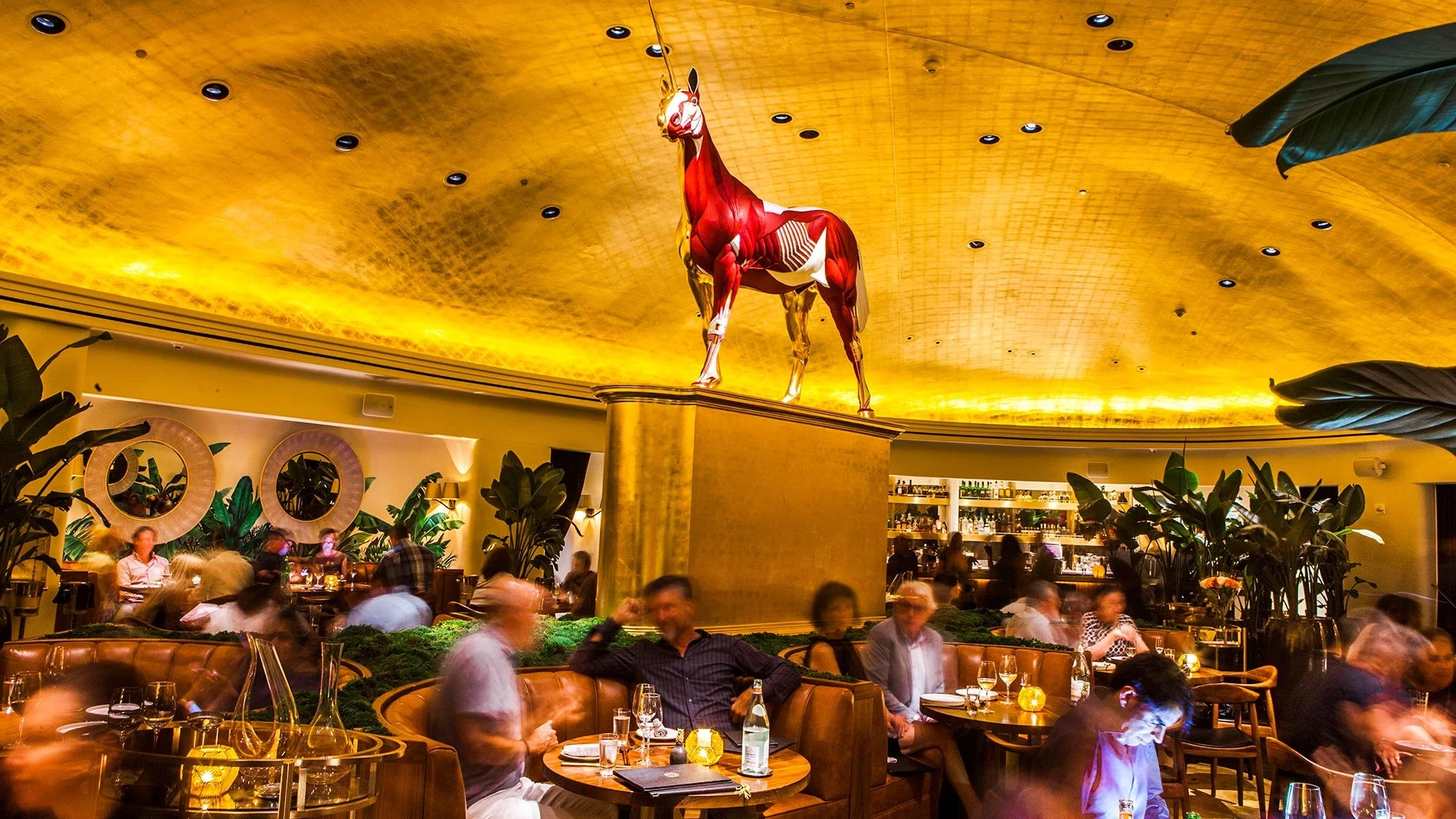
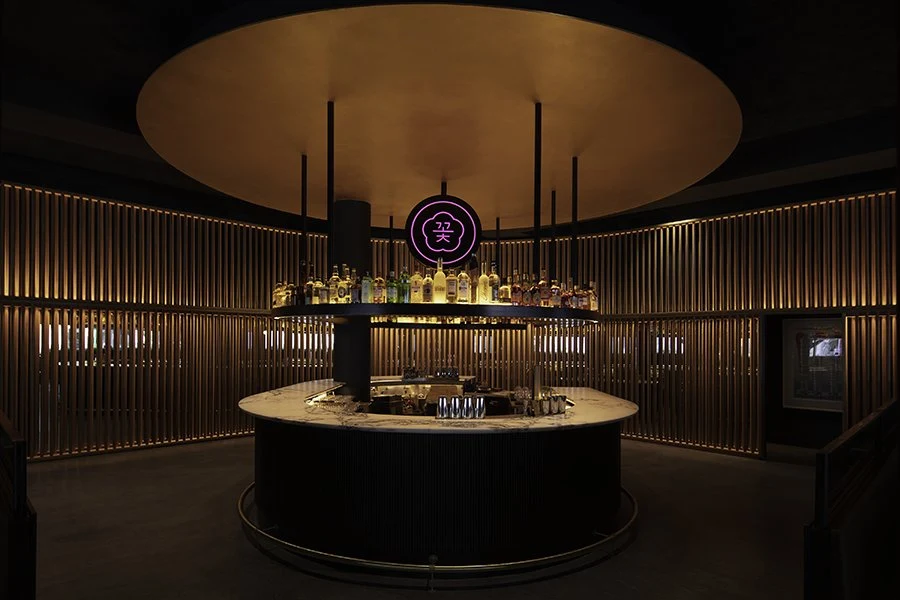
Miami Beach's hotel dining corridor has long defaulted to Mediterranean formats and Latin-leaning menus, which makes the Asian-focused program at Pao by Paul Qui something of an outlier on Collins Avenue. The restaurant occupies space inside Faena Hotel Miami Beach, one of the more theatrically designed hotel projects on the strip, and that setting shapes the experience before a dish arrives. High ceilings, gold accents, and ocean sightlines create the kind of room where the visual register is set to maximum, a fitting container for a menu that operates at similar intensity.
The broader context matters here. Miami's premium dining tier has diversified considerably over the past decade, with Asian-inflected concepts earning Michelin recognition alongside the French-technique houses and wood-fire Argentinian formats that previously defined the upper end. Pao holds a Michelin Plate (2025), placing it in a tier of recognised serious cooking rather than hotel-dining-as-amenity. That distinction matters when you consider the address: hotel restaurants at this price point can skew toward convenience over conviction, and Pao does not.
The Sunday letter
Find new places through the people who run them.
Our Sunday email brings you the chefs, winemakers and hoteliers behind our newest stories. See a sample before you subscribe.
See a sample of the Sunday emailOne email a week. Unsubscribe from any issue.
The Architecture of the Meal
The dining ritual at Pao rewards sequential thinking rather than a rush through courses. The menu is structured to build in waves, and the kitchen's instinct is to layer rather than simplify. Starting with binchotan service, tableside preparation over Japanese white-oak charcoal, establishes a tempo that the rest of the meal follows: active, participatory, attentive to texture and heat.
From there, the progression moves through small plates where technique is doing visible work. The chilled peanut gazpacho arrives with charred eggplant puree, pickled bok choy, and curry oil, a dish that coordinates acid, fat, and smoke in a cold format, which takes more precision than it appears. The panko-crusted pork katsu sando uses kurobuta pork, karashi mustard, and a sweet-sour fruit sauce on pan de sal, a Filipino sweet roll: the bread choice is deliberate, grounding a Japanese preparation in a Southeast Asian bakery tradition.
The kinilaw that opens the protein sequence uses hiramasa (high-grade yellowtail) and hearts of palm prepared with coconut milk, a Philippine curing technique applied to a fish more commonly seen in Japanese crudo formats. The combination positions Pao clearly within a school of cooking that treats the Pacific Rim as a single, connected culinary region rather than a set of separate national traditions. This approach sits alongside other American chefs working the same territory: the Peruvian-Japanese fusion practiced at ITAMAE in Miami and the precision-led Asian formats at taku in Cologne and Jun's in Dubai all reflect the same international appetite for cross-Pacific technique.
The Signature Dishes That Define the Program
Among the dishes that have drawn consistent attention, the Unicorn stands apart: sea urchin, grilled sweet corn pudding, calamansi, chile de árbol, and sake aioli. The combination reads as a set of decisions, the brininess of uni against the sweetness of corn, the brightness of calamansi cutting the sake aioli's richness, the heat from chile de árbol providing final contrast. It is a dish that requires the diner to work through it rather than simply consume it.
The rice dishes function as a structural anchor mid-meal. Pork adobo with fried duck egg, or short rib with wild mushrooms and pickled vegetables, provide weight and comfort inside what is otherwise a meal of high-wire technique. The fish preparations, according to the Michelin inspector's notes, are kept deliberately simple to let the ingredient carry the flavour, a restraint that reads as confidence in sourcing rather than lack of ambition.
Dessert pivots into surprise territory. The cheddar cheese ice cream sandwich, light waffles holding Cabot white cheddar ice cream with goat's milk dulce de leche, operates on the assumption that the distinction between savoury and sweet is a convention worth testing. That logic runs through the entire menu.
The Beverage Program as a Parallel Track
The drinks at Pao are not an afterthought. Faena's beverage director Zarko Stankovik collaborated with Mayur Subbarao and Mark Kinzer on a cocktail program drawn from early- to mid-19th-century classics, reworked with fresh local ingredients: the gin and tonic uses fresh kaffir lime leaves, for instance, grounding a historical template in South Florida's subtropical produce. The sake selection runs deep and includes Faena's own label, unusual in the American hotel dining context, where sake lists tend toward the decorative rather than the substantive. For a meal structured around Japanese and Filipino technique, a serious sake program is a logical complement, and the kitchen-beverage alignment here is tighter than most.
Pao in Miami's Competitive Dining Set
At the $$$ price tier, Pao sits alongside Miami restaurants like Kaori, MILA, and Jaya in the middle bracket of serious dining rather than the leading end occupied by L'Atelier de Joël Robuchon Miami or comparison venues like Ariete and Stubborn Seed at $$$$. Within that bracket, Pao's Google rating of 4.5 across 388 reviews place it among the more consistently regarded options. It holds its own against nationally recognised hotel dining formats, the kind of serious hotel restaurant program found at properties like those housing Le Bernardin in New York or the destination-level cooking at The French Laundry in Napa and Single Thread Farm in Healdsburg, though at a different price point and in a distinctly different register.
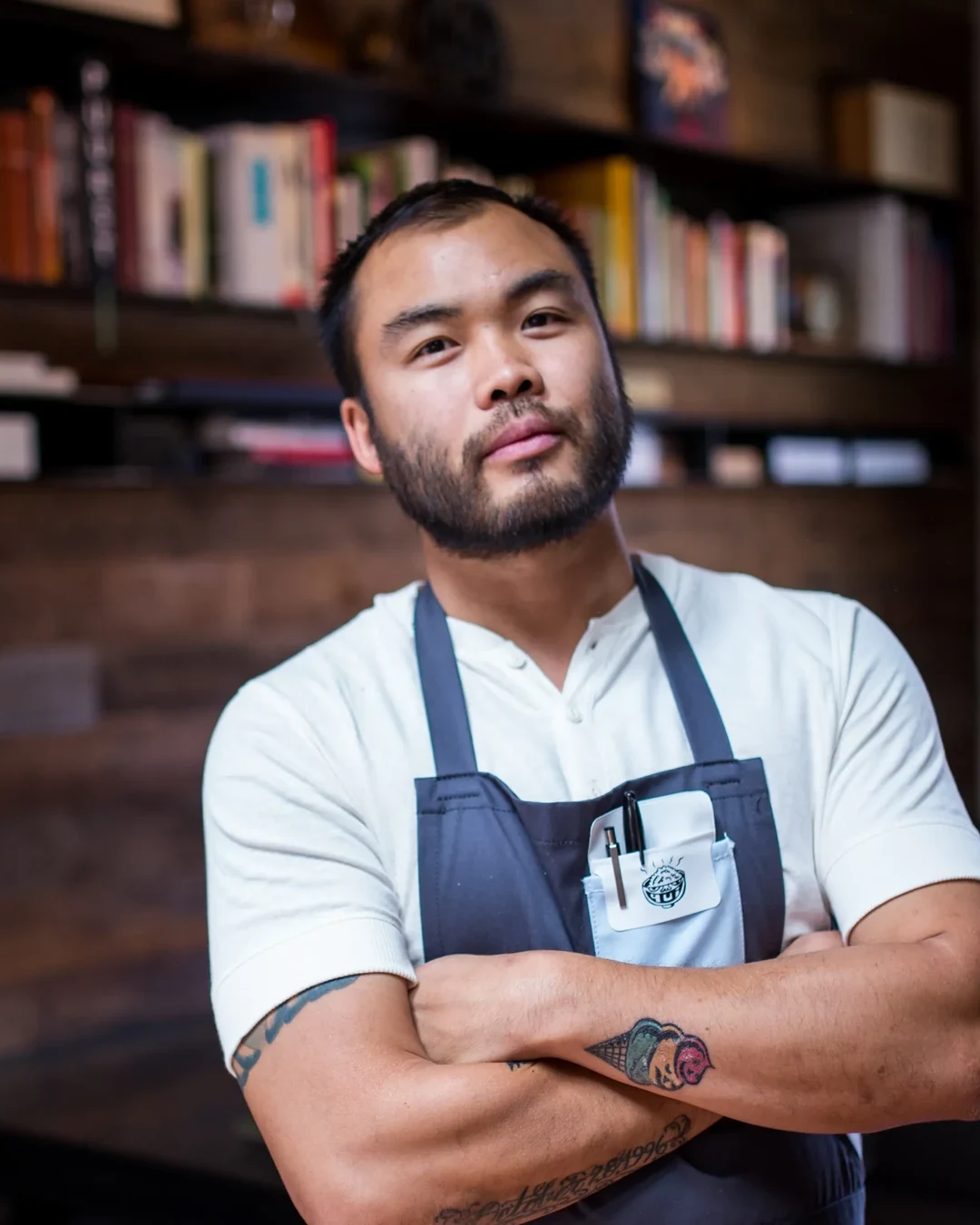
Paul Qui's background includes James Beard recognition and a lineage through high-level American and Filipino-Asian cooking that positions him within a cohort of technically exacting chefs working outside French-classical frameworks. That credential functions less as biography and more as a signal of how seriously to take the kitchen's ambitions. Other chefs who have pushed format boundaries at a similar level include the teams behind Alinea in Chicago and Lazy Bear in San Francisco, though Pao operates in a warmer, more sensory register than either.
Know Before You Go
- Address: 3201 Collins Avenue, Miami Beach, FL 33140 (inside Faena Hotel Miami Beach)
- Dinner service: Tuesday through Saturday only
- Dress code: Smart casual; South Beach-chic attire is the operative standard
- Price tier: $$$
- Awards: Michelin Plate (2025)
- Reservations: Advance booking is required; demand is high given the format and recognition
- Beverage: 19th-century-inspired cocktails, deep sake selection including Faena's own label
- Tableware: Custom hand-thrown stoneware by Jono Pandolfi; gold flatware and wood service ware
Questions
Frequently asked
Who works at Pao by Paul Qui?
Made By profiles Paul Qui (Chef) at Pao by Paul Qui.
How expensive is Pao by Paul Qui?
Pao by Paul Qui is listed at a price level of $$$$.
Where is Pao by Paul Qui and what does it serve?
Pao by Paul Qui is in Miami Beach, Miami, serving Modern Asian Fusion.
The field
How it compares
| Place | Cuisine | Notes | Awards |
|---|---|---|---|
| Pao by Paul Qui | Modern Asian Fusion | Miami Beach, $$$$ | · |
| Ariete | Modern Cuban-American Fine Dining | Miami | Michelin 1 Star |
| Cafe La Trova | Modern Cuban | Miami | · |
| Cote Miami | Modern Korean Steakhouse with Table-Side BBQ | Miami | Michelin 1 Star |
| Mandolin Aegean Bistro | Greek-Turkish Aegean Bistro | Miami | · |
| NAOE | Traditional Japanese Omakase | Miami | · |
| ViceVersa | Italian Aperitivo | Miami | · |
In residence
Similar places
Modern Cuban-American Fine Dining
Ariete
Miami, United States
★
Modern Cuban
Cafe La Trova
Miami, United States
Modern Korean Steakhouse with Table-Side BBQ
Cote Miami
Miami, United States
★
Greek-Turkish Aegean Bistro
Mandolin Aegean Bistro
Miami, United States
Traditional Japanese Omakase
NAOE
Miami, United States
Italian Aperitivo
ViceVersa
Miami, United States
The Sunday letter
Get the next Made By story in your inbox.
We send one email every Sunday morning with the places and people we covered that week.
See a sample of the Sunday emailOne email a week. Unsubscribe from any issue.