- Opinionated About Dining Casual in Europe Recommended · 2026
- Gambero Rosso 3 Forchette · 2026
- Michelin Plate · 2026
- We're Smart World 1 Radish · 2025
- Michelin Plate · 2025
- Opinionated About Dining Casual in Europe Ranked #523 · 2025
- Michelin Plate · 2024
- Opinionated About Dining Casual in Europe Ranked #345 · 2024
- Opinionated About Dining Casual in Europe Highly Recommended · 2023
Roman Cooking in the 12th: Where Passerini Sits in Paris's Italian Scene
Paris has a complicated relationship with Italian food. The city that codified haute cuisine has long treated the trattoria format as either a tourist trap or an afterthought, and genuinely Roman cooking, the kind that draws on offal, bitter greens, cured pork, and precise pasta technique, has been especially scarce. The handful of serious Italian addresses that do exist in Paris tend toward northern Italian or generically pan-Italian menus, partly because the Milanese and Venetian palate translates more comfortably to French dining expectations. Roman cooking, with its harder edges and its insistence on ingredients like guanciale, puntarelle, and cicoria, asks more of a non-Italian audience.
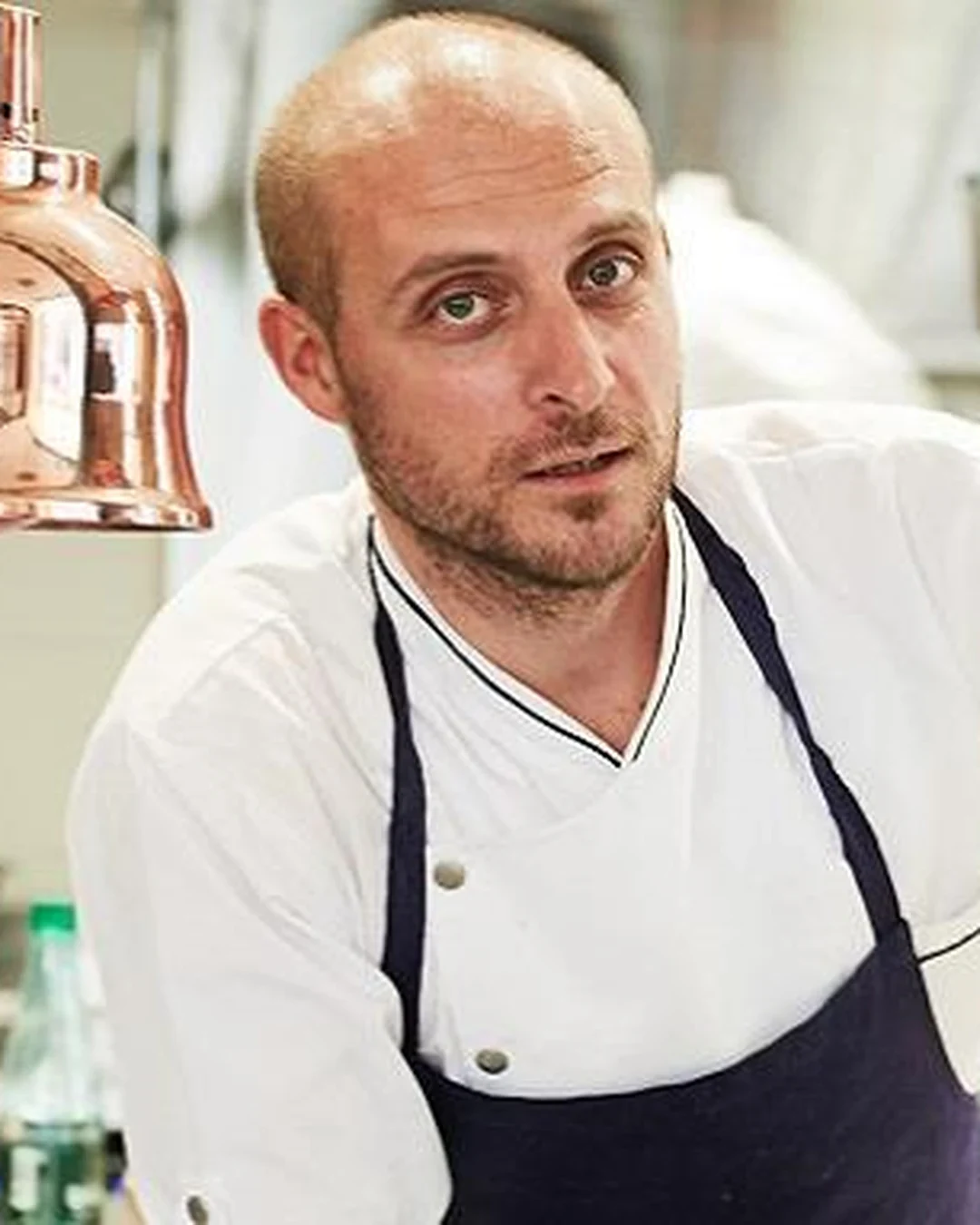
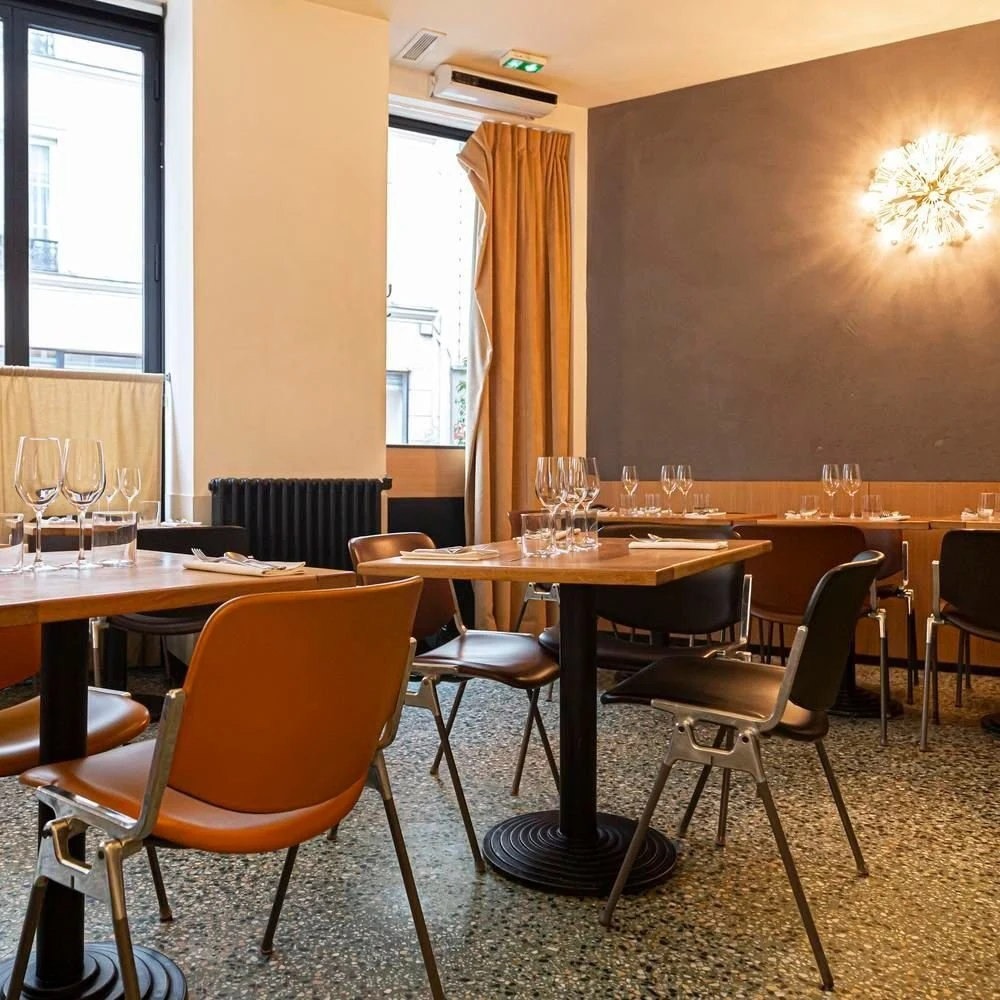
That context matters when placing Passerini on Rue Traversière in the 12th. Chef Giovanni Passerini opened here to cook the food of Rome, not a softened interpretation of it, but a version that puts Treviso, chicory, and bitter vegetables at the center of plates alongside pasta made fresh in-house. The approach sits in a different register entirely from the grand French tables Paris is better known for: Alléno Paris au Pavillon Ledoyen, Arpège, L'Ambroisie, or Le Cinq, restaurants where the grammar is entirely French. Even cross-cultural experiments like Kei, which fuses Japanese technique with French ingredients, operate within a luxury-tier framework Passerini consciously rejects. This is a €€€ restaurant with a Michelin Plate, not a star, and that positioning is coherent: the food is serious, but the format is deliberately casual.
The Sunday letter
Find new places through the people who run them.
Our Sunday email brings you the chefs, winemakers and hoteliers behind our newest stories. See a sample before you subscribe.
See a sample of the Sunday emailOne email a week. Unsubscribe from any issue.
The Roman Tradition Behind the Menu
Roman cuisine has a distinct identity within Italian cooking that gets flattened in most international contexts. Where Tuscan cooking leans on steak and beans, Milanese on butter and risotto, and Neapolitan on tomato and mozzarella, the Roman kitchen is built around bitter greens, cured pork fat, dried pasta cooked with precision, and a broader acceptance of vegetables as structural elements rather than garnish. Puntarelle, the hollow chicory shoots served raw with anchovy dressing, is one of Rome's most recognizable ingredients and one that rarely survives transplanting, because the preparation requires both the right chicory variety and a willingness to serve something aggressively bitter to a dining room that might not expect it.
Passerini's menu reflects this directly. The kitchen uses ravioli to hold vegetable fillings, builds plates around combinations like Treviso salad with mozzarella, smoked beet, algae, and anchovies, and serves farm chicken alongside chicory baked in chicken fat with amandine potatoes and puntarelle salad. The macedoine of asparagus with pork loin applies a classical French technique, the term refers to a cut of uniform small pieces, to a flavor combination that reads as Roman. This cross-pollination is not accidental: a Roman chef working in Paris for years will inevitably absorb French technical vocabulary without abandoning the flavor logic of his home cooking.
Fresh pasta is central to what the kitchen does, and pasta in Rome carries different cultural weight than in Bologna or Naples. Roman pasta tradition includes cacio e pepe, carbonara, and amatriciana, each of which depends on precision rather than complexity, with very few ingredients and no tolerance for imprecision. That discipline tends to produce cooks who are demanding about texture and timing, and it shows in kitchens like this one, where pasta appears to anchor the menu rather than supplement it.
Recognition, Ranking, and What the Scores Imply
Passerini holds a Michelin Plate, which Michelin awards to restaurants serving food of good quality, a step below star recognition but a meaningful signal that the kitchen is consistent and cooking at a considered level. The distinction matters in the context of how Italian casual dining typically fares in the Michelin system, where trattoria formats are often underweighted relative to formal French service structures.
The Opinionated About Dining (OAD) ranking is a more granular signal. OAD's methodology relies on votes from experienced restaurant-goers and food professionals rather than anonymous inspectors, and its casual category for Europe tends to surface restaurants that have earned genuine loyalty from a knowledgeable audience. Passerini appeared on that list as Highly Recommended in 2023, climbed to #345 in Europe in 2024, and reached #523 in the broader OAD ranking in 2025. The trajectory over three consecutive years of recognition, in a category where competition from across the continent is substantial, confirms that the restaurant's following is not parochial. Customers travel from across Paris to reach the 12th, a less central arrondissement that requires a deliberate decision to visit rather than a casual walk-in.
A Google rating of 4.3 across 882 reviews adds a layer of public confirmation. For a restaurant of this price tier and format, that volume suggests regular repeat customers alongside first-time visitors, which is a different endorsement than novelty-driven traffic.
The 12th Arrondissement as Context
The 12th sits east of the Marais and south of the Gare de Lyon, an arrondissement without the concentrated dining prestige of Saint-Germain or the Palais-Royal area. Rue Traversière runs parallel to the Viaduc des Arts, the repurposed railway viaduct whose lower arcade houses craft workshops. The neighborhood has a residential density and a working-city texture that makes it a plausible home for a restaurant that prioritizes cooking over scene. For comparison, some of France's most serious kitchen traditions have long operated away from capital capitals, from Flocons de Sel in Megève to Bras in Laguiole, and in Paris, the eastward drift of serious independent restaurants has been underway for at least a decade.
The restaurant draws from across the city rather than from a local catchment, which is a reliable indicator of a destination address rather than a neighborhood convenience. That dynamic places it in the same behavioral category as restaurants like Mirazur in Menton or Troisgros in Ouches, places people travel to specifically, not places they stumble into, even though the price point is radically different.
Know Before You Go
Address: 65 Rue Traversière, 75012 Paris, France
Price range: €€
Hours: Tuesday: 7:30 to 10:15 pm | Wednesday–Friday: 12 to 2:15 pm and 7:30 to 10:15 pm | Saturday: 7:30 to 10:15 pm | Sunday and Monday: Closed
Cuisine: Modern Trattoria, Italian (Roman)
Recognition: Michelin Plate (2024, 2025); Opinionated About Dining Casual Europe Ranked #345 (2024), #523 (2025)
Google rating: 4.3 (844 reviews)
Booking: Advance reservation recommended; destination-level demand from across Paris
For reference points in other cities and contexts, Le Bernardin in New York and Atomix in New York represent the kind of sustained critical recognition that Passerini is building toward at its own scale. French regional anchors like Paul Bocuse in Collonges-au-Mont-d'Or and Auberge de l'Ill in Illhaeusern show what long-term institutional recognition looks like at the other end of the French dining spectrum.
Questions
Frequently asked
Who works at Passerini?
Made By profiles Giovanni Passerini (Chef) at Passerini.
How expensive is Passerini?
Passerini is listed at a price level of $$$.
Where is Passerini and what does it serve?
Passerini is in Bastille, Paris, serving Modern Italian Trattoria.
The field
How it compares
| Place | Cuisine | Notes | Awards |
|---|---|---|---|
| Passerini | Modern Italian Trattoria | Bastille, $$$ | · |
| Arpège | Vegetable-Focused French Fine Dining | Paris | Michelin 3 Stars, World's 50 Best |
| Epicure | Contemporary French Fine Dining | Paris | Michelin 3 Stars |
| Guy Savoy | Classic French Fine Dining | Paris | Michelin 2 Stars, World's 50 Best |
| Le Cinq | Modern French Fine Dining | Paris | Michelin 3 Stars, World's 50 Best |
| Le Taillevent | Classic and Modern French Fine Dining | Paris | Michelin 2 Stars, World's 50 Best |
| Pierre Gagnaire | Avant-Garde French Fine Dining | Paris | Michelin 3 Stars, World's 50 Best |
In residence
Similar places
Vegetable-Focused French Fine Dining
Arpège
Paris, France
★★★ · 50 Best
Contemporary French Fine Dining
Epicure
Paris, France
★★★
Classic French Fine Dining
Guy Savoy
Paris, France
★★ · 50 Best
Modern French Fine Dining
Le Cinq
Paris, France
★★★ · 50 Best
Classic and Modern French Fine Dining
Le Taillevent
Paris, France
★★ · 50 Best
Avant-Garde French Fine Dining
Pierre Gagnaire
Paris, France
★★★ · 50 Best
The Sunday letter
Get the next Made By story in your inbox.
We send one email every Sunday morning with the places and people we covered that week.
See a sample of the Sunday emailOne email a week. Unsubscribe from any issue.