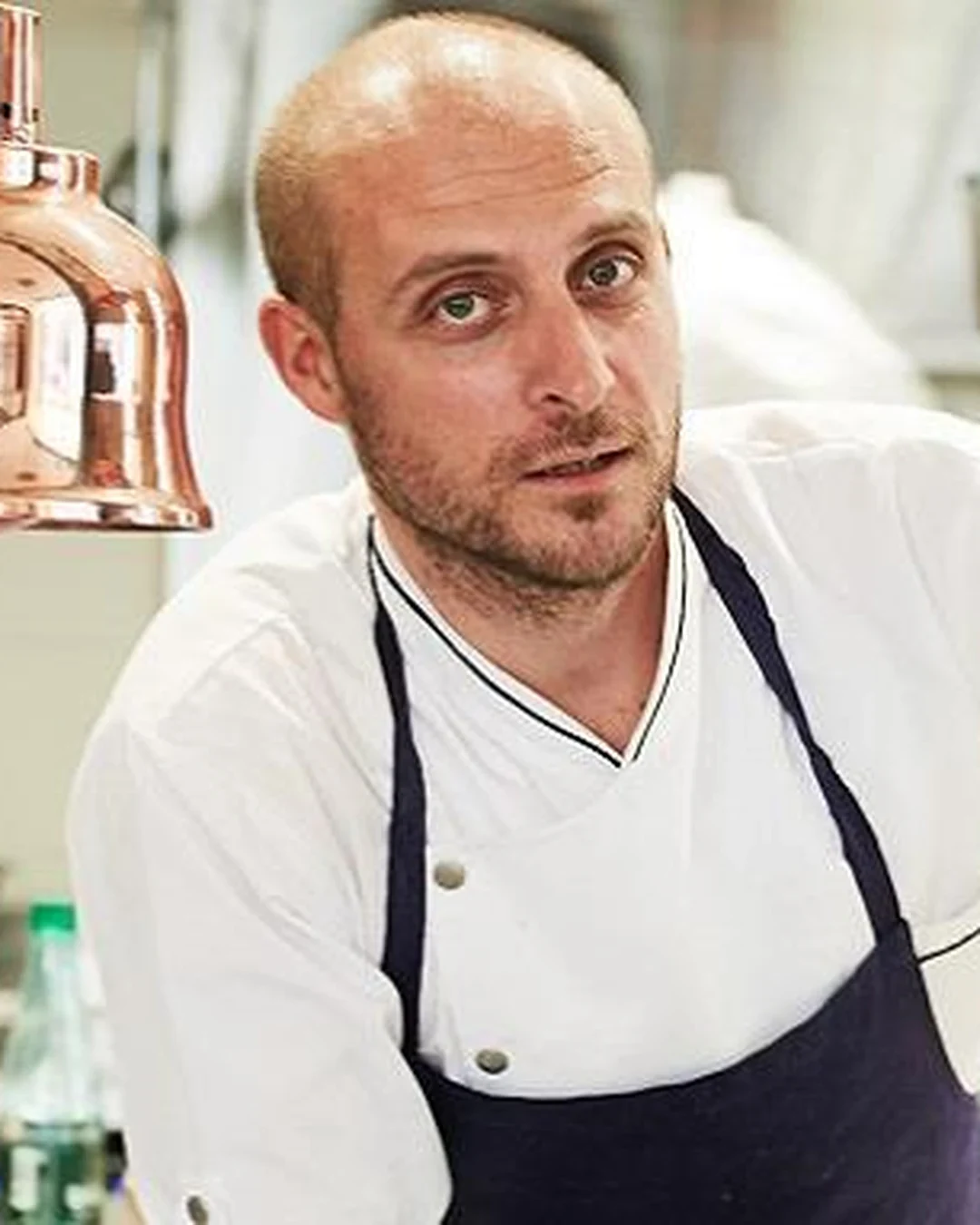
Portrait of Giovanni Passerini
i. Biography
Beginnings
Bistro work gives a cook a plain test: the plate has to satisfy before it explains itself. Born in Rome, Giovanni Passerini began his career in a bistro in Rome, and that register remains legible in the cooking associated with him: direct, hot, built for appetite, and resistant to unnecessary ceremony. Parisian bistronomy provided a different kind of discipline: informal rooms with kitchens still working at a high pitch. As second hand to Parisian chef Petter Nilsson at La Gazetta in Paris, Passerini entered a current where precision did not require old formal codes, and where pleasure and rigor could occupy the same service. Le Chateaubriand added another Paris kitchen to that formation. The sequence matters for the craft: Rome gave the first bistro grammar, Paris supplied a looser restaurant language, and the later cooking carried both without treating them as opposites.
The Sunday letter
Read Made By's new profiles every Sunday.
Meet the chefs, winemakers and sommeliers behind the places we cover. See a sample below before you subscribe.
See a sample of the Sunday emailOne email a week. Unsubscribe from any issue.
The Rise
Independent direction gave the cooking a clearer frame before the later restaurant that would take Passerini’s name. Its center of gravity stayed close to Italian cuisine while using the movement and informality of bistronomy: less stiffness, no loss of technique. The most convincing work in that register is built around appetite rather than category. Pasta is allowed to feel familiar while still being deliberate. Offal is handled as food with roots in everyday eating, not as a stunt. Sauce, heat, and the shared table are part of the method. Tripe à la romaine is a house specialty, described with tomato sauce coating thin strips of offal. In Passerini’s hands, the dish stays in a Roman register: sauced, tender, emphatic, and clear about what it is. For me, it’s tripe.” Filled pasta shows the same concern for translation between workshop and dining room. Ravioli from his pastificio are filled with potimarron, orange and tonka bean, carrying flavor, season and texture through handmade pasta rather than through garnish or explanation.
At Work Now
Restaurant hospitality, in this case, begins with the kind of place the makers would choose for themselves. “My wife, Justine, and I wanted to open a place where we ourselves would have wanted to go for a meal.” At Passerini, that idea points toward recognition and welcome rather than distance or spectacle. The move away from a prix fixe menu toward pleasure, sharing and the basics of a meal is also a technical adjustment. Passerini describes it plainly: “My mind is still set in a certain way, but I make an effort to plate foods with a ladle instead of with tweezers, the way I used to.” The distinction is practical. A ladle carries sauce, volume and heat; tweezers carry another kind of control. The craft now sits where Roman bistro instinct, Paris bistronomy, handmade pasta and the appetite for tripe can share the same table. At Passerini, Modern Italian cucina functions as practice rather than label: rooted in Italian cooking, shaped by Paris, and built to be eaten.
Signature
Signature dishes include Tripe à la romaine and Ravioli from his pastificio.
FAQ What is Giovanni Passerini's day job? Giovanni Passerini is chef at Passerini — Modern Trattoria, Italian. What is Giovanni Passerini known for? Handmade pasta at Passerini. What recognition has Giovanni Passerini received? Fooding guide: best chef of the year (2017).

The Sunday letter
Get the next Made By profile in your inbox.
We send one email every Sunday morning with the people we profiled that week.
See a sample of the Sunday emailOne email a week. Unsubscribe from any issue.