From the people index
Recommended by
One trusted voice points here.
- Opinionated About Dining Casual in Japan Ranked #4 · 2026
- 50 Top Pizza Asia-Pacific #35 · 2026
- Opinionated About Dining Casual in Japan Ranked #37 · 2025
- Tabelog 100 #36: 3.7pts · 2025
- Opinionated About Dining Casual in Japan Ranked #96 · 2024
Tokyo's Neapolitan Moment and Where Ebisu Fits
The story of serious pizza in Tokyo is, by now, a decade-plus in the making. Japanese pizzaiolos trained in Naples, returned home, and built a category that now rivals the original in technical discipline. What has happened more recently is a second wave: a generation of operators who absorbed that Neapolitan foundation and began asking questions about what comes next, in sourcing, in method, in the environmental logic of running a wood-fired kitchen inside one of the world's most supply-chain-conscious food cities. Pizza Marumo is a Japanese-Italian fusion pizza restaurant in Ebisu, Tokyo, at roughly $50 per person, and it sits squarely inside that second wave.
Ebisu occupies a specific register in Tokyo's dining geography. It is not the frenetic density of Shibuya proper, nor the kaiseki formality of Ginza or Kagurazaka. It is residential-adjacent, with a local clientele that sustains neighbourhood restaurants over years rather than chasing seasonal hype. For a pizzeria with a sustainability-conscious sourcing posture, that demographic suits the format: repeat guests reward consistency and ingredient integrity more than novelty.
From #96 to #37: What the OAD Trajectory Signals
Opinionated About Dining's Casual Japan ranking is one of the more reliable indicators of word-of-mouth momentum among eating-obsessed frequent diners. Pizza Marumo entered the 2024 list at #96 and moved to #37 in 2025, a jump of 59 positions in a single year. That kind of movement in OAD's system, which weights diner votes rather than institutional judges, reflects sustained repeat traffic and advocacy rather than a single breakout review. It places Marumo alongside a cohort of Tokyo pizzerias where the proposition is precise enough to generate strong opinions. Peers in that OAD Casual Japan tier include Pizza Strada, Pizza Studio Tamaki, and Pizzeria e Trattoria da ISA, each occupying slightly different positions on the formality-casualness spectrum. Seirinkan in Nakameguro and 400℃ PIZZA TOKYO represent other nodes in the city's serious-pizza conversation. The 4.4 Google rating across 1,108 reviews reinforces the OAD signal.
The Sustainability Frame: Sourcing Logic in a Tokyo Pizzeria
Running a wood-fired pizzeria sustainably in Tokyo involves a set of constraints that don't apply in the same way in Naples or Rome. Urban fuel sourcing, domestic versus imported flour decisions, and the logic of which toppings travel the shortest distance all carry weight in a city where ingredient traceability is a serious consumer concern. Tokyo's food culture has long prioritised producer relationships, the concept of shun, seasonal ingredient timing, applies just as readily to a pizzeria as to a kaiseki counter.
The strongest signal of a sustainability orientation in this category is sourcing specificity: which prefectures supply the vegetables, whether flour is milled domestically, how the dairy component of the cheese is handled. Japanese pizzerias at this tier of OAD recognition have generally moved beyond generic Italian imports toward a hybrid sourcing model that privileges domestic producers where quality is competitive. That shift matters not just ecologically but culinarily, it changes the flavour profile of the pie in ways that distinguish Tokyo-style Neapolitan from its source material.
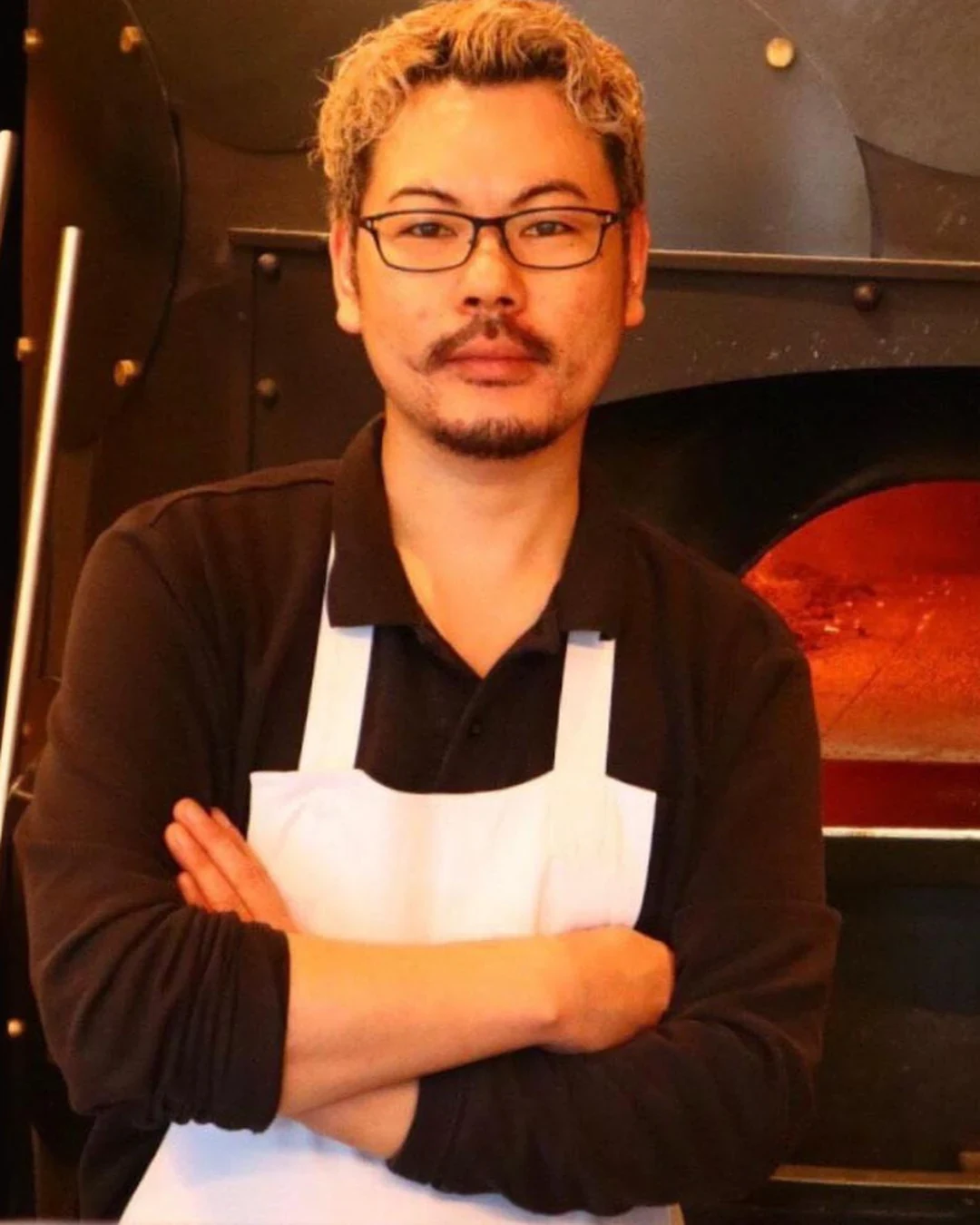
Chef Yuki Motokura operates within this context. The kitchen runs lunch and dinner daily. That schedule, five days, two services, is calibrated for a small team operating at a quality-first pace rather than maximum throughput, which itself has waste-reduction implications: tighter prep cycles, lower ingredient turnover, and more consistent execution per service.
The Dining Format and What to Expect
Service runs 11:30 am to 2:30 pm at lunch and 5 to 10 pm at dinner. The split-service format is standard for serious Tokyo pizzerias and allows the kitchen to reset between covers, maintain dough timing, and manage the oven temperature cycle with precision. The neighbourhood is walkable and compact enough that it pairs naturally with a pre or post stop at one of Ebisu's wine bars or natural wine-leaning spots.
Reservations are essential, particularly at lunch on weekends.
Japan in Comparative Context
Pizza Marumo's OAD position makes more sense when placed against Japan's broader casual-dining recognition circuit. The country's serious casual tier is globally competitive, a Casual Japan #37 ranking in 2025 sits in a list that spans everything from ramen specialists to French bistros. For reference, restaurants operating at the formal end of Japan's scene include HAJIME in Osaka, Gion Sasaki in Kyoto, and akordu in Nara, a different tier and format entirely. In the casual register, Goh in Fukuoka, 1000 in Yokohama, and 6 in Okinawa each represent regional-specific expressions of what Japanese casual dining looks like at its most considered. For international comparison points in the pizzeria category specifically, Ken's Artisan Pizza in Portland and 11th Street Pizza in Miami each represent how the Neapolitan-influenced model translates in American cities with strong craft-food cultures.
Questions
Frequently asked
Who works at Pizza Marumo?
Made By profiles Yuki Motokura (Chef) at Pizza Marumo.
How expensive is Pizza Marumo?
Pizza Marumo is listed at a price level of $$$.
Where is Pizza Marumo and what does it serve?
Pizza Marumo is in Shibuya, Tokyo, serving Japanese-Italian Fusion Pizza.
The field
How it compares
| Place | Cuisine | Notes | Awards |
|---|---|---|---|
| Pizza Marumo | Japanese-Italian Fusion Pizza | Shibuya, $$$ | · |
| Den | Modern Japanese Kaiseki | Tokyo | Michelin 2 Stars, World's 50 Best |
| Florilège | Modern French-Japanese Plant-Based Fine Dining | Tokyo | Michelin 2 Stars, World's 50 Best |
| Narisawa | Modern Japanese Satoyama Fine Dining | Tokyo | Michelin 2 Stars, World's 50 Best |
| Quintessence | Modern French Fine Dining | Tokyo | Michelin 3 Stars |
| Sazenka | Modern Chinese Fine Dining | Tokyo | Michelin 3 Stars, World's 50 Best |
| Sézanne | Modern French Fine Dining | Tokyo | Michelin 3 Stars, World's 50 Best |
In residence
Similar places
Modern Japanese Kaiseki
Den
Tokyo, Japan
★★ · 50 Best
Modern French-Japanese Plant-Based Fine Dining
Florilège
Tokyo, Japan
★★ · 50 Best
Modern Japanese Satoyama Fine Dining
Narisawa
Tokyo, Japan
★★ · 50 Best
Modern French Fine Dining
Quintessence
Tokyo, Japan
★★★
Modern Chinese Fine Dining
Sazenka
Tokyo, Japan
★★★ · 50 Best
Modern French Fine Dining
Sézanne
Tokyo, Japan
★★★ · 50 Best