Podere L’Aja
- 01CityRadda in Chianti, Italy
- Falstaff Winery - 2 Stars · 2026
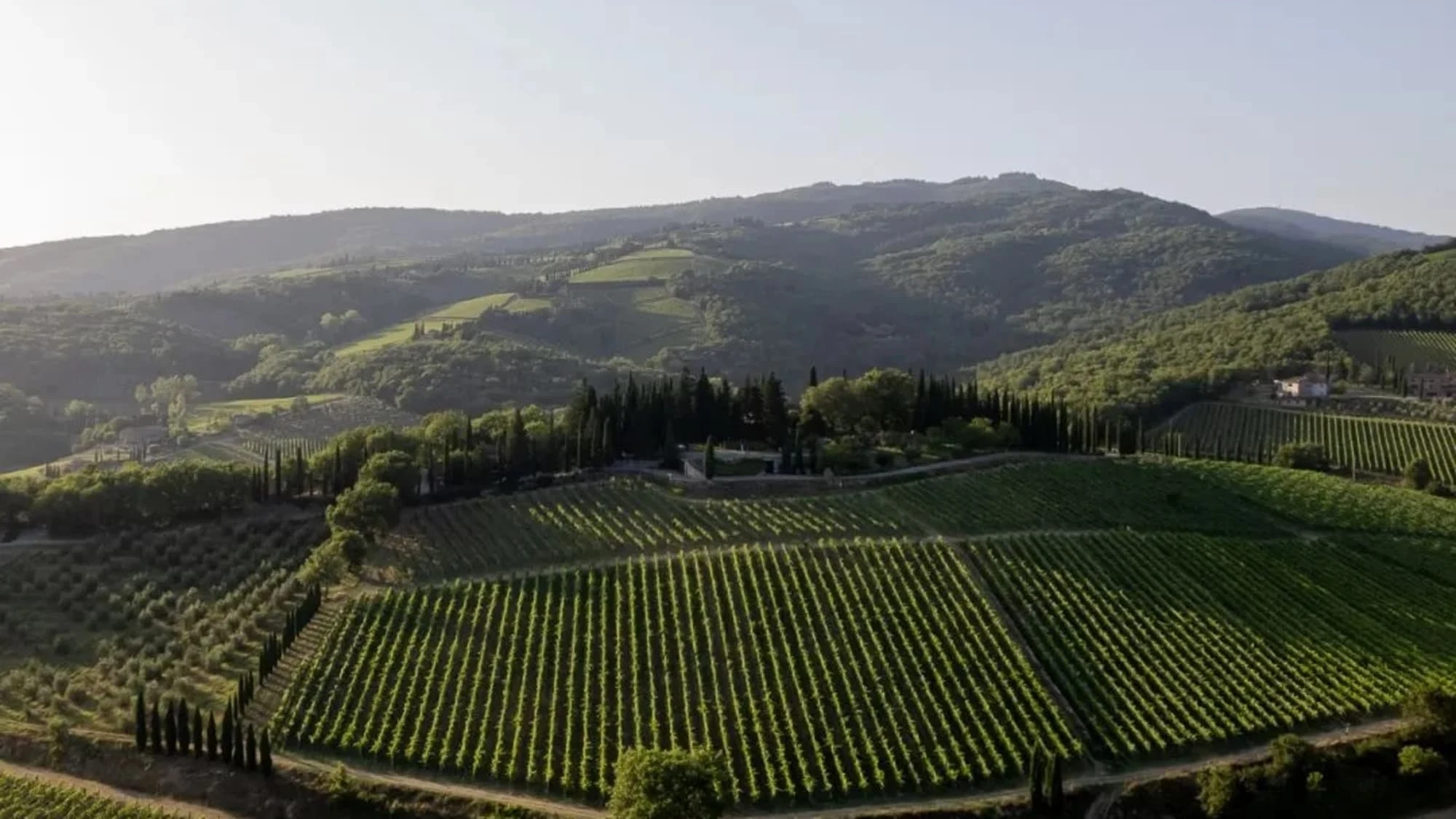
Approaching wine in Radda in Chianti means reading the countryside as much as the glass: stone villages, olive groves, orchards, and vineyards that sit close enough to daily life that the agricultural and the civic feel inseparable. Podere L’Aja fits that Radda pattern with unusual clarity. It is an organic Chianti Classico estate within close reach of the historic village, and its visitor experience is built around the working property rather than a polished tasting-room performance.
Chianti Classico tourism often splits between large estates with high-throughput hospitality and smaller producers where the cellar, the vineyard, and the host remain part of the same conversation. Podere L’Aja belongs to the latter camp. The estate works twelve hectares of vines and produces about 70,000 bottles annually, a scale large enough to support a structured cellar program but small enough for the visit to retain a direct, educational rhythm.
Radda's small-estate Chianti model, seen through organic Sangiovese
The most useful way to understand the estate is through its farming and cellar logic. Sangiovese is the central grape, supported by Canaiolo and Colorino, the traditional supporting varieties that keep the wines anchored in Chianti Classico rather than in a generic Tuscan red category. The portfolio is described in broad terms as red and white wine, but the estate’s identity is clearly tied to Chianti Classico DOCG and the Radda area.
Organic production gives the project its clearest philosophical line. In a region where visitors often encounter the language of heritage before the details of farming, this estate places its claim in the vineyard first. Grapes are handpicked, and the cellar is organized in two stages: a modern winery for initial winemaking and a traditional cellar for aging and bottling. Maturation uses both Slavonian oak barrels and French barriques, a combination that signals respect for local convention while allowing different aging registers inside the same small production frame.
That mix of old and new also reflects the estate’s origin story. Angelo and Ugo Contrino began revitalizing the property in 1979, and the family connection continues through Marco and Roberta Contrino with local partners. The more interesting editorial point is not the personal narrative itself, but what it represents in Chianti: outside investment and professional discipline brought into a rural estate, then measured against the expectations of a historic appellation. The result is not a museum-piece winery. It is a functioning agricultural property that uses modern cellar tools without loosening its tie to place.
A hosted cellar visit rather than a scripted tasting counter
The hospitality format matters because it explains why travelers choose this kind of estate over a larger appointment circuit. Reviews consistently describe vineyard and cellar tours, guided tastings, and a knowledgeable host, with Valerio Marconi named as the visible figure explaining the winemaking process. The tone is educational rather than theatrical: the point is to connect grape, cellar, barrel, and glass in a compact visit.
Food appears as a supporting element rather than a restaurant-style program. Tastings may include a plate of local products, which places the wines inside the everyday Tuscan table instead of treating them as isolated technical objects. That distinction is important in Chianti Classico. Sangiovese makes the most sense when acidity, tannin, savory food, and the agricultural setting are allowed to speak together.
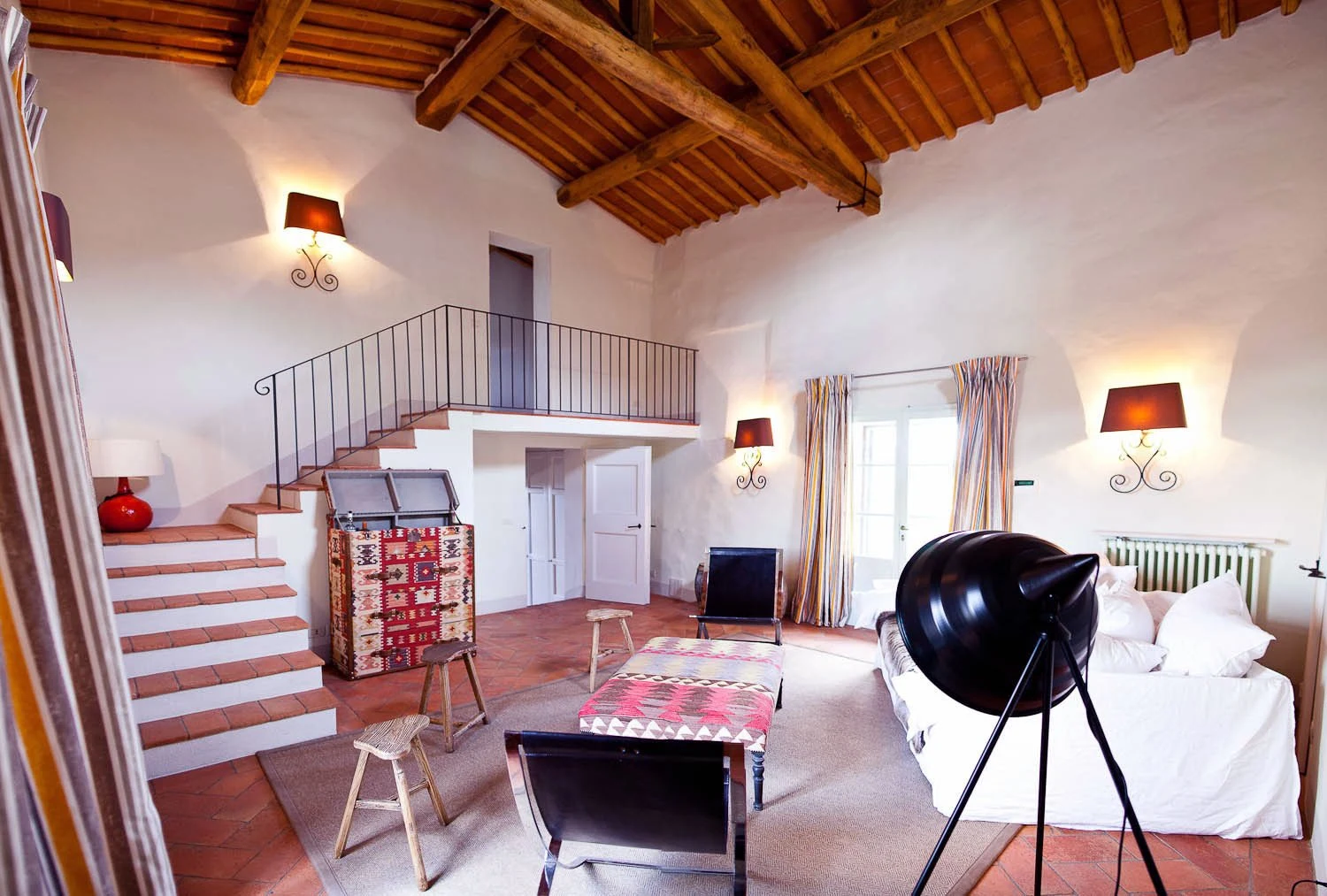
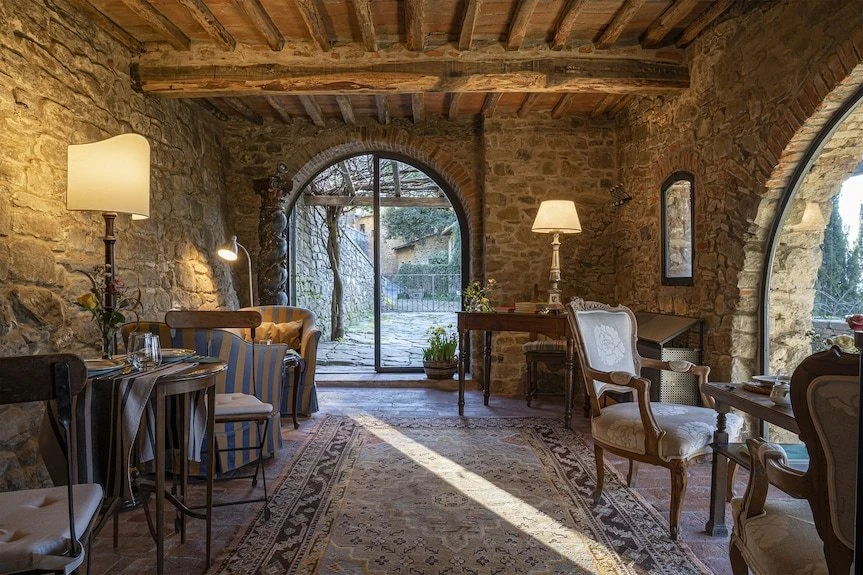
The estate’s atmosphere is quiet and intimate, with vineyard and garden views, a rustic setting, and a cellar-tasting format. Accessibility details are unusually practical for a rural winery: wheelchair access and a step-free entrance are listed, dogs are allowed, and English is among the tour languages. The format also suits small groups, couples, and solo travelers who want conversation and context rather than a rapid flight of pours.
Where it sits in a Radda itinerary
Radda in Chianti rewards a slower winery itinerary. Distances between producers can look modest on a map, but the value here comes from pacing: one estate for cellar education, another for a contrasting production style, then time in the village rather than a day reduced to transfers. Podere L’Aja is strongest as the educational, estate-grounded stop, especially for travelers who want to understand organic Chianti Classico through a small production lens.
For broader planning around the area, start with Our full Radda in Chianti wineries guide, then build the day with nearby winery pages such as Arillo in Terrabianca, Azienda Agricola Colle Bereto, Azienda Agricola Il Barlettaio, Azienda Agricola Livernano, and Borgo La Stella. The non-wine parts of a trip are better handled separately through Our full Radda in Chianti restaurants guide, Our full Radda in Chianti hotels guide, Our full Radda in Chianti bars guide, and Our full Radda in Chianti experiences guide.
Travelers extending an Italian or European wine route can also compare regional formats through 3GP SRL in Treviso, 47 Anno Domini in Trebaseleghe, A Mano Wine in Noci, »der Steiner« Hans Steiner in Podersdorf am See, and & Handwein in Mannheim. The contrast is useful: Radda’s appeal is not volume or spectacle, but the cumulative detail of denomination, farming, barrel choice, and host-led explanation.
The critical read is simple. Podere L’Aja is not the choice for travelers chasing trophy labels or a formal collector tasting. It is the stronger fit for understanding how a small organic Chianti Classico estate presents Sangiovese, cellar work, and Tuscan mixed agriculture in one compact visit.
Questions
Frequently asked
How expensive is Podere L’Aja?
Podere L’Aja is listed at a price level of $$.
The field
How it compares
| Place | Notes |
|---|---|
| Podere L’Aja | Radda in Chianti, $$ |
| Borgo La Stella | Radda in Chianti |
| Castello di Albola | Radda in Chianti |
| Castello di Volpaia | Radda in Chianti |
| Montevertine | Radda in Chianti |
| Podere Capaccia | Radda in Chianti |
| Tenuta di Campomaggio | Radda in Chianti |