Poesia
- 01CitySaint-Christophe-des-Bardes, France
- Falstaff Winery - Listed · 2026
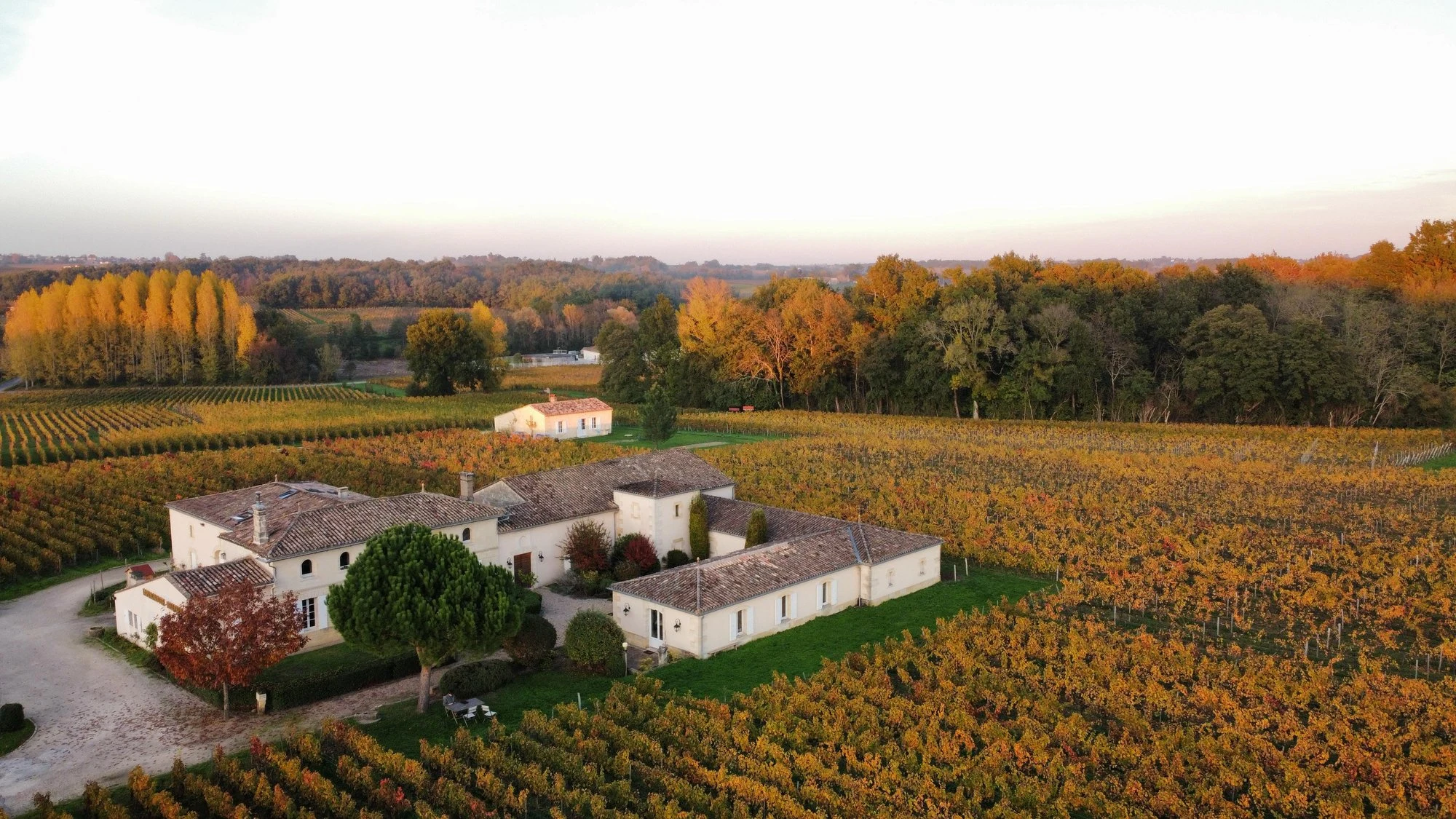
Approaching the eastern limestone plateau of Saint-Émilion, the mood changes quickly from village tourism to vineyard concentration. This is the quieter side of Right Bank Bordeaux: clay-limestone ground, wind across the plateau, and views opening toward the Dordogne valley rather than a procession of grand visitor architecture. Poesia belongs to that register. The estate reads as a terroir-first address, where the attraction is the relationship between slope, soil, vine age and cellar choices rather than a broad hospitality production.
Clay-limestone Saint-Émilion, expressed through Merlot and Cabernet Franc
Saint-Émilion’s serious identity is built on small differences in limestone, clay, exposure and water regulation. At Poesia, that argument is unusually legible: roughly 10 hectares under vine, a single contiguous terroir, clay-limestone soils and plantings led by 70% Merlot and 30% Cabernet Franc. The average vine age is 35 years, placing the estate in a mature-vine bracket where concentration can come from vineyard material rather than cellar exaggeration.
The style signal is clear. Merlot is the anchor grape on this part of the plateau, especially where clay and limestone retain enough water to steady the vine in warmer periods while preserving structure. Cabernet Franc gives the blend a firmer frame and aromatic lift. The estate works with manual harvesting, concrete tanks and ageing that includes 80% new barrels, so the wines are positioned for texture, polish and ageworthiness rather than immediate simplicity.
Production scale matters here. Around 15,000 bottles annually for the Château Poesia label puts the estate closer to a focused small-property model than a wide commercial portfolio. Tastingbook has rated the 2023 Poesia at 95 points, a useful recognition signal for a property whose public identity rests on precision and scarcity more than volume. In Saint-Émilion terms, this is a compact Grand Cru proposition: Merlot-led, plateau-shaped, and aimed at red wines with enough structure to reward time in bottle.
A restrained estate visit rather than a wine-tourism spectacle
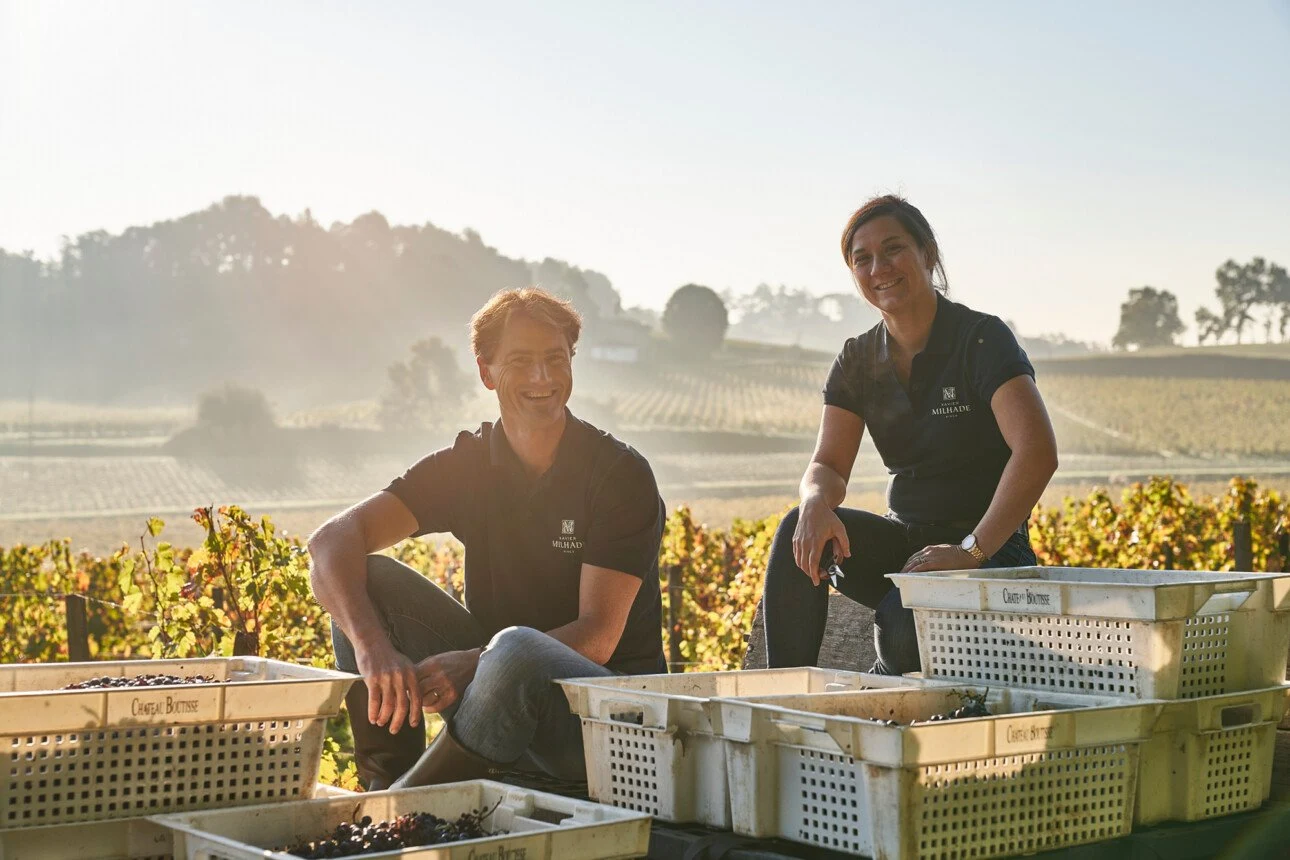
The visitor experience fits the wine. Poesia is not framed around a showpiece complex or a long menu of add-on formats. The relevant cues are direct sales, estate tastings, barrel tasting, vineyard-focused visits, outdoor space and a reception room for groups. Languages include French, English and Spanish, which matters in Saint-Émilion, where serious wine tourism often involves international collectors trying to understand small estates beyond the labels they already know.
The atmosphere is quiet and contemplative, with the landscape doing much of the work. A hilltop setting, vineyard views and the Dordogne valley give the visit its visual context, but the stronger editorial point is agricultural: this is a place to read the plateau through the glass. The estate is better suited to visitors interested in soils, vineyard position and the mechanics of Right Bank blending than to travellers looking for food pairing theatre or a broad wine-bar format.
Ownership by Vignobles Garcin-Lévêque, with Hélène Garcin-Lévêque and Patrice Levêque associated with the estate and Thomas Duclos named for consulting or technical direction, gives the property a clear technical frame without making the biography the story. The stronger story remains the land: a small block, mature vines, Merlot dominance, concrete fermentation and a serious oak programme brought into service of Saint-Émilion Grand Cru reds.
How to place Poesia in a Saint-Christophe-des-Bardes wine day
Saint-Christophe-des-Bardes rewards a slower itinerary than central Saint-Émilion. The village and its eastern plateau are better approached as a study in vineyard position, not a checklist. Poesia works well for travellers who want one focused estate visit paired with broader regional context from our full Saint-Christophe-des-Bardes wineries guide. For planning around meals, lodging and evening drinking, use our full Saint-Christophe-des-Bardes restaurants guide, our full Saint-Christophe-des-Bardes hotels guide, our full Saint-Christophe-des-Bardes bars guide and our full Saint-Christophe-des-Bardes experiences guide.
Readers building a wider Saint-Christophe-des-Bardes route can also look at Château Barde-Haut, Château Boutisse, Château Cantin, Château Clos de Sarpe and Château Croix de Labrie. For a broader European wine map beyond Bordeaux, useful contrasts include A. Margaine in Villers-Marmery, Abbaye de Fontfroide in Narbonne, Abbotts & Delaunay in Marseillette, »der Steiner« Hans Steiner in Podersdorf am See and & Handwein in Mannheim.
Questions
Frequently asked
How expensive is Poesia?
Poesia is listed at a price level of $$$.
The field
How it compares
| Place | Notes |
|---|---|
| Poesia | Saint-Christophe-des-Bardes / eastern limestone plateau of Saint-Émilion, $$$ |
| Château Boutisse | Saint-Christophe-des-Bardes |
| Château Fombrauge | Saint-Christophe-des-Bardes |
| Château Haut-Sarpe | Saint-Christophe-des-Bardes |
| Château Laplagnotte-Bellevue | Saint-Christophe-des-Bardes |
| Château Le Rey (Tour Saint Christophe) | Saint-Christophe-des-Bardes |
| Enclos de Viaud | Saint-Christophe-des-Bardes |
Similar places
Château Boutisse
Saint-Christophe-des-Bardes, France
Château Fombrauge
Saint-Christophe-des-Bardes, France
Château Haut-Sarpe
Saint-Christophe-des-Bardes, France
Château Laplagnotte-Bellevue
Saint-Christophe-des-Bardes, France
Château Le Rey (Tour Saint Christophe)
Saint-Christophe-des-Bardes, France
Enclos de Viaud
Saint-Christophe-des-Bardes, France