Five soy sauces, one live pot
- Michelin Bib Gourmand · Michelin Guide
- Michelin Bib Gourmand · 2026
- Opinionated About Dining Casual in Japan Ranked #121 · 2026
- Tabelog 100 #97: 3.9pts · 2025
- Michelin Bib Gourmand · 2024
Broth first, then the beat
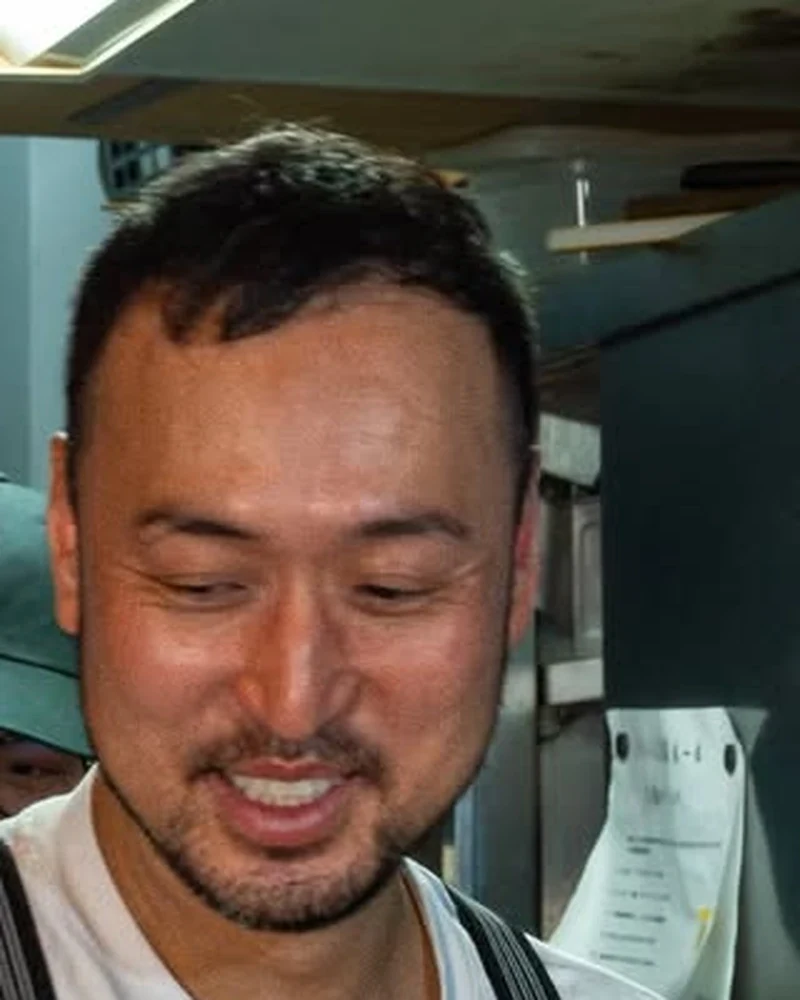
Broth stays moving in the pot while Takuro Yanase, chef at Ramen Break Beats in Tokyo, builds each bowl in the order that matters: tare, soup, noodles, garnish. In Meguro’s Yutenji area, the former professional DJ works at a ramen counter where timing is not a metaphor. It is the difference between a noodle arriving with bite and one that has already given itself up to the soup.
Yanase opened Ramen Break Beats in 2022 after work in French and Italian restaurants in Fukuoka, then French and Japanese kitchens in Toronto. His role remains owner-chef, with the bowl organized around stock, tare, noodle structure and the short window between finishing and serving. The music in the room traces his earlier life, but the craft at the bench is quieter: clear chicken depth, soy sauce tension, clam savor, smoke, wheat and heat, each held in proportion.
Five soy sauces and a live pot
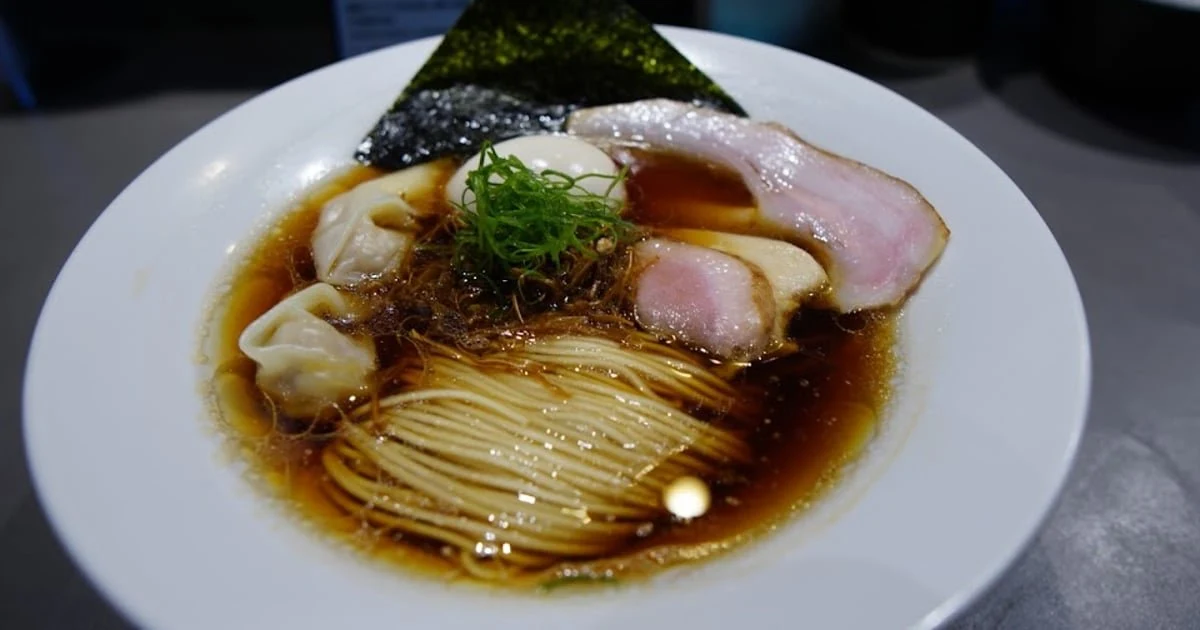
The shoyu bowl takes its frame from a tare built with five varieties of soy sauce, a seasoning base praised for tang and definition rather than weight. Yanase pairs it with al-dente noodles from Mikawaya Seimen, then uses toppings for structure as much as flavor: marinated egg, fried enoki mushrooms in place of menma, wontons, chashu and green negi. In the Tokujyo Shoyu Ramen, the pleasure is sequential. Crisp gives way to chew. Smoke moves through the broth. The noodle carries salt and chicken without going slack.
For Tokujyo Shio Ramen, Yanase works with Amakusa Daio chicken broth and shijimi clams, then adds four kinds of smoked chashu, house-fried enoki mushrooms and wontons. The problem is clarity. Salt has to sharpen the poultry, not flatten it; clam has to deepen the soup without pulling it away from chicken. The yobi-modoshi boiling method keeps one pot in use as broth is added back, so continuity becomes part of the method rather than a service trick. Te-momi hand-massaged noodles can be requested, changing the surface of the strand and the way it grips the soup.
Eight seats in Yutenji
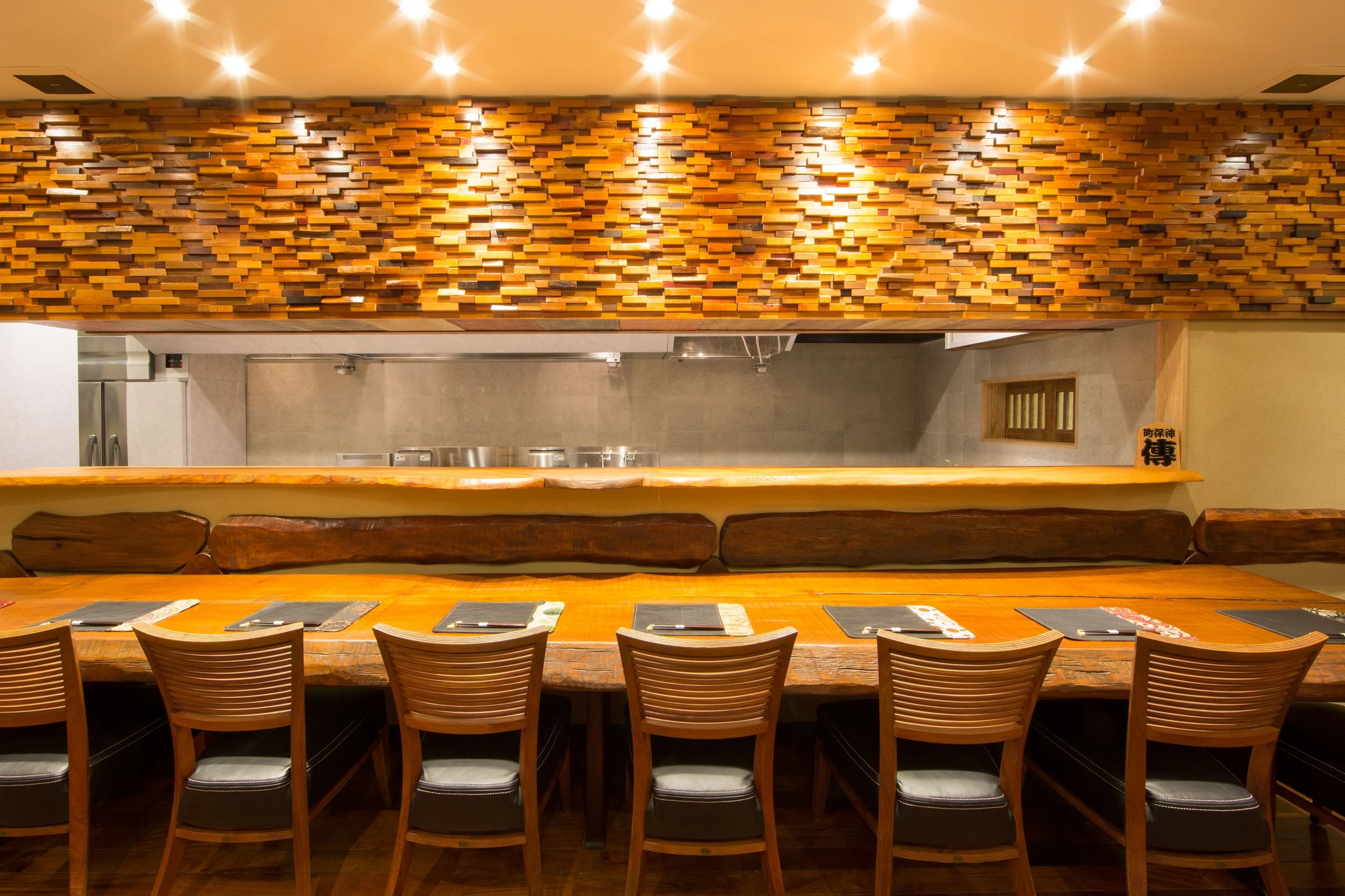
The room is small enough for the counter to set the pace. Eight seats face the work, with hip-hop and ’90s music moving through the speakers while bowls cross the pass in quick succession. This is counter dining, but not hurried cooking. Yanase torches, folds, portions and finishes within sight, and the room takes its energy from that compression: a residential street outside, a focused bench inside, steam lifting from clear soup.
Ramen Break Beats carries Michelin Bib Gourmand recognition and Tabelog Ramen TOKYO selections in 2022, 2023 and 2025, but the awards sit behind the daily repetition. The dishes to follow are still the house signatures, Tokujyo Shoyu Ramen, Tokujyo Shio Ramen and Aburi Mayo Donburi.
Questions
Frequently asked
Who cooks at Ramen Break Beats?
Takuro Yanase is the owner-chef at Ramen Break Beats. He opened the restaurant in 2022 after working in French and Italian restaurants in Fukuoka, then in French and Japanese kitchens in Toronto.
What style of ramen does Ramen Break Beats serve?
The restaurant serves refined shoyu and shio ramen. The bowls are built around broth, tare, noodle structure and the short window between finishing and serving.
What are the house signatures?
The signature dishes are Tokujyo Shoyu Ramen, Tokujyo Shio Ramen and Aburi Mayo Donburi. The shoyu bowl uses a tare made with five varieties of soy sauce, while the shio bowl is built on Amakusa Daio chicken broth and shijimi clams.
What is the booking policy?
Reservation is essential, and bookings are taken through TableCheck.
What recognition does the restaurant hold?
Ramen Break Beats holds Michelin Bib Gourmand recognition.
The field
How it compares
| Place | Cuisine | Notes | Awards |
|---|---|---|---|
| Ramen Break Beats | Refined Shoyu & Shio Ramen | Meguro, $$$ | · |
| Den | Modern Japanese Kaiseki | Tokyo | Michelin 2 Stars, World's 50 Best |
| Florilège | Modern French-Japanese Plant-Based Fine Dining | Tokyo | Michelin 2 Stars, World's 50 Best |
| Narisawa | Modern Japanese Satoyama Fine Dining | Tokyo | Michelin 2 Stars, World's 50 Best |
| Quintessence | Modern French Fine Dining | Tokyo | Michelin 3 Stars |
| Sazenka | Modern Chinese Fine Dining | Tokyo | Michelin 3 Stars, World's 50 Best |
| Sézanne | Modern French Fine Dining | Tokyo | Michelin 3 Stars, World's 50 Best |
In residence
Similar places
Modern Japanese Kaiseki
Den
Tokyo, Japan
★★ · 50 Best
Modern French-Japanese Plant-Based Fine Dining
Florilège
Tokyo, Japan
★★ · 50 Best
Modern Japanese Satoyama Fine Dining
Narisawa
Tokyo, Japan
★★ · 50 Best
Modern French Fine Dining
Quintessence
Tokyo, Japan
★★★
Modern Chinese Fine Dining
Sazenka
Tokyo, Japan
★★★ · 50 Best
Modern French Fine Dining
Sézanne
Tokyo, Japan
★★★ · 50 Best