Rapalino
- 01CityNeviglie, Italy
- Falstaff Winery - Listed · 2026
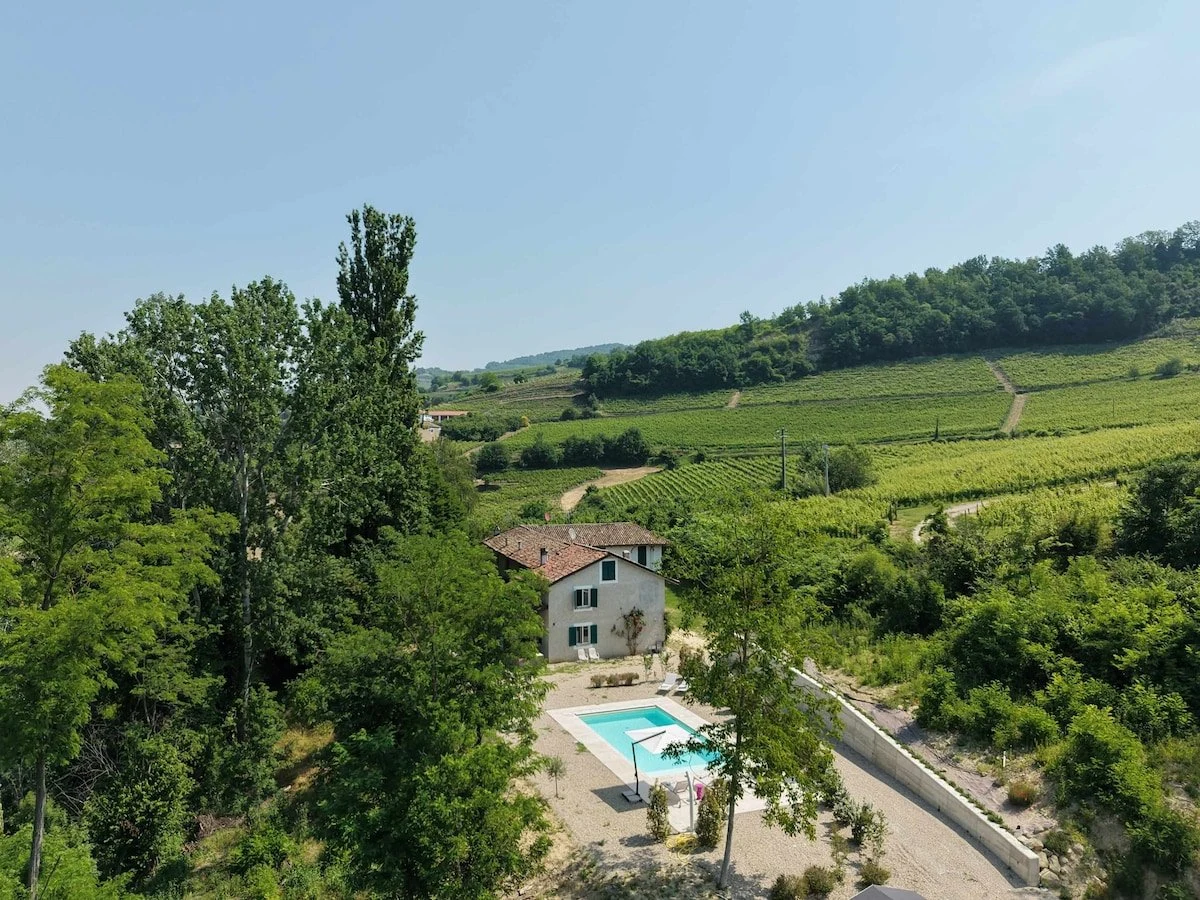
Approaching wine in Neviglie means reading the hills before reading the label: vineyard rows, changing exposures, and the hard geometry of Langhe slopes explain much of what ends up in the glass. Rapalino belongs to that agricultural register. The setting is quiet and rural, with vineyard and mountain views framing a family-run estate rather than a polished tasting salon detached from production.
This part of Piedmont rewards wineries that can translate difficult ground into disciplined wine. Here, the story begins with clay-calcareous soils, ventilated sites, and an estate base spread across Neviglie, Alba, Treiso, Trezzo Tinella, Neive, and Camo. The average elevation is about 400 meters, with slopes around 20 degrees and steeper parcels reaching 30 degrees; some vineyards are included in the Sorì Eroici mapping for severe hillside cultivation. That matters because the wines are not being sold only on regional name recognition. They are tied to physical labor, parcel variation, and the slow economics of farming land that resists easy mechanization.
Hillside Langhe farming, not cellar-door theatre
Langhe hospitality can tilt either toward spectacle or toward the working farm. Rapalino sits firmly in the second camp. The family lineage in Neviglie reaches back to the late 1800s, while bottling under the family name began in 1998. The estate is often described as founded in 1800, but the more useful distinction for drinkers is this: household wine culture came first, commercial bottling came later.
The production argument is vineyard-led. Grapes come from directly cultivated vineyards, and the estate base is described at roughly the mid-30s to around 40 hectares depending on the public source. That is a meaningful scale for a family winery: broad enough to support a wide portfolio, small enough for site decisions to remain central. Each vineyard is worked according to variety, zone, exposure, and slope, which is exactly how Langhe farming should be discussed, as a mosaic rather than a single postcard view.
Sustainability here is also practical rather than decorative. The family describes long-running farming without herbicides or synthetic vineyard products, a stance linked to postwar decisions by an earlier generation. SQNPI certification is attached to the estate’s integrated production credentials, and the winery also refers to traceability-focused procedures. None of that replaces taste, but it does clarify the operating culture: the vineyard is managed as the source of structure, health, and longevity, not as a backdrop for hospitality.
A portfolio that explains Piedmont by breadth
The wine range is unusually useful for visitors trying to understand Piedmont beyond a single famous grape. Rapalino works across sparkling, white, rosé, red, and sweet styles, with Alta Langa DOCG, Asti Spumante, Nebbiolo d’Alba Spumante, Langhe Favorita, Arneis, Chardonnay, Dolcetto d’Alba, Barbera d’Alba, Langhe Nebbiolo, Freisa, Pinot Nero, Barbaresco DOCG, and Moscato d’Asti all part of the wider picture.
That breadth should not be mistaken for lack of focus. In this region, variety can be a serious expression of place when the vineyard base is coherent. Barbera, Nebbiolo, Dolcetto, Moscato, and Alta Langa each speak differently through altitude, ventilation, and calcareous clay. The estate’s own framing emphasizes structure and aging capacity from its soils, while the sparkling and aromatic wines show another side of the same farming base. For a first visit, the value is comparative: still reds against sparkling work, aromatic whites against Moscato, Barbaresco against Langhe Nebbiolo. The education sits in the contrasts.
There are named cuvées that point back to house history, including Alta Langa “1998 Anniversario,” Alta Langa “Intenzione,” Asti Spumante Metodo Classico “Circa 26°,” and Nebbiolo d’Alba Spumante “Nebiò.” Those names are less important than what they reveal about the estate’s positioning: appellation credibility first, family memory second, hospitality story third.
How the tasting format fits the estate
The visit format is structured rather than casual. Tastings are by reservation, with classic, deluxe, and premium-style experiences running roughly 60 to 180 minutes. Published tasting formats include La Classica Wine Experience, Deluxe Wine Experience, and Piemonte Lovers Wine Experience, with prices from €20, €30, and €50 and group capacity from 1 to 40 guests. That makes the estate flexible: suitable for a solo taster wanting context, a small group comparing Langhe styles, or a larger party using the winery as a regional anchor.
The atmosphere is rustic, scenic, quiet, and family-run, with a working-estate feel rather than restaurant formality. The dress code is casual, dogs are permitted, parking is on site, and tasting languages include Italian, English, French, and German. Food pairing is not part of the listed format, so the stronger plan is to treat the visit as wine education and place study, then build meals elsewhere in Neviglie or nearby Langhe towns.
Editorial case for Rapalino is clear: choose it when the point of the day is to understand how Langhe terrain shapes a broad Piedmont cellar, not when the aim is prestige hunting. Neviglie has producers with different emphases, and planning around the town works better when wine, meals, and lodging are treated as one itinerary. For nearby wine planning, see Bera, Roberto Sarotto, and our full Neviglie wineries guide. For the rest of the trip, use our full Neviglie restaurants guide, our full Neviglie hotels guide, our full Neviglie bars guide, and our full Neviglie experiences guide.
For a broader Italian and European winery map, continue with 3GP SRL in Treviso, 47 Anno Domini in Trebaseleghe, A Mano Wine in Noci, a6mani in Fragagnano, Abbadia Ardenga in Torrenieri, Abbazia di Crapolla in Neapel, »der Steiner« Hans Steiner in Podersdorf am See, and & Handwein in Mannheim.
Questions
Frequently asked
How expensive is Rapalino?
Rapalino is listed at a price level of $$.
The field
How it compares
| Place | Notes | Awards |
|---|---|---|
| Rapalino | Neviglie, $$ | · |
| Bera | Neviglie | · |
| Château Cos d'Estournel | Saint-Estèphe | World's 50 Best |
| Chateau Haut-Brion | Pessac | World's 50 Best |
| Domaine François Raveneau | Chablis | · |
| Jacques Selosse | Avize | · |
| Roberto Sarotto | Neviglie | · |